Kitchen Backsplash Durability: Material Lifespan Analysis
Analyze kitchen backsplash durability and lifespan. Compare porcelain, stone, and glass failure modes, grout standards, and 2026 maintenance costs.
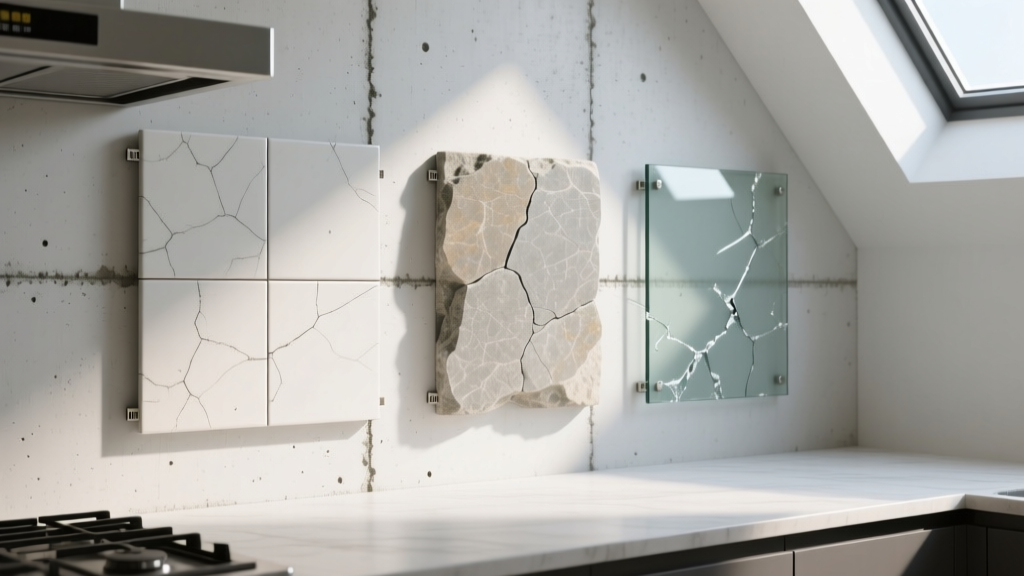
The Lifespan Matrix: Kitchen Backsplash Materials Ranked
While often categorized alongside flooring due to shared manufacturing processes and material standards, a kitchen backsplash operates in a uniquely hostile microenvironment. It faces rapid thermal cycling from cooktops, high-velocity moisture impact from sinks, and chemical exposure from acidic foods and alkaline cleaning agents. Understanding the true lifespan of your backsplash kitchen materials requires looking beyond surface aesthetics to evaluate Mohs hardness, water absorption rates, and thermal shock resistance.
Below is a comprehensive durability matrix evaluating the most common backsplash materials based on real-world failure data and industry testing standards.
| Material | Expected Lifespan | Mohs Hardness | Water Absorption (ASTM C373) | Primary Failure Mode |
|---|---|---|---|---|
| Porcelain Tile | 50+ Years | 7.0 - 8.0 | < 0.5% | Glaze crazing, hard impact chipping |
| Ceramic Tile | 20 - 30 Years | 5.0 - 6.0 | 3.0% - 7.0% | Moisture ingress, surface scratching |
| Natural Stone (Marble) | 30 - 50 Years | 3.0 - 4.0 | 0.5% - 2.0% | Acid etching, sealing degradation |
| Natural Stone (Granite) | 50+ Years | 6.0 - 7.0 | 0.1% - 0.5% | Resin coating yellowing, impact fracturing |
| Glass Tile | 30 - 40 Years | 5.5 - 6.5 | 0.0% | Thermal shock cracking, hard water spotting |
| Stainless Steel | 20 - 30 Years | 5.0 - 6.0 | 0.0% | Abrasive scratching, chloride pitting |
Material-Specific Failure Modes and Edge Cases
Porcelain and Ceramic: The Crazing and Impact Factor
Porcelain and ceramic tiles are often used interchangeably in design, but their durability profiles differ significantly. True porcelain is fired at higher temperatures (up to 2,500°F), resulting in a vitrified body with a water absorption rate of less than 0.5% per ASTM C373 standards. This makes it virtually impervious to the moisture and steam generated in a kitchen environment.
The primary failure mode for glazed porcelain and ceramic in a backsplash application is crazing—a network of fine cracks in the glaze. This occurs when the glaze and the clay body expand and contract at different rates during the rapid thermal cycling caused by proximity to a gas range. To mitigate this, specify tiles with a high thermal shock resistance rating and maintain a minimum 4-inch clearance between the cooktop burner and the tile surface. Furthermore, while porcelain is highly scratch-resistant, the edges of large-format tiles (e.g., 24x48 inch panels) are susceptible to chipping if struck by heavy cast-iron cookware.
Natural Stone: The Etching and Sealing Reality
Natural stone, particularly calcite-based stones like marble, travertine, and limestone, presents the highest maintenance burden in a kitchen. The calcium carbonate composition of marble reacts chemically with any substance that has a pH below 7. Common kitchen culprits include lemon juice, tomatoes, vinegar, and wine. This reaction, known as etching, physically dissolves the polished surface, leaving dull, matte spots that cannot be wiped away.
Glass and Metal: Thermal Shock and Abrasion
Glass tile offers a 0.0% water absorption rate, making it completely immune to moisture damage and staining. However, its vulnerability lies in thermal shock. If a glass tile backsplash is installed directly behind a high-BTU commercial-style gas range without a stainless steel backguard, the intense, localized heat can cause the glass to expand rapidly and shatter. Always use a tempered glass specification or maintain a protective metal zone behind the stove.
Stainless steel backsplashes are highly durable against heat and moisture but are notoriously prone to micro-scratching. When cleaning stainless steel, never use abrasive scouring pads or chloride-based cleaners (like bleach), which can break down the passive chromium oxide layer and cause localized pitting and rust.
The Hidden Point of Failure: Grout and Thinset Degradation
The tiles themselves rarely fail first; the installation system does. In a kitchen environment, the grout joints are subjected to grease aerosolization, boiling water splashes, and aggressive degreasing chemicals. Standard cementitious grout (ANSI A118.6) is inherently porous and will absorb grease and moisture, leading to staining, efflorescence, and eventual crumbling.
For a kitchen backsplash, upgrading to a high-performance grout system is non-negotiable for long-term durability:
- Epoxy Grout (ANSI A118.3): Products like Laticrete SPECTRALOCK or Mapei Kerapoxy offer near-zero water absorption and complete chemical resistance. While the material cost is 3 to 4 times higher than cement grout (averaging $45 to $60 per square foot installed in 2026), it eliminates the need for sealing and prevents joint degradation for decades.
- Single-Component Urethane Grout (ANSI A118.12): A middle-ground option that offers excellent stain resistance and flexibility, accommodating minor substrate movement without cracking. It is easier to install than epoxy but slightly less resistant to extreme heat.
2026 Cost vs. Longevity ROI Analysis
When budgeting for a backsplash kitchen renovation, evaluating the initial cost against the expected lifespan and maintenance requirements provides a clearer picture of the true return on investment. The pricing below reflects national averages for Q1 2026, including premium materials and professional installation with epoxy grout systems.
| Material System | Installed Cost (per sq. ft.) | Annual Maintenance Cost | 50-Year Total Cost of Ownership |
|---|---|---|---|
| Large-Format Porcelain + Epoxy Grout | $28 - $42 | $0 | $28 - $42 (No replacement needed) |
| Standard Ceramic + Cement Grout | $15 - $22 | $2 - $4 (Sealing/Cleaning) | $115 - $222 (Includes 1 replacement) |
| Honed Marble + Urethane Grout | $45 - $75 | $8 - $12 (Professional sealing) | $445 - $1,350 (High maintenance) |
| Tempered Glass + Silicone/Epoxy | $35 - $55 | $0 | $35 - $55 (No replacement needed) |
Actionable Maintenance Framework for Maximum Lifespan
To ensure your backsplash reaches its maximum engineered lifespan, implement the following maintenance protocols based on your specific material choice:
- Establish a pH-Neutral Cleaning Baseline: Discard all alkaline degreasers and acidic bathroom cleaners. Use only pH-neutral stone and tile cleaners (pH 7.0) to prevent the gradual degradation of grout polymers and stone sealers.
- Manage the Aerosol Zone: The area extending 24 inches horizontally and 30 inches vertically from the cooktop is the 'aerosol zone' where vaporized cooking oils settle. Wipe this specific zone with a microfiber cloth and a dedicated kitchen degreaser (formulated for your specific tile type) weekly to prevent oil from polymerizing into a hardened, yellowed film.
- Inspect Caulk Transitions Annually: The joint where the backsplash meets the countertop is a critical expansion joint. It must be filled with 100% silicone caulk, not grout. Inspect this joint every 12 months; if the silicone shows signs of adhesion loss or mold infiltration, cut it out and re-apply a kitchen-grade, mold-inhibiting silicone to prevent water from migrating behind the substrate and causing drywall delamination.
- Protect Thermal Boundaries: If using glass or natural stone, verify that your range hood is venting properly and capturing ambient heat. Prolonged exposure to trapped heat accelerates the breakdown of thinset mortar adhesives, leading to tile debonding.
By selecting materials based on their physical properties rather than just visual appeal, and by pairing them with modern, chemically resistant installation systems, you can engineer a kitchen backsplash that effortlessly withstands the rigors of daily cooking for half a century or more.