Selecting a Carpet: Red Carpet Material Taxonomy & Guide
Explore red carpet material taxonomy, from solution-dyed nylon to plush wool. Learn how to select the right fiber, pile, and pad for home theaters and events.
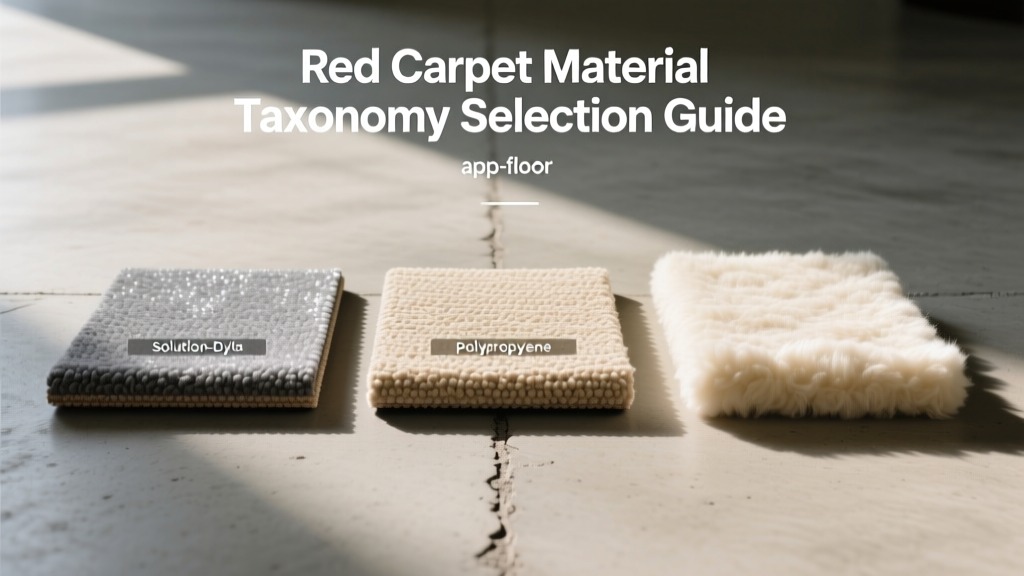
The Technical Challenge of Red Carpeting
When selecting a new carpet, red carpet materials demand a rigorous technical approach that goes far beyond standard color matching. Red pigments—chemically derived from azo or anthraquinone compounds—possess larger molecular structures that sit closer to the surface of synthetic fibers. This makes them uniquely vulnerable to photodegradation (UV fading) and chemical oxidation. Furthermore, red is a high-impact visual wavelength; in specialized environments like home theaters or commercial cinemas, the wrong shade or pile construction will reflect light back onto projection screens, destroying contrast ratios. This guide breaks down the material taxonomy of red carpeting, providing exact specifications for fiber selection, dye chemistry, and acoustic underpadding.
Fiber Taxonomy: Choosing the Right Polymer
The longevity of a red carpet is dictated by its base polymer. Not all synthetic fibers hold red dye with the same tenacity. Below is the technical breakdown of the primary fiber types used in red carpet manufacturing.
| Fiber Type | Dye Affinity & Fade Resistance | Crush Recovery | Best Application | Avg Cost (per sq yd) |
|---|---|---|---|---|
| Nylon 6,6 | Excellent (tight polymer chain locks dye) | Superior | High-traffic residential, commercial event | $45 - $85 |
| Nylon 6 | Good (slightly more porous than 6,6) | Very Good | Standard residential, bedrooms | $30 - $60 |
| Wool | Moderate (natural luster, requires careful cleaning) | Excellent (natural spring) | Luxury residential, low-traffic formal rooms | $70 - $140 |
| PET (Polyester) | High initial vibrancy, poor long-term UV resistance | Poor (matts down quickly) | Low-traffic budget residential | $20 - $40 |
| Olefin (Polypropylene) | Perfect (only available solution-dyed) | Poor (low melting point, crushes) | Outdoor, basements, low-profile commercial | $15 - $35 |
For premium red carpet installations, Nylon 6,6 remains the industry gold standard. The molecular structure of Nylon 6,6 (created from hexamethylenediamine and adipic acid) features a tighter polymer chain than standard Nylon 6, effectively trapping red dye molecules and preventing them from leaching during hot water extraction cleaning. According to the Carpet and Rug Institute Fiber Guide, Nylon 6,6 also offers superior resilience, meaning the carpet will not mat down and expose the primary backing—a critical flaw that makes red carpet look patchy and worn.
Dye Chemistry: Solution-Dyed vs. Piece-Dyed
The method used to color the fiber is the single most important factor in preventing a crimson carpet from turning salmon or pink over time.
Piece-Dyed (Beck Dyed)
In piece-dyeing, the color is applied to the fiber after it has been extruded and tufted. This allows for infinite color variations and deep, rich reds. However, the dye only penetrates the outer cortex of the fiber. If installed in a room with high UV exposure (sunrooms, large south-facing windows), piece-dyed red carpet will experience noticeable photodegradation within 18 to 24 months.
Solution-Dyed (Mass Colored)
Solution-dyeing introduces the red pigment into the liquid polymer before the fiber is even extruded. The color is locked entirely through the fiber core. Solution-dyed red nylon is virtually impervious to UV fading and can be cleaned with harsh chemicals (even diluted bleach) without stripping the color. Historically, solution-dyed reds lacked the deep, complex vibrancy of piece-dyed options, but advancements in 2026 pigment dispersion technologies have largely closed this gap.
Red carpet is highly susceptible to "ozone fading" and chemical oxidation. Nitrogen oxides (NOx) from gas furnaces and formaldehyde off-gassing from newly installed MDF cabinetry or VOC-heavy paints can react with red dye molecules, turning deep burgundy into a washed-out orange or pink. The EPA notes that indoor VOCs can persist for months. If installing red carpet in a newly renovated space, ensure all paints and adhesives have fully cured and the HVAC system has been flushed with fresh air for at least 14 days prior to carpet installation.
Pile Construction and Light Absorption
The physical cut of the carpet fibers dictates how light interacts with the red pigment, which is especially critical in media rooms and home theaters.
- Velvet / Plush Cut Pile: The fibers are cut and sheared to a uniform height. This creates a smooth, velvety surface that absorbs ambient light rather than reflecting it. In a home theater, a 60 oz dark red velvet pile prevents the screen's light from bouncing off the floor and washing out the bottom third of the projected image.
- Saxony Cut Pile: Slightly longer and more twisted than velvet. It shows footprints and vacuum marks prominently. While beautiful in formal dining rooms, the light/shadow contrast of footprints can be distracting in a media environment.
- Loop Pile (Berber): Fibers are looped back into the backing. Light hits the curved sides of the loops, creating a mottled, textured appearance. Red loop piles are excellent for high-traffic commercial corridors (like cinema hallways) because they hide foot traffic patterns and resist crushing.
Application-Specific Selection Framework
Scenario A: The Dedicated Home Theater
Home theaters require carpeting that serves dual purposes: optical control and acoustic dampening.
Specifications:
• Fiber: Nylon 6,6 or high-grade Wool.
• Color: Deep burgundy, oxblood, or crimson (avoid bright cherry red, which reflects too much light).
• Face Weight: 45 oz to 60 oz per square yard. Heavier face weights provide better sound absorption.
• Pile: Velvet or low-profile Saxony.
• Acoustic Goal: A heavy plush carpet paired with a thick pad can achieve a Noise Reduction Coefficient (NRC) of 0.60 to 0.70, significantly reducing high-frequency flutter echo in the room.
Scenario B: Commercial Event & Cinema Spaces
Commercial red carpets must withstand rolling carts, heavy foot traffic, and frequent commercial extraction cleaning.
Specifications:
• Fiber: Solution-dyed Nylon or Olefin.
• Face Weight: 20 oz to 32 oz (lower profile prevents tripping hazards and wheelchair resistance).
• Construction: Tight loop or high-density cut-and-loop patterns.
• Installation: Direct glue-down to the concrete subfloor. Glue-down prevents the carpet from rippling under heavy rolling loads and eliminates the need for a cushion, which would degrade under commercial traffic.
Underpad (Cushion) Specifications
The underpad is the hidden structural component that dictates the lifespan of your red carpet. Installing a premium 60 oz nylon carpet over a cheap foam pad will result in premature crushing and backing delamination.
- Residential Plush (Bedrooms/Living): 8 lb to 10 lb rebond polyurethane, 7/16" thickness. Provides luxurious underfoot feel and excellent acoustic insulation.
- Residential High-Traffic (Stairs/Hallways): 10 lb rebond or slab rubber, 3/8" thickness. Thinner and denser to prevent the carpet from flexing and snapping over stair nosings.
- Commercial/Event: 40 oz synthetic felt pad (if using a stretch-in system) or no pad (direct glue-down). Never use rebond foam in commercial settings; it breaks down under concentrated static loads.
Maintenance and Longevity Protocols
To maintain the structural integrity and color depth of red carpeting, implement a strict maintenance protocol. Use only CRI (Carpet and Rug Institute) Seal of Approval certified cleaning solutions. Alkaline-based cleaners (pH above 10) can strip the acid-dye sites in nylon, causing the red color to bleed or fade permanently. For routine cleaning, hot water extraction should be performed at a maximum temperature of 150°F (65°C) to prevent browning of the backing adhesives and dye migration. By aligning the fiber chemistry, dye method, and pile construction with the specific optical and acoustic demands of your space, a red carpet will remain a durable, high-impact design element for decades.