Flooret Flooring Specs: Wear Layers, Core Density & Ratings
Analyze Flooret flooring performance specs, including SPC core density, 22-mil vs 40-mil wear layers, AC ratings, and real-world durability.
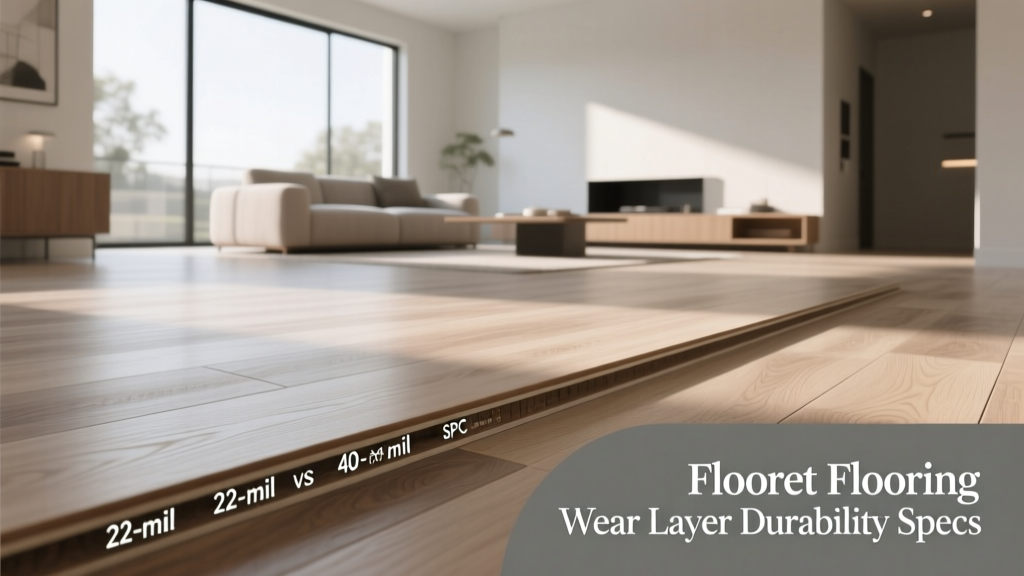
Anatomy of a Flooret SPC Plank: Layer-by-Layer Breakdown
Flooret has carved a distinct niche in the direct-to-consumer luxury vinyl plank (LVP) market by prioritizing high-density Stone Plastic Composite (SPC) cores and commercial-grade wear layers. Unlike big-box store alternatives that often mask thin cores with thick attached pads, Flooret's specifications focus on structural rigidity and surface endurance. Understanding these material specifications is critical for architects, contractors, and homeowners evaluating the brand for high-traffic or moisture-prone environments.
A standard Flooret Crafted+ plank is engineered with five distinct functional layers, each contributing to its overall performance rating:
- UV-Cured Urethane Topcoat: Infused with aluminum oxide or ceramic beads to provide scratch resistance and control surface sheen (typically a low-gloss matte or satin finish to mimic real wood).
- PVC Wear Layer: The primary shield against abrasion, available in 22-mil and 40-mil thicknesses.
- High-Definition Print Film: A 3D-printed vinyl layer utilizing Embossed-In-Register (EIR) technology, aligning the physical texture with the visual wood grain.
- SPC Rigid Core: An extruded composite of approximately 65% limestone dust and 35% PVC resin, providing dimensional stability and 100% waterproofing.
- Attached Acoustic Underlayment: A 1.0mm to 1.5mm IXPE (cross-linked polyethylene) pad that reduces impact noise and masks minor subfloor imperfections.
Wear Layer Specifications: 22-Mil vs. 40-Mil
The wear layer is the most critical specification for determining the lifespan of any LVP product. Flooret categorizes its inventory primarily by this metric, bypassing the ambiguous "residential vs. commercial" marketing jargon in favor of exact measurements. One mil equals 1/1000th of an inch; therefore, a 22-mil layer is 0.022 inches thick.
| Specification | Flooret 22-Mil (Crafted+ Standard) | Flooret 40-Mil (Commercial Grade) |
|---|---|---|
| Thickness | 0.55 mm (22 mil) | 1.0 mm (40 mil) |
| AC Rating | AC4 (Moderate Commercial) | AC5 (Heavy Commercial) |
| Best Application | Residential, light retail, boutique offices | High-traffic retail, restaurants, multi-family rentals |
| Scratch Resistance | High (resists pet claws, standard furniture) | Extreme (resists heavy rolling loads, gravel) |
| Material Cost (2026) | $3.89 - $4.49 / sq. ft. | $4.79 - $5.49 / sq. ft. |
Core Density and Dimensional Stability
The SPC core is where Flooret differentiates itself from budget LVP brands. Budget SPC often uses a higher ratio of PVC resin and recycled plastics to cut costs, resulting in a core that is flexible but prone to thermal expansion. Flooret utilizes a high-limestone formulation. This high mineral content makes the plank exceptionally rigid, which translates to superior resistance to indentations from heavy furniture (tested to withstand static loads exceeding 250 lbs per square inch without permanent deformation).
However, this rigidity introduces a critical installation requirement. Because the core does not flex, it cannot conform to an uneven subfloor. If installed over a dip or hump, the plank will "bridge" the gap. When weight is applied, the Valinge 5G click-lock mechanism will bear the structural load it was not designed for, eventually leading to joint separation or snapping.
Subfloor Flatness Tolerances
According to industry standards and ASTM F710 guidelines for subfloor preparation, rigid core LVP requires the subfloor to be flat to within 3/16-inch over a 10-foot radius, and 1/8-inch over a 6-foot radius. Concrete subfloors must be tested for moisture vapor emission rates (MVER) using a calcium chloride test or relative humidity probe, ensuring readings fall below the manufacturer's maximum threshold (typically 3-5 lbs per 1,000 sq. ft. over 24 hours).
Real-World Failure Modes and Edge Cases
Despite high manufacturing specifications, field failures occur when environmental or installation variables are ignored. Based on warranty claim data and contractor field reports, here are the primary failure modes associated with Flooret and similar high-density SPC products:
- Telegraphing and Stress Fractures: If the subfloor is not swept and vacuumed prior to installation, even a small pebble or hardened joint compound droppings trapped beneath the IXPE pad will act as a fulcrum. Over months of foot traffic, this point-load will cause the SPC core to fracture or the wear layer to turn white (stress whitening) directly above the debris.
- UV Delta-E Shifts: While Flooret applies UV inhibitors to the topcoat, prolonged, direct exposure to unfiltered south-facing or west-facing sunlight will eventually cause the print film to fade. This is particularly noticeable in rooms with partial rug coverage; the exposed areas will lighten, creating a permanent delta-E (color difference) mismatch when the rug is moved. Specifying UV-blocking window film (rejecting 99% of UV rays) is mandatory for sun-drenched rooms.
- Perimeter Peaking: SPC expands and contracts at a much lower rate than traditional wood or WPC vinyl, but it still moves. Flooret requires a strict 1/4-inch expansion gap at all vertical obstructions (walls, cabinets, pipes). If baseboards are installed too tightly, or if the flooring is pinned under heavy kitchen islands without proper slip joints, the planks will buckle upward (peak) at the seams during peak summer humidity.
Environmental Certifications and Indoor Air Quality
For commercial projects requiring strict adherence to green building codes (such as LEED or WELL), Flooret's environmental certifications are a major specification advantage. The brand's products are independently tested for volatile organic compound (VOC) emissions.
- FloorScore Certified: Verified by SCS Global Services, this certification ensures the flooring meets the stringent VOC emission limits set by the California Section 01350 standard, which is the benchmark for indoor air quality in schools and healthcare facilities.
- GREENGUARD Gold: Administered by UL Solutions, this is the highest tier of chemical emissions testing, ensuring the product is safe for sensitive environments like children's rooms and hospitals.
- Ortho-Phthalate Free: Flooret explicitly formulates its PVC layers without ortho-phthalates, utilizing safer, bio-based or DOTP plasticizers, which eliminates the endocrine-disrupting risks associated with older vinyl manufacturing processes.
Cost vs. Performance Matrix: Is Flooret the Right Spec?
When specifying flooring for a 2026 build or renovation, material cost is only one variable. The total cost of ownership includes installation prep, longevity, and replacement frequency. Below is a decision matrix to determine if Flooret's specifications align with your project parameters.
| Project Scenario | Recommended Flooret Spec | Estimated Material Budget | Alternative Consideration |
|---|---|---|---|
| Whole-Home Residential (Dry Areas) | 22-Mil Crafted+ (Wood Visuals) | $3.89 - $4.29 / sq. ft. | Engineered Hardwood (if budget allows $7+ / sq. ft.) |
| Full Bathroom / Wet Room | 22-Mil Crafted+ (Tile/Stone Visuals) | $4.09 - $4.49 / sq. ft. | Ceramic/Porcelain Tile (superior lifespan, higher install cost) |
| Multi-Family Rental / Airbnb | 40-Mil Commercial Grade | $4.79 - $5.29 / sq. ft. | Sheet Vinyl (cheaper, but lower aesthetic and resale value) |
| Basement over Concrete Slab | Any SPC Core (with vapor barrier check) | $3.89 - $5.49 / sq. ft. | None. SPC is the optimal choice for below-grade moisture. |
Final Specification Verdict
Flooret flooring delivers a highly competitive performance-to-price ratio, particularly for projects demanding commercial-grade wear layers without the commercial-grade markup. The 22-mil and 40-mil SPC options provide exceptional indentation resistance and dimensional stability. However, the rigidity of the high-limestone core demands flawless subfloor preparation. If your contractor is unwilling to self-level concrete or sand plywood seams to meet the 3/16-inch over 10-foot tolerance, the locking mechanisms will eventually fail, voiding the warranty. Specify Flooret when you have a competent installation crew and a verified, flat subfloor; look to flexible WPC or traditional glue-down LVP if subfloor remediation is cost-prohibitive.