Ride On Floor Sweeper Parts Beloit: Industrial Flooring Guide
Match ride on floor sweeper parts to Beloit's industrial flooring taxonomy. Expert guide on brushes, squeegees, and filters for concrete and epoxy.
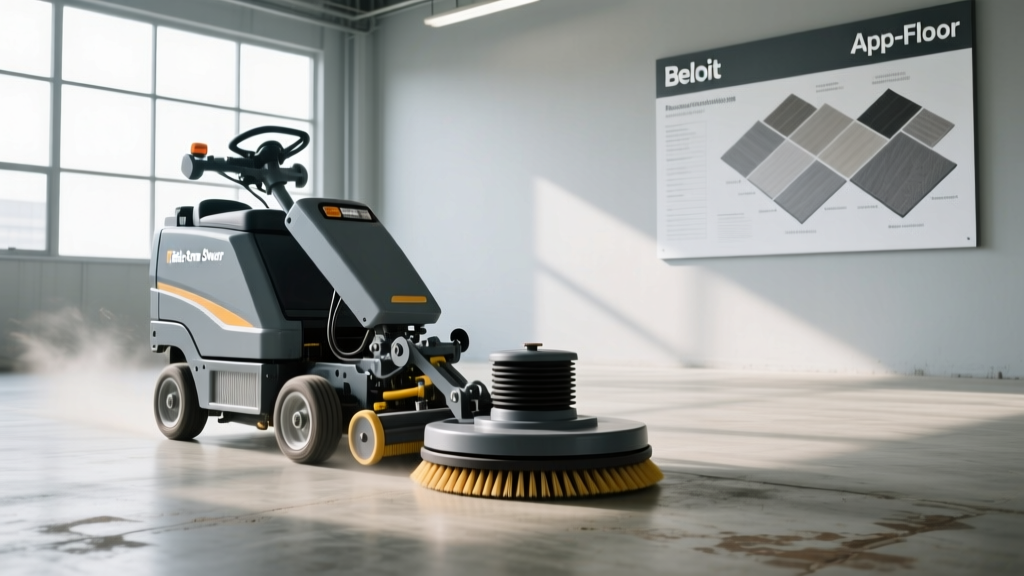
Industrial Floor Taxonomy in the Beloit Manufacturing Corridor
Beloit, Wisconsin, and the surrounding Rockford industrial corridor feature a high concentration of heavy manufacturing, paper milling, and advanced logistics facilities. The flooring in these environments endures extreme mechanical stress, chemical exposure, and constant forklift traffic. Maintaining these surfaces requires heavy-duty ride-on floor sweepers, but a machine is only as effective as its consumable components. Selecting the correct ride on floor sweeper parts is not a one-size-fits-all process; it demands a strict alignment with the underlying flooring material taxonomy.
Facility managers who install generic, uncalibrated parts risk micro-scratching polished concrete, delaminating epoxy coatings, or failing to capture respirable crystalline silica dust. This guide provides a technical framework for matching sweeper consumables—main brooms, side brushes, squeegees, and filtration media—to the specific industrial floor types prevalent in Southern Wisconsin and Northern Illinois facilities.
The Core Flooring Material Taxonomy
Before ordering replacement parts, identify the exact floor substrate and its surface treatment. The three dominant industrial floor categories dictate entirely different mechanical sweeping parameters.
1. Polished and Densified Concrete
Concrete treated with lithium or sodium silicate densifiers and mechanically polished to a 400- to 3000-grit finish. These floors rely on a microscopic peak-and-valley structure to reflect light. Aggressive brush filaments will permanently dull the surface by flattening the peaks, destroying the gloss and reducing slip resistance.
2. Heavy-Duty Epoxy and Urethane Coatings
Multi-layer systems (typically 10 to 30 mils thick) featuring a base coat, quartz sand broadcast for texture, and a clear polyurethane or epoxy topcoat. While highly chemical-resistant, these coatings are vulnerable to sharp impacts and aggressive abrasion. Black scuff marks from improper tires are a primary aesthetic and safety failure mode here.
3. Industrial VCT and Specialty Resilient Floors
Vinyl Composition Tile (VCT) or heavy-gauge rubber flooring used in lighter assembly areas or cleanrooms. These require gentle agitation and strict moisture control during the sweeping and scrubbing phases to prevent adhesive degradation at the seams.
Component Selection Matrix by Floor Type
The following matrix dictates the exact specifications for ride-on sweeper consumables based on the floor taxonomy. Refer to this when ordering parts from regional distributors.
| Floor Material | Main Broom Filament | Side Brush Filament | Squeegee Durometer | Tire Compound |
|---|---|---|---|---|
| Polished Concrete (800+ Grit) | 0.020" Polypropylene / Palmyra mix | 0.025" Nylon (soft flare) | 80A Shore (Smooth edge) | Non-marking Polyurethane (90A) |
| Epoxy / Urethane Coatings | 0.030" Polypropylene | 0.030" Polypropylene | 70A Shore (Beveled) | Non-marking Polyurethane (85A) |
| Raw / Broom-Finished Concrete | 0.050" Nylon or Steel Wire Mix | 0.040" Stiff Nylon | 60A Shore (Thick blade) | Pneumatic or Solid Rubber |
| Industrial VCT / Rubber | 0.025" Palmyra | 0.020" Palmyra | 75A Shore (Soft bevel) | Non-marking Polyurethane (80A) |
Deep-Dive: Brush Filament Specifications and Failure Modes
The main broom and side brushes represent the primary point of mechanical contact with the floor. In the Beloit market, where facilities often run three shifts a day, brush wear accelerates rapidly if the filament diameter and material are mismatched to the floor.
Polypropylene (PP) Filaments
Polypropylene is the workhorse of industrial sweeping. It offers excellent chemical resistance and fatigue life. For sealed concrete and epoxy, specify 0.030-inch diameter filaments. This thickness provides enough stiffness to dislodge embedded pallet dust and forklift tire residue without scratching the clear coat. In high-heat environments (common near Beloit's foundries and paper mills), PP can suffer from thermal memory loss, causing the bristles to flare permanently. If ambient floor temperatures exceed 110°F, transition to nylon.
Nylon Filaments
Nylon (specifically Nylon 6 or Nylon 6,6) is stiffer and more heat-resistant than PP. Use 0.040-inch or 0.050-inch nylon exclusively for raw, broom-finished concrete or heavily textured exterior loading docks. Nylon excels at digging debris out of the deep pores of unsealed concrete but will act like sandpaper on polished surfaces.
Palmyra and Natural Fibers
Palmyra is a stiff natural fiber ideal for fine dust recovery. When sweeping facilities that generate micro-particulates (such as CNC machining or dry material blending), a palmyra main broom ensures the fine dust is swept into the hopper rather than being flicked into the air. As of 2026, synthetic alternatives like crimped polyester are gaining traction for fine dust, offering better moisture resistance than natural palmyra.
Filtration Media and Air Quality Compliance
Sweeping raw concrete generates respirable crystalline silica dust. Under OSHA's Respirable Crystalline Silica standard, facility managers must control airborne dust to protect workers. The sweeper's filtration system is the primary engineering control for this hazard.
Pocket vs. Pleated Filters
Standard polyester pocket filters offer high surface area and are suitable for dry, general manufacturing dust. However, in Beloit's paper milling and food processing sectors, ambient humidity is high. Standard polyester filters will blind (clog) rapidly when exposed to moist dust. For these environments, specify PTFE-coated pleated cartridge filters. The polytetrafluoroethylene coating creates a non-stick surface that allows the mechanical shaker system to effectively knock dust cake off the filter media, maintaining consistent airflow and suction.
Furthermore, maintaining optimal indoor air quality is essential for worker health and regulatory compliance, aligning with broader EPA Indoor Air Quality guidelines that emphasize source control and proper ventilation in industrial settings.
Squeegee and Tire Selection for Traction and Seal
The squeegee (or debris flap) creates the seal between the sweeping head and the floor, ensuring vacuum pressure pulls dust into the hopper rather than exhausting it out the back.
- Squeegee Durometer: Measured on the Shore A scale. Use a 60A (soft) squeegee for uneven, raw concrete to allow the blade to conform to surface pits and cracks. Use an 80A (hard) squeegee for perfectly flat polished concrete or epoxy; a soft squeegee on a flat floor will drag and wear out prematurely, while a hard squeegee on uneven concrete will leave gaps, leaking dust.
- Tire Compound: Forklift traffic already damages industrial floors; sweeper tires should not add to the problem. Always specify non-marking polyurethane tires for epoxy and polished concrete. Standard carbon-black rubber tires will leave permanent black scuff marks on light-colored coatings that require costly chemical stripping to remove.
Regional Sourcing Strategy: OEM vs. Aftermarket
When sourcing ride on floor sweeper parts in the Beloit and Rockford area, facility managers must weigh the cost savings of aftermarket parts against the precision of OEM (Original Equipment Manufacturer) components. Machines from major brands like Tennant, Nilfisk, and Hako have tight tolerances in their brush drive motors and vacuum shrouds.
Preventative Maintenance and Replacement Intervals
Running a sweeper with worn parts increases the amp-draw on the brush motors, leading to premature motor failure and increased battery depletion. Track the following replacement intervals based on standard 8-hour daily operation in a heavy manufacturing environment.
| Component | Inspection Interval | Typical Replacement Lifespan | Wear Indicator / Failure Sign |
|---|---|---|---|
| Main Broom | Weekly | 250 - 400 Hours | Bristle length reduced to within 1 inch of the core; uneven flare. |
| Side Brushes | Daily (Visual) | 150 - 250 Hours | Bristles splaying outward excessively; failure to reach into corners. |
| Squeegee Blade | Monthly | 500 - 800 Hours | Visible curling, tearing, or dust trail left behind the sweeping head. |
| Pocket Filters | Daily (Shaker test) | 6 - 12 Months | Vacuum motor amperage spikes; visible dust exhaust from the rear. |
| Drive Belts | Quarterly | 1,500 Hours | Glazing, cracking, or brush RPM dropping under heavy load. |
Optimizing Sweeper Performance for Long-Term Floor Life
Matching ride-on sweeper parts to the specific flooring taxonomy is a critical operational discipline. A polished concrete floor ruined by an overly aggressive nylon brush cannot be fixed by simply changing the brush; it requires a full mechanical re-polishing that costs upwards of $3.00 to $5.00 per square foot. By strictly adhering to filament diameter specifications, selecting the correct squeegee durometer, and utilizing PTFE-coated filters in high-humidity zones, Beloit facility managers can extend the lifespan of their industrial floors by decades while maintaining strict OSHA air quality compliance.