Using White Vinegar in Carpet Shampooer: Specs, pH & Mix Ratios
Technical specs, pH limits, and exact dilution ratios for using white vinegar in carpet shampooers. Learn fiber compatibility and machine safety.
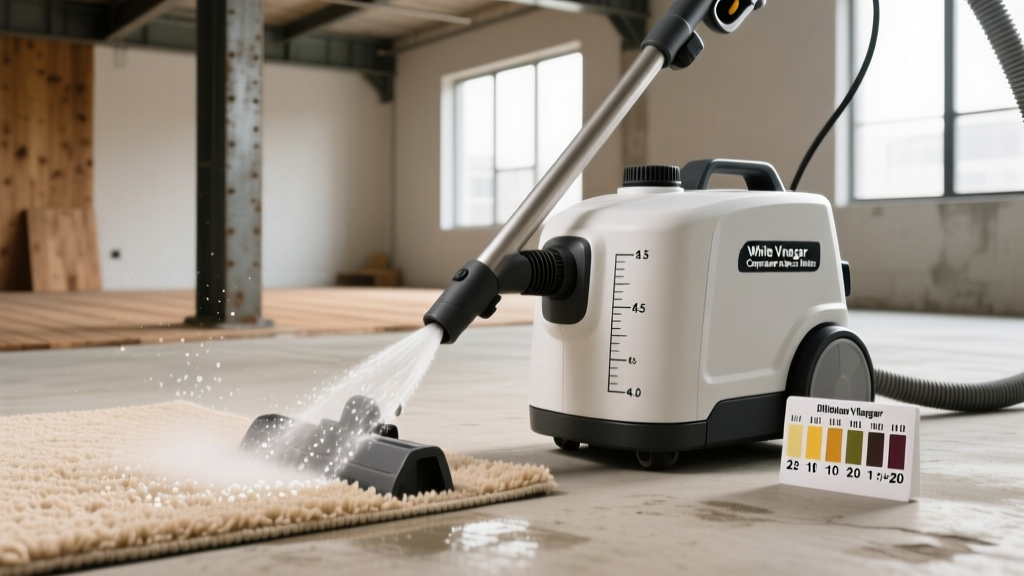
The Chemistry of Acetic Acid on Carpet Fibers
Using white vinegar in a carpet shampooer is not merely a household hack; it is a calculated chemical intervention. Standard distilled white vinegar consists of 5% acetic acid and 95% water, yielding a highly acidic pH between 2.4 and 3.4. When introduced to carpet fibers via hot water extraction, this acidity fundamentally alters the fiber's cuticle structure and dye stability. The most common residential carpet fiber, Nylon 6,6, is dyed using acid dyes that require an acidic environment to remain bonded to the polymer chain. Alkaline commercial shampoos (pH 8.0–10.5) open the fiber cuticles to lift soil but can strip dye molecules and leave the fiber porous. Introducing a diluted acetic acid solution acts as an acidic rinse, lowering the pH, snapping the cuticles shut, and locking in the color while neutralizing alkaline salt residues.
However, the Carpet and Rug Institute (CRI) emphasizes that pH extremes can degrade secondary backings and latex adhesives. Understanding the exact isoelectric point and pH tolerance of your specific carpet fiber is mandatory before introducing acetic acid into your extraction machine.
Fiber Compatibility & pH Tolerance Matrix
| Fiber Type | Isoelectric Point | Vinegar Safety Rating | Technical Notes & Limitations |
|---|---|---|---|
| Nylon 6,6 | pH 5.5 - 6.0 | High (Diluted) | Closes cuticles, prevents rapid resoiling. Do not use undiluted (pH < 3.0) as it can degrade stain-resist treatments. |
| Polyester (PET) | pH 5.0 - 5.5 | Moderate | Oleophilic (attracts oils). Vinegar removes water-based stains but is ineffective on lipid-based soils without a surfactant. |
| Olefin (Polypropylene) | pH 6.0 | High | Highly chemical resistant. Vinegar will not damage the fiber, but Olefin's low melting point requires strict heat control in the shampooer. |
| Wool (Natural) | pH 4.5 - 5.5 | Conditional | Wool is destroyed by alkaline solutions (pH > 8). Mildly acidic vinegar (diluted to pH 4.5) is safe, but high acidity causes hydrolysis of keratin bonds. |
Machine Specifications: Seals, Heaters, and Warranties
Carpet extraction machines, such as the Bissell ProHeat 2X Revolution or the Hoover PowerDash Pet, are engineered for specific chemical tolerances. The internal plumbing relies on EPDM (Ethylene Propylene Diene Monomer) rubber O-rings and nitrile seals. While EPDM offers excellent resistance to hot water and mild alkaline detergents, it exhibits poor resistance to concentrated acids. At a standard tank dilution of 0.5% acetic acid, the solution remains well within the safe operational limits for EPDM and Viton seals. However, prolonged exposure is a critical failure point.
Furthermore, machines equipped with PTC (Positive Temperature Coefficient) heating elements, like Bissell's HeatWave technology, maintain water temperatures between 140°F and 160°F. Heating acetic acid accelerates off-gassing. If the heated vinegar solution sits in the polyethylene or ABS plastic recovery tank for more than 24 hours post-cleaning, the acidic vapor can cause micro-crazing in the plastic welds and degrade the vacuum motor's copper windings due to corrosive vapor ingestion.
Virtually all major carpet shampooer manufacturers explicitly state in their user manuals that using non-approved, non-surfactant cleaning agents voids the mechanical warranty. If a pump failure or seal leak occurs and the service center detects acetic acid residue in the internal lines, your claim will be denied. Always flush the machine with 1 gallon of clear, hot water immediately after using a vinegar solution.
Exact Dilution Ratios and Mixing Protocol
The EPA Safer Choice Program recognizes acetic acid as a safer, biodegradable alternative to harsh synthetic solvents, provided it is used at correct concentrations. Undiluted 5% white vinegar (pH 2.4) is too aggressive for carpet backing latex and will cause delamination over time. The target pH for the extraction solution should be between 4.0 and 5.0.
Step-by-Step Mixing Protocol
- Base Water Temperature: Fill the clean water tank with 1 gallon of hot tap water (120°F - 130°F). Do not use boiling water, as it will warp the machine's internal polyethylene tubing.
- Acetic Acid Measurement: Add exactly 1/2 cup (4 fluid ounces) of standard 5% distilled white vinegar per 1 gallon of water. This yields a 0.31% acetic acid concentration, safely raising the pH to approximately 4.5.
- Agitation: Secure the tank cap and gently invert the machine or tank twice to ensure homogenous mixing. Do not shake violently, which introduces air bubbles that can cavitate the extraction pump.
- Extraction Pass: Run the shampooer over the carpet using the 'Water Rinse' or 'Low Flow' setting. Vinegar is a rinse agent, not a primary soil suspender. It should be used on the final pass to neutralize prior alkaline cleaning agents.
- System Flush: Immediately empty the clean tank, rinse it, fill it with 1/2 gallon of plain hot water, and run the machine over a utility sink or towel to flush the internal hoses and pump head.
Commercial Alkaline Cleaners vs. Acidic Vinegar
A common and catastrophic mistake is mixing white vinegar directly into the shampooer tank alongside commercial alkaline carpet shampoos. Commercial shampoos rely on anionic surfactants, primarily Sodium Lauryl Sulfate (SLS) or Sodium Laureth Sulfate (SLES), to emulsify oils. When acetic acid reacts with SLS in an aqueous solution, it undergoes an acid-base neutralization reaction. This produces sodium acetate (a salt) and water, effectively destroying the surfactant's cleaning power.
Performance Data Comparison
| Metric | Commercial Alkaline Shampoo (pH 9.0) | Diluted White Vinegar Rinse (pH 4.5) |
|---|---|---|
| Soil Suspension | High (Emulsifies lipids and proteins) | Low (Only dissolves mineral deposits and alkaline salts) |
| Fiber Cuticle State | Open (Prone to rapid resoiling if not rinsed) | Closed (Smooth surface repels dry particulate soil) |
| Dye Stability | Risk of dye bleeding on low-quality nylon/wool | Sets acid dyes, enhances colorfastness |
| Drying Time | Standard (4-6 hours) | Accelerated (Acid breaks water surface tension slightly) |
| Residue Left Behind | Sticky surfactant residue (attracts new dirt) | Zero residue (Flashes off as vapor and water) |
Troubleshooting Extraction Failures and Residue
When integrating white vinegar into your carpet maintenance protocol, specific failure modes can occur if the chemical environment is mismanaged. Understanding the mechanics of these failures allows for immediate remediation.
1. The 'Brown Spot' Wicking Phenomenon
If brown spots appear 12 to 24 hours after a vinegar extraction, this is not a chemical burn. This is 'wicking.' The vinegar successfully dissolved alkaline salt residues and tannins (from wood subfloors or pet urine) deep within the carpet pad. As the carpet dries, the moisture migrates upward via capillary action, carrying the dissolved brown tannins to the fiber tips. Fix: Do not re-wet the carpet. Allow it to dry completely, then lightly mist the spot with a 3% hydrogen peroxide solution and blot with a microfiber towel to oxidize the tannin.
2. Persistent Acetic Off-Gassing Odor
Acetic acid has a distinct, pungent odor that vaporizes at 118°F. If the shampooer's recovery vacuum is weak, or the carpet pad is highly absorbent (like rebond foam), the acid-laden water remains trapped in the lower pile. The odor will persist until the moisture fully evaporates. Fix: Increase the room's air exchange rate. Deploy high-velocity axial air movers (minimum 50 CFM each) directed across the carpet surface. The accelerated evaporation will flash off the remaining acetic vapor within 2 to 4 hours.
3. Foaming in the Recovery Tank
White vinegar does not foam. If your recovery tank fills with thick, white foam during a vinegar rinse pass, it indicates that the carpet was previously cleaned with an alkaline surfactant that was never properly rinsed. The vinegar is reacting with the residual soap. Fix: Empty the recovery tank immediately to prevent foam from entering the vacuum motor. Perform a second rinse pass using only plain hot water to extract the remaining neutralized salts.
"The primary function of an acidic rinse in hot water extraction is not to clean, but to restore the chemical equilibrium of the fiber. A carpet left at pH 8.5 will resoiling three times faster than a carpet neutralized to pH 5.0. Vinegar is the most accessible, cost-effective neutralizer available to residential consumers, provided the dilution mathematics are strictly observed."
By adhering to these precise chemical specifications, dilution ratios, and machine maintenance protocols, white vinegar transitions from a crude kitchen remedy to a highly effective, professional-grade fiber neutralizer that extends the lifecycle and visual integrity of your carpeting.