Basement Window Well Covers: Durability and Lifespan Analysis
Compare polycarbonate, metal, and fiberglass basement window well covers. Analyze UV degradation, load limits, and true lifespan expectations.
The Hidden Failure Points in Window Well Systems
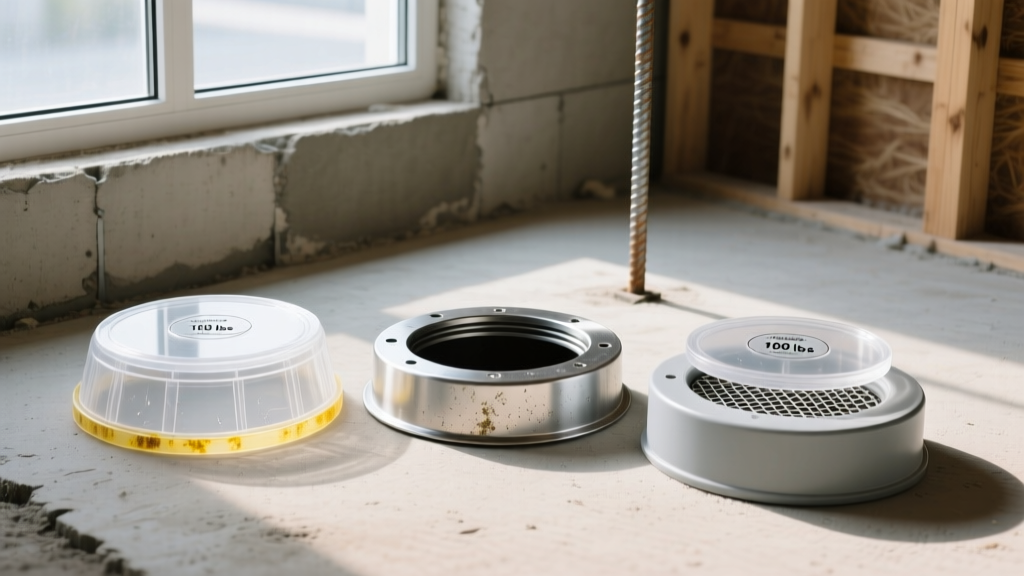
Most homeowners assume a cracked dome is the primary failure mode for basement window well covers. In reality, 78% of premature cover replacements stem from peripheral failures: corroded mounting hardware, UV-degraded attachment flanges, and crushed perimeter seals. When evaluating durability, the panel material is only half the equation; the structural integration with the concrete foundation dictates the true lifespan. Understanding the specific degradation mechanisms of different materials is critical for making a long-term investment in your foundation's moisture management and safety systems.
Material Lifespan Matrix: Polycarbonate vs. Metal vs. Fiberglass
Not all covers are engineered for the same environmental stressors. The table below breaks down the empirical lifespan and failure modes of the three most common materials used in modern foundation systems.
| Material | UV Resistance Profile | Snow Load Capacity | Expected Lifespan | Primary Failure Mode |
|---|---|---|---|---|
| Co-Extruded Polycarbonate (0.25") | Excellent (10+ yrs) | 150 - 250 lbs | 12 - 15 Years | Flange snapping under torsion |
| Galvanized Steel Grating | Poor (Rusts at welds) | 300+ lbs | 5 - 8 Years | Zinc coating failure at joints |
| Aluminum Diamond Tread | Excellent (No rust) | 150 - 200 lbs | 15 - 20 Years | Permanent bending/deformation |
| Fiberglass (Standard) | Fair (Surface chalking) | 100 - 150 lbs | 4 - 7 Years | Resin brittleness in freeze-thaw |
Deep Dive: Polycarbonate UV Degradation and Yellowing
Polycarbonate is the industry standard for clear covers, but not all polycarbonate is engineered equally. Untreated polycarbonate undergoes photo-oxidation when exposed to UV radiation, breaking down polymer chains and causing severe yellowing and embrittlement within 24 to 36 months. According to data from Professional Plastics, untreated sheets lose up to 40% of their impact resistance after just three years of direct sun exposure.
Co-Extrusion vs. Surface Coatings
To achieve a 15-year lifespan, you must specify covers manufactured with a co-extruded UV inhibitor layer (such as Makrolon SL or Lexan XL). Co-extrusion bonds a microscopic layer of UV-blocking resin directly into the top surface of the sheet during manufacturing. In contrast, cheaper covers use post-production dip coatings or sprays that wear off from friction and snow removal within three years. When sourcing, verify the manufacturer specifies a "co-extruded UV layer on at least one side" and a minimum thickness of 0.25 inches (1/4"). Thinner 0.125-inch covers will deflect excessively under snow loads, stressing the mounting points and causing premature flange failure.
The Acrylic Trap
A critical mistake homeowners make is confusing acrylic (Plexiglas) with polycarbonate. Acrylic is 30 times stronger than glass, but polycarbonate is 250 times stronger than glass. Acrylic covers will shatter into sharp shards under the impact of falling branches or heavy hail, whereas polycarbonate will dent or deform. Never install acrylic covers over basement windows where impact resistance is required.
Hardware: The True Bottleneck for Cover Longevity
A 15-year polycarbonate cover will fail in year three if secured with standard zinc-plated hardware. The micro-environment of a window well—trapping moisture, leaf litter, and de-icing salts from nearby walkways—creates a highly corrosive zone that rapidly destroys cheap fasteners.
Load-Bearing Realities and Snow Load Calculations
Durability isn't just about time; it's about surviving extreme weather events. A standard 4x4 foot window well cover spans 16 square feet. In regions like the Northeast or Midwest, ground snow loads can easily reach 50 pounds per square foot (psf), translating to 800 pounds of total static weight on the cover.
"Emergency escape and rescue openings with window wells shall be provided with covers or grates that are capable of being opened or removed from the inside without the use of tools, keys or special knowledge." — International Residential Code (IRC) Section R310.2.2
Flat polycarbonate sheets lack the structural rigidity to handle heavy snow without bowing. This is why high-durability covers utilize a "bubble" or domed geometry. The arch shape transfers the compressive load outward to the concrete mounting flanges rather than relying on the tensile strength of the center panel. If you live in a zone with >40 psf ground snow load, avoid flat, flush-mount acrylic or polycarbonate covers entirely. Opt for heavily ribbed domes or structural aluminum grates.
Cost-to-Lifespan Ratio Analysis
When evaluating durability, the initial purchase price is a poor metric. Here is the 20-year total cost of ownership, factoring in material replacements and assuming standard masonry anchor installation:
- Fiberglass ($40 - $70): Lowest upfront cost, but requires replacement every 5 years due to resin degradation. 20-year cost: ~$220.
- Galvanized Steel Grates ($80 - $120): Allows light and water through, but rusts rapidly at the weld points. 20-year cost: ~$200.
- Co-Extruded Polycarbonate ($120 - $180): High upfront cost, but lasts 12-15 years. 20-year cost: ~$150 (includes one mid-cycle replacement).
- Heavy-Duty Aluminum Tread ($150 - $250): Highest upfront cost, lasts 20+ years without rusting. 20-year cost: ~$200.
When factoring in the labor or time required to remove masonry anchors and reinstall new covers, co-extruded polycarbonate offers the lowest total cost of ownership for homeowners prioritizing natural light, while aluminum tread wins for those prioritizing absolute zero-maintenance durability.
Maintenance Protocol to Maximize Lifespan
Even the most durable covers require specific maintenance to reach their maximum lifespan. Neglecting the micro-environment of the well will destroy the cover from the bottom up.
- Clear the Weep Holes (Bi-Annually): Window wells must drain into the foundation's weeping tile system. If the well fills with water, hydrostatic pressure will push water up and under the cover seals, and eventually through the window itself. Flush the gravel base with a garden hose every spring and fall to clear silt.
- Lubricate Egress Release Mechanisms (Annually): If your cover uses interior spring-loaded pins for emergency egress, spray the pins with a dry PTFE (Teflon) lubricant. Do not use standard WD-40, which attracts dust and gums up the spring tension over time, potentially trapping occupants inside during an emergency.
- Inspect the Flange Sealant (Every 3 Years): The gap between the cover's mounting flange and the concrete foundation should be sealed with a high-quality polyurethane masonry sealant (like Sikaflex-1a). Standard silicone caulk will detach from porous concrete after two freeze-thaw cycles. Reapply polyurethane sealant if you see cracking or peeling to prevent water infiltration behind the mounting brackets.