Foundation Repair Cost Austin: 2026 Pricing & Methods
Discover the true foundation repair cost in Austin for 2026. Compare piering, foam jacking, and local soil factors affecting Texas slab foundations.

The Austin Soil Factor: Why Local Costs Defy National Averages
When evaluating the foundation repair cost Austin properties demand, homeowners quickly realize that national averages are virtually useless. The United States national average for foundation repair hovers between $4,500 and $7,000, but in Central Texas, projects routinely range from $8,000 to over $25,000. This premium is not driven by arbitrary contractor markup; it is dictated by the region's hostile geology.
Austin sits on a complex geological fault line where the Blackland Prairie meets the Edwards Plateau. This means a home in South Austin might sit on highly expansive Del Rio clay, which can swell up to 30% in volume when wet and shrink drastically during droughts. Conversely, a home in Northwest Austin might sit directly on shallow Austin Chalk or limestone bedrock. According to InterNACHI's Foundation Inspection Standards, expansive soils are responsible for over 25% of all structural damage to residential properties in the United States, and Texas represents the most concentrated zone of this damage.
Because the soil moves so aggressively, shallow repair methods fail. Contractors must drill deeper to find stable load-bearing strata, requiring more steel, heavier hydraulic equipment, and specialized limestone-drilling bits. This geological reality is the primary driver of local repair pricing.
2026 Foundation Repair Cost Breakdown for Austin Homes
The table below outlines current 2026 market rates for the most common foundation stabilization methods used in the Greater Austin area. These costs reflect materials, labor, engineering, and standard site preparation.
| Repair Method | Unit Cost (2026) | Average Total Project | Best Application in Austin |
|---|---|---|---|
| Steel Push Piers | $1,200 - $1,600 / pier | $12,000 - $22,000 | Heavy slab-on-grade homes on deep clay |
| Helical Piers | $1,500 - $2,200 / pier | $15,000 - $28,000 | Lighter structures, porches, or rocky soil |
| Polyurethane Foam Jacking | $10 - $18 / sq. ft. | $2,500 - $6,000 | Minor slab settlement, driveway lifting |
| Traditional Mudjacking | $5 - $9 / sq. ft. | $1,500 - $3,500 | Exterior flatwork, patios, pool decks |
| Root Barriers (Linear) | $65 - $85 / linear ft. | $2,000 - $4,500 | Protecting slabs from Live Oak roots |
Deep Foundation Piering: Steel Push vs. Helical
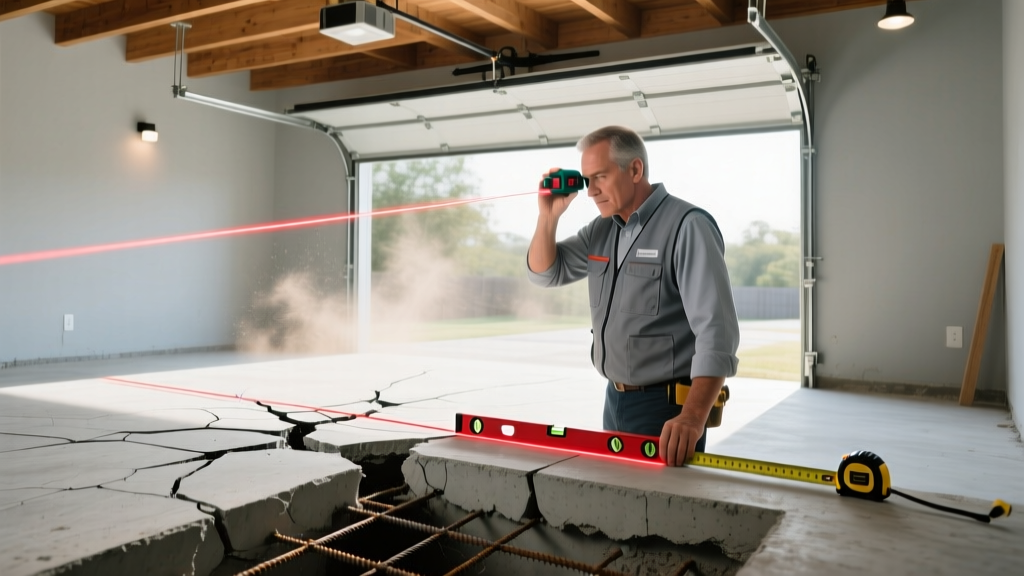
For severe differential settlement—where one corner of a house has dropped significantly more than the rest—deep piering is the only permanent solution. However, the choice between push piers and helical piers drastically alters the final invoice.
Steel Push Piers and the Limestone Challenge
Steel push piers are driven hydraulically through the soil until they hit a load-bearing stratum. In East and South Austin, this stratum might be 30 to 45 feet deep, requiring multiple 3-foot steel sections. Each additional section adds to the material cost. In West Austin, contractors often hit limestone bedrock at just 6 to 10 feet. While this requires less steel, drilling through solid Austin Chalk requires specialized rotary carbide bits and slows down installation, keeping the per-pier cost high.
Helical Piers for Rocky Terrain
Helical piers are screwed into the ground like giant wood screws. They are ideal for the rocky, caliche-heavy soils of the Hill Country outskirts where driving a straight push pier is impossible due to subterranean boulders. The American Concrete Institute (ACI) notes that helical piles provide immediate load transfer, making them superior for lifting lighter structures like attached garage slabs or covered patios that cannot provide the downward resistance required to push a standard friction pier.
Expert Insight: Avoid contractors who quote 'bell-bottom' concrete piers for expansive clay zones. While cheaper upfront ($800 per pier), the concrete shaft often delaminates from the bell base under the sheer lateral pressure of Austin's swelling clays, leading to catastrophic failure within 5 to 7 years.
Slab Lifting: Polyurethane Foam vs. Traditional Mudjacking
Not every foundation issue requires underpinning. If your slab-on-grade foundation has experienced uniform settlement or minor voiding beneath the concrete, slab jacking is a highly effective, lower-cost alternative.
Polyurethane Foam Injection (Slabjacking)
- Cost: $10 to $18 per square foot.
- Process: Technicians drill 5/8-inch holes (about the size of a dime) and inject a two-part high-density structural foam. The foam expands, filling microscopic voids and lifting the slab with pinpoint precision.
- Austin Advantage: The foam is impervious to moisture. Given Austin's cycle of flash floods followed by severe droughts, foam will not wash away or shrink when the soil dries out.
- Cure Time: 15 minutes. You can drive on a lifted garage slab the same day.
Traditional Mudjacking (Cement Slurry)
- Cost: $5 to $9 per square foot.
- Process: Requires drilling 2-inch holes and pumping a heavy slurry of topsoil, sand, and Portland cement beneath the slab.
- Austin Drawback: The slurry weighs roughly 100 lbs per cubic foot. This immense weight can cause further subsidence in the already weak, expansive clay soils prevalent in the Blackland Prairie. It is best reserved for exterior flatwork like driveways and pool decks, not interior structural slabs.
Neighborhood Geology: Where Does Your Home Sit?
Your specific zip code heavily influences the repair methodology and, consequently, the cost. Use this matrix to understand your local risk profile:
- South & East Austin (e.g., 78744, 78745, 78724): Dominated by deep, highly expansive clays. Expect to need deep steel push piers (30+ feet) to bypass the active root and moisture zone. Budget on the higher end of the piering spectrum.
- Northwest & West Austin (e.g., 78732, 78738, 78759): Characterized by shallow limestone, caliche, and steep grading. Helical piers or micropiles are often required to navigate the rocky subsurface. Drainage correction and retaining wall repairs are frequently bundled with foundation work here.
- Central Austin (e.g., 78703, 78705): A mix of Austin Chalk and older, mature tree canopies. Foundation damage here is frequently caused by massive Live Oak and Cedar Elm root systems extracting moisture from the soil beneath the foundation, causing localized subsidence.
Hidden Costs: Austin Permitting and Hydrostatic Plumbing Tests
When budgeting for foundation repair, homeowners often overlook the mandatory regulatory and safety steps required in the City of Austin and surrounding municipalities like Round Rock and Cedar Park.
1. Hydrostatic Plumbing Testing ($350 - $600)
When a foundation drops, it often pulls the underground PVC or cast-iron sewer lines with it, causing breaks. When the foundation is lifted back to level, those same pipes can snap or separate. Austin requires a licensed plumber to perform a hydrostatic pressure test post-repair to ensure no leaks exist beneath the slab. If a leak is found, the slab must be tunneled or broken open to repair the pipe before the city will sign off on the foundation permit.
2. City Permits and Engineering Reports ($800 - $1,500)
The City of Austin requires a structural engineer's seal on the repair plan for any project involving more than a minimal number of piers or affecting load-bearing walls. Furthermore, if your repair requires trenching near the property line or near a protected tree, you will need an arborist review. Root barriers installed to protect a foundation from a heritage tree require specific city approvals, adding time and administrative costs to the project.
Vetting Austin Foundation Contractors: The E-E-A-T Checklist
The barrier to entry for starting a foundation repair company in Texas is notoriously low. To protect your investment, demand the following from any contractor bidding on your home:
- Third-Party Engineering: The contractor should not be the one designing the repair. Insist on a plan drawn and stamped by an independent, Texas-licensed Professional Engineer (P.E.).
- ICCES Evaluation: Ask if their piering systems have been evaluated by the ICC Evaluation Service (ICC-ES). This ensures the steel thickness and hydraulic brackets meet national building codes, not just the manufacturer's claims.
- Transferable Warranty Details: Many companies offer a 'lifetime warranty,' but read the fine print. A genuine warranty should transfer to the new homeowner for a one-time administrative fee (usually $200-$500) without requiring the new owner to purchase an annual maintenance contract.
- Drainage Integration: If a contractor quotes you for 25 piers but does not address your negative grading, clogged French drains, or missing gutter downspout extensions, walk away. Piering a house without fixing the surface water management is like putting a cast on a broken arm that is still being hit with a hammer.
Understanding the localized variables—from the depth of the Austin Chalk to the strict municipal plumbing codes—empowers you to evaluate bids accurately. A higher initial bid that includes deep piers, engineering stamps, and drainage correction will ultimately cost less than a cheap bell-bottom pier job that fails during the next Central Texas drought cycle.
Written by
David NakamuraDavid Nakamura is a licensed architect (AIA) and construction technology writer focused on sustainable building methods, mass timber engineering, and high-performance building envelopes. He holds a Master of Architecture from the University of Washington and is a certified Passive House Consultant (CPHC). David spent eight years at the Seattle firm Mithun, where he led the design of three LEED Platinum projects, before founding his own practice specializing in net-zero residential design. He serves on the editorial advisory board of GreenBuilder Magazine and has authored peer-reviewed papers on cross-laminated timber (CLT) connections for the Journal of Structural Engineering. In his spare time, David teaches woodworking at Pratt Fine Arts Center and kayaks the Puget Sound.
More from David Nakamura
View all
Construction Cost
Labor Cost to Build a Deck Per Sq Ft: 2026 Installation Guide
Discover the exact labor cost to build a deck per sq ft in 2026. This installation guide breaks down contractor rates, complexity factors, and hidden fees.
Aug 4, 2026

Construction Cost
How Much Does It Cost to Build a 3 Bedroom House? Financing Guide
Learn exactly how much it costs to build a 3 bedroom house and explore 2026 financing options, construction loan types, and budget frameworks for your build.
Aug 4, 2026

Construction Cost
Cost to Build a Tennis Court: 2026 Guide
How much does it cost to build a tennis court in 2026? Breakdowns for asphalt, concrete, and synthetic surfaces plus fencing and lighting.
Jul 30, 2026