Gravel Shed Foundation: Scenario Matching & Material Guide
Discover if a gravel shed foundation fits your soil and climate. Compare material specs, load limits, and costs for a durable, drainage-optimized base.
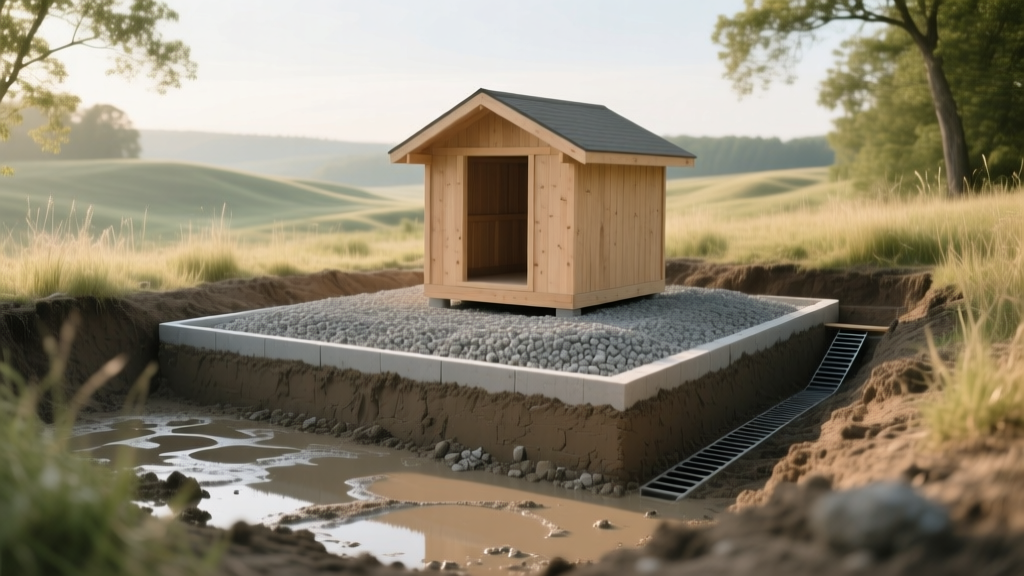
A gravel shed foundation is a permeable, flexible subbase that excels in specific hydrological scenarios but fails catastrophically under heavy point loads or improper aggregate selection. Unlike monolithic concrete slabs that trap moisture and crack under frost heave, a properly engineered gravel pad allows water to percolate away from the structure's skids. However, treating all gravel bases as a universal solution is a primary cause of premature shed rot and differential settlement. Matching the foundation to your specific soil profile, climate zone, and structural load is the critical first step in site preparation.
The Application-Fit Matrix: When Gravel Wins (and When It Fails)
Before ordering aggregate, evaluate your site conditions against this scenario matrix. A gravel base is not a one-size-fits-all solution; its viability depends entirely on the interaction between soil drainage and structural weight.
| Site Scenario | Soil Profile | Shed Type & Weight | Gravel Foundation Verdict |
|---|---|---|---|
| High Water Table | Heavy Clay / Poor Drainage | Resin or Plastic (Lightweight) | Ideal: Use 6-inch depth with geotextile separation to prevent mud boils. |
| Frost Heave Zone | Silty Loam / Moisture Retentive | Wood Workshop (Heavy Machinery) | Poor: Point loads will cause shifting. Use concrete piers below the frost line instead. |
| Arid or Sloped | Sandy / Well-Draining | Metal Storage or Standard Wood | Excellent: 4-inch depth is sufficient; natural percolation prevents pooling. |
| Temporary Placement | Any (Over existing grass) | Seasonal Equipment Storage | Good: Allows for future removal without concrete demolition costs. |
Aggregate Engineering: Why #57 Crushed Stone is Non-Negotiable
The most common failure in DIY gravel shed foundations is the use of pea gravel or rounded river rock. According to aggregate classification standards similar to ASTM D448 guidelines for subbase materials, rounded stones lack the angular facets required to mechanically interlock. Under the dynamic load of a shed shifting in high winds or settling under weight, pea gravel behaves like a fluid, rolling outward and causing the perimeter to collapse.
You must specify #57 angular crushed stone (typically 3/4-inch clean limestone or granite). The 'clean' designation means the stone dust and fines have been washed out. While crusher-run (gravel with fines) compacts into a harder surface, it becomes virtually impermeable, trapping water against your shed's wooden skids and accelerating rot. Clean #57 stone maintains a 40% void ratio, allowing surface water to drain instantly through the pad and into the subgrade.
The Compaction Protocol
Angular gravel does not self-compact. It requires mechanical force to achieve the necessary lock-up.
- Layering: Never dump and spread 6 inches of gravel at once. Apply in 2-inch lifts (layers).
- Equipment: A hand tamper is insufficient for anything larger than an 8x8 pad. Rent a vibratory plate compactor (minimum 5,000 lbs of compaction force).
- Moisture Control: Lightly misting the stone with a hose during compaction reduces friction between the angular faces, allowing them to slide into a tighter matrix without turning the base into mud.
Subgrade Preparation and the Geotextile Imperative
Placing gravel directly onto topsoil guarantees failure within 24 months. Organic topsoil compresses unpredictably and holds moisture. You must excavate 4 to 6 inches of topsoil to reach the mineral subgrade. Once the subgrade is exposed and sloped at a minimum 1/8-inch per foot for runoff, a separation layer is mandatory.
Use a non-woven, needle-punched geotextile fabric rated at a minimum of 4 ounces per square yard. Woven fabrics (often used for driveway stabilization) restrict vertical drainage and are prone to tearing under the sharp edges of crushed stone. Non-woven fabric acts as a one-way valve: it allows water to pass down into the subgrade while preventing fine silt and clay particles from migrating upward into the gravel voids—a process known as 'pumping' that eventually turns a drainage bed into a solid block of mud. Detailed site prep methodologies outlined by experts at This Old House consistently emphasize that skipping this fabric layer is the primary reason gravel pads require annual re-leveling.
Perimeter Containment and AWPA Lumber Ratings
The gravel must be contained to prevent lateral spreading. While plastic grid systems exist, a timber perimeter remains the most cost-effective and rigid solution for standard sheds. The critical variable is the lumber treatment rating, governed by the American Wood Protection Association (AWPA).
Standard pressure-treated lumber found at big-box stores is often rated UC4A (Ground Contact, General Use). If your shed is located in a region with high annual rainfall, poor drainage, or constant soil moisture, you must special-order UC4B (Ground Contact, Heavy Duty) or UC4C treated timber. UC4B retains a higher concentration of copper azole or micronized copper preservatives, resisting the fungal decay that will otherwise consume a 4x4 perimeter frame within five years.
Construct the perimeter using 4x4 or 6x6 timbers joined at the corners with half-lap joints secured by 1/2-inch galvanized lag screws. Avoid butt joints nailed with spikes; the lateral pressure of the compacted gravel will push the corners apart over time. Stake the perimeter to the ground using 2-foot lengths of #4 rebar driven through pre-drilled holes every 4 feet.
Load-Bearing Thresholds and Point Load Risks
A standard 4-inch compacted #57 gravel pad easily supports the uniform load of a 12x16 wooden shed (approx. 3,500 lbs empty). However, gravel foundations struggle with point loads. If you are installing a workshop shed that will house a 1,500 lb lathe, a heavy safe, or a riding mower parked consistently in the same corner, the localized weight will push the wooden skids down through the gravel matrix, causing differential settlement and binding the shed doors.
The Mitigation Strategy: If your scenario involves heavy, concentrated interior loads, increase the gravel depth to 8 inches and introduce a biaxial geogrid layer midway through the gravel profile. The geogrid distributes point loads laterally across a wider surface area, mimicking the load-spreading characteristics of a reinforced concrete slab while maintaining the drainage benefits of a gravel base.
2026 Cost Breakdown for a Standard 10x12 Pad
Material costs for gravel foundations remain highly localized due to the weight of aggregate and lumber. The following breakdown reflects national averages for a 10x12 foot (120 sq ft) pad, excavated to a 4-inch depth, utilizing 4x4 UC4A perimeter lumber.
| Material Component | Quantity Required | Estimated Unit Cost | Total Line Cost |
|---|---|---|---|
| #57 Clean Crushed Stone | 2.5 Tons (Delivered) | $55.00 / Ton | $137.50 |
| Non-Woven Geotextile Fabric | 150 sq ft roll (4 oz) | $0.35 / sq ft | $52.50 |
| 4x4 UC4A Treated Lumber | 44 Linear Feet | $9.50 / ft | $418.00 |
| Hardware & Rebar Stakes | Misc (Lags, spikes, rebar) | Flat Rate | $65.00 |
| Equipment Rental | Plate Compactor (1 Day) | $85.00 / Day | $85.00 |
| Total Estimated DIY Cost | $758.00 | ||
By matching the gravel depth, aggregate angularity, and lumber treatment to your specific site conditions, a gravel shed foundation provides a highly durable, frost-resistant base that outlasts poorly poured concrete slabs in wet environments.