Foundation Heave Repair Cost: 2026 Pricing & Repair Methods
Analyze the true foundation heave repair cost in 2026. Discover pricing for moisture barriers, soil stabilization, and root removal fixes.

Understanding Foundation Heave: The Upward Threat
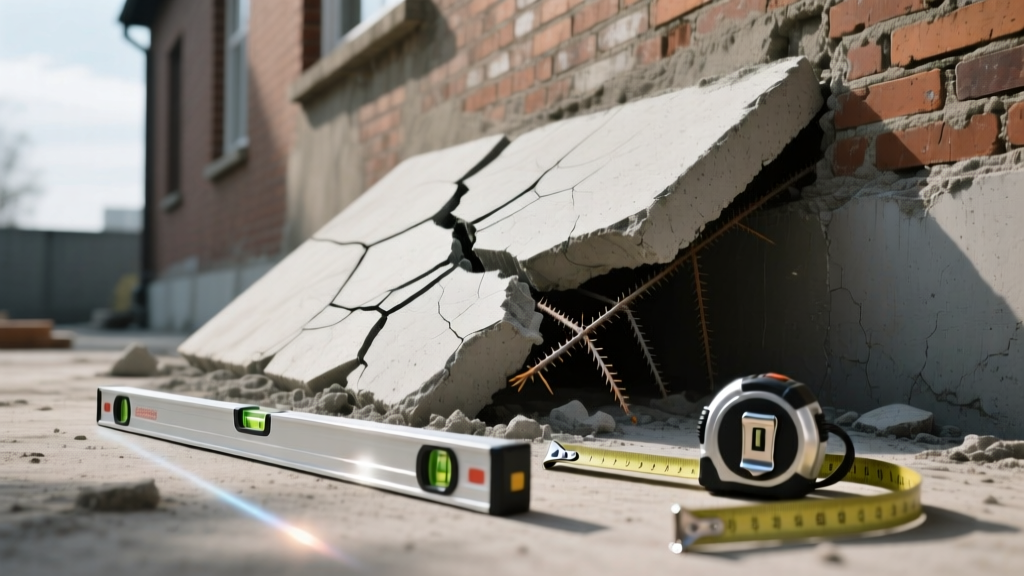
Foundation heave is the upward movement of a concrete slab or footing caused by the expansion of moisture-saturated soils beneath the structure. Unlike foundation settlement, which is driven by soil compression or washout, heave is an expansive force. In regions dominated by smectite and montmorillonite clays, soil volume can increase by up to 30% when transitioning from a dry to a fully saturated state. This generates uplift pressures exceeding 5,000 pounds per square foot (psf), easily overpowering the dead load of a standard residential structure.
When evaluating the foundation heave repair cost, homeowners must understand that lifting a heaved foundation requires addressing the moisture differential, not just the structural symptom. Attempting to force a heaved slab back down without neutralizing the subsurface moisture will result in recurring damage and wasted capital.
2026 Foundation Heave Repair Cost Breakdown
The total foundation heave repair cost is rarely a single line item. It is a composite of diagnostic testing, moisture mitigation, and structural stabilization. Below is the current market pricing for the most common interventions required to halt and reverse uplift.
| Repair Method | Primary Application | Average Cost Range | Expected Longevity |
|---|---|---|---|
| Hydrostatic Plumbing Test | Leak detection under slab | $350 – $600 | N/A (Diagnostic) |
| Deep Chemical Grouting | Moisture blocking / soil stabilization | $14 – $24 per linear ft. | 15 – 25 Years |
| Perimeter Root Barriers | Stopping tree root moisture extraction | $65 – $90 per linear ft. | 20+ Years |
| French Drain & Grading | Surface and subsurface water diversion | $4,500 – $9,500 | 30+ Years |
| Sub-Slab Pipe Rerouting | Bypassing leaking under-slab drainage | $2,500 – $6,000 | 50+ Years |
| Independent Structural Engineer Report | Unbiased damage assessment & repair plan | $500 – $900 | N/A (Diagnostic) |
Diagnostic Matrix: Identifying the Moisture Source
The foundation heave repair cost is entirely dependent on the underlying moisture mechanism. Expansive soils react to differential moisture content. You must identify whether your structure is experiencing center lift or edge lift before soliciting contractor bids.
1. Center Lift (The Dome Effect)
Center lift occurs when the perimeter of the foundation dries out while the center remains saturated. The edges shrink and pull away, causing the slab to pivot on the saturated center mass.
- Common Culprits: Hidden sub-slab plumbing leaks, poor crawl space ventilation, interior humidity condensation, or mature tree roots extracting water exclusively from the perimeter.
- Required Fix: Hydrostatic testing to isolate plumbing leaks, followed by interior moisture vapor barriers or perimeter root barriers to equalize soil suction.
2. Edge Lift (The Dish Effect)
Edge lift occurs when the perimeter soil becomes heavily saturated while the center remains relatively dry. The edges expand and push upward, causing the center of the slab to sag relative to the perimeter.
- Common Culprits: Negative surface grading directing rainwater toward the foundation, clogged gutter downspouts discharging at the foundation edge, or heavy perimeter landscaping irrigation.
- Required Fix: Surface regrading (minimum 5% slope over 10 feet), French drain installation, and extending downspout discharge a minimum of 15 feet from the foundation.
Active Soil Stabilization Techniques
When moisture mitigation alone cannot reverse the uplift, or when the soil's Plasticity Index (PI) is exceptionally high (PI > 35), structural engineers may recommend active soil modification. These techniques alter the chemical composition of the clay to prevent water absorption.
Potassium Silicate Injection
This method involves injecting a potassium silicate solution into the subsurface soil. The chemical reacts with the clay minerals to form a permanent, water-insoluble gel. This effectively caps the soil's ability to absorb moisture and expand. While the upfront cost ($14 to $24 per linear foot) is higher than simple grading, it is often the only viable solution for highly active smectite clays where surface drainage control is insufficient.
Lime or Cement Slurry Injection
Pressure-injecting lime or cement slurry into the subgrade alters the soil's pH and flocculates the clay particles. This reduces the soil's plasticity and increases its load-bearing capacity. According to guidelines published by the American Society of Civil Engineers (ASCE), chemical stabilization is highly effective for reducing the swell potential of expansive soils, provided the injection depth reaches below the active moisture fluctuation zone (typically 3 to 5 feet deep).
Regional Soil Risk and the Plasticity Index
The severity of foundation heave—and consequently the repair cost—is heavily dictated by regional geology. Soils are classified by their Plasticity Index (PI), which measures the range of moisture content over which the soil remains plastic.
- Low Risk (PI < 15): Minimal expansion. Heave is rare unless driven by massive, localized plumbing failures.
- Moderate Risk (PI 15 - 30): Common in parts of the Southeast and Midwest. Requires standard moisture control and grading.
- High Risk (PI > 30): Prevalent in Texas, Colorado, and parts of California. The Foundation Performance Association notes that soils with a PI exceeding 35 require rigorous, engineered moisture control systems and often deep chemical stabilization to prevent cyclic heaving.
Step-by-Step Action Plan for Homeowners
Navigating a heaving foundation requires a methodical approach to avoid predatory repair tactics. Follow this sequence to ensure your capital is spent on permanent solutions.
- Hire an Independent Structural Engineer ($500 - $900): Never rely solely on a free inspection from a foundation repair contractor. An independent engineer has no financial incentive to oversell piers or chemical injections. They will perform a floor elevation survey and identify the exact mechanism of the heave.
- Conduct a Hydrostatic Pressure Test ($350 - $600): Before any soil injection or grading work begins, a licensed plumber must test the under-slab drainage and supply lines. A slow, undetected leak will render thousands of dollars in exterior moisture barriers useless.
- Implement Exterior Moisture Mitigation ($4,500 - $9,500): Execute the engineer's grading and drainage plan. Install French drains, regrade the soil, and extend downspouts. Wait 3 to 6 months to monitor slab movement. In many edge-lift scenarios, removing the water source allows the soil to slowly desiccate and the slab to settle back toward level.
- Execute Active Stabilization (If Required): If the slab does not stabilize after moisture correction, or if the differential movement exceeds structural tolerances (typically L/360), proceed with the engineer's specified chemical grouting or root barrier installation.
Designing for expansive soils requires either moisture control to maintain constant soil suction, or structural systems capable of spanning the anticipated differential movement. Remediation must always prioritize moisture equilibrium over brute-force structural resistance.
Written by
James ThorntonJames Thornton is a construction industry veteran with 25 years of hands-on experience in wood framing, lumber grading, and residential building codes. He started as a framing carpenter in rural Oregon, earned his ICC Residential Building Inspector certification, and eventually became a senior plan reviewer for the City of Portland Bureau of Development Services. James holds a B.S. in Wood Science & Technology from Oregon State University and is a certified lumber grader through the West Coast Lumber Inspection Bureau (WCLIB). He has inspected over 3,000 residential construction sites and authored the city's internal guide on advanced framing techniques (2x6 at 24" O.C.). James lives in Bend, OR, where he builds custom timber-frame cabins and competes in lumberjack sports.
More from James Thornton
View all
Insulation
Best Home Insulation Materials: Complete 2026 Guide
Compare top home insulation materials for 2026. Find R-values, installed costs per square foot, and best uses for fiberglass, spray foam, and mineral wool.
Aug 4, 2026

Sustainable Building
Certify Your Green Building Material for LEED and WELL
Step-by-step guide to certifying a green building material for LEED v5 and WELL v2. Master EPDs, HPDs, and VOC limits for 2026 project specifications.
Aug 4, 2026

Stone & Masonry
Veneer Stacked Stone Panels: Interior Design & Style Showcase
Discover how veneer stacked stone panels transform interiors. Explore modern design profiles, material pairings, and technical installation specs.
Aug 4, 2026