Foundation Piers Maintenance: A Cleaning & Inspection Playbook
Protect your home's structural integrity with this comprehensive maintenance and cleaning playbook for exposed and buried foundation piers.
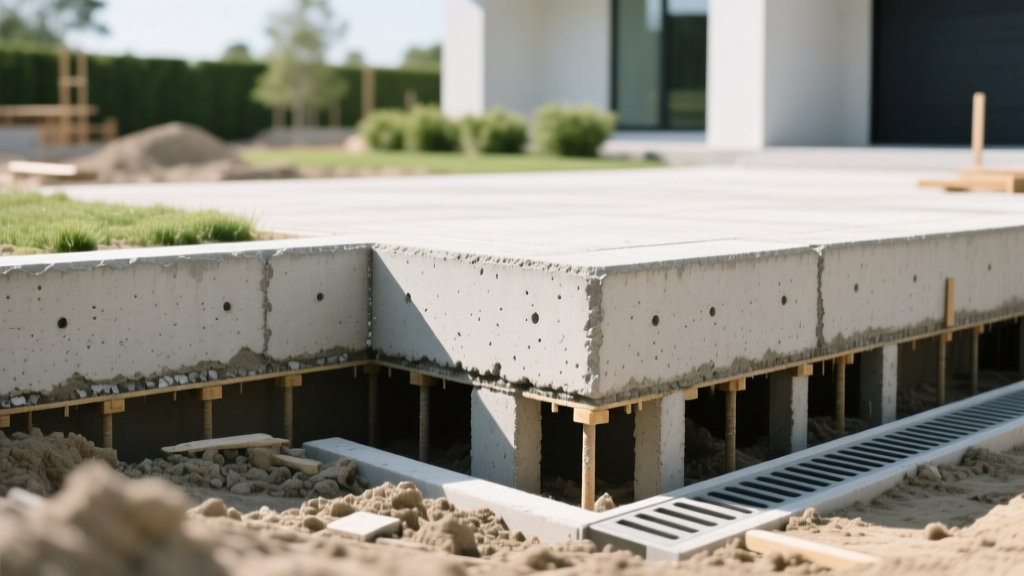
The Hidden Vulnerability of Point-Load Foundations
Unlike continuous strip footings or monolithic slab-on-grade systems, foundation piers concentrate the entire structural load of a building into discrete, high-stress point loads. Whether supporting a raised coastal home, a pier-and-beam farmhouse, or a commercial crawl space, these structural columns operate in highly aggressive microenvironments. Because they bridge the gap between unstable surface soils and the conditioned living space above, foundation piers are uniquely susceptible to moisture wicking, soil erosion, galvanic corrosion, and biological growth.
Neglecting pier maintenance does not result in gradual degradation; it results in sudden, localized structural failure. A single compromised pier can trigger cascading floor joist deflection, drywall cracking, and door frame racking. This playbook provides structural engineers, contractors, and advanced DIYers with exact chemical protocols, moisture management specifications, and inspection tolerances required to maintain both concrete and steel foundation piers in 2026.
Phase 1: Crawl Space & Exposed Pier Cleaning Protocols
Exposed foundation piers in vented or unvented crawl spaces act as giant wicks for ground moisture. The primary visual indicators of moisture migration are efflorescence on concrete and oxidation on steel. Cleaning these surfaces is not merely cosmetic; it is a diagnostic necessity to halt material degradation.
Efflorescence Removal on Concrete Piers
Efflorescence occurs when water-soluble salts (primarily calcium hydroxide) migrate through the capillary network of the concrete and react with atmospheric carbon dioxide to form insoluble calcium carbonate. According to the Portland Cement Association, while mild efflorescence is harmless, heavy crystalline buildup indicates chronic hydrostatic pressure and active water infiltration.
- Mild Deposits (Powdery White): Dry-brush the surface with a stiff nylon-bristle brush. Never use a wire brush; embedded iron particles will oxidize and create secondary rust stains that are impossible to remove from porous concrete.
- Moderate to Heavy Deposits (Crystalline/Crusty): Apply a commercial cleaner formulated for calcium carbonate dissolution, such as PROSOCO SureKlean Vana-Trol or a 50/50 solution of white vinegar and distilled water. Allow a 10-minute dwell time, agitate with a nylon brush, and rinse with low-pressure water (under 400 PSI) to avoid driving moisture deeper into the pier matrix.
Steel Pier Rust Conversion & Coating
Helical piers and driven steel pipe piles are typically hot-dip galvanized to a minimum thickness of 3.0 mils (per ASTM A123). In high-humidity crawl spaces, the zinc sacrificial layer depletes over time, manifesting as white rust (zinc oxide) before progressing to red rust (iron oxide).
- White Rust Treatment: Wipe the affected area with a 5% solution of sodium dichromate or a commercial zinc-phosphate cleaner. Once dry, apply a zinc-rich cold galvanizing compound (e.g., Rust-Oleum Cold Galvanizing Compound #1685838) to restore the sacrificial anode layer.
- Red Rust Conversion: Mechanically remove loose scale with a wire cup brush. Apply a phosphoric acid-based rust converter (such as Ospho or Naval Jelly) to transform the remaining iron oxide into a stable iron phosphate black crust. Rinse thoroughly, allow to dry for 24 hours, and encapsulate with a two-part polyurethane topcoat to block oxygen and moisture.
Phase 2: Moisture & Vapor Barrier Maintenance
Cleaning the piers is futile if the ambient crawl space environment remains saturated. The EPA's Moisture Control Guidelines mandate strict vapor retarder specifications to protect structural wood and foundation piers from ground-source evaporation. Maintaining this barrier is the most critical annual chore for pier longevity.
| Vapor Barrier Spec | Puncture Resistance | Expected Lifespan | 2026 Avg. Material Cost |
|---|---|---|---|
| 6-Mil Polyethylene | Low (Tears on gravel) | 1–3 Years | $0.12 - $0.18 / sq ft |
| 12-Mil Cross-Laminated | Medium (Handles foot traffic) | 5–10 Years | $0.25 - $0.35 / sq ft |
| 20-Mil Reinforced (Woven) | High (Contractor grade) | 20+ Years | $0.45 - $0.65 / sq ft |
Maintenance Protocol: Inspect the vapor barrier bi-annually. All seams must be overlapped by a minimum of 12 inches and sealed with 4-inch wide butyl seam tape (not standard duct tape, which loses adhesion in high humidity). The barrier must run up the sides of the foundation piers and be sealed to the concrete with acoustical sealant or termination bar fasteners to prevent capillary draw from the surrounding soil.
Phase 3: Exterior Soil & Drainage Grading Playbook
For buried foundation piers (such as drilled shafts or bell-bottom piers), the primary maintenance vector is the exterior soil grade. Improper grading allows surface water to pool around the pier caps, leading to soil liquefaction in expansive clays or frost heave in northern climates. FEMA Building Science guidelines emphasize that positive drainage is the most cost-effective method of preventing differential settlement.
The 5/10 Rule for Grading
Verify that the soil slopes away from the foundation at a minimum gradient of 5% over the first 10 horizontal feet. This equates to a 6-inch vertical drop over 10 feet. Use a laser level or a 4-foot spirit level with a digital angle finder to measure the slope annually, as soil naturally settles and compacts over time.
Downspout & Swale Maintenance
- Extensions: Downspouts must discharge a minimum of 5 feet away from the nearest pier cap, though 10 feet is the recommended standard for expansive soils.
- Swales: Clean exterior drainage swales of debris, roots, and sediment buildup every spring. A blocked swale will divert thousands of gallons of roof runoff directly into the soil surrounding your deepest foundation piers.
Phase 4: Annual Inspection Checklist & Tolerances
Routine visual inspections are insufficient for point-load foundations. You must measure structural geometry using precision tools. Perform this checklist every 12 months or immediately following a seismic event or severe drought.
- Plumb Deviation Test: Place a 4-foot digital level against the exposed portion of the pier. According to ACI 117 tolerances, a plumb deviation exceeding 1/4 inch per 10 feet of pier height warrants immediate evaluation by a structural engineer.
- Shim Pack Inspection: For pier-and-beam systems, inspect the wooden or composite shims between the concrete pier cap and the steel/wood beam. Look for crushing, rot, or lateral slipping. Replace crushed pine shims with high-density polyethylene (HDPE) structural shims.
- Moisture Mapping: Use a pinless moisture meter on the wooden beams resting on the piers. Readings consistently above 19% indicate active fungal decay (wood rot) and require immediate crawl space dehumidification and vapor barrier repair.
- Cap Integrity: Inspect the concrete pier caps for horizontal shear cracks. Horizontal cracking near the soil line often indicates lateral soil pressure or frost heave pushing against the side of the pier.
When to Call a Structural Engineer: Red Flags
Maintenance and cleaning can arrest surface degradation, but they cannot reverse structural yielding. Halt your DIY playbook and hire a licensed Professional Engineer (PE) if you observe any of the following critical failure modes:
- Differential Settlement: A laser level reveals that one section of the floor framing has dropped more than 1 inch relative to the adjacent piers.
- Diagonal Shear Cracks: The concrete pier exhibits 45-degree stair-step cracking, indicating the soil beneath the footing has washed out or consolidated unevenly.
- Beam Bearing Failure: The main support beam has split longitudinally directly above the pier cap, reducing the bearing surface area and risking a sudden collapse.
- Severe Spalling with Rebar Exposure: More than 10% of the pier's cross-sectional area is compromised by deep spalling, reducing its axial load capacity below the engineered safety factor.
By adhering to these specific chemical treatments, moisture barriers, and geometric tolerances, you transition foundation pier care from reactive emergency repair to proactive asset management, ensuring the structural longevity of the entire building envelope.