2026 Cost Breakdown: Comparing Roofing Materials Types
Compare the 2026 installed costs of popular roofing materials types. Detailed pricing per square foot, lifespan, and ROI for asphalt, metal, and tile.
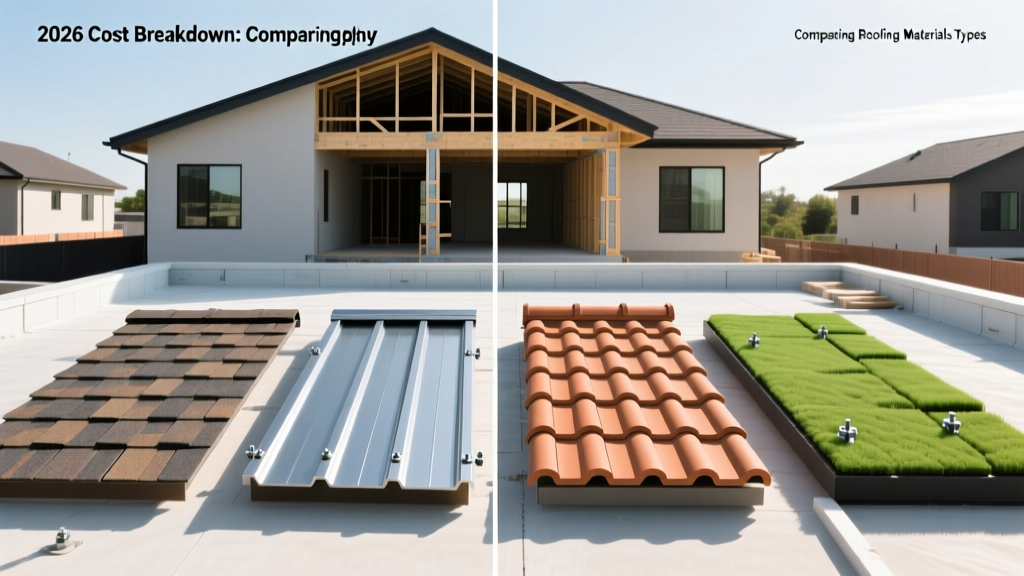
The True Financial Scope of a 2026 Roof Replacement
When evaluating roofing materials types, homeowners and commercial property managers often fixate on the per-square material cost, ignoring the complex web of labor, structural prerequisites, and long-term maintenance that dictates the true financial impact. In 2026, the national average for a complete tear-off and replacement on a standard 2,000-square-foot residential roof ranges from $11,000 for basic architectural asphalt to over $45,000 for premium slate or standing seam metal systems. Understanding the granular cost drivers behind these roofing materials types is essential for avoiding budget overruns and selecting a system that aligns with your climate and structural capacity.
Comprehensive Pricing Matrix: Roofing Materials Types
The following matrix breaks down the 2026 installed costs (material plus professional labor) for a standard 2,000-square-foot roof (20 squares) with a moderate 6/12 pitch and a single-layer tear-off.
| Roofing Material | Installed Cost / Sq. Ft. | Total Cost (2,000 Sq. Ft.) | Expected Lifespan | Maintenance Cost / Decade |
|---|---|---|---|---|
| 3-Tab Asphalt Shingles | $3.50 - $4.50 | $7,000 - $9,000 | 15 - 20 Years | $800 - $1,200 |
| Architectural Asphalt | $5.50 - $8.50 | $11,000 - $17,000 | 25 - 30 Years | $400 - $600 |
| Exposed Fastener Metal | $9.00 - $12.00 | $18,000 - $24,000 | 30 - 40 Years | $1,500 (Screw replacements) |
| Standing Seam Metal | $14.00 - $20.00 | $28,000 - $40,000 | 50+ Years | $200 - $400 |
| Concrete Tile | $15.00 - $22.00 | $30,000 - $44,000 | 50+ Years | $1,000 (Underlayment) |
| Natural Slate | $28.00 - $45.00 | $56,000 - $90,000 | 75 - 100+ Years | $500 - $800 |
Material-Specific Cost Drivers and Edge Cases
Asphalt Shingles: Beyond the Basics
Architectural shingles remain the most prevalent among roofing materials types due to their balance of cost and durability. Premium lines like GAF Timberline HDZ or Owens Corning Duration utilize proprietary nailing zones (e.g., GAF's StrikeZone) that drastically reduce installation time and blow-off risk in 130 mph wind zones (ASTM D3161 Class F). However, the cost delta between standard architectural and premium designer shingles (which mimic slate or wood shake) can add $4.00 to $7.00 per square foot. Furthermore, upgrading to impact-resistant shingles (UL 2218 Class 4) adds roughly 15% to the material cost but can yield a 10% to 25% discount on homeowners insurance premiums in hail-prone regions like Texas and Colorado.
Standing Seam Metal: Gauge and Coating Variables
When pricing metal roofing materials types, the gauge and coating dictate both the cost and the failure timeline. A 26-gauge steel panel is roughly 20% cheaper than a 24-gauge panel, but it is highly susceptible to oil-canning (visible rippling) and wind uplift damage. For residential applications, 24-gauge Galvalume-coated steel (AZ50 coating designation) is the baseline standard. If the property is located within 1,500 feet of a saltwater coastline, you must upgrade to an aluminum standing seam system (ASTM B209) or a specialized marine-grade PVDF paint system to prevent galvanic corrosion, which will increase the total project cost by 25% to 35%.
Concrete and Clay Tile: The Structural Tax
Tile roofing systems carry a hidden cost that rarely appears on the initial material quote: structural reinforcement. Concrete tiles weigh between 900 and 1,100 pounds per square (100 square feet), compared to just 250 pounds for asphalt. According to structural engineering standards, homes not originally built for tile will require roof truss reinforcement or additional load-bearing supports, adding $2,500 to $6,000 to the project. Additionally, while the tiles themselves last 50+ years, the underlying felt or synthetic underlayment degrades in 20 to 30 years, requiring a costly 'lift and relay' maintenance procedure.
Hidden Variables That Inflate Roofing Quotes
A common pitfall when comparing quotes for different roofing materials types is ignoring the line items that contractors classify as 'unforeseen conditions.' Budget for these variables upfront:
- Decking Replacement: Once the old roof is torn off, rotten decking must be replaced. Standard 1/2-inch OSB costs about $65 to $85 per sheet installed, but building codes in high-moisture or high-wind zones increasingly mandate 5/8-inch CDX plywood ($110 to $140 per sheet installed) for superior fastener holding strength and moisture resistance.
- Ice and Water Shield: Code requires this self-adhering membrane in valleys, eaves, and around penetrations. Upgrading to a full-deck application using a premium product like Grace Ice & Water Shield adds $1.25 to $1.75 per square foot but prevents catastrophic interior damage from ice damming.
- Flashing Upgrades: Reusing old step flashing or drip edge is a critical failure point. Mandate the installation of new 26-gauge galvanized steel or aluminum flashing, which should account for 5% to 8% of the total labor and material budget.
Pitch, Complexity, and Labor Multipliers
The base costs listed in our matrix assume a standard 6/12 pitch roof with minimal valleys and no dormers. Roofing contractors apply labor multipliers based on the physical difficulty and safety requirements of the job. A roof with a 9/12 to 12/12 pitch requires specialized scaffolding, roof jacks, and harness systems, typically adding a 20% to 30% labor premium. Furthermore, every valley, skylight, and chimney penetration increases the time required for precision flashing and waterproofing. A highly complex Victorian-style roof with multiple intersecting gables can double the labor cost compared to a simple ranch-style hip roof, regardless of the roofing materials types selected.
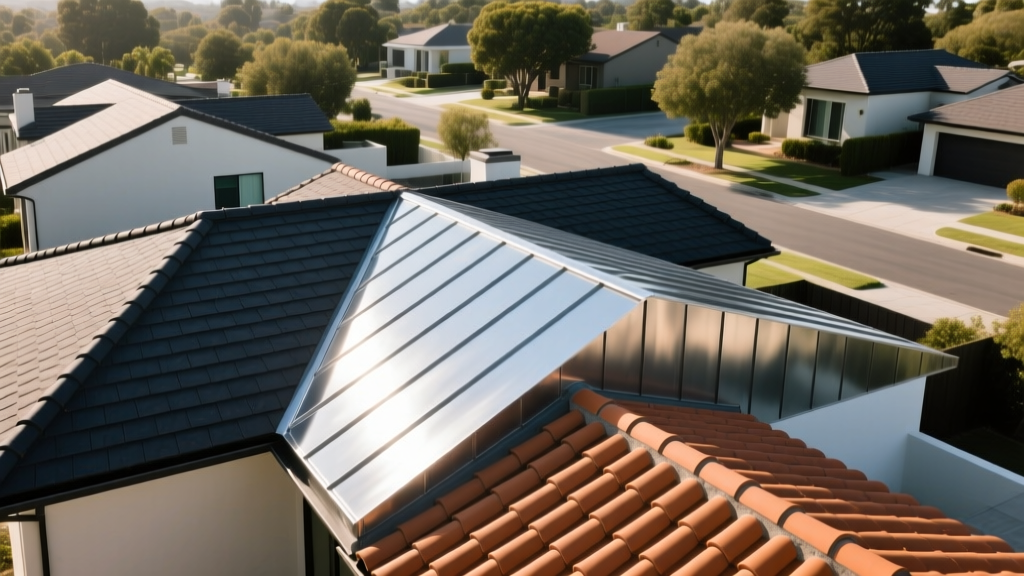
Decision Framework: Aligning Material with Budget and Climate
Selecting from the various roofing materials types should be driven by a matrix of climate resilience, budget, and planned ownership duration.
According to the Remodeling Magazine Cost vs. Value Report, a standing seam metal roof replacement recoups approximately 60% to 65% of its cost at resale, while architectural asphalt recoups about 55% to 60%. However, the energy savings of reflective metal and cool-roof coated tiles can significantly offset upfront premiums in southern climates.
If your budget is under $15,000: Architectural asphalt shingles are the undisputed choice. Opt for a Class 4 impact rating if you reside in Tornado Alley or Hail Alley to secure insurance premium offsets that effectively pay for the upgrade over five years.
If you are in a high-wind or coastal zone: Standing seam metal with concealed fasteners is mandatory. Exposed fastener systems will inevitably suffer from back-out screws and neoprene washer degradation in high-UV and salt-spray environments.
If you are in the Southwest or Mediterranean climates: Concrete tile offers unmatched thermal mass and longevity. Ensure your budget includes the structural engineering assessment required prior to installation.
Industry Standards and References
For further technical specifications regarding energy efficiency and material lifespans, consult the U.S. Department of Energy's Cool Roofs guide for solar reflectance index (SRI) requirements, and the InterNACHI Life Expectancy Chart for standardized lifespan data across all major roofing materials types. Always verify that your selected materials carry active certifications from the National Roofing Contractors Association (NRCA) and meet local building code requirements for wind uplift and fire resistance.
Written by
Marcus ChenMarcus Chen is a licensed structural engineer (PE) and building materials analyst with over 12 years of experience across residential, commercial, and industrial construction. He holds a Master of Science in Civil Engineering from UC Berkeley and spent six years at Thornton Tomasetti before transitioning to independent consulting and technical writing. Marcus specializes in material selection for seismic-prone regions, concrete reinforcement strategies, and lifecycle cost analysis. His work has been cited by the American Concrete Institute (ACI) and the Structural Engineers Association of California (SEAOC). When he is not on a job site or at his desk, you will find him hiking the Sierra Nevada or restoring a 1920s craftsman bungalow in Oakland, CA.
More from Marcus Chen
View all
Construction Cost
How Much Did the Eiffel Tower Cost to Build?
How much did the Eiffel Tower cost to build in 1889? We adjust for inflation and compare its budget to modern skyscraper construction.
Aug 4, 2026

Fire Resistance
What Is a Fire Resistant Material? Testing & Certification Guide
Discover what is a fire resistant material through ASTM and UL testing. Learn how fire ratings, certifications, and assemblies work in construction.
Aug 4, 2026

Construction Cost
How Much Did the Burj Khalifa Cost to Build?
How much did the Burj Khalifa cost to build? We break down the $1.5B project and extract 5 money-saving strategies for your next build.
Jul 30, 2026