Elastomeric Roof Coating Cost Calculator & 2026 Pricing Guide
Calculate your elastomeric roof coating costs with our 2026 pricing guide. Learn material coverage rates, prep expenses, and total project estimates.
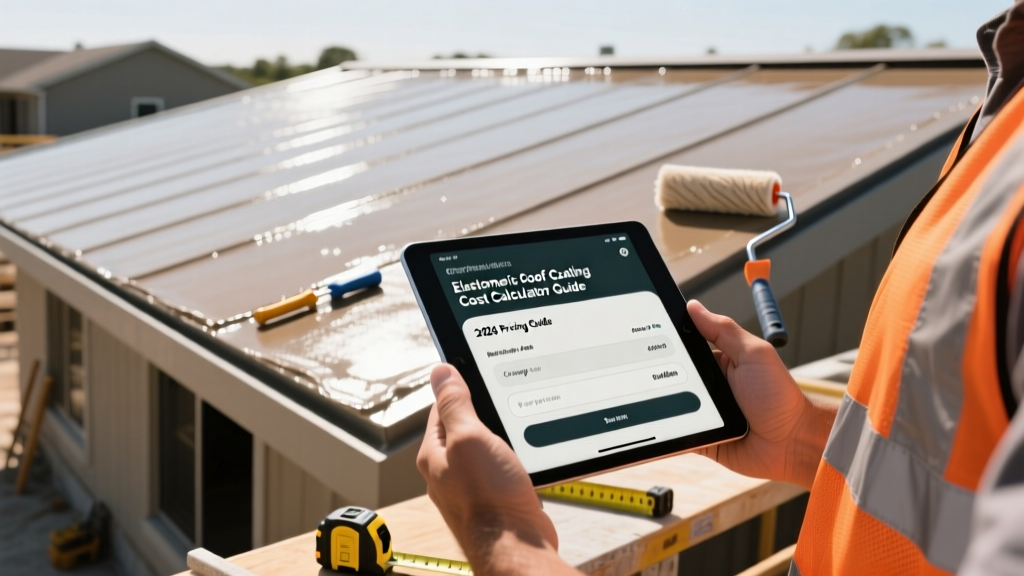
The Economics of Elastomeric Roof Coatings in 2026
Applying an elastomeric roof coating is a fraction of the cost of a full commercial tear-off, typically extending a roof's lifespan by 10 to 15 years while reducing cooling loads by up to 20%. However, inaccurate quantity calculations and ignored substrate prep costs routinely cause budgets to overrun by 30% or more. This guide provides the exact mathematical frameworks, 2026 material pricing, and hidden cost variables required to build a bulletproof project estimate.
2026 Quick Cost Baselines (Per Square Foot)
- Acrylic Systems: $1.85 – $2.60 / sq. ft. (Materials + Labor)
- Silicone Systems: $2.90 – $4.15 / sq. ft. (Materials + Labor)
- Polyurethane Systems: $3.50 – $5.20 / sq. ft. (Materials + Labor)
- Substrate Prep & Primer: $0.45 – $1.20 / sq. ft. (Highly variable)
Calculating Material Quantities: The 1604 Rule
The most common error in coating estimation is confusing wet mils with dry mils. Elastomeric coatings shrink as solvents and water evaporate. To calculate exact gallonage, estimators must use the industry-standard "1604 Rule": one gallon of coating covers exactly 1,604 square feet at a thickness of one mil (0.001 inches) with 100% volume solids.
To find your required gallons, use this formula:
Gallons Needed = (Total Sq. Ft. × Target Dry Mils) / (1604 × Volume Solids %)
For example, if you are applying an acrylic coating with 52% volume solids to a 10,000 sq. ft. roof, and the manufacturer requires 24 dry mils for a valid warranty:
(10,000 × 24) / (1604 × 0.52) = 240,000 / 834.08 = 287.7 gallons.
Coverage Rate Matrix by Roof Texture
The mathematical formula above assumes a perfectly smooth surface. Real-world substrates absorb material and require heavier application rates to achieve the same dry film thickness (DFT). Adjust your baseline coverage using the matrix below.
| Substrate Type | Surface Profile | Adjusted Coverage (per 5-gal pail) | Required Application Tool |
|---|---|---|---|
| Smooth Metal (Standing Seam) | Non-porous, smooth | 250 - 275 sq. ft. | 3/8" nap roller or airless sprayer |
| Modified Bitumen (Smooth APP) | Slightly porous | 225 - 250 sq. ft. | 1/2" nap roller |
| EPDM / TPO Membranes | Non-porous, requires primer | 250 - 280 sq. ft. | 3/8" nap roller |
| Granulated Cap Sheet (SBS) | Highly textured, porous | 150 - 180 sq. ft. | 1" to 1.5" nap roller |
| Spray Polyurethane Foam (SPF) | Cellular, high absorption | 125 - 160 sq. ft. (first coat) | Airless sprayer (3000+ PSI) |
2026 Product-Specific Pricing & Chemistry Comparison
Material selection dictates not just the upfront cost, but the long-term viability of the roof. According to the U.S. Department of Energy, high-albedo cool roofs significantly reduce urban heat island effects and building cooling loads, but the chemistry must match the roof's drainage profile.
| Chemistry Type | Leading 2026 Product Models | Avg. Price (Per 5-Gal Pail) | Volume Solids | Best Use Case |
|---|---|---|---|---|
| 100% Acrylic | Henry 587 Dura-Brite, GacoFlex | $165 - $195 | 50% - 55% | Sloped metal roofs, areas with zero ponding water. |
| High-Solids Silicone | GacoRoof, Henry 885 Tropi-Cool | $280 - $340 | 95% - 98% | Flat roofs with poor drainage, ponding water zones. |
| Polyurethane (Aliphatic) | GAF Uni-Elastic, Karnak 99 | $310 - $380 | 65% - 75% | High-traffic roofs, extreme hail/wind uplift zones. |
When reviewing products like Henry 587 Dura-Brite, note that while acrylics are the most cost-effective upfront, they will re-emulsify if submerged in standing water for more than 48 hours. For flat commercial roofs with scupper blockages, high-solids silicone is mandatory despite the 60% price premium.
The Hidden Costs: Primers, Seam Tapes, and Substrate Prep
Estimators who only calculate topcoat gallonage will lose money on the job. A proper elastomeric roof coating system requires a multi-component approach to prevent failure modes like asphalt bleed-through, membrane splitting, and adhesive delamination.
- Power Washing & Etching: Commercial roofs accumulate chalk, oxidation, and biological growth. Professional power washing averages $0.12 to $0.18 per square foot. Metal roofs may require a TSP (Trisodium Phosphate) etching solution to ensure coating adhesion.
- Asphalt Bleed-Through Blockers: When coating over asphalt-based substrates (like modified bitumen or built-up roofs), UV rays will cause the asphalt oils to migrate through white acrylics, turning them yellow and degrading the UV reflectivity. You must budget for a bleed-blocking primer like GacoBleedTrap or Henry 295, which costs approximately $55 per gallon and covers 250 sq. ft.
- Polyester Reinforcing Tape: All seams, penetrations, and fastener heads must be detailed before the base coat. A 6-inch by 300-foot roll of polyester reinforcing fabric (e.g., GacoPatch) costs around $75. Expect to use 1 roll per 1,500 square feet of roof area.
- Metal Fastener Re-tightening: On standing seam or R-panel metal roofs, wind vibration backs out screws. Budget 4 hours of labor per 10,000 sq. ft. to re-tighten and cap fasteners with butyl sealant before coating.
Never apply standard water-based acrylic elastomerics directly over EPDM (rubber) or TPO membranes without a specialized solvent-based primer (such as GacoFlex E5320). The plasticizers in single-ply membranes will break down the acrylic bond within 14 months, leading to catastrophic peeling and voided manufacturer warranties.
Step-by-Step Estimation Workflow
To build a comprehensive bid for an elastomeric roof coating project, follow this sequential workflow to ensure zero scope gaps.
- Core Sample & Moisture Scan: Budget $600–$1,200 for an infrared moisture survey. Coating over wet insulation traps moisture, leading to deck rot. Any wet areas identified must be cut out, replaced, and tapered before coating.
- Measure and Categorize: Calculate the total field area, then isolate the linear footage of seams, parapet walls, and pipe penetrations. These detail areas require 2x the material thickness of the field.
- Calculate Primer & Tape: Determine if a bleed-blocker or single-ply adhesion primer is required based on the substrate. Calculate linear feet of tape needed for seams.
- Run the 1604 Formula: Calculate the topcoat gallonage based on the specific volume solids of the chosen product and the texture-adjusted coverage rate.
- Factor in Waste & Overspray: Add 8% waste for roller application on flat surfaces. If using an airless sprayer in windy conditions or on complex parapets, increase the waste factor to 15%.
- Apply Labor Multipliers: Base commercial coating labor ranges from $1.50 to $2.50 per sq. ft. Add 20% to the labor rate if the roof has a pitch greater than 4:12, requires extensive HVAC unit masking, or lacks direct freight elevator access for 5-gallon pails.
Warranties and Long-Term ROI
When estimating costs, factor in the value of the warranty. Most manufacturers, including those listed in the GAF commercial roofing portfolio, offer 10-year and 15-year material and labor warranties. However, these warranties are strictly contingent upon applying the exact wet-mil thickness specified in the product data sheet. Estimators must include the cost of a wet-mil gauge and third-party quality assurance inspections in the project overhead to ensure the application meets warranty thresholds. A properly specified and applied elastomeric system in 2026 yields an average ROI of 4.5 to 6 years through deferred tear-off costs and reduced HVAC energy consumption.