Modified Bitumen Roofing Cost Calculator & 2026 Pricing Guide
Calculate modified bitumen roofing costs for 2026. Get exact material quantities, SBS vs APP pricing, labor rates, and waste factors for flat roofs.
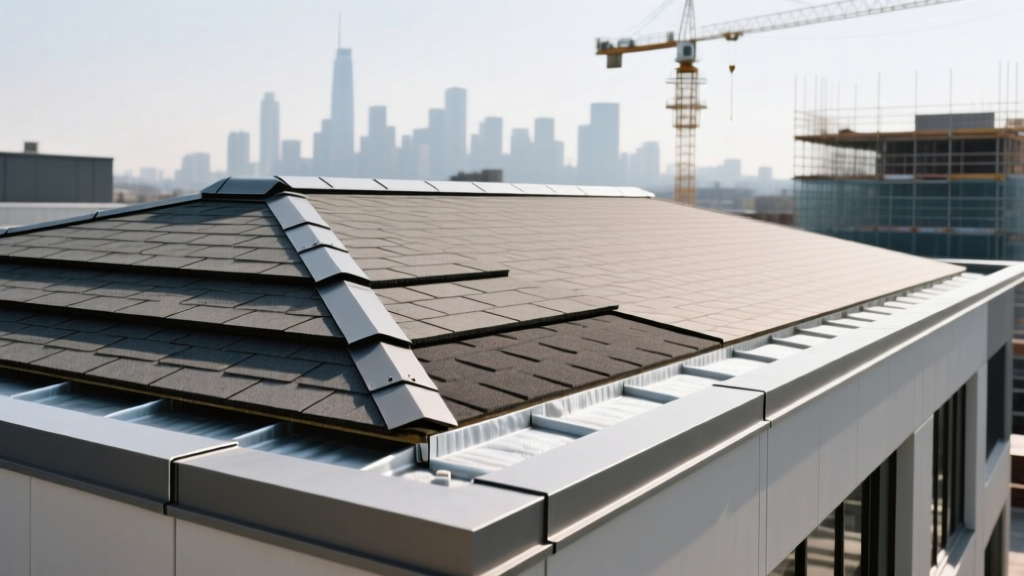
The True Cost of Modified Bitumen Roofing in 2026
Estimating a flat or low-slope roof project requires moving beyond simple square-footage multipliers. Modified bitumen roofing (often called "mod-bit" or "rubberoid") remains a dominant force in commercial and multi-family residential applications due to its puncture resistance and multi-ply redundancy. As of 2026, the national average for a fully installed, two-ply modified bitumen roof system ranges from $5.50 to $8.50 per square foot. However, this baseline fluctuates wildly based on polymer type (SBS vs. APP), application method (torch, cold adhesive, or self-adhered), and underlying insulation requirements.
This guide provides a granular cost estimation framework and quantity calculator to help contractors and facility managers build accurate 2026 budgets, avoiding the common material shortages and hidden substrate costs that derail low-slope projects.
Quick 2026 Cost Snapshot (Per Square Foot)
- Materials Only (2-Ply System): $1.80 – $3.20
- Labor & Installation: $2.50 – $4.50
- Polyiso Insulation (2-inch): $1.40 – $1.90
- Total Installed (Basic): $5.50 – $8.50
- Total Installed (With Coverboard & Upgrades): $8.00 – $11.50
SBS vs. APP: Material Cost & Performance Matrix
Modified bitumen is not a single product; it is an asphalt base reinforced with polymers. The two primary modifiers—Styrene-Butadiene-Styrene (SBS) and Atactic Polypropylene (APP)—dictate both the material cost and the required installation technique. SBS acts like rubber, offering high elongation and cold-weather flexibility. APP acts like plastic, providing superior UV resistance and a higher melting point. According to the National Roofing Contractors Association (NRCA), SBS accounts for roughly 75% of the North American mod-bit market due to its versatile application methods.
| Feature | SBS (Rubber-Modified) | APP (Plastic-Modified) |
|---|---|---|
| 2026 Material Cost (Cap Sheet) | $1.85 – $2.60 / sq. ft. | $1.70 – $2.30 / sq. ft. |
| Elongation at Break | 30% – 40% (Highly flexible) | 10% – 15% (Rigid) |
| Application Methods | Torch, Cold Adhesive, Self-Adhered, Hot Mop | Torch Only |
| Cold Weather Performance | Excellent (remains pliable below 0°F) | Poor (brittle in freezing temps) |
| Top Leading Brands | GAF Ruberoid, IKO Carrara, Carlisle INNOVIVA | Soprema Soprafix, Johns Manville |
Quantity Calculator: How to Measure and Order Mod-Bit
Ordering modified bitumen requires calculating not just the membrane, but the primer, adhesives, and fasteners. Standard mod-bit rolls are typically 3.33 feet wide by 33 feet long, covering exactly 100 square feet (1 square). However, accounting for overlaps and waste is critical.
Step 1: Calculate Base Area and Waste Factor
- Measure the Footprint: Calculate the gross square footage of the roof deck (Length × Width).
- Add Parapet and Penetration Turn-ups: Measure the linear footage of all parapet walls, HVAC curbs, and pipe boots. Multiply by 1.5 feet (standard turn-up height) and add this to your gross area.
- Apply the Waste Factor: For wide-open commercial roofs, add 10%. For roofs with heavy HVAC penetration, skylights, or complex angles, add 15% to 20%.
Formula: (Gross Area + Turn-ups) × 1.15 = Total Adjusted Square Footage.
Step 2: Determine Roll Counts and Accessories
Divide your Total Adjusted Square Footage by 100 to find the number of "squares" needed. A standard 2-ply system requires one base sheet roll and one cap sheet roll per square.
2026 Labor Rates and Installation Methods
Labor accounts for 40% to 60% of your total modified bitumen roofing cost. The application method you choose drastically alters both the speed of installation and the insurance liabilities carried by the contractor.
- Torch-Applied ($2.50 – $3.50 / sq. ft. labor): The fastest and most common method for APP and SBS. Requires an open flame to melt the underside of the roll. Hidden Cost: Requires hot work permits, a dedicated fire watch for 2 hours post-torch, and higher contractor liability insurance, which is baked into the bid.
- Cold-Adhesive Applied ($3.50 – $4.50 / sq. ft. labor): Uses solvent-based or water-based asphalt adhesives. Mandatory for occupied buildings, schools, or facilities where open flames are prohibited (e.g., chemical plants). Curing time is slower, increasing labor hours.
- Self-Adhered / Peel-and-Stick ($4.00 – $5.00 / sq. ft. labor): SBS membranes with a factory-applied adhesive backing. Material costs are 30% higher, but labor is faster and requires no torch or wet adhesives. Ideal for noise-sensitive environments like hospitals.
Hidden Costs: Insulation, Cover Boards, and Deck Prep
A common estimation error is pricing the membrane while ignoring the thermal and structural layers required by modern building codes. The U.S. Department of Energy mandates strict continuous insulation (ci) R-values for commercial roofs, often requiring 2 to 4 inches of Polyisocyanurate (Polyiso).
The Insulation and Cover Board Stack
Mod-bit should rarely be applied directly to a steel or wood deck. A proper 2026 assembly includes:
- Polyiso Insulation: $1.40 – $1.90 per sq. ft. (Provides R-5.6 per inch).
- Gypsum Cover Board (e.g., DensDeck Prime): $1.20 – $1.60 per sq. ft. This is a non-negotiable upgrade for torch-applied systems to prevent fire from reaching the insulation, and it provides a smooth, rigid surface that prevents the mod-bit from telegraphing insulation seams.
- Fasteners and Plates: $0.35 – $0.55 per sq. ft. Heavy-duty screws with 3-inch galvanized plates are required to secure the insulation and cover board to the deck. Wind uplift calculations (per FM Global or ANSI/SPRI standards) will dictate your fastener density, often requiring 12-inch on-center spacing in the perimeter zones.
Edge Cases and Troubleshooting Estimation Risks
"The most expensive line item on a mod-bit project is the one you didn't see: substrate moisture. If you torch-apply over wet insulation or a damp concrete deck, the trapped water turns to steam, causing massive blistering and delamination within the first summer."
Moisture Testing and Substrate Remediation
Always include a line item for roof core cuts and moisture scanning ($500 - $1,200 per project) before finalizing a tear-off or overlay estimate. If a roof overlay is planned, trapped moisture will void the manufacturer's warranty. If the deck is wet, you must budget for a complete tear-off to the structural deck, adding $1.50 to $2.50 per sq. ft. in demolition and disposal fees.
Flashing and Detail Work
Membrane field costs are straightforward; detail work is where margins vanish. Budget for specialized flashing membranes (like SBS granular-surfaced flashing rolls) for parapets and pipe penetrations. Metal edge terminations, reglets, and counter-flashing typically add $12 to $18 per linear foot to the perimeter costs. Never estimate a flat roof using only the field square-footage rate; always separate the field membrane from the linear flashing details.
Frequently Asked Questions
Can I install modified bitumen over an existing EPDM or TPO roof?
No. Asphalt-based products (like mod-bit adhesives and primers) will chemically degrade and dissolve single-ply EPDM membranes. If you are converting from EPDM to mod-bit, a complete tear-off or a physical separation layer (like a mechanically fastened cover board) is strictly required.
Are reflective coatings required for mod-bit in 2026?
While you can order SBS cap sheets with factory-applied white granules for cool-roof compliance, they are more expensive and harder to seam. Most contractors install standard black granular cap sheets and apply an aluminum roof coating or a silicone/acrylic elastomeric coating post-installation. Budget $1.50 to $2.50 per sq. ft. for a high-solids silicone coating if local energy codes mandate a high Solar Reflectance Index (SRI). Manufacturers like GAF Commercial Roofing offer specific compatible topcoats that maintain the membrane's warranty.
How long does a 2-ply SBS roof last compared to APP?
Both systems carry 15- to 20-year manufacturer warranties when installed by certified applicators. However, in real-world conditions, SBS tends to outlast APP in climates with extreme temperature swings due to its superior elongation and recovery properties, which prevent seam splitting during thermal shock.