Roof Vents Durability Analysis: Material Lifespans and Failure Modes
Analyze the durability and expected lifespan of various roof vents, from static box vents to solar models, including common failure modes and maintenance.
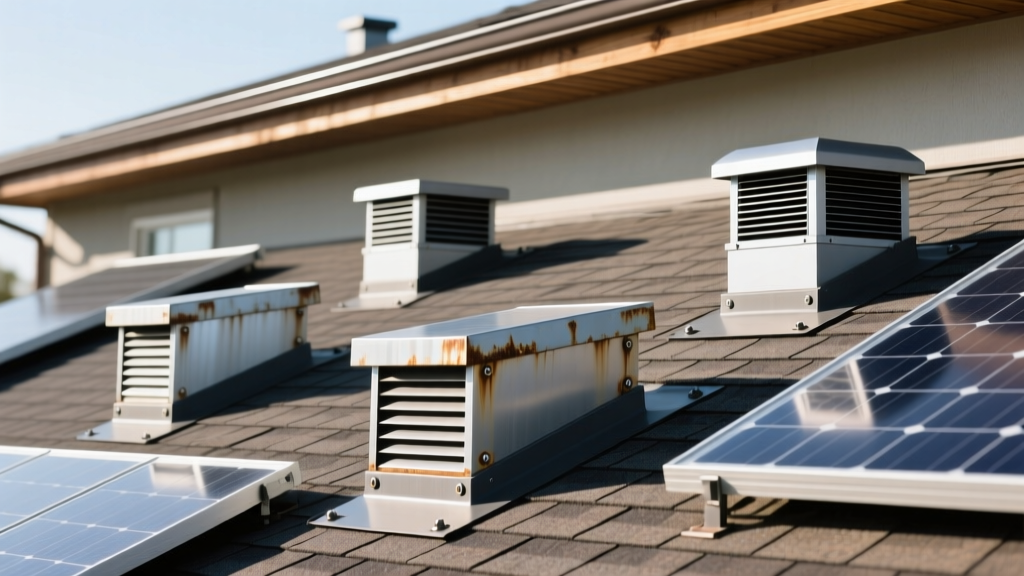
Lifespan Expectancies by Vent Type and Material
The durability of roof vents is rarely discussed until a leak manifests or an attic overheats. While modern architectural asphalt shingles routinely command 30- to 50-year warranties, the roof vents penetrating or sitting atop them often fail in half that time. Understanding the material science and mechanical limitations of roof vents is critical for long-term roofing system integrity. As of 2026, advancements in UV-inhibitor polymers and powder-coated aluminum have extended baseline lifespans, but environmental stressors remain the ultimate arbiter of vent longevity.
The expected lifespan of a roof vent is dictated by its material composition, mechanical complexity, and exposure to localized microclimates. The following matrix outlines the realistic durability profiles for the most common residential and commercial roof vent systems.
| Vent Type | Primary Material | Expected Lifespan | Primary Failure Trigger | Avg. Replacement Cost (2026) |
|---|---|---|---|---|
| Static Box (Slant-Back) | Polypropylene / ABS | 10–15 Years | UV Embrittlement & Cracking | $12–$18 / unit |
| Static Box (Heavy Duty) | Aluminum / Galvanized Steel | 20–30 Years | Galvanic Corrosion | $25–$45 / unit |
| Ridge Vent (Continuous) | Polymer w/ Internal Filter | 25–40 Years | Filter Clogging / UV Warping | $3.50–$5.50 / lin. ft. |
| Turbine (Whirlybird) | Galvanized Steel / Aluminum | 10–15 Years | Bearing Seizure | $45–$85 / unit |
| Solar-Powered Active | Polymer Housing / PV Panel | 7–12 Years | Battery / Motor Degradation | $150–$280 / unit |
| Static Off-Ridge (Premium) | Copper / Stainless Steel | 50+ Years | Flashing Integration Failure | $90–$140 / unit |
Primary Failure Modes and Environmental Stressors
To maximize the return on investment for roofing ventilation, contractors and homeowners must anticipate how specific materials degrade. According to the Building America Solution Center, proper attic ventilation is essential for moisture control and thermal regulation, but failing vents compromise the entire building envelope.
UV Degradation in Polymer Vents
Polypropylene and ABS plastics are the industry standard for cost-effective static box and ridge vents. However, these polymers are highly susceptible to photo-oxidation. Even with carbon black additives and advanced UV stabilizers, 12 to 15 years of direct solar radiation causes the polymer chains to break down. This results in micro-cracking, loss of impact resistance (failing ASTM D4272 standards), and eventual shattering during hail events or routine roof maintenance. In high-UV environments like the American Southwest, plastic vent lifespans can decrease by up to 30%.
Galvanic Corrosion and Moisture Traps
Metal roof vents offer superior structural longevity but introduce the risk of galvanic corrosion. When aluminum vents are installed using copper flashing, or when they come into direct contact with pressure-treated lumber containing copper-based preservatives (like ACQ), a galvanic cell is formed. In the presence of rain or condensation acting as an electrolyte, the aluminum (anode) rapidly corrodes. This often leads to the vent flange dissolving entirely, creating a direct path for water intrusion long before the vent's structural dome fails.
Never install aluminum roof vents using copper flashing or uncoated steel fasteners. Always use rubberized isolation washers or specify stainless steel ring-shank nails to prevent accelerated anodic corrosion and subsequent roof leaks within 3 to 5 years.
Mechanical Seizure in Active Systems
Active ventilation systems, including turbine and solar-powered vents, introduce moving parts that drastically reduce overall lifespan. Turbine vents rely on ball bearings that are continuously exposed to attic dust, humidity, and temperature fluctuations. Without sealed, maintenance-free bearings, these units typically seize within a decade. Solar-powered vents face a different challenge: the extreme heat of an attic space (often exceeding 140°F in summer) accelerates the degradation of the internal lithium-ion batteries and brushless motors, frequently requiring full unit replacement every 7 to 12 years.
Installation Flaws That Accelerate Degradation
Even premium copper or stainless steel vents will fail prematurely if installed incorrectly. The International Residential Code (IRC) Section R806 dictates strict net free area (NFA) requirements, but the physical installation methodology dictates durability.
- Over-Driven Fasteners: Pneumatic nail guns frequently over-drive nails into plastic vent flanges, creating immediate stress fractures that expand under thermal cycling. Hand-nailing or using depth-adjusted collars is mandatory for polymer vents.
- Improper Shingle Integration: For continuous ridge vents, the cap shingles must overlap the vent material by a minimum of 3 inches. Insufficient overlap allows wind-driven rain to bypass the vent's internal weather baffle, leading to hidden decking rot.
- Sealant Reliance: Relying on roofing cement or polyurethane sealants to waterproof the vent flange instead of utilizing proper step-flashing or integrated shingle overlaps guarantees failure. Sealants dry out, crack, and detach from the vent housing within 5 to 8 years.
The Cost-to-Lifespan Ratio: Which Material Wins?
When specifying roof vents, evaluating the cost-to-lifespan ratio provides a clearer picture of long-term value than initial purchase price alone. For standard 30-year asphalt shingle roofs, heavy-gauge aluminum or high-density polyethylene (HDPE) ridge vents offer the optimal balance, matching the roof's lifespan without requiring mid-cycle replacements.
However, for premium roofing systems like slate, clay tile, or standing-seam metal, plastic or standard aluminum vents are a critical liability. In these applications, specifying solid copper or 304-grade stainless steel static vents (such as the Lomanco copper line or custom-fabricated stainless units) is non-negotiable. While the upfront cost exceeds $100 per unit, their 50+ year lifespan ensures they will outlast the premium roofing material itself, eliminating the need for dangerous and expensive roof penetrations during future maintenance.
Expert Insight: The most common cause of premature vent failure is not material defect, but biological intrusion. Paper wasps and carpenter bees frequently nest in the louvers of static box vents, blocking airflow and trapping moisture against the flange. Installing vent models with integrated internal insect screens or adding a secondary mesh barrier during installation is a mandatory durability upgrade.
Maintenance Framework for Maximum Durability
Roof vents are not strictly "install and forget" components. To achieve the upper limits of their expected lifespans, a targeted maintenance protocol is required. The University of Minnesota Extension emphasizes that blocked vents lead to severe winter condensation and ice damming, making clearance inspections vital.
- Bi-Annual Visual Inspection: Use binoculars from the ground or a drone to inspect vent housings every spring and fall. Look for warping, discoloration (indicating UV failure in plastics), or rust weeping from metal seams.
- Baffle and Filter Clearance: For ridge vents with internal weather filters (like the GAF Cobra or Air Vent ShingleVent II), ensure the filter media is not clogged with pollen, dust, or blown insulation from the attic side. A clogged filter causes negative pressure buildup and renders the vent useless.
- Fastener Integrity Check: Inspect the exposed nail heads on static box vents. If the original neoprene washers are cracked or missing, apply a dab of high-grade exterior silicone or replace the fastener with a stainless steel screw and neoprene washer to prevent water infiltration.
- Active System Testing: For solar and hardwired turbine vents, verify operation monthly during the cooling season. Listen for grinding noises that indicate bearing wear, and clean the photovoltaic panel surface with a microfiber cloth to maintain optimal motor voltage.