Best Roofing Material for RV Roofs: 2026 Buyer Guide
Compare EPDM, TPO, and liquid coatings for your rig. Our 2026 guide covers costs, lifespans, and exact product recommendations for RV roof replacement.

The RV Roofing Landscape: Membrane vs. Rigid vs. Liquid
Recreational vehicle roofs endure extreme environmental stress. Surface temperatures can exceed 160°F in direct summer sunlight, while winter conditions subject the membrane to sub-zero thermal contraction. Selecting the correct roofing material for RV applications requires balancing puncture resistance, UV stability, and the coefficient of thermal expansion. According to the RV Industry Association, roof leaks remain the number one cause of structural degradation in motorhomes and travel trailers, making material selection and proper seam sealing critical to the asset's longevity.
Material Comparison Matrix: EPDM, TPO, PVC, and Fiberglass
The RV industry primarily relies on flexible elastomeric membranes, though rigid fiberglass and liquid overlays serve specific use cases. Below is a technical comparison of the primary options available in 2026.
| Material | Expected Lifespan | Material Cost (per sq. ft.) | UV Resistance | Puncture Rating | Primary Installation Method |
|---|---|---|---|---|---|
| EPDM (Rubber) | 15–20 Years | $1.50 – $2.20 | Moderate (Oxidizes) | High | Adhesive + Lap Sealant |
| TPO (Thermoplastic) | 15–25 Years | $1.80 – $2.80 | Excellent | Moderate | Heat Weld or Adhesive |
| PVC | 20+ Years | $3.00 – $4.50 | Excellent | High | Heat Weld |
| Fiberglass (Rigid) | 20+ Years | $4.00 – $6.00 | Good (Requires Gelcoat) | Very High | Mechanical Fasteners |
| Liquid Silicone/Acrylic | 5–10 Years | $0.80 – $1.50 | Excellent | Low (Overlay only) | Roller / Sprayer |
Deep Dive: EPDM vs. TPO Membranes
Over 85% of modern RVs utilize either EPDM or TPO. Understanding the chemical and physical differences between these two polymers is essential for a successful replacement.
EPDM (Ethylene Propylene Diene Monomer)
EPDM is a synthetic rubber membrane known for its exceptional elasticity and cold-weather flexibility. The industry standard is Dicor Products' UltraFlex line. EPDM is typically manufactured in 40-mil and 60-mil thicknesses. For RVs frequently parked under oak or pine trees, upgrading to 60-mil is highly recommended to resist branch punctures.
Pros & Cons of EPDM
- Pro: Unmatched flexibility in freezing temperatures; resists cracking during extreme thermal contraction.
- Pro: Forgiving installation; seams are sealed with chemical lap sealants rather than requiring specialized heat-welding equipment.
- Con: Traditional EPDM oxidizes and 'chalks' over time, requiring annual cleaning and UV protectant applications.
- Con: Incompatible with petroleum-based solvents and aerosol sprays, which will cause the rubber to swell and degrade.
TPO (Thermoplastic Polyolefin)
TPO is a single-ply reflective membrane that has gained massive market share due to its superior UV resistance and lack of oxidative chalking. Alpha Systems manufactures the most prevalent TPO membranes for the RV sector. TPO features a laminated top and bottom ply with a reinforcing polyester scrim in the center. Many RV-specific TPO products feature a fleece-backing, which allows for direct adhesion to luan or OSB substrates without requiring an intermediate underlayment board.
Pros & Cons of TPO
- Pro: Highly reflective white surface reduces interior cooling loads by up to 15% compared to black-backed EPDM.
- Pro: Does not chalk or oxidize; requires significantly less maintenance over its lifespan.
- Con: Stiffer than EPDM; requires careful handling and heating during installation in temperatures below 50°F to prevent creasing.
- Con: Seams must be heat-welded for maximum longevity, requiring a specialized hot-air gun and practiced technique.
Liquid Roof Coatings: The Overlay Alternative
If your existing membrane is structurally sound but suffering from micro-cracks, UV degradation, or failing lap sealant, a full tear-off may be unnecessary. Liquid roof coatings (such as Heng's Rubber Roof Coating or Dicor Roof Coating) provide a seamless, monolithic elastomeric barrier. Silicone-based coatings offer the best ponding-water resistance, while acrylics are more cost-effective for steeply pitched RV roofs.
Expert Application Protocol
- Deep Clean: Wash the roof with a TSP (Trisodium Phosphate) solution to remove dirt, sap, and oxidized chalk. Rinse thoroughly.
- Remove Failing Sealant: Use a plastic putty knife to remove all peeling or cracked existing lap sealant. Do not apply liquid coating over loose debris.
- Prime: Apply a compatible elastomeric primer to any exposed metal vents, skylight flanges, or bare substrate areas.
- Base Coat: Roll on the first layer of liquid coating at a rate of 1 gallon per 125 square feet. Embed a polyester reinforcing fabric over all seams and vent perimeters.
- Top Coat: After 24 hours of curing, apply the final topcoat to achieve a total dry mil thickness of 40 to 50 mils.
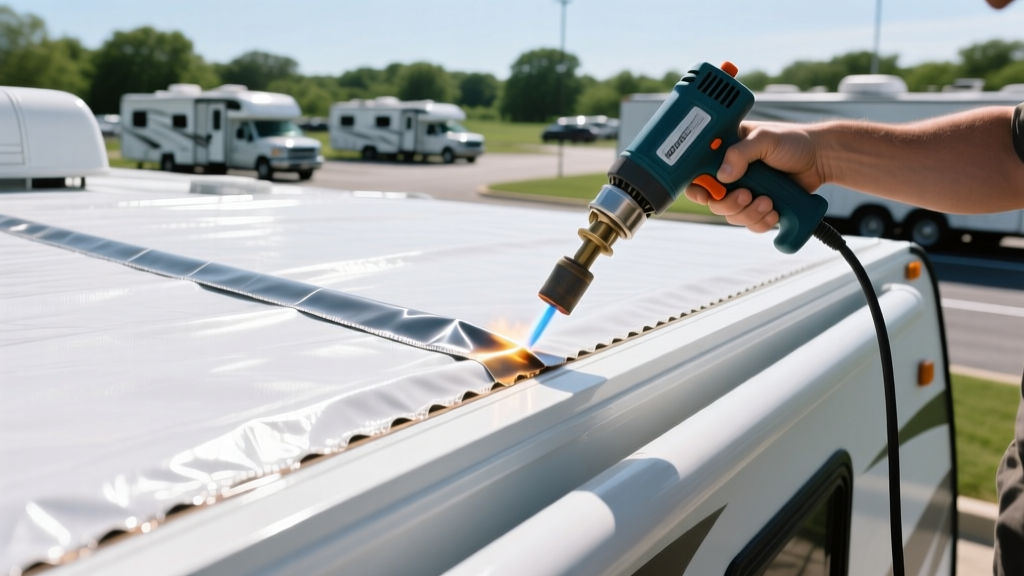
2026 Cost Breakdown: Material vs. Professional Installation
Pricing varies significantly based on the size of the rig and the complexity of roof penetrations (skylights, AC units, antennas). The following estimates are based on a standard 30-foot motorhome or travel trailer, yielding approximately 240 to 300 square feet of roof space.
| Project Scope | DIY Material Cost | Professional Installed Cost | Time Investment |
|---|---|---|---|
| EPDM Full Replacement (40-mil) | $450 – $650 | $2,200 – $3,500 | 2–3 Days (DIY) |
| TPO Full Replacement (Fleece-back) | $550 – $850 | $2,800 – $4,200 | 2–4 Days (DIY) |
| Liquid Silicone Overlay | $300 – $500 | $1,200 – $1,800 | 1–2 Days (DIY) |
| Fiberglass Shell Replacement | $1,200 – $1,800 | $4,500 – $7,000+ | 5+ Days (DIY) |
Critical Failure Modes and Installation Gotchas
The Self-Leveling vs. Non-Leveling Sealant Trap
The most common cause of DIY RV roof failure is the misuse of lap sealants. Dicor 501LSW is a self-leveling sealant designed exclusively for flat, horizontal surfaces. It flows like honey to create a smooth, water-shedding bead. However, if you use 501LSW on vertical joints, skylight side-flanges, or roof caps with a steep pitch, the sealant will run off the joint before curing, leaving the top edge completely exposed to water intrusion. Always use Dicor 551LSW (non-leveling) for any surface with an angle greater than 5 degrees.
Substrate Adhesion Failures
When gluing down EPDM or TPO, the choice of adhesive is paramount. Solvent-based contact adhesives provide the strongest initial grab but require a precise 'flash-off' time (typically 15 to 30 minutes) before the membrane is laid down. If the membrane is applied while the solvent is still wet, the trapped gases will cause massive bubbling and eventual delamination. Water-based adhesives are slower to cure but eliminate the risk of solvent entrapment and are generally safer for DIY installers working in high-heat environments.
The PVC Incompatibility Rule
Never install a PVC membrane directly over an existing EPDM roof, and never use PVC-compatible adhesives on EPDM. The plasticizers in PVC will chemically migrate into the EPDM rubber, causing it to liquefy and fail catastrophically within months. If upgrading from EPDM to PVC, a complete tear-off to the wooden substrate is mandatory.
Frequently Asked Questions
How do I identify if my current RV roof is EPDM or TPO?
Perform the 'rub test'. Take a clean white cloth and rub it vigorously against the roof surface. If the cloth picks up a white, chalky residue, you have EPDM (which oxidizes). If the cloth remains clean, you likely have TPO. Alternatively, check the underside of the membrane near a vent cutout; EPDM typically has a black backing (though white-on-white variants exist), while TPO usually has a white or light-grey fleece backing.
Can I install a new membrane directly over old lap sealant?
No. Old, cured lap sealant creates a rigid, uneven ridge that will telegraph through the new membrane and create a high-stress point. All old sealant must be scraped flush with the roof surface, and any voids must be filled with a compatible patching compound before rolling out the new adhesive and membrane.
Do I need to reinforce the roof decking before installing TPO?
If your existing roof decking is luan (thin plywood) and shows signs of water rot or delamination, it must be replaced. TPO fleece-back can be glued directly to sound, clean luan or OSB. However, if you are installing non-fleece-backed TPO or EPDM, it is highly recommended to install a 1/8-inch luan or high-density fiberboard underlayment to provide a smooth, uniform bonding surface and prevent the wood grain from telegraphing through the membrane over time.
Written by
David NakamuraDavid Nakamura is a licensed architect (AIA) and construction technology writer focused on sustainable building methods, mass timber engineering, and high-performance building envelopes. He holds a Master of Architecture from the University of Washington and is a certified Passive House Consultant (CPHC). David spent eight years at the Seattle firm Mithun, where he led the design of three LEED Platinum projects, before founding his own practice specializing in net-zero residential design. He serves on the editorial advisory board of GreenBuilder Magazine and has authored peer-reviewed papers on cross-laminated timber (CLT) connections for the Journal of Structural Engineering. In his spare time, David teaches woodworking at Pratt Fine Arts Center and kayaks the Puget Sound.
More from David Nakamura
View all
Construction Cost
Labor Cost to Build a Deck Per Sq Ft: 2026 Installation Guide
Discover the exact labor cost to build a deck per sq ft in 2026. This installation guide breaks down contractor rates, complexity factors, and hidden fees.
Aug 4, 2026

Construction Cost
How Much Does It Cost to Build a 3 Bedroom House? Financing Guide
Learn exactly how much it costs to build a 3 bedroom house and explore 2026 financing options, construction loan types, and budget frameworks for your build.
Aug 4, 2026

Construction Cost
Cost to Build a Tennis Court: 2026 Guide
How much does it cost to build a tennis court in 2026? Breakdowns for asphalt, concrete, and synthetic surfaces plus fencing and lighting.
Jul 30, 2026