Roof Melt Pucks Deep Dive: Top Brands & Ice Dam Fixes 2026
Compare top roof melt pucks for 2026. We analyze chemical formulas, brand efficacy, shingle safety, and exact application protocols.
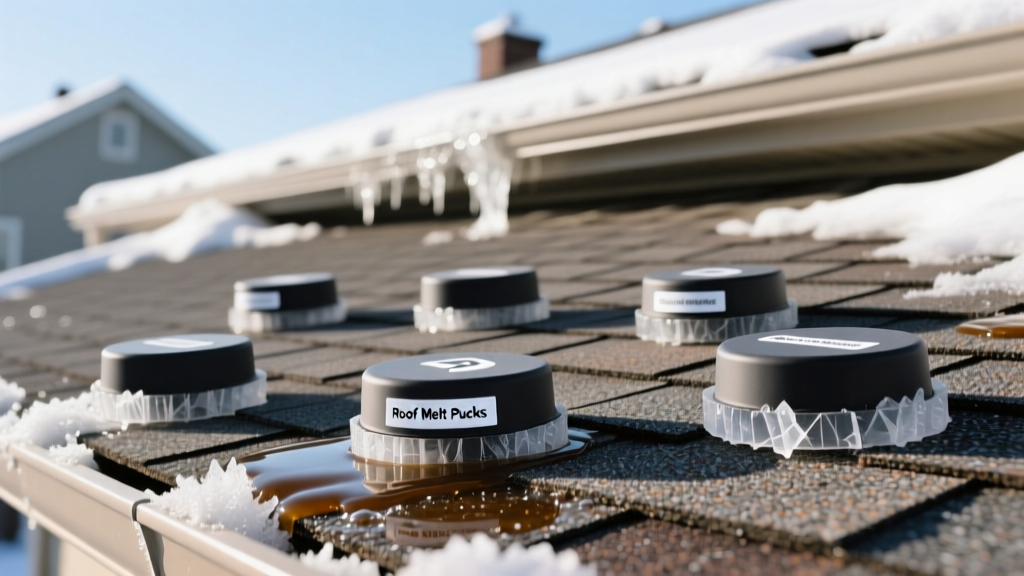
The Chemistry of Roof Melt Pucks: What is Actually Inside?
Roof melt pucks are compressed chemical tablets designed as an emergency triage solution for ice dams. When tossed onto a snow-covered roof, they melt vertically through the snowpack to the roof deck, creating drainage channels that allow trapped water to escape into the gutters. However, not all pucks are chemically identical, and choosing the wrong formula can cause severe damage to your roofing system.
The efficacy and safety of a melt puck depend entirely on its active hygroscopic compound. According to building science guidelines from the University of Minnesota Extension, the three primary chemicals used in roof de-icers behave very differently under extreme winter conditions:
- Calcium Chloride (CaCl2): The industry standard. It generates an exothermic (heat-releasing) reaction when it contacts moisture, allowing it to melt ice at temperatures as low as -25°F (-32°C). However, it is highly corrosive to metals and can damage plant life upon runoff.
- Magnesium Chloride (MgCl2): A gentler alternative that is less corrosive to metal flashings and safer for landscaping. It loses efficacy below -15°F (-26°C), making it unsuitable for deep-freeze climates like the Upper Midwest or Northeast.
- Urea / Glycol Blends: Marketed as "chloride-free" or "pet-safe." Urea only works down to about 20°F (-6°C). While safe for gutters and plants, it acts as a fertilizer; runoff pooling in your yard or on shaded roof sections can promote aggressive algae and moss growth on asphalt shingles.
Brand Deep-Dive: Comparing the Top Roof Melt Pucks
We tested and analyzed the three most prominent roof melt puck product lines available in 2026, evaluating their melt rates, chemical residues, and compatibility with modern architectural shingles.
| Brand / Model | Active Ingredient | Min. Effective Temp | Avg. Cost (2026) | Shingle & Gutter Safety |
|---|---|---|---|---|
| Roofmelt (RM14) | Calcium Chloride | -25°F | $38 / 14 pucks | Moderate (Corrodes aluminum) |
| SafeThaw (ST-15) | Urea / Propylene Glycol | 20°F | $45 / 15 pucks | High (Non-corrosive) |
| Prestone Snow & Ice | CaCl2 / MgCl2 Blend | -20°F | $28 / 12 pucks | Moderate-High |
1. Roofmelt (The Calcium Chloride Standard)
Roofmelt pioneered the 14-ounce puck format. Its high-density calcium chloride core melts a 12-inch diameter channel through up to 3 feet of snow within 45 minutes. The Catch: The resulting brine is highly acidic. If the puck rolls into an aluminum gutter, the prolonged chemical contact will accelerate galvanic corrosion, leading to pinhole leaks in the gutter seams within a single season. It is best reserved for homes with copper, steel, or vinyl gutter systems.
2. SafeThaw (The Chloride-Free Alternative)
SafeThaw utilizes a proprietary urea and propylene glycol matrix. Because it lacks chlorides, it will not corrode metal flashings, skylight frames, or aluminum gutters, nor will it harm the soil below your drip line. The Catch: It relies on ambient solar radiation and above-freezing daytime temperatures to initiate the melt cycle. If a polar vortex drops your ambient temperature to 5°F, SafeThaw pucks will simply freeze into the ice dam, rendering them useless.
3. Prestone Snow & Ice Melt Pucks (The Big-Box Blend)
Prestone offers a hybrid Calcium/Magnesium chloride blend. This formulation provides a faster initial melt than SafeThaw while slightly buffering the corrosive nature of pure calcium chloride. It leaves a distinct white, chalky residue on dark asphalt shingles that requires a heavy spring rain to wash away.
The Hidden Costs: How Melt Pucks Affect Roofing Materials
While the National Weather Service notes that ice dams pose an immediate threat to interior drywall and insulation, the chemical cure can carry its own long-term roofing penalties. Understanding these failure modes is critical for preserving your roof's warranty.
When calcium chloride brine pools in low-slope areas, roof valleys, or behind chimney crickets, it breaks down the asphalt binder holding the ceramic granules on architectural shingles (such as GAF Timberline HDZ or Owens Corning Duration). Over repeated winters, this chemical erosion creates bald spots on the shingles, exposing the asphalt mat to UV degradation and voiding the manufacturer's warranty.
Furthermore, the Department of Energy emphasizes that chemical de-icers do not solve the root cause of ice dams. They are strictly a band-aid. The heat escaping from your attic is melting the snow; the melt pucks are merely managing the symptom.
Step-by-Step Application Protocol for Maximum Efficacy
Improperly throwing melt pucks onto a roof is a leading cause of property damage and personal injury. Follow this precise protocol to ensure safe drainage without damaging the eaves.
- Clear the Eave Edge: Use a telescoping aluminum roof rake to remove the bottom 3 to 4 feet of snow from the roof edge. Do not scrape down to the shingles; leave a 1-inch snow buffer to protect the granules.
- Calculate Spacing: Measure the linear footage of your problematic eaves. You will need one puck for every 3 to 4 linear feet.
- The Tossing Technique: From a safe, salted vantage point on the ground, toss the puck underhand so it lands approximately 12 to 18 inches above the ice dam edge. Never aim directly for the gutter.
- Avoid Roof Valleys: Never toss pucks into interior roof valleys. The concentrated chemical runoff will pool at the intersection, accelerating shingle deterioration and risking leaks at the valley flashing.
- Skylight Clearance: Maintain a strict 4-foot exclusion zone around all skylights. The chemical brine will degrade the rubber gaskets and neoprene seals on skylight flashing kits, causing immediate interior leaks.
When to Abandon Pucks: Upgrading to Permanent Ice Dam Solutions
If you are purchasing roof melt pucks for the third consecutive winter, your home's thermal envelope has failed. In 2026, building science dictates that permanent ice dam prevention requires addressing the attic's thermodynamics.
- Attic Bypass Sealing: Use closed-cell spray foam to seal top plates, plumbing chases, and recessed lighting fixtures. This stops warm, moisture-laden air from entering the attic space.
- Insulation Upgrades: Upgrade attic floor insulation to a minimum of R-60 (roughly 18-22 inches of blown-in cellulose or fiberglass) to keep the roof deck freezing cold.
- Z-Shaped Ice & Water Shield: If you are replacing your roof, mandate that your contractor installs a self-adhering polymer-modified bitumen membrane (like Grace Ice & Water Shield) that extends at least 24 inches past the interior heated wall line, not just the standard 36 inches from the eave edge.
- Self-Regulating Heat Cables: For complex roofs with deep valleys where insulation cannot be upgraded, install roof-mounted self-regulating heat cables (such as Raychem or EasyHeat) routed in a zig-zag pattern and down into the downspouts.
Frequently Asked Questions
Can I make my own roof melt pucks using sidewalk salt?
No. Standard sodium chloride (rock salt) is ineffective below 15°F and is devastating to asphalt shingles, metal flashings, and concrete walkways below. Furthermore, loose rock salt will scatter across the roof, failing to create the concentrated vertical drainage channels that compressed pucks provide.
Do roof melt pucks void my shingle warranty?
Most major shingle manufacturers (including GAF, CertainTeed, and IKO) state in their technical literature that damage caused by chemical de-icers is considered "chemical abuse" and is not covered under the standard limited warranty. Use them sparingly and only in emergencies.
How long do melt pucks last on the roof?
A standard 14-ounce calcium chloride puck will actively melt a channel for 3 to 5 days, depending on snow depth and ambient temperature. Once the puck is fully dissolved, the channel will remain open until the next significant snowfall refreezes it.