Lifespan and Durability of Common Types of Flat Roofs Materials
Compare the lifespan, puncture resistance, and failure modes of EPDM, TPO, PVC, and modified bitumen to choose the most durable flat roof system.

The Reality of Flat Roof Lifespans
When evaluating the types of flat roofs materials, manufacturer warranties often advertise 20 to 30 years of protection. However, real-world durability is dictated by membrane thickness, seam integrity, chemical exposure, and installation methodology. A 45-mil membrane installed with basic lap sealant will fail a decade earlier than an 80-mil reinforced membrane that is fully adhered and heat-welded. Understanding the specific failure modes of each material is critical for maximizing your return on investment in 2026 and beyond.
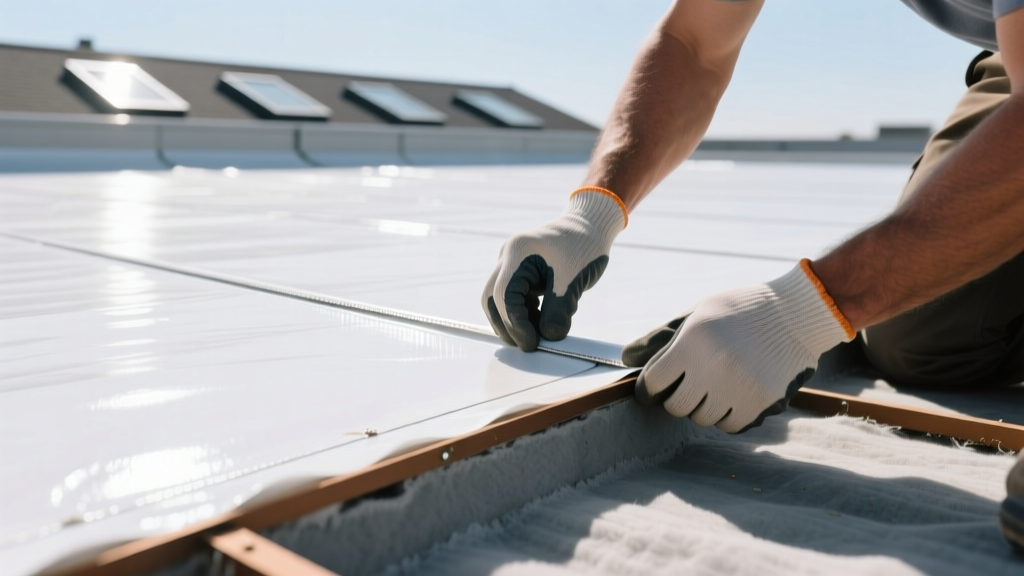
Material Lifespans and Durability at a Glance
| Material | Expected Lifespan | Puncture Resistance | Primary Failure Mode | 2026 Installed Cost (per sq. ft.) |
|---|---|---|---|---|
| EPDM (Rubber) | 30 - 50 Years | Moderate | Seam tape degradation / shrinkage | $4.50 - $8.00 |
| TPO (Thermoplastic) | 20 - 30 Years | High (with scrim) | Membrane cracking at fasteners | $5.00 - $9.00 |
| PVC (Polyvinyl Chloride) | 25 - 35+ Years | Very High | Plasticizer migration / brittleness | $7.00 - $12.00 |
| SBS Modified Bitumen | 20 - 30 Years | Extreme | Granule loss / blistering | $6.00 - $10.00 |
| Built-Up Roofing (BUR) | 20 - 40 Years | Extreme | Alligatoring / moisture trapping | $7.50 - $11.50 |
EPDM Rubber: The 40-Year Marathoner
Ethylene Propylene Diene Monomer (EPDM) remains a dominant force in low-slope roofing due to its exceptional UV and ozone resistance. According to the National Roofing Contractors Association (NRCA), properly maintained EPDM systems routinely exceed 40 years in northern climates. However, its Achilles' heel is the seam.
Thickness and Reinforcement Specifications
While 45-mil EPDM is still sold for light commercial or residential applications, specifying a minimum of 60-mil (or 90-mil for high-traffic roofs) is the 2026 industry standard for durability. Unreinforced EPDM relies on vulcanized splicing tape or liquid adhesives for seams. Over 15 to 20 years, thermal expansion and contraction cause the membrane to shrink, placing immense shear stress on these taped seams, leading to peeling and water intrusion.
TPO vs. PVC: The Thermoplastic Showdown
Thermoplastic membranes dominate the commercial sector because their seams are heat-welded, creating a monolithic bond that is stronger than the membrane itself. Yet, TPO and PVC perform very differently under specific environmental stressors.
TPO (Thermoplastic Polyolefin)
TPO is highly reflective, making it a favorite for meeting U.S. Department of Energy cool roof standards. Early generations of TPO (pre-2015) suffered from premature cracking and seam failures due to flawed polymer formulations. Modern 2026 TPO membranes utilize advanced polymer blends and polyester scrim reinforcement. For maximum durability, specify 60-mil or 80-mil scrim-reinforced TPO (meeting ASTM D6878). The scrim provides exceptional dimensional stability and wind-uplift resistance, though TPO remains vulnerable to prolonged exposure to grease, oils, and certain HVAC exhaust chemicals.
PVC (Polyvinyl Chloride)
PVC (meeting ASTM D4434) is the undisputed champion of chemical resistance. If your flat roof houses restaurant exhaust vents, industrial chemical outflows, or experiences heavy animal fat exposure, PVC is mandatory. The heat-welded seams on PVC are incredibly reliable. However, standard PVC relies on plasticizers to remain flexible. Over 25+ years, these plasticizers can migrate out of the membrane, leading to brittleness. To combat this, specify KEE (Ketone Ethylene Ester) polymer membranes, which utilize a solid polymer plasticizer that does not leach out, effectively extending the functional lifespan past 35 years.
Modified Bitumen: The Heavy-Duty Contender
For roofs that require extreme puncture resistance—such as those with heavy foot traffic for HVAC maintenance or rooftop patios—Modified Bitumen (Mod-Bit) outperforms single-ply membranes. Mod-Bit is an asphalt-based system reinforced with fiberglass or polyester.
- SBS (Styrene-Butadiene-Styrene): Rubberized asphalt that offers superior flexibility in freezing temperatures. It can be installed via torch-down, hot-mop, or cold-adhesive peel-and-stick methods. Peel-and-stick SBS is increasingly preferred in 2026 due to municipal fire codes restricting open-flame torch applications.
- APP (Atactic Polypropylene): A plasticized asphalt that excels in high-heat environments and high-UV regions. APP is almost exclusively torch-applied, creating a thick, durable, fused layer.
The primary durability threat to Mod-Bit is granule loss. Once the protective ceramic granules wear away, the underlying asphalt degrades rapidly under UV exposure. Regular inspections and the application of aluminum or elastomeric roof coatings at the 15-year mark are critical to reaching the 30-year lifespan.
Climate-Specific Decision Framework
Selecting the most durable material requires matching the membrane's chemical properties to your local climate and building use. Use this decision matrix to guide your specification:
High UV / Low Chemical Exposure (e.g., Sunbelt Office Buildings)
Optimal Choice: 60-mil Scrim-Reinforced TPO. The high solar reflectance reduces cooling loads and thermal shock, while the heat-welded seams resist intense solar degradation better than EPDM tape.
High Chemical / Grease Exposure (e.g., Restaurants, Manufacturing)
Optimal Choice: 50-mil or 60-mil PVC or KEE. TPO will degrade and split when exposed to animal fats and petroleum-based exhaust, whereas PVC remains chemically inert.
Extreme Cold / High Foot Traffic (e.g., Northern Climates, Busy HVAC Decks)
Optimal Choice: Two-ply SBS Modified Bitumen with a granular cap sheet. The rubberized asphalt remains pliable at -40°F, and the multi-ply thickness absorbs the physical abuse of maintenance workers and snow removal tools.
Budget-Conscious / Complex Roof Geometry
Optimal Choice: 60-mil Fully Adhered EPDM. EPDM is easily cut and flashed around complex penetrations, pipes, and parapets without the need for expensive heat-welding equipment, keeping labor costs low while maintaining a 30+ year lifespan.
The Ponding Water Problem
'Ponding water—defined as water remaining on a roof for more than 48 hours after precipitation—is the single greatest enemy of flat roof longevity. It voids the warranties of nearly all single-ply membrane manufacturers and accelerates biological growth and chemical breakdown.'
— Building Science Corporation, Low-Slope Roof Design Guidelines
As noted by the Building Science Corporation, structural deflection causes water to pool. While PVC and heat-welded TPO can withstand constant water immersion better than EPDM, no flat roof material is truly immune to the biological degradation and freeze-thaw stress caused by standing water. Designing adequate slope (minimum 1/4 inch per foot) using tapered polyiso insulation is a non-negotiable requirement for maximizing the lifespan of any flat roof system.
Maintenance Milestones to Hit Advertised Lifespans
Durability is not solely a product of the material; it is a product of proactive maintenance. To ensure your roof reaches the upper end of its lifespan spectrum, adhere to this schedule:
- Year 1 (Post-Installation): Conduct an infrared moisture survey and a comprehensive seam inspection to identify any installation defects while the contractor's workmanship warranty is fully active.
- Years 5, 10, and 15: Perform core cuts to verify that moisture has not infiltrated the insulation layer beneath the membrane. Wet insulation loses its R-value and adds massive dead weight to the roof deck.
- Bi-Annual (Spring and Fall): Clear all drains, scuppers, and gutters. Inspect all pipe boots, pitch pans, and parapet flashings, as 90% of flat roof leaks occur at these penetration details, not in the field of the membrane.
By aligning your material choice with your specific environmental stressors and committing to rigorous seam and drainage maintenance, you can reliably extract three to four decades of service from modern flat roofing systems.
Written by
James ThorntonJames Thornton is a construction industry veteran with 25 years of hands-on experience in wood framing, lumber grading, and residential building codes. He started as a framing carpenter in rural Oregon, earned his ICC Residential Building Inspector certification, and eventually became a senior plan reviewer for the City of Portland Bureau of Development Services. James holds a B.S. in Wood Science & Technology from Oregon State University and is a certified lumber grader through the West Coast Lumber Inspection Bureau (WCLIB). He has inspected over 3,000 residential construction sites and authored the city's internal guide on advanced framing techniques (2x6 at 24" O.C.). James lives in Bend, OR, where he builds custom timber-frame cabins and competes in lumberjack sports.
More from James Thornton
View all
Insulation
Best Home Insulation Materials: Complete 2026 Guide
Compare top home insulation materials for 2026. Find R-values, installed costs per square foot, and best uses for fiberglass, spray foam, and mineral wool.
Aug 4, 2026

Sustainable Building
Certify Your Green Building Material for LEED and WELL
Step-by-step guide to certifying a green building material for LEED v5 and WELL v2. Master EPDs, HPDs, and VOC limits for 2026 project specifications.
Aug 4, 2026

Stone & Masonry
Veneer Stacked Stone Panels: Interior Design & Style Showcase
Discover how veneer stacked stone panels transform interiors. Explore modern design profiles, material pairings, and technical installation specs.
Aug 4, 2026