EPDM Roofing Material Selection Framework: Thickness and Install Guide
Use this EPDM roofing material selection framework to choose the right membrane thickness, color, and attachment method for your flat roof project.

The EPDM Roofing Material Selection Framework
Ethylene Propylene Diene Monomer (EPDM) remains a dominant force in low-slope and flat commercial roofing due to its exceptional UV resistance, ozone stability, and long-term weathering capabilities. However, specifying EPDM roofing material is not a one-size-fits-all process. Defaulting to a standard 45-mil black membrane without evaluating structural loads, climate zones, and wind uplift requirements leads to premature failure, seam shrinkage, and thermal inefficiency.
This selection framework provides a structured, data-driven approach for architects, facility managers, and contractors to specify the exact membrane thickness, thermal profile, and attachment method required for specific building envelopes in 2026.
Phase 1: Membrane Thickness and Reinforcement Matrix
EPDM membranes are primarily manufactured in three thicknesses: 45 mil, 60 mil, and 90 mil. The choice between non-reinforced and polyester-reinforced (scrim) variants dictates the membrane's tensile strength and mechanical fastening capabilities.
| Specification | Weight (lbs/sq ft) | Tensile Strength | Primary Application | 2026 Material Cost (per sq ft) |
|---|---|---|---|---|
| 45-Mil Non-Reinforced | 0.28 | 1,300 psi | Ballasted systems, simple geometries, low-traffic roofs | $0.85 - $1.10 |
| 60-Mil Reinforced | 0.36 | 2,500+ psi | Mechanically attached, fully adhered, high-wind zones | $1.30 - $1.65 |
| 90-Mil Reinforced | 0.55 | 3,000+ psi | Heavy hail zones, high-traffic maintenance decks, severe climates | $1.90 - $2.40 |
Evaluating Puncture and Hail Resistance
For facilities in the central United States (specifically IBHS hail-prone regions), 60-mil is the absolute minimum. Upgrading to 90-mil EPDM roofing material provides a 35% increase in puncture resistance, which is critical for roofs with heavy HVAC foot traffic or falling debris risks. Brands like Carlisle SynTec and Elevate (formerly Firestone) offer specialized hail-rated 90-mil membranes that meet FM 1-90 severe hail standards.
Phase 2: Thermal Performance and Color Selection
Historically, EPDM was only available in black, relying on carbon black additives for UV stabilization. Today, white and tan EPDM options are widely available, though they utilize different chemical stabilizers (titanium dioxide) and are almost exclusively manufactured as reinforced membranes.
Climate Zone Mapping for EPDM Color
- ASHRAE Climate Zones 1-3 (Hot/Humid & Hot/Dry): White EPDM is mandatory for energy code compliance and cooling cost reduction. White membranes reflect up to 80% of solar radiation, reducing roof surface temperatures by up to 50°F compared to black membranes. Refer to the Department of Energy's Cool Roof guidelines for specific solar reflectance index (SRI) requirements.
- ASHRAE Climate Zones 5-8 (Cold & Very Cold): Black EPDM is often the superior choice. The solar heat gain helps melt winter snow loads, reducing the risk of ice damming at parapets, and lowers winter heating costs. The energy penalty of using a white roof in northern climates often outweighs the summer cooling benefits.
- Climate Zone 4 (Mixed): Requires a lifecycle energy analysis. If cooling degree days significantly outnumber heating degree days, specify white. Otherwise, black remains the most cost-effective and durable option.
Phase 3: Attachment Method Decision Tree
The attachment method dictates the roof's wind uplift resistance, installation speed, and deck compatibility. The National Roofing Contractors Association (NRCA) outlines three primary methods for EPDM systems.
1. Fully Adhered Systems
The membrane is bonded directly to the insulation or cover board using specialized water-based or solvent-based adhesives. Use Case: High-wind coastal regions, roofs with complex penetrations, and sloped decks (up to 2:12). Limitation: Highly weather-dependent during installation; adhesives will not cure properly below 40°F or in high humidity.
2. Mechanically Attached Systems
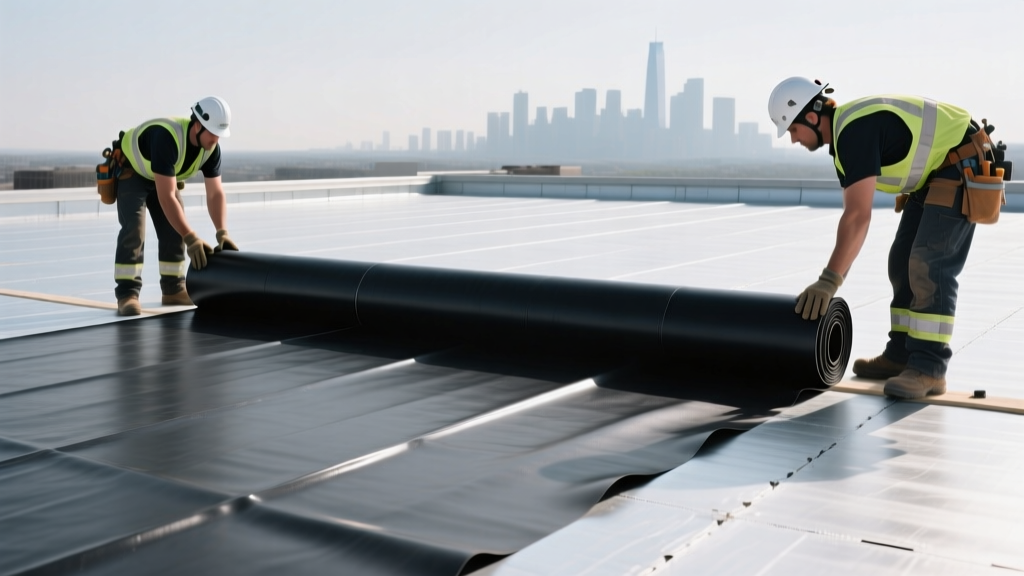
Reinforced EPDM is fastened to the structural deck using screws and batten bars or round plates, with seams spliced using butyl tape. Use Case: Large, open commercial warehouses, new construction with steel or wood decks, and projects requiring rapid installation. Limitation: Requires a structural deck capable of holding fasteners; not suitable for concrete decks without specialized powder-actuated tools or pre-drilling.
3. Ballasted Systems
Loose-laid 45-mil or 60-mil EPDM is covered with river-washed stone (typically 10 to 12 lbs per square foot) or concrete pavers. Use Case: Simple roof geometries, concrete decks where fastening is impossible, and budget-constrained projects. Limitation: The building structure must support the massive dead load of the ballast. Ponding water can cause the ballast to shift, exposing the membrane to UV degradation.
Phase 4: Flashing, Seam Technology, and Edge Cases
The most common failure point in EPDM roofing is not the field membrane, but the seams and flashings. Modern EPDM systems rely on pre-applied butyl splice tapes rather than liquid lap sealants, which drastically reduces human error and seam failure rates.
Seam Technology Specifications
Specify 3-inch or 6-inch factory-applied butyl splice tape for horizontal seams. For vertical flashings and complex penetrations, use uncured EPDM flashing laminated to a butyl adhesive backing. Uncured EPDM conforms to irregular shapes (like pipe boots and corner gussets) and cures in place under UV exposure.
Material Incompatibility Failures
EPDM is highly susceptible to degradation from petroleum-based products. A frequent and catastrophic edge case occurs when contractors use asphalt-based roof cements, coal tar pitch, or bituminous flashing tapes to repair or seal EPDM flashings. These hydrocarbons cause the EPDM polymers to break down, swell, and lose tensile strength within months.
- Compatible: Polyurethane caulks, butyl tapes, EPDM-specific water-based contact adhesives, silicone sealants.
- Incompatible: Asphalt cements, coal tar, mineral spirits, petroleum-based solvents, PVC membranes (plasticizer migration).
Phase 5: 2026 Cost Economics and ROI
When budgeting for an EPDM roofing material installation, factor in both material and specialized labor costs. While EPDM material itself is highly economical, the total installed cost varies heavily by attachment method.
| System Type | Material Cost (per sq ft) | Labor & Accessories (per sq ft) | Total Installed Cost (per sq ft) | Expected Lifespan |
|---|---|---|---|---|
| 45-Mil Ballasted | $0.95 | $2.50 - $3.50 | $3.45 - $4.45 | 20 - 25 Years |
| 60-Mil Mechanically Attached | $1.45 | $3.50 - $4.50 | $4.95 - $5.95 | 25 - 30 Years |
| 60-Mil Fully Adhered | $1.45 | $4.50 - $6.00 | $5.95 - $7.45 | 30+ Years |
| 90-Mil Fully Adhered (Premium) | $2.15 | $5.00 - $6.50 | $7.15 - $8.65 | 35+ Years |
Note: Costs assume a standard commercial deck with 1-2 layers of polyiso insulation and a gypsum cover board. Tear-off of existing roofing systems will add $1.50 to $3.00 per square foot depending on the number of layers and disposal fees.
Compliance and Final Sourcing Checklist
Before finalizing your specification, ensure the selected EPDM roofing material meets the following industry standards:
- ASTM D4637: Standard Specification for EPDM Sheet Used In Single-Ply Roofing Membrane. Verify the product data sheet explicitly states compliance with Type I (non-reinforced) or Type II (reinforced) classifications.
- FM Global / UL Approvals: Ensure the specific assembly (membrane, insulation, fastener, and deck) holds a current FM 1-60 or FM 1-90 wind uplift rating, and a Class A fire rating.
- Warranty Requirements: If pursuing a 20-year or 30-year NDL (No Dollar Limit) manufacturer warranty, you must strictly adhere to the manufacturer's approved fastener patterns, adhesive coverage rates, and authorized contractor lists.
By systematically evaluating thickness, thermal requirements, and attachment methodologies through this framework, you eliminate guesswork and ensure the EPDM system performs reliably across its entire lifecycle.
Written by
Priya KapoorPriya Kapoor is a real estate market analyst and construction economics researcher with expertise in housing affordability, development feasibility, and infrastructure investment. She holds a Master of Regional Planning from Cornell University and previously worked as a senior analyst at CBRE's Investment Properties group, where she modeled returns for $4B in mixed-use development pipelines. Priya now runs an independent research practice advising developers, municipalities, and REITs on construction cost forecasting and market timing. She publishes the quarterly "BuildMat Market Pulse" report tracking material price indices across 12 commodity categories. Based in Austin, TX, Priya serves on the board of Habitat for Humanity Austin and is a marathon runner.
More from Priya Kapoor
View all
Construction Cost
Cost to Build a 1600 Sq Ft Home in 2026: Full Breakdown
Accurate 2026 cost to build a 1600 sq ft home—material, labor, and regional pricing breakdowns included. Plan your budget with real-time estimates.
Aug 11, 2026

Wood & Lumber
Name the Types of Wood for Pressure Treatment and Preservation
Learn how to name the types of wood best suited for pressure treatment. Compare species treatability, chemical retention levels, and 2026 preservation costs.
Aug 4, 2026

Stone & Masonry
Stone Veneer Suppliers Lindenhurst: 2026 Cost Analysis
Analyze 2026 stone veneer costs in Lindenhurst, NY. Compare local supplier pricing, delivery fees, and Suffolk County installation labor rates.
Aug 4, 2026