How to Select Roof Shingle Colors for Architecture and Climate
Discover how to select the best roof shingle colors based on climate SRI ratings, architectural style, and HOA rules. Expert taxonomy and brand guide.
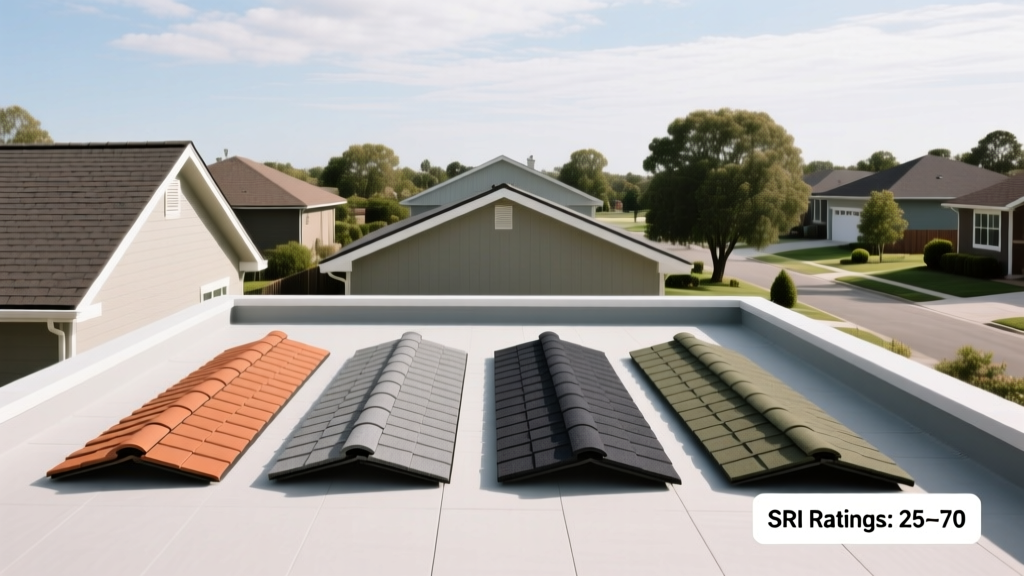
The Physics of Shingle Pigmentation and Thermal Performance
Selecting roof shingle colors extends far beyond curb appeal; it is a critical thermodynamic decision that impacts your home's cooling loads, attic ventilation requirements, and long-term material degradation. Modern asphalt shingles derive their color from ceramic-coated crushed rock granules. During manufacturing, these granules are fired at high temperatures with inorganic pigments to ensure UV stability.
The thermal performance of these pigments is measured by the Solar Reflectance Index (SRI). A standard black shingle typically has an SRI of 5 to 10, meaning it absorbs the vast majority of solar radiation, potentially reaching surface temperatures of 160°F on a 90°F summer day. In contrast, specialized 'cool roof' granules in lighter hues can achieve an SRI of 25 to 35. According to the U.S. Department of Energy, shifting from a dark roof to a cool-colored roof can reduce peak cooling demand by 10% to 15% in hot climates.
Taxonomy of Asphalt Shingle Color Blends
Shingle manufacturers do not produce single-color roofs. To mimic natural materials like slate and wood, they utilize complex granule blending techniques. Understanding this taxonomy is essential for matching the visual weight of your home's exterior.
| Color Blend Type | Material Application | Visual Characteristics | Industry Examples |
|---|---|---|---|
| Monochromatic / Low-Variance | 3-Tab & Basic Architectural | Uniform appearance with minimal shadow lines. Best for homes with highly textured siding (e.g., heavy stone or log cabins) to avoid visual clutter. | GAF Timberline HDZ (Charcoal), Owens Corning Duration (Onyx Black) |
| Variegated / Mid-Contrast | Premium Architectural | Blends 3 to 5 distinct granule colors within the same hue family. Creates depth and mimics weathered wood or aged slate. | CertainTeed Landmark PRO (Weathered Wood), GAF Timberline UHDZ (Barkwood) |
| High-Contrast / Shadow | Luxury / Designer Laminates | Combines disparate colors (e.g., black and deep red, or gray and brown) to create aggressive shadow lines. Simulates thick-cut slate or scalloped wood. | Owens Corning TruDefinition Duration Designer (Aged Copper), CertainTeed Grand Manor |
Climate-Driven Color Selection Framework
The geographic location of your property dictates whether you should prioritize solar reflectance or thermal absorption. Building scientists use Heating Degree Days (HDD) and Cooling Degree Days (CDD) to evaluate this balance.
The Sunbelt and High-CDD Regions
In areas where cooling costs dominate (e.g., Texas, Florida, Southern California), lighter roof shingle colors like Desert Tan, Estate Gray, or Pewter Gray are highly recommended. These colors reflect visible light, reducing attic temperatures and extending the lifespan of the asphalt binder, which can prematurely bake out and cause granule loss at sustained high temperatures.
Northern Climates and High-HDD Regions
In heating-dominated climates (e.g., Minnesota, Maine, upstate New York), dark roof shingle colors like Charcoal or Moire Black provide a marginal passive heating benefit during winter months by melting snow loads faster, which reduces the risk of ice dam formation at the eaves. However, the Asphalt Roofing Manufacturers Association (ARMA) notes that proper attic insulation and intake/exhaust ventilation are vastly more important for ice dam prevention than shingle color alone.
Architectural Pairing Matrix
A common failure in roof replacement is selecting a shingle color that fights the home's architectural lines. Use this matrix to align your shingle taxonomy with your home's structural style.
- Colonial & Cape Cod: These homes feature symmetrical lines and traditional siding (clapboard or Dutch lap). Selection: Variegated mid-contrast colors in gray or brown families (e.g., GAF Pewter Gray, Owens Corning Driftwood). Avoid high-contrast designer shingles, which look too chaotic against strict symmetry.
- Craftsman & Bungalow: Characterized by tapered columns, wide eaves, and mixed materials (stone bases, wood siding). Selection: High-contrast, earthy blends. Colors with subtle red or green undertones (e.g., CertainTeed Autumn Brown, GAF Canyon Shake) bridge the gap between natural stone and wood trim.
- Modern & Contemporary: Defined by flat planes, mixed cladding (stucco, metal, fiber cement), and sharp angles. Selection: Strict monochromatic profiles. Solid Onyx Black, Charcoal, or even stark white (if using specialized cool-roof coatings) emphasize the geometric purity of the structure.
- Victorian & Queen Anne: Complex rooflines with turrets, dormers, and steep pitches. Selection: Premium designer laminates with high-contrast shadow lines. Slate-inspired colors (e.g., Owens Corning Sedona Canyon) highlight the intricate cuts and valleys of the roofline.
Optical Illusions: Pitch, Lighting, and Fading
A critical, often overlooked variable in roof shingle color selection is the optical distortion caused by roof pitch and ambient lighting. A color swatch viewed vertically at eye level will look drastically different when installed on a 40-degree slope.
Algae Streaking and Granule Degradation
In humid climates, dark roof shingle colors are highly susceptible to Gloeocapsa magma (blue-green algae), which manifests as unsightly black streaks running down the roof slopes. While this does not immediately compromise the shingle's waterproofing, it severely impacts aesthetics. If you are committed to a dark color in a high-humidity zone (USDA Hardiness Zones 7-10), you must specify shingles with copper or zinc-infused algae-resistant granules, such as Owens Corning's StreakGuard or GAF's Time-Release Algae-Fighting Technology. Standard 3-tab shingles rarely include these premium biocides.
HOA Navigation and Final Selection Checklist
Before finalizing your material order, cross-reference your selection with local Homeowner Association (HOA) covenants. Many modern HOAs explicitly ban solid black or pure white shingles, mandating 'architectural blends' to maintain neighborhood cohesion. Request a physical 2x2 foot mock-up board from your contractor and view it outside in both direct noon sunlight and overcast conditions.
Pre-Purchase Verification Checklist
- Verify SRI Ratings: Check the CRRC directory for the specific product and color code to ensure it meets local energy codes (e.g., Title 24 in California requires minimum SRI values for low-slope and steep-slope roofs).
- Confirm Algae Warranties: Ensure the manufacturer's warranty explicitly covers algae discoloration for a minimum of 10 to 15 years if installing in a humid biome.
- Check Batch Consistency: For large roofs requiring multiple pallets, verify that all bundles share the exact same manufacturing lot number printed on the wrapper to prevent visible color banding across the roof plane.
- Assess Trim Contrast: Ensure the chosen shingle color does not perfectly match your exterior trim or fascia, which eliminates the visual boundary of the roofline and creates a muddy, undefined exterior elevation.