2026 Cost Breakdown by Roof Material Type: Pricing & ROI
Analyze the 2026 cost breakdown by roof material type. Compare installed pricing, hidden structural fees, and ROI for asphalt, metal, and tile.

The 2026 Base Cost Matrix: Material vs. Installed
Selecting the optimal roof material type is fundamentally a capital allocation exercise. In 2026, supply chain stabilization has normalized base material costs, but specialized labor premiums, structural reinforcement requirements, and advanced underlayment mandates dictate the true financial outlay. A superficial comparison of material-only costs often leads to severe budget overruns once site-specific variables are introduced.
The following matrix establishes the baseline financial parameters for the most common residential and commercial roofing systems, measured per standard roofing square (100 square feet).
| Roof Material Type | Material Cost (Per Square) | Installed Cost (Per Square) | Expected Lifespan |
|---|---|---|---|
| Architectural Asphalt | $130 - $170 | $450 - $650 | 25 - 35 Years |
| Standing Seam Metal (24ga) | $400 - $550 | $1,100 - $1,600 | 40 - 60 Years |
| Concrete Tile | $220 - $350 | $850 - $1,200 | 50+ Years |
| 60-Mil TPO Membrane | $180 - $250 | $600 - $900 | 20 - 30 Years |
| Natural Slate | $900 - $1,600 | $2,200 - $3,500 | 75 - 100+ Years |
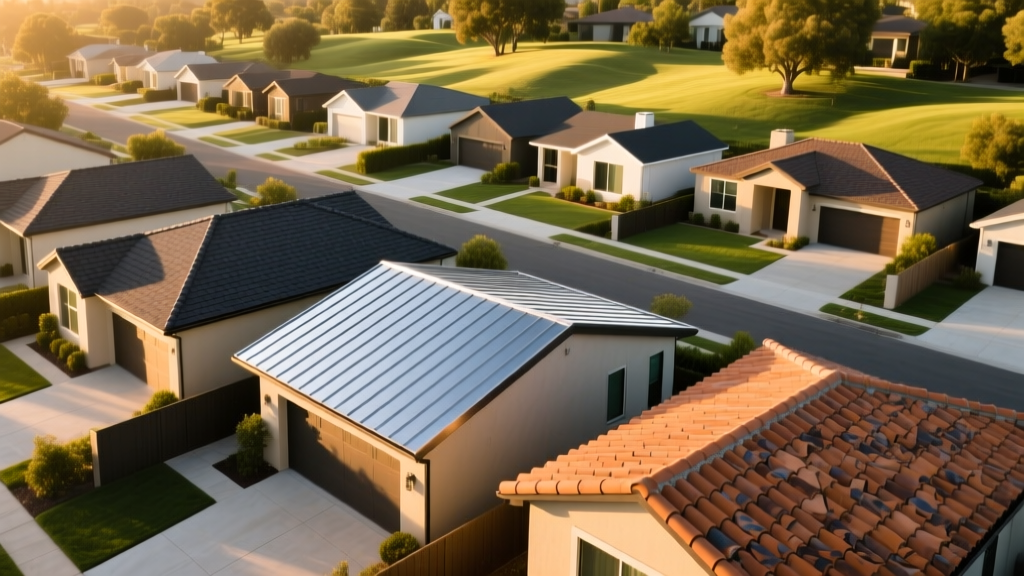
Granular Cost Analysis by Roof Material Type
Architectural Asphalt Shingles: The Baseline Standard
Architectural shingles remain the dominant roof material type in North America due to their favorable cost-to-performance ratio. However, not all architectural shingles are engineered equally. Premium lines like GAF Timberline HDZ or Owens Corning Duration feature proprietary nailing zones (such as GAF's StrikeZone) that reduce installer error and increase wind uplift resistance to ASTM D3161 Class F (110 mph).
While the material cost hovers around $145 per square, the installed price is heavily influenced by roof pitch and complexity. A simple gable roof with a 6/12 pitch will sit at the lower end of the $450 per square installed range. Conversely, a 12/12 pitch with multiple valleys and dormers requires specialized fall protection and slower installation, pushing costs toward $650 per square. Furthermore, upgrading to a synthetic underlayment like SharkSkin Ultra adds approximately $35 per square but provides critical secondary water resistance and tear strength.
Standing Seam Metal: The Premium Long-Term Play
When evaluating a metal roof material type, specifying the exact gauge and coating is non-negotiable. A 24-gauge Galvalume standing seam panel (such as the MBCI Signature 200) offers superior puncture resistance and structural integrity compared to 26-gauge alternatives. The concealed fastener clip system allows for thermal expansion and contraction, eliminating the back-out screws and subsequent leaks common in exposed-fastener corrugated metal roofs.
The financial barrier to entry is high. Material costs average $475 per square, but specialized fabrication and installation labor drive the total to $1,300 or more per square. A critical, often-omitted cost in metal roofing is the requirement for a high-temperature synthetic underlayment. Metal panels can reach 160°F in direct summer sunlight; standard asphalt-saturated felt will melt, adhere to the metal, and void warranties. Budget an additional $45 to $60 per square for high-temp slip-sheet underlayments.
Concrete and Clay Tile: The Structural Tax
Tile roofing offers unmatched longevity and thermal mass, but it introduces a massive hidden variable: structural load. A standard concrete tile profile (like those from Eagle Roofing) weighs between 900 and 1,050 pounds per square. Clay tiles can exceed 1,100 pounds.
Before a single tile is purchased, a structural engineering assessment (typically $800 to $1,500) is required. If the existing truss system cannot support the dead load, the homeowner must pay for structural reinforcement. Sistering trusses, adding mid-span bracing, or upgrading roof decking from 7/16-inch OSB to 5/8-inch CDX plywood can add $3,000 to $8,000 to the overall project cost. This 'structural tax' must be factored into the initial budget when selecting this roof material type.
Low-Slope Membranes (TPO/EPDM): Commercial and Modern Flat Roofs
For low-slope applications (under 3:12 pitch), thermoplastic polyolefin (TPO) and ethylene propylene diene monomer (EPDM) are the standard. A 60-mil reinforced TPO membrane (such as Carlisle Sure-Weld) costs roughly $210 per square for materials. The installation cost divergence lies in the attachment method.
- Mechanically Attached: The membrane is fastened to the decking using plates and screws. This is the most cost-effective method ($600/sq installed) but can cause 'billowing' in high-wind events.
- Fully Adhered: The membrane is glued directly to the insulation board using specialized bonding adhesive. This adds $1.50 to $2.50 per square foot in adhesive and labor, pushing installed costs to $900/sq, but provides superior wind uplift ratings and a smoother aesthetic.
The Hidden Cost Framework: What Quotes Don't Show
Contractor quotes based strictly on per-square roofing metrics frequently exclude site-preparation variables. Always verify that your estimate includes the following line items to avoid mid-project change orders.
- Decking Replacement: Tear-off often reveals rotted OSB or plywood. In 2026, replacing a 4x8 sheet of 5/8-inch OSB costs $55 to $75 per sheet in materials, plus $30 in labor. Budget a 10% contingency for decking replacement.
- Ice and Water Shield: Building codes in northern climates mandate self-adhering polymer-modified bitumen membranes (e.g., Grace Ice & Water Shield) in eaves, valleys, and penetrations. This material costs $85 to $120 per square, significantly higher than standard synthetic underlayment.
- Tear-Off and Disposal: Dump fees have risen sharply. Expect to pay $100 to $150 per square for the labor and landfill fees associated with removing and disposing of existing layers.
- Crane Rentals: For slate or heavy tile roofs on multi-story structures, a material hoist or crane is required. Daily crane rental rates range from $1,200 to $2,500, plus operator fees.
Decision Matrix: Matching Roof Material Type to Project Goals
Use the following framework to align your capital expenditure with your property's specific environmental and financial requirements.
| Project Constraint / Goal | Recommended Roof Material Type | Financial Justification |
|---|---|---|
| Budget under $15,000 (Standard Home) | Architectural Asphalt (30-year) | Lowest upfront installed cost; adequate wind resistance; widely available labor pool keeps installation margins competitive. |
| WUI Zone (Wildfire Urban Interface) | Class A Standing Seam Metal | Non-combustible surface prevents ember ignition. Higher upfront cost is offset by insurance premium reductions in high-risk fire zones. |
| Historic Preservation / High-End Resale | Synthetic Slate (e.g., DaVinci) | Provides the aesthetic of natural slate at 40% less weight, eliminating structural reinforcement costs while maintaining a premium appraisal value. |
| Low-Slope / High HVAC Load | White 60-Mil TPO (Fully Adhered) | High solar reflectance index (SRI) reduces cooling loads by up to 15%. Refer to the U.S. Department of Energy's Cool Roof guidelines for climate-specific energy savings data. |
Sourcing and Technical Standards
Accurate budgeting requires adherence to current industry standards and manufacturer specifications. When evaluating contractor proposals, ensure all proposed materials and installation methods comply with the latest technical bulletins published by the National Roofing Contractors Association (NRCA). Verifying that your chosen roof material type meets local building codes for wind uplift (ASTM D3161 or FM 1-90) and fire resistance (UL Class A) is essential for long-term structural integrity and insurance compliance.
Written by
Sarah WhitfieldSarah Whitfield is a chartered quantity surveyor (MRICS) and construction cost analyst with 15 years of experience in material pricing, procurement strategy, and project budgeting. She earned her degree in Construction Management from the University of Reading (UK) and has worked on projects ranging from $2M custom homes to $180M mixed-use developments across North America and Europe. Sarah currently leads cost estimating for BuildMat Insight, maintaining a proprietary database of 4,000+ material price points updated quarterly. She is a frequent contributor to RSMeans cost data panels and has presented at the International Cost Engineering Council (ICEC) congress. Based in Denver, CO, Sarah is an avid trail runner and volunteer mentor for Women in Construction.
More from Sarah Whitfield
View all
Wood & Lumber
What Are the Different Types of Wood? A Builder's Guide
Compare structural softwoods, finish hardwoods, and engineered lumber. Analyze Janka ratings, MOE values, and 2026 pricing for construction.
Aug 4, 2026

Walls & Panels
Steel Framing vs Wood Framing: Corrosion and Moisture Defense
Compare steel framing vs wood framing for moisture resistance. Learn about galvanized coatings, condensation risks, and corrosion protection strategies.
Jul 21, 2026

Stone & Masonry
How to Cut Stone Veneer: Wet Saw vs Grinder Comparison
Compare the best tools for cutting stone veneer. We review wet saws, angle grinders, and chop saws to help you achieve clean, chip-free cuts.
Jul 21, 2026