Roof Tar Material Taxonomy: Selecting the Right Sealant
Compare fibered, non-fibered, and rubberized roof tar types. Use our material taxonomy to select the exact asphalt sealant for your flat roof repair.
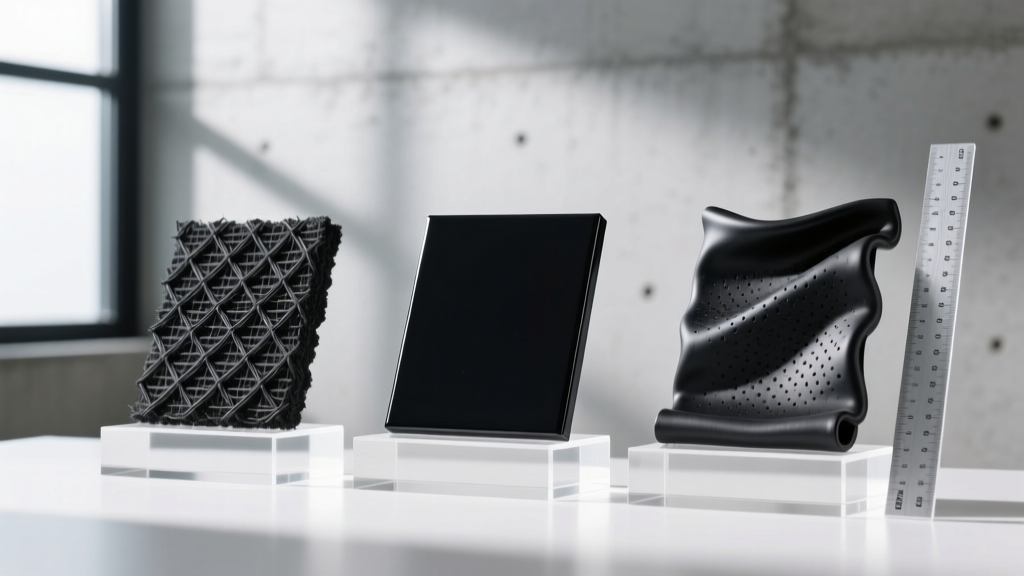
The Material Taxonomy of Bituminous Roof Sealants
The term 'roof tar' is a colloquial catch-all that technically spans several distinct chemical formulations of bitumen and asphalt-based sealants. In modern commercial and residential roofing, true coal tar pitch is largely restricted to specialized industrial applications due to environmental regulations. The products available to contractors and facility managers today are predominantly petroleum-derived asphalt cements, cutbacks, and emulsions. Selecting the correct formulation requires understanding the structural taxonomy of these materials, as applying the wrong variant can lead to membrane degradation, adhesion failure, or trapped moisture blisters.
1. Fibered Asphalt Plastic Cement
Fibered roof tar is a heavy-bodied, solvent-based asphalt cement reinforced with cellulose, fiberglass, or synthetic fibers. Governed by ASTM D4586 (Standard Specification for Asphalt Roof Cement), this material is designed for high-build applications. The internal fiber matrix provides exceptional bridging capabilities, allowing the sealant to span gaps, cracks, and open joints up to 1/4-inch wide without sagging or running on vertical surfaces. It is the standard choice for embedding roofing felts, sealing pipe penetrations, and repairing severe alligatoring on built-up roofs (BUR).
2. Non-Fibered Base Flashing Cement
Non-fibered variants lack the structural reinforcement of added fibers, resulting in a smoother, more fluid consistency. While it cannot bridge wide gaps, its lack of aggregate allows it to penetrate tight seams and micro-fissures more effectively. Non-fibered tar is primarily used as an adhesive for embedding asphalt-saturated fiberglass mats during base flashing installation, or for sealing tight metal-to-membrane transitions where a smooth, trowelable finish is required.
3. Asphalt Emulsions (Water-Based)
Asphalt emulsions suspend microscopic bitumen droplets in a water base using emulsifying agents. Because they contain no volatile organic solvents, they are compliant with strict VOC regulations and emit minimal odor. Emulsions are typically used as primers, protective topcoats, or as the base layer for reflective aluminum or elastomeric roof coatings. However, their water-based chemistry dictates a critical limitation: they cannot be applied in freezing temperatures or when rain is imminent, as the material relies entirely on water evaporation to cure.
4. SBS Rubberized Asphalt Sealants
Styrene-Butadiene-Styrene (SBS) modified roof tar represents the premium tier of bituminous sealants. By blending synthetic rubber polymers into the asphalt matrix, manufacturers create a sealant that remains highly flexible across extreme temperature fluctuations. Standard asphalt cements become brittle below 32°F (0°C) and can soften and slump above 140°F (60°C). SBS rubberized tar maintains elasticity down to -20°F (-29°C) and resists flow at high ambient temperatures, making it the mandatory choice for active cracks that experience thermal expansion and contraction.
Selection Matrix: Matching Tar Type to Application
Use the following decision matrix to align your specific roofing substrate and repair scenario with the correct material taxonomy.
| Material Type | Viscosity & Build | Primary Use Case | Incompatible Substrates | Coverage Rate (per Gallon) |
|---|---|---|---|---|
| Fibered Asphalt Cement | High / Heavy-bodied | Pipe collars, wide gap bridging, BUR repair | EPDM, TPO, PVC single-plys | 12-15 sq. ft. at 1/8" thickness |
| Non-Fibered Cement | Medium / Smooth | Felt embedding, tight metal flashing seams | EPDM, TPO, PVC single-plys | 20-25 sq. ft. at 1/16" thickness |
| Asphalt Emulsion | Low / Fluid | Priming concrete decks, reflective coating base | Untreated wood, freezing conditions | 50-75 sq. ft. as a primer coat |
| SBS Rubberized Tar | Medium-High / Elastic | Active thermal cracks, mobile home seams | Uncured EPDM (test for compatibility) | 15-20 sq. ft. at 1/8" thickness |
Critical Incompatibilities and Failure Modes
The most frequent and costly error in roof tar selection involves chemical incompatibility with single-ply roofing membranes.
The Moisture Encapsulation Blister
Another common failure mode occurs when solvent-based roof tar is applied over a damp substrate or trapped moisture. Solvent-based cements cure through the evaporation of their carrier solvents. If applied over wet insulation or a damp concrete deck, the tar forms an impermeable vapor barrier on the surface. As the sun heats the roof, the trapped moisture vaporizes, expanding and creating massive blisters that delaminate the repair and tear the surrounding membrane. Always verify substrate moisture levels are below 15% using a protimeter before applying solvent-based cements.
Curing vs. Drying: Understanding the Timeline
Contractors often conflate 'drying to the touch' with 'curing,' leading to premature topcoating and system failures.
- Skin-Over Time (Drying): Most solvent-based roof tars will form a surface skin within 2 to 4 hours under optimal conditions (70°F, low humidity). This skin is merely a barrier against dust and light rain.
- Through-Cure Time: The complete evaporation of deep-solvents and full cross-linking of the bitumen matrix takes significantly longer. A 1/4-inch thick application of fibered tar requires 14 to 28 days to fully cure through its entire depth.
- Bleed-Through Prevention: If you plan to apply a white elastomeric or acrylic topcoat over a roof tar repair, you must wait for the full cure time and apply a specialized bleed-blocking primer. If applied too early, the uncured asphalt oils will migrate through the white coating, causing permanent yellow and brown staining.
Technical Application Parameters
To ensure adhesion and longevity, strict adherence to environmental and preparatory parameters is required. According to guidelines published by the Asphalt Institute, bituminous materials are highly sensitive to ambient conditions during application.
Temperature Thresholds
Solvent-based roof tars should not be applied when ambient or surface temperatures are below 40°F (4°C). At lower temperatures, the viscosity increases drastically, preventing the material from wetting out the substrate and resulting in poor mechanical adhesion. Conversely, applying tar when surface temperatures exceed 120°F (49°C) can cause the solvents to flash off too quickly, leading to a porous, poorly consolidated repair.
Substrate Preparation
Roof tar will not adhere to oxidized, chalky, or dusty surfaces. Before application, the repair area must be power-washed and scrubbed with a stiff-bristle broom to remove gravel, dirt, and oxidized bitumen. For highly oxidized modified bitumen surfaces, applying a thin coat of asphalt primer (cutback) and allowing it to become tacky before troweling the heavy cement will dramatically increase the bond strength.
Cost Breakdown and Yield Estimations
When budgeting for roof maintenance, material costs must be evaluated alongside coverage rates to determine the true cost per square foot of repair. Prices reflect average commercial distributor rates.
- Standard Fibered Asphalt Cement: $28 - $38 per 1-gallon can; $95 - $130 per 5-gallon pail. Yields approximately $0.75 per square foot at standard 1/8" repair thickness.
- SBS Rubberized Wet/Dry Sealant: $45 - $65 per 1-gallon can; $160 - $210 per 5-gallon pail. Yields approximately $1.20 per square foot. The premium cost is justified by a 300% increase in elongation properties and extended service life.
- Asphalt Emulsion Primer: $80 - $110 per 5-gallon pail. Highly economical for large-area priming, yielding less than $0.15 per square foot.
By matching the specific chemical taxonomy of the sealant to the physical demands of the substrate and the environmental realities of the job site, facility managers can execute flat roof repairs that last decades rather than seasons. Always consult the manufacturer's Technical Data Sheet (TDS) for the specific VOC limits and environmental compliance standards required in your local jurisdiction before procurement.