House Wrap Lifespan: Durability and UV Exposure Analysis
Analyze house wrap lifespan, UV degradation rates, and durability of top WRB membranes to ensure long-term moisture protection for exterior walls.
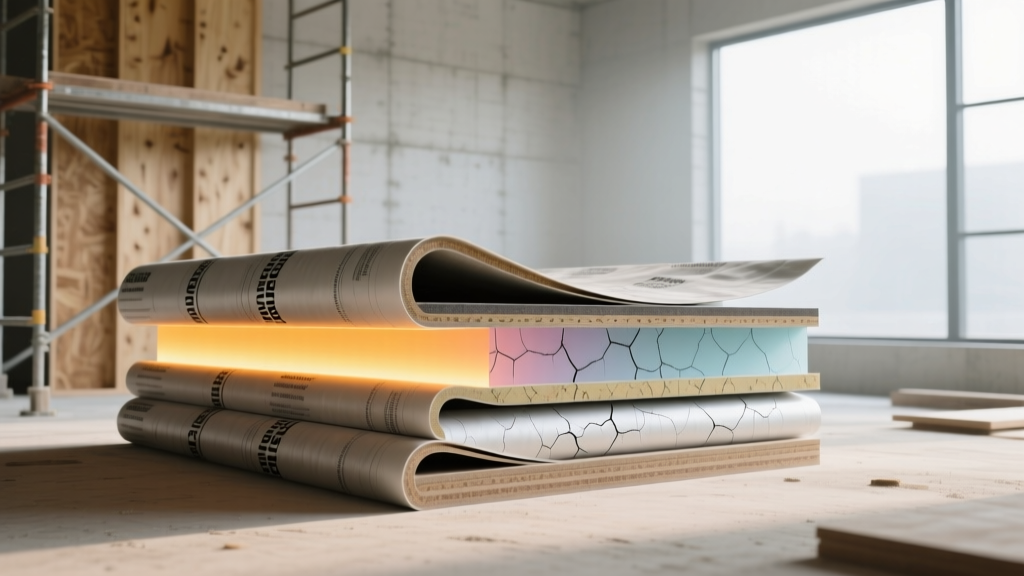
The Bifurcated Lifespan: Service Life vs. Exposure Life
When evaluating the durability of house wrap—technically classified as a Water-Resistive Barrier (WRB)—building scientists separate its lifespan into two distinct phases: exposure life and service life. The exposure life refers to the membrane's ability to withstand ultraviolet (UV) radiation and mechanical job-site abuse before the exterior cladding is installed. The service life refers to its functional longevity once protected behind siding, brick, or stucco.
Once shielded from UV light, high-quality spunbonded polyolefin and liquid-applied WRBs are engineered to last 50 to 75 years, effectively matching the lifespan of the cladding and sheathing. However, during the construction phase, standard house wraps degrade rapidly if left exposed beyond their manufacturer-rated UV limits, which typically range from 90 to 180 days. According to the Pacific Northwest National Laboratory’s Building America Solution Center, UV degradation compromises the polymer matrix, leading to micro-tearing and a total loss of water resistance long before the siding is ever applied.
UV Degradation Matrix: Comparing Top WRB Membranes
Not all house wraps tolerate job-site delays equally. The polymer composition, coating thickness, and integration of drainage gaps dictate how long the material survives direct sunlight. Below is a durability and exposure matrix comparing industry-standard WRBs available for current residential and light-commercial builds.
| Product / System | Material Type | Max UV Exposure | Tear Strength (ASTM D5034) | Drainage Gap |
|---|---|---|---|---|
| DuPont Tyvek HomeWrap | Spunbonded Polyolefin | 120 Days | ~15 lbf (MD) | None (Flat) |
| Huber ZIP System | OSB with Fused Coating | 180 Days | N/A (Structural Panel) | None (Flat) |
| Benjamin Obdyke HydroGap | Spunbonded w/ Spacer | 120 Days | ~18 lbf (MD) | 1 mm Spacer |
| Typar Surround VR | Spunbonded w/ Coating | 270 Days (9 Mo) | ~25 lbf (MD) | None (Flat) |
For projects in regions with high solar intensity or where cladding installation is prone to supply chain delays, specifying a wrap like Typar Surround VR or an integrated system like ZIP System prevents the catastrophic failure of the WRB before the building envelope is sealed.
Mechanical Durability: Wind Loading and Fastener Sealability
The physical lifespan of house wrap is frequently cut short by improper fastening, which compromises its ability to resist bulk water intrusion over decades of thermal expansion and wind-driven rain events. The ASTM D5034 Standard Test Method measures the breaking strength and elongation of textile fabrics, which directly correlates to how a WRB handles wind loads before siding is applied.
The Fatal Flaw of Staple Guns
Using a pneumatic staple gun to secure house wrap is the most common cause of premature WRB failure. Staples create narrow, linear slits in the polymer matrix. When subjected to wind flutter (billowing), these slits elongate into tears. More critically, staples do not seal the penetration hole. Over a 50-year service life, capillary action will draw moisture through these unsealed staple holes directly into the OSB or plywood sheathing, leading to rot long before the wrap itself degrades.
To guarantee the rated lifespan of the membrane, installation protocols mandate the use of cap fasteners. A minimum 1-inch diameter plastic or metal cap nail distributes the wind load across a wider surface area and creates a mechanical seal around the nail shank. According to DuPont’s official installation guidelines, cap fasteners are strictly required in high-wind zones and are heavily recommended for all applications to maintain the 10-year manufacturer warranty.
Failure Mode Decision Tree: Diagnosing WRB Breakdown
When a house wrap system fails to protect the sheathing, it is rarely due to the material reaching the end of its natural chemical lifespan. Failures are almost exclusively mechanical or chemical incompatibilities introduced during installation. Use this diagnostic framework to identify the root cause of WRB degradation:
- Symptom: Chalking, flaking, or brittleness upon touch.
- Cause: UV Overexposure. The wrap was left exposed beyond its rated limit (e.g., 120 days for standard polyolefin).
- Fix: The damaged sections must be completely removed and replaced. Taping over UV-burnt wrap will fail because the substrate lacks structural integrity.
- Symptom: Moisture accumulation on sheathing despite intact wrap.
- Cause: Capillary wicking via flat-wrap contact or unsealed fastener holes (staples).
- Fix: Upgrade to a drainage-mat WRB (e.g., HydroGap or CedarBreath) which provides a physical air gap to break capillary tension and allow bulk water to drain to the sill plate.
- Symptom: Seams peeling or tape detaching after 1-2 years.
- Cause: Chemical incompatibility between the tape adhesive and the WRB coating, or application over damp/dusty sheathing.
- Fix: Exclusively use manufacturer-matched tape systems (e.g., Tyvek tape for Tyvek, ZIP tape for ZIP). Generic butyl or acrylic tapes often fail to bond with the specific surfactants used in proprietary WRB coatings.
Drainage Gaps and Sheathing Longevity
While the house wrap itself may last 50 years, the sheathing behind it will not if bulk water is trapped. Modern building codes increasingly mandate drainage gaps behind certain claddings, particularly absorptive materials like manufactured stone veneer, stucco, and fiber cement.
"A flat house wrap pressed tightly against OSB sheathing creates a capillary sandwich. If water breaches the cladding, surface tension pulls it laterally across the sheathing rather than allowing gravity to drain it downward. Incorporating a 1mm to 1.5mm drainage gap via a textured WRB or a separate rainscreen mat effectively doubles the functional lifespan of the wood sheathing by allowing rapid drying to the exterior."
For builds utilizing stucco or stone veneer, relying on a flat wrap like standard Tyvek is a critical error that reduces the overall envelope lifespan. Specifying a dimpled or spaced WRB ensures that incidental moisture bypasses the capillary threshold, preserving the structural framing.
Strategic Selection for Build Timelines
Specifying the correct house wrap requires aligning the material’s UV tolerance and drainage capabilities with your specific construction schedule and cladding choice. For fast-tracked production homes where siding follows framing within weeks, a standard 120-day UV-rated flat wrap is economically and functionally sufficient. However, for custom builds, multi-story commercial projects, or structures utilizing high-mass absorptive claddings, investing in a 9-month UV-rated wrap or an integrated drainage system is non-negotiable. The upfront material premium of $0.15 to $0.30 per square foot for advanced WRBs prevents tens of thousands of dollars in sheathing remediation, ensuring the water-resistive barrier performs flawlessly for the entire 50-year service life of the structure.