LED Solar Light Outdoor Waterproof Selection: IP Ratings & Materials
Discover how to select the right LED solar light outdoor waterproof systems. Compare IP ratings, housing materials, and encapsulation for durability.
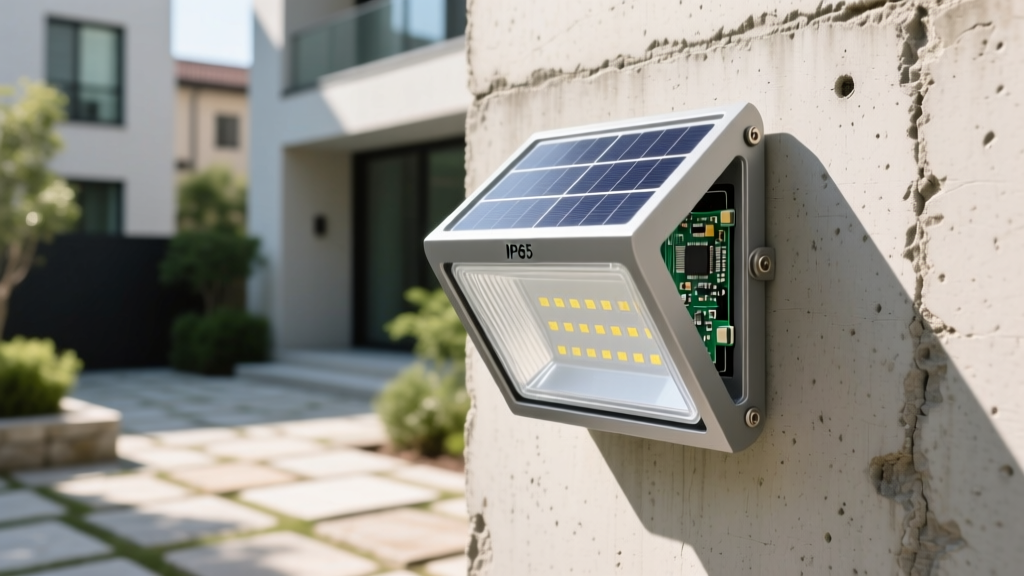
The Thermodynamic Challenge of Solar Enclosures
Selecting a reliable led solar light outdoor waterproof fixture requires looking far beyond the marketing claims on the packaging. The fundamental engineering challenge of outdoor solar lighting is managing the intersection of photovoltaic generation, lithium-ion energy storage, and solid-state LED drivers within a single, sealed environment. Unlike hardwired architectural lighting, solar fixtures must endure extreme thermal cycling without the benefit of active cooling or external ventilation.
During peak summer irradiance, a dark-colored solar fixture housing can reach internal temperatures exceeding 65°C (149°F). At night, ambient temperatures may drop to 10°C (50°F) or lower. This 55°C delta-T causes the housing and lens materials to expand and contract at different rates based on their Coefficient of Thermal Expansion (CTE). If the waterproofing materials—such as gaskets and O-rings—cannot accommodate this mechanical fatigue, they suffer from compression set, leading to micro-gaps that allow moisture ingress. Understanding the material taxonomy of these fixtures is critical for architects, landscape contractors, and facility managers specifying long-term hardscape illumination.
Decoding IP Ratings for Architectural Solar Lighting
The Ingress Protection (IP) rating system, defined by the IEC 60529 standard, is the baseline metric for evaluating moisture resistance. However, the material requirements to achieve these ratings vary drastically. According to the U.S. Department of Energy's Solid-State Lighting program, proper thermal and moisture management is the primary driver of LED lumen maintenance and lifespan.
| IP Rating | Protection Level | Required Material Taxonomy | Best Application |
|---|---|---|---|
| IP65 | Low-pressure water jets | Silicone gaskets, mechanical screw clamping, conformal coated PCBs. | Standard wall sconces, soffit lighting, dry climates. |
| IP67 | Temporary immersion (1m for 30 mins) | EPDM O-rings, precision-machined mating surfaces, marine-grade cable glands. | Grade-level path lights, hardscape step lights. |
| IP68 | Continuous submersion | Full epoxy or polyurethane potting, hermetic glass-to-metal seals, ePTFE breather valves. | Pool copings, retaining wall weep holes, flood zones. |
Housing Material Selection: Beyond Basic Plastics
The outer shell of the fixture dictates both its structural longevity and its UV resistance. Material selection here is a balance of thermal conductivity, impact resistance, and cost.
Die-Cast Aluminum (ADC12 and A380 Alloys)
Aluminum remains the gold standard for commercial-grade solar fixtures due to its high thermal conductivity, which pulls heat away from the LED junction. However, raw aluminum is highly susceptible to galvanic corrosion, especially in coastal environments. Specifiers must require housings treated with a chromate conversion coating followed by a minimum 60-micron layer of UV-stable polyester powder coating (e.g., Qualicoat Class 2 or AAMA 2604 standards). Fixtures lacking this dual-layer treatment will exhibit oxidation blistering within 24 months in salt-air environments.
UV-Stabilized Polycarbonate (PC)
Polycarbonate offers superior impact resistance (often exceeding 900 J/m² in Izod testing) and is lighter than aluminum. However, standard PC degrades rapidly under UV exposure, leading to yellowing and micro-cracking that compromises the waterproof seal. For outdoor use, the polycarbonate must feature a co-extruded UV-cap layer (typically 50-75 microns thick) applied during the extrusion process. This cap layer absorbs UV radiation and dissipates it as heat, protecting the structural polymer beneath.
ABS (Acrylonitrile Butadiene Styrene)
ABS is frequently used in low-cost, consumer-grade solar lights. While it molds easily and accepts paint well, its baseline UV resistance is poor. ABS should only be specified for architectural applications if it is heavily pigmented with carbon black (which naturally absorbs UV) or if it is installed in heavily shaded hardscape wells where direct solar irradiance on the housing is minimal.
Internal Encapsulation: The Shift to Epoxy Potting
Historically, manufacturers relied on silicone sealants and rubber gaskets to keep water away from the LED driver and battery management system (BMS). In 2026, the industry standard for high-reliability fixtures has shifted toward thermoset potting compounds. Potting involves encasing the entire printed circuit board (PCB) and wire connections in a solid resin, eliminating internal air pockets where condensation can form.
Material Callout: Potting Compound Chemistry
- Epoxy Resins: Offer the highest mechanical strength and chemical resistance, but are rigid. Best for static fixtures where thermal shock is moderate.
- Polyurethane (PU): Provides excellent flexibility and adhesion to varied substrates. Ideal for fixtures experiencing high vibration or extreme thermal cycling.
- Silicone Gels: Offer the widest operating temperature range (-50°C to 200°C) and high optical clarity, but have lower tensile strength and are more expensive.
When specifying a potted led solar light outdoor waterproof system, request the thermal conductivity rating of the potting compound. High-performance fixtures utilize thermally conductive potting (rated >1.5 W/m·K) filled with aluminum oxide or boron nitride ceramics. This not only waterproofs the electronics but also acts as a secondary heat sink, extending the LED's L70 lumen maintenance life.
Pressure Equalization: Solving the Condensation Trap
Even a perfectly sealed IP68 fixture can fail if it ignores internal pressure dynamics. As the fixture heats up during the day, internal air expands and pushes against the gaskets. At night, the air cools and contracts, creating a negative pressure vacuum. This vacuum actively sucks microscopic moisture vapor through microscopic imperfections in the seal. Over weeks, this vapor accumulates, condenses on the inside of the lens, and eventually drips onto the BMS, causing catastrophic short circuits.
The engineering solution is the integration of an ePTFE (expanded polytetrafluoroethylene) breather valve. These membranes feature a micro-porous structure that allows gas molecules (air and water vapor) to pass through freely, equalizing internal and external pressure, while the surface tension of the PTFE blocks liquid water droplets from entering. Specifying fixtures with integrated ePTFE vents (such as Gore PolyVent equivalents) is non-negotiable for high-value commercial landscape projects.
Environmental Selection Matrix
Choosing the correct material combination requires matching the fixture's taxonomy to the specific environmental stressors of the site. The Illuminating Engineering Society (IES) provides extensive guidelines on outdoor lighting performance, emphasizing that environmental context dictates material longevity.
| Environment | Primary Stressor | Required Housing Material | Required Waterproofing / Seal | Hardware Spec |
|---|---|---|---|---|
| Coastal / Marine | Salt spray, galvanic corrosion | Marine-grade 316 Stainless or heavily anodized 6061 Aluminum | PU potting, EPDM O-rings | 316 Stainless Steel fasteners |
| Desert / Arid | Extreme UV, high ambient heat | UV-capped Polycarbonate or powder-coated ADC12 | High-temp silicone gaskets, ePTFE vent | Zinc-plated with passivation |
| Freeze-Thaw / Alpine | Ice expansion, thermal shock | Die-cast Aluminum (high impact resistance) | IP68 full epoxy potting, flexible PU seals | 18-8 Stainless Steel |
| High-Humidity / Tropical | Constant moisture, biological growth | PC with anti-fungal additives | Silicone potting, hermetic cable glands | Brass or 304 Stainless |
Installation Waterproofing: Preventing Capillary Action
The most robust factory seal can be compromised during installation if cable management is ignored. Many solar fixtures utilize remote photovoltaic panels connected via DC extension cables. If these cables are buried directly in soil or laid in drainage gravel without proper gland sealing, water will travel down the copper strands via capillary action, bypassing the fixture's IP rating entirely and flooding the battery compartment.
Always specify fixtures that utilize compression cable glands (e.g., PG9 or PG11 sizing) with internal neoprene seals. For buried wire runs, the connection point between the panel cable and the fixture must be encased in a direct-burial waterproof splice kit filled with dielectric silicone gel. Furthermore, ensure that the cable enters the fixture from the bottom or side, never from the top, to prevent water from pooling against the gland entry point due to gravity.
Lifecycle Cost and Maintenance Realities
While consumer-grade, non-potted ABS solar lights may cost $15 to $30 per unit, their failure rate in harsh environments often exceeds 60% within the first 14 months, resulting in high replacement labor costs. Commercial-grade, architecturally specified fixtures utilizing ADC12 aluminum, ePTFE breathers, and thermally conductive polyurethane potting typically range from $120 to $280 per unit. However, their mean time between failures (MTBF) extends beyond 50,000 hours. By prioritizing the material taxonomy and internal encapsulation methods over superficial brightness metrics, specifiers ensure that the hardscape illumination remains functional, safe, and visually consistent for the lifespan of the surrounding architecture.