Stretchy Waterproof Material Cost Breakdown: EPDM vs. Liquid Rubber
Compare the 2026 costs of stretchy waterproof materials. Detailed pricing for EPDM membranes and liquid rubber coatings, including labor and hidden expenses.

The Physics of Elasticity: Why Buildings Need Stretchy Waterproofing
Structural movement is the primary enemy of rigid waterproofing systems. As concrete cures, steel frames expand under solar loading, and foundations experience minor settling, building envelopes shift. When a waterproofing layer lacks sufficient elongation at break, these micro-movements translate into catastrophic membrane tearing and subsequent water intrusion. This is where a high-performance stretchy waterproof material becomes non-negotiable. In construction terminology, we evaluate this 'stretch' through ASTM D412 tensile testing, measuring elongation percentages before failure. While standard modified bitumen might offer 10% to 20% elongation, true elastomeric systems—specifically EPDM (Ethylene Propylene Diene Monomer) membranes and liquid-applied polyurethane rubbers—routinely achieve 300% to over 1000% elongation, bridging dynamic cracks without compromising the moisture barrier.
Specifying these elastic systems requires a nuanced understanding of both upfront capital expenditure and long-term lifecycle costs. The initial price per square foot is only a fraction of the total installed cost, heavily influenced by substrate preparation, detailing labor, and auxiliary components like primers and seam tapes. Below, we dissect the exact 2026 pricing structures for the two dominant stretchy waterproofing categories: sheet-applied EPDM and fluid-applied polyurethane rubber.
Direct Cost Matrix: EPDM vs. Liquid Polyurethane vs. Acrylic
The following matrix breaks down the installed costs for three common elastomeric systems. Note that these figures assume a fully adhered application over a clean, primed concrete or plywood deck, excluding the cost of the insulation layer beneath.
| Cost Component (Per Sq. Ft.) | 60-Mil EPDM Membrane | Liquid Polyurethane Rubber | Liquid Acrylic Elastomer |
|---|---|---|---|
| Base Material | $1.60 - $2.20 | $2.80 - $4.10 | $0.90 - $1.50 |
| Primer / Adhesive | $0.45 - $0.65 | $0.30 - $0.55 | $0.15 - $0.25 |
| Reinforcement Fleece | N/A (Inherent) | $0.40 - $0.70 | $0.25 - $0.40 |
| Installation Labor | $2.80 - $4.50 | $2.20 - $3.80 | $1.50 - $2.50 |
| Total Installed Cost | $5.25 - $8.00 | $6.10 - $9.85 | $3.20 - $5.15 |
The Acrylic Caveat
While liquid acrylic elastomers appear significantly cheaper, they possess a critical limitation: they are water-based and will re-emulsify if subjected to ponding water for more than 48 hours. According to the U.S. Department of Energy's guidelines on elastomeric cool roofs, acrylics are strictly recommended for sloped surfaces where immediate drainage is guaranteed. For flat roofs, plaza decks, or balconies where water may pool, polyurethane or EPDM must be specified, despite the higher material cost.
Hidden Costs in Stretchy Waterproofing Systems
Budget overruns in elastomeric waterproofing rarely stem from the primary membrane; they originate from the ancillary components and substrate preparation required to make the system monolithic. When estimating your project, you must account for the following line items:
- Substrate Moisture Scanning ($0.08 - $0.15 per sq. ft.): Applying a stretchy liquid membrane over damp concrete traps moisture, leading to blistering and delamination as the sun heats the surface. Infrared or nuclear moisture surveys are mandatory before liquid application.
- Detail Flashing and Penetrations ($45 - $95 per penetration): The field of the roof is easy to waterproof; the pipes, drains, and HVAC curbs are where leaks occur. Liquid polyurethane requires embedding a polyester reinforcement fleece into the wet coating at all 90-degree transitions. This manual labor drastically increases the cost per linear foot of detailing.
- EPDM Seam Tape and Primer ($0.18 - $0.30 per linear ft): Unlike liquid systems that cure into a seamless monolith, EPDM sheets must be joined. Modern fully adhered systems rely on 3-inch or 6-inch butyl seam tape rather than liquid adhesives. The tape itself, combined with the required EPDM primer and seam roller labor, adds a substantial hidden cost to large-footprint roofs with many sheet overlaps.
- Surface Grinding and Shotblasting ($0.75 - $1.50 per sq. ft.): Liquid polyurethane requires a CSP-2 or CSP-3 concrete surface profile to achieve mechanical adhesion. If the existing concrete is smooth or coated with form-release oils, mechanical abrasion is required before the primer goes down.
While 60-mil EPDM offers excellent 300% elongation, it has relatively low puncture resistance compared to reinforced liquid systems. If the stretchy waterproof material is being installed on a pedestrian plaza deck or a roof with heavy mechanical traffic, you must budget for an additional walkway pad system (typically $3.50 - $5.00 per sq. ft. for paver pedestals or heavy-duty walkway rolls) to protect the membrane from foot traffic and dropped tools.
Lifecycle Cost Analysis: 20-Year ROI
To accurately evaluate the economics of stretchy waterproofing, we must look beyond day-one installation costs and analyze the 20-year cost of ownership. The Whole Building Design Guide (WBDG) emphasizes that lifecycle costing must include maintenance, energy efficiency impacts, and eventual replacement or recoating.
EPDM Membrane Lifecycle:
A properly installed 60-mil fully adhered EPDM system has an expected service life of 25 to 30 years. Over a 20-year period, the primary maintenance cost involves inspecting and potentially replacing failed seam tapes or patching localized punctures. Because EPDM is typically black (though white is available at a 20% premium), it absorbs solar heat, which can marginally increase cooling costs in warm climates, though it provides passive heating benefits in northern zones.
Liquid Polyurethane Lifecycle:
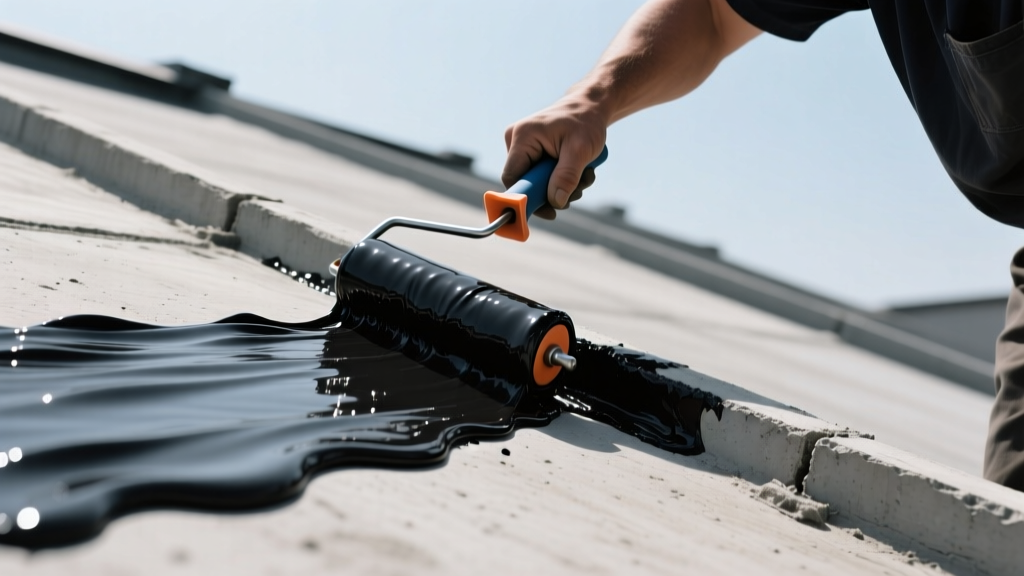
Polyurethane elastomers typically last 15 to 20 years before the topcoat begins to chalk and degrade from UV exposure. However, the major financial advantage of liquid rubber is the recoating process. At year 15, an EPDM roof requires a complete, expensive tear-off and replacement. A liquid polyurethane roof merely requires a power wash and a fresh 10-mil topcoat application (costing roughly $1.80 - $2.50 per sq. ft.), extending the system's life by another 15 years without the landfill waste and labor costs of a tear-off.
Specification Framework: Matching Material to Substrate
Selecting the correct stretchy waterproof material requires aligning the physical properties of the elastomer with the specific geometric and environmental demands of the substrate. Use this decision framework during the design phase:
Specify 60-Mil EPDM When:
- The project involves a large, simple, unobstructed roof plane (e.g., a big-box retail store or warehouse) where wide sheets (up to 50 feet wide) can be deployed, minimizing seam labor.
- The budget requires a mid-range initial capital expenditure, and the building owner prefers a proven, traditional sheet good with a massive historical track record.
- The substrate is lightweight insulating concrete or polyiso board where liquid adhesion might be compromised by substrate outgassing.
Specify Liquid Polyurethane Rubber When:
- The structure features complex geometry, numerous penetrations, irregular parapets, or tight mechanical yards where cutting and seaming EPDM sheets would result in excessive waste and high detailing labor.
- The application is a below-grade plaza deck, podium, or balcony where seamless integration with vertical flashing and drain bowls is critical.
- The project demands a highly elastic, monolithic barrier capable of 1000% elongation to bridge severe structural cracking in aging concrete substrates.
"The shift toward fluid-applied elastomeric membranes in complex urban infill projects is driven by the elimination of seams. In high-wind uplift zones and intricate podium decks, a seamless stretchy waterproof material removes the weakest links found in traditional sheet goods." — Industry consensus from the National Roofing Contractors Association (NRCA) technical bulletins on low-slope applications.
Final Procurement Advice
When sourcing these materials, avoid the trap of comparing mil-thickness across different chemistries. A 60-mil EPDM sheet is not directly comparable to 60 wet mils of liquid polyurethane. Liquid coatings shrink as the solvents or water evaporate; to achieve a 30-dry-mil polyurethane membrane (the industry minimum for plaza decks), contractors must apply 45 to 50 wet mils. Always specify and pay for dry film thickness in liquid contracts, and mandate third-party adhesion pull-tests and spark testing for pinholes upon completion to ensure the elastic barrier performs as engineered.
Written by
James ThorntonJames Thornton is a construction industry veteran with 25 years of hands-on experience in wood framing, lumber grading, and residential building codes. He started as a framing carpenter in rural Oregon, earned his ICC Residential Building Inspector certification, and eventually became a senior plan reviewer for the City of Portland Bureau of Development Services. James holds a B.S. in Wood Science & Technology from Oregon State University and is a certified lumber grader through the West Coast Lumber Inspection Bureau (WCLIB). He has inspected over 3,000 residential construction sites and authored the city's internal guide on advanced framing techniques (2x6 at 24" O.C.). James lives in Bend, OR, where he builds custom timber-frame cabins and competes in lumberjack sports.
More from James Thornton
View all
Insulation
Best Home Insulation Materials: Complete 2026 Guide
Compare top home insulation materials for 2026. Find R-values, installed costs per square foot, and best uses for fiberglass, spray foam, and mineral wool.
Aug 4, 2026

Sustainable Building
Certify Your Green Building Material for LEED and WELL
Step-by-step guide to certifying a green building material for LEED v5 and WELL v2. Master EPDs, HPDs, and VOC limits for 2026 project specifications.
Aug 4, 2026

Stone & Masonry
Veneer Stacked Stone Panels: Interior Design & Style Showcase
Discover how veneer stacked stone panels transform interiors. Explore modern design profiles, material pairings, and technical installation specs.
Aug 4, 2026