Building Materials Channel Marketing: Direct vs Distributor Strategies
Compare building materials channel marketing strategies for 2026. Analyze direct-to-consumer vs. distributor models, margins, and B2B lead generation.
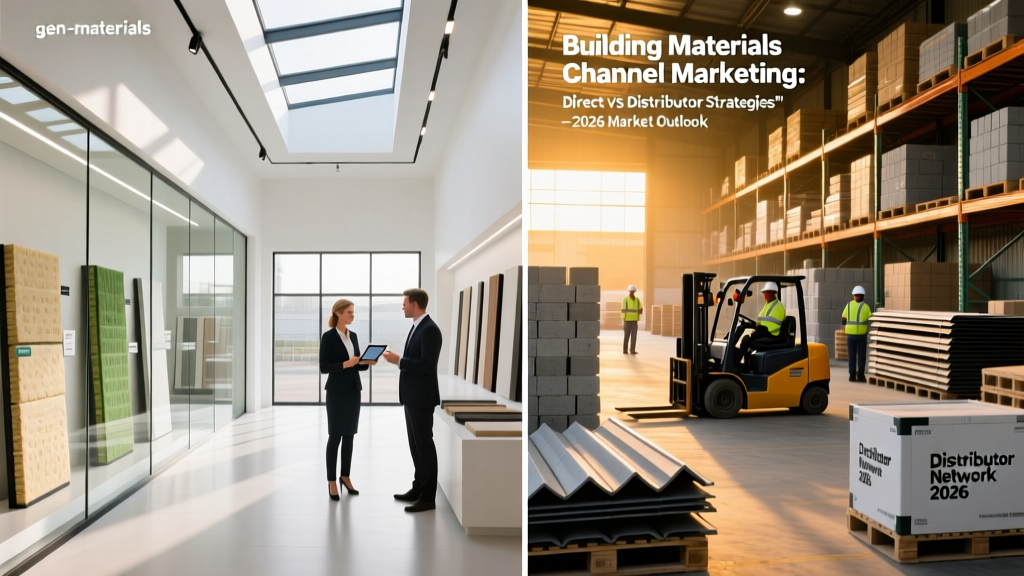
The Evolution of Building Materials Channel Marketing
The era of relying solely on relationship-based sales and trade show handshakes to move construction supplies is over. In 2026, building materials channel marketing requires a sophisticated, data-driven omnichannel approach. General contractors (GCs), procurement officers, and architects now expect B2B purchasing experiences that mirror the frictionless nature of consumer e-commerce. According to broader industry analysis from McKinsey's construction practice, digital procurement and omnichannel engagement are no longer competitive advantages; they are baseline expectations for commercial contractors.
For building material manufacturers and suppliers, the core strategic dilemma remains channel selection: should you push inventory through traditional wholesale distributors, pull demand via direct-to-contractor (D2B) digital marketing, or leverage emerging B2B digital marketplaces? Each channel dictates vastly different customer acquisition costs (CAC), gross margins, and technical support burdens. Choosing the wrong mix can result in severe channel conflict, margin erosion, or stagnant market share.

Direct-to-Buyer vs. Distributor: A Margin and CAC Comparison
Before deploying marketing spend, it is critical to understand the financial and operational trade-offs inherent in each channel model. The table below benchmarks the three primary routes to market based on current B2B construction industry averages.
| Metric | Traditional Two-Step Distributor | Direct-to-Contractor (D2B) | B2B Digital Marketplaces |
|---|---|---|---|
| Gross Margin | 25% - 40% | 55% - 70% | 45% - 60% (minus platform fees) |
| Customer Acquisition Cost (CAC) | Low (Leverages distributor's existing book) | $600 - $1,500+ per qualified GC account | $150 - $400 (Pay-to-play ranking) |
| Fulfillment & Logistics | Handled by distributor (LTL/FTL freight) | Manufacturer bears full logistics burden | Hybrid (Often integrated with 3PL networks) |
| Technical Support Burden | Pushed to distributor's pro desk / sales team | Requires dedicated in-house application engineers | Minimal (Relies on standardized spec sheets) |
| End-User Data Ownership | Opaque (Distributor guards buyer data) | 100% owned by manufacturer | Shared or gated by platform algorithms |
Evaluating the Three Primary Channel Models
1. The Traditional Two-Step Distributor Model
The traditional model relies on a "push" marketing strategy. Manufacturers sell to regional or national distributors (e.g., 84 Lumber, Beacon Building Products, or local specialty yards), who then sell to the GCs and subcontractors. Marketing spend in this channel is heavily focused on trade promotions, Market Development Funds (MDF), co-op advertising, and point-of-sale displays at pro desks.
The Advantage: Unmatched scale and logistics offloading. Distributors absorb the credit risk, break down bulk pallets into job-site quantities, and manage the last-mile delivery via boom trucks. The Drawback: Margin compression and data blindness. When you market through a distributor, you rarely know which specific subcontractor is buying your specialized epoxy flooring or structural fasteners. Furthermore, your product is sitting on the shelf next to three direct competitors, making you vulnerable to the distributor's house-brand substitutions.
2. Direct-to-Contractor (D2B) Digital Marketing
The D2B model utilizes a "pull" strategy powered by Account-Based Marketing (ABM). Manufacturers target mid-sized to enterprise GCs directly through LinkedIn programmatic ads, geofenced job site targeting, and SEO-optimized technical portals. Recent data highlighted by Construction Dive indicates that B2B construction technology and digital material sourcing platforms have seen massive adoption among mid-market GCs, paving the way for direct material ordering.
The Advantage: Complete control over the brand narrative, pricing, and end-user data. You capture the full 60%+ gross margin and can build direct feedback loops for R&D. The Drawback: The CAC is brutal. Acquiring a single enterprise GC account that will consistently order high-volume commercial HVAC units or architectural cladding can cost upwards of $1,500 in targeted digital spend and sales engineering time. Additionally, you must build or integrate a robust ERP system capable of handling complex LTL freight quoting and job-site staging.
3. B2B Digital Marketplaces and Procurement Hubs
Platforms like Infra.Market, Buildxact, and specialized material hubs act as the Amazon of construction supplies. Marketing here is less about brand storytelling and more about algorithmic optimization—ensuring your SKUs have perfect metadata, CSI MasterFormat alignments, and competitive API-driven pricing.
The Advantage: High-intent traffic. Procurement officers use these platforms specifically to compare lead times and bulk pricing across multiple vendors simultaneously. The Drawback: Extreme price transparency leads to a race to the bottom for commodity items. This channel is highly effective for standardized goods (e.g., Type X gypsum board, standard rebar) but poorly suited for highly technical, custom-fabricated materials.
The Architect "Pull" Strategy: Bypassing Channel Conflict
Strategic Callout: The Spec-Driven Halo Effect
The most effective building materials channel marketing often doesn't target the buyer at all; it targets the specifier. By marketing directly to architects and engineers through BIM object libraries (Revit), ARCAT, and Material Bank, manufacturers can write their proprietary product specifications into the project blueprints.
The Result: When the project goes out to bid, the GC is legally bound to purchase your specific product (or an approved equal). This creates a powerful "pull" effect where the GC demands your product from your existing distributor network. You achieve the high-margin demand generation of direct marketing without taking on the logistics and fulfillment burden of direct sales, effectively neutralizing channel conflict.
Decision Matrix: Aligning Product Type with Channel Strategy
Not all materials should be routed through the same channel. Use this framework to align your product portfolio with the optimal marketing and distribution strategy:
- High-Volume Commodities (Drywall, Standard Lumber, Insulation): Rely heavily on the Traditional Distributor model. Marketing spend should focus on supply chain reliability, volume rebates, and distributor sales-team enablement. Margins are too thin to support direct-to-contractor CAC.
- Specialized & Technical Systems (Smart Glass, Epoxy Terrazzo, Post-Tension Cables): Deploy a Direct D2B and Architect Spec strategy. These products require intense technical marketing, ROI calculators, and on-site application engineering. The high gross margin easily justifies a $1,000+ CAC.
- Mid-Tier Standardized Goods (Fiber Cement Siding, Metal Roofing Panels): Utilize a Hybrid Omnichannel approach. Market the brand and aesthetic directly to homeowners and architects (creating pull), but fulfill the orders through a certified local distributor network (push).
Real-World Failure Modes in Channel Transitions
When building material companies attempt to modernize their channel marketing, they frequently encounter predictable failure modes. Economic indicators from the National Association of Home Builders (NAHB) continue to emphasize that material cost volatility requires tighter, more transparent supply chain marketing, yet many suppliers trip over their own execution.
Failure Mode 1: Unmanaged Channel Conflict
A manufacturer launches a direct-to-contractor e-commerce portal to capture higher margins. Their top three regional distributors, who account for 70% of historical volume, notice the manufacturer is now undercutting them on price or competing for the same GC bids. The distributors retaliate by burying the manufacturer's SKUs in favor of a competitor's line. The Fix: Implement strict SKU differentiation. Sell standard sizes and colors through distributors, but reserve custom colors, bulk project-quote tiers, and specialized accessories exclusively for the direct channel.
Failure Mode 2: The "Brochure-ware" B2B Portal
Suppliers invest heavily in a direct marketing portal, but the backend lacks real-time ERP integration. GCs log in to order 500 sheets of marine-grade plywood, only to find the portal doesn't show live inventory, requires a 48-hour manual freight quote, and lacks integration with procurement software like Procore or PlanGrid. The GC abandons the cart and calls the local lumber yard. The Fix: B2B building material marketing is only as strong as the procurement UX. Invest in API middleware that connects your digital storefront directly to your inventory management and LTL freight rating engines.
Failure Mode 3: Misaligned Attribution Models
Marketing teams often misattribute a closed $2M commercial cladding deal to a "direct LinkedIn ad click," ignoring the fact that the GC actually purchased the material through a distributor using a negotiated annual contract. This leads to over-investing in digital performance marketing while starving the distributor co-op fund. The Fix: Adopt a multi-touch attribution model that tracks the "specification-to-procurement" lifecycle, recognizing the architect's initial BIM download and the distributor's final point-of-sale scan as equal partners in the revenue cycle.
Written by
James ThorntonJames Thornton is a construction industry veteran with 25 years of hands-on experience in wood framing, lumber grading, and residential building codes. He started as a framing carpenter in rural Oregon, earned his ICC Residential Building Inspector certification, and eventually became a senior plan reviewer for the City of Portland Bureau of Development Services. James holds a B.S. in Wood Science & Technology from Oregon State University and is a certified lumber grader through the West Coast Lumber Inspection Bureau (WCLIB). He has inspected over 3,000 residential construction sites and authored the city's internal guide on advanced framing techniques (2x6 at 24" O.C.). James lives in Bend, OR, where he builds custom timber-frame cabins and competes in lumberjack sports.
More from James Thornton
View all
Insulation
Best Home Insulation Materials: Complete 2026 Guide
Compare top home insulation materials for 2026. Find R-values, installed costs per square foot, and best uses for fiberglass, spray foam, and mineral wool.
Aug 4, 2026

Sustainable Building
Certify Your Green Building Material for LEED and WELL
Step-by-step guide to certifying a green building material for LEED v5 and WELL v2. Master EPDs, HPDs, and VOC limits for 2026 project specifications.
Aug 4, 2026

Stone & Masonry
Veneer Stacked Stone Panels: Interior Design & Style Showcase
Discover how veneer stacked stone panels transform interiors. Explore modern design profiles, material pairings, and technical installation specs.
Aug 4, 2026