Which Ionic Compound Is Used as a Building Material? Top 4 Compared
Discover which ionic compound is used as a building material. We compare calcium carbonate, gypsum, lime, and MgO for strength, cost, and application.

The Molecular Foundation of Modern Construction
When architects and engineers specify materials for a project, they rarely think in terms of chemical bonds. Yet, the structural integrity, fire resistance, and longevity of the built environment rely entirely on ionic lattices. If you are asking which ionic compound is used as a building material, the answer is not a single substance, but a specific group of alkaline earth metal salts. The four dominant ionic compounds in construction are Calcium Carbonate (CaCO3), Calcium Sulfate (CaSO4), Calcium Hydroxide (Ca(OH)2), and Magnesium Oxide (MgO).
Each compound possesses a unique lattice energy, solubility profile, and thermal decomposition point that dictates its exact role on the job site. Selecting the wrong ionic base for a specific environmental condition leads to catastrophic failures, from efflorescence and spalling to the corrosion of structural steel framing. Below, we break down the chemical and practical realities of these four compounds to guide material procurement and specification.
Comparison Matrix: The Big Four Ionic Compounds
| Compound | Formula | Primary Construction Form | Compressive Strength | Moisture Tolerance | Bulk Cost (Approx.) |
|---|---|---|---|---|---|
| Calcium Carbonate | CaCO3 | Limestone, Marble, Aggregate | 30 – 250 MPa | Moderate (Vulnerable to acid) | $15 – $25 / ton |
| Calcium Sulfate | CaSO4·2H2O | Gypsum Board, Plaster | 5 – 15 MPa | Poor (Softens in water) | $40 – $60 / ton |
| Calcium Hydroxide | Ca(OH)2 | Slaked Lime, Mortar | 2 – 10 MPa (Cured) | High (Breathable/Permeable) | $80 – $120 / ton |
| Magnesium Oxide | MgO | MgO Board, Specialty Cement | 15 – 30 MPa | Excellent (If sulfate-based) | $300 – $500 / ton |
Note: Bulk costs reflect raw material processing averages; finished product costs (e.g., fabricated drywall or dimensional stone) are significantly higher.
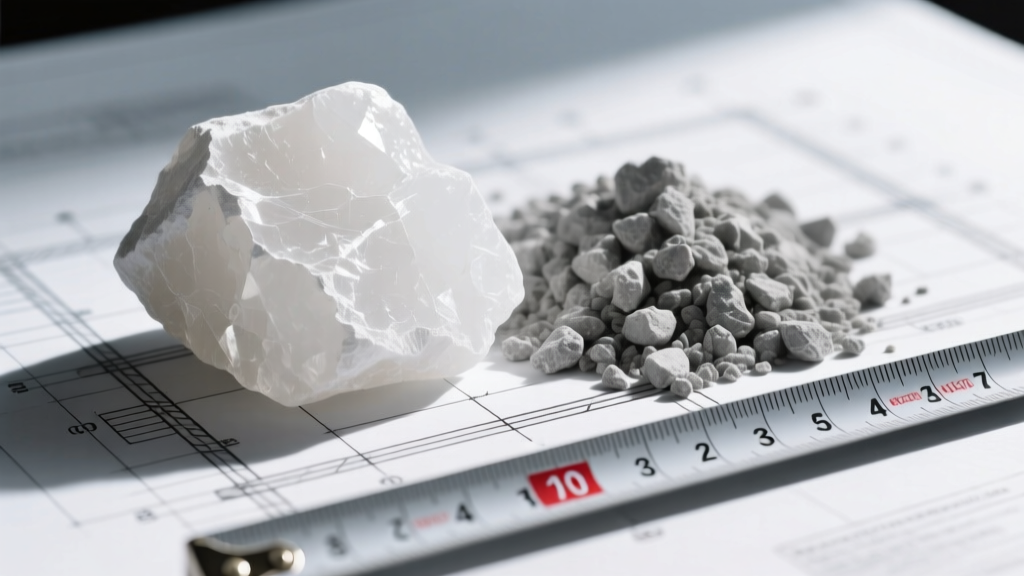
Calcium Carbonate (CaCO3): The Aggregate Backbone
Calcium carbonate is the most abundant ionic compound used in construction by sheer volume. It exists naturally as limestone, chalk, and marble. In its raw form, it is crushed to meet ASTM C33 standards for concrete aggregates. However, its true power is unlocked through calcination—heating CaCO3 to 900°C to drive off CO2, yielding Calcium Oxide (CaO), the foundational precursor to Portland cement.
Edge Cases and Failure Modes
While CaCO3 provides exceptional compressive strength, its ionic bond is highly susceptible to acidic attack. In environments with acid rain (pH < 5.0) or industrial sulfur dioxide emissions, calcium carbonate dissolves into calcium bicarbonate, leading to the pitting and degradation of limestone facades.
Calcium Sulfate (CaSO4): The Interior Fire Shield
When hydrated, calcium sulfate forms gypsum (CaSO4·2H2O). The construction industry relies heavily on the reversible dehydration of this compound. By heating gypsum to 150°C, it becomes a hemihydrate (Plaster of Paris). When mixed with water on the job site, it rehydrates into an interlocking matrix of dihydrate crystals, creating the rigid core of drywall and interior plasters.
The Chemistry of Fire Resistance
Gypsum's dominance in interior partitioning is due to its chemically bound water. Type X gypsum board contains roughly 21% water by mass. When exposed to fire, the thermal energy breaks the ionic hydration bonds, releasing water vapor. This endothermic reaction keeps the backside of the drywall below 100°C until all free water is driven off, providing a predictable 1-hour fire rating per ASTM E119 for 5/8-inch panels.
Calcium Hydroxide (Ca(OH)2): The Masonry Binder
Also known as portlandite or slaked lime, calcium hydroxide is the workhorse of traditional masonry and historic restoration. Unlike Portland cement, which relies on complex calcium silicate hydrates, pure lime mortars cure through carbonation. The Ca(OH)2 absorbs atmospheric CO2 over weeks or months, slowly reverting to calcium carbonate (CaCO3) and locking the masonry units together.
Why Type S Lime Still Matters
Modern builders often dismiss lime as outdated, but ASTM C207 Type S (Special) hydrated lime remains critical for brick veneer and historic repointing. Because the Ca(OH)2 matrix is more flexible and vapor-permeable than rigid cement mortars, it accommodates the thermal expansion of soft clay bricks without cracking. Furthermore, if micro-cracks do form, uncarbonated calcium hydroxide dissolves in rainwater, migrates into the fissure, and precipitates as CaCO3, effectively 'healing' the mortar.
Magnesium Oxide (MgO): The Modern Disruptor
Magnesium oxide represents the newest major ionic compound to disrupt the building materials market. MgO boards are manufactured by reacting MgO powder with a liquid binder to form a cementitious matrix. They offer Class A fire ratings (ASTM E84), zero VOC emissions, and total immunity to mold and termite damage, making them highly attractive for commercial and multi-family residential projects.
The 'Crying Board' Catastrophe: A Lesson in Ionic Impurities
Not all MgO boards are created equal, and the difference lies in the liquid binder used during manufacturing. Early MgO boards utilized magnesium chloride (MgCl2) to accelerate curing. However, MgCl2 is highly deliquescent—it actively pulls moisture from the ambient air. In humid climates, these boards began 'sweating' salty brine, which dripped onto galvanized steel floor tracks and structural studs, causing rapid and severe chloride-induced corrosion.
The structural failure of steel framing due to chloride-leaching MgO boards resulted in millions of dollars in remediation across coastal regions. The industry has since pivoted, but unverified inventory remains in the supply chain.
Procurement Decision Framework
Use this logic tree to select the correct ionic base for your specific project scope:
- Is the application structural and exterior?
Select CaCO3 (as crushed aggregate in concrete) or as dimensional limestone. Ensure proper sealing if in an acidic environment. - Is the application an interior fire-rated partition?
Select CaSO4 (Type X Gypsum). It provides the most cost-effective fire resistance at roughly $0.45 to $0.65 per square foot installed. - Is the application an exterior masonry veneer or historic restoration?
Select Ca(OH)2 (Type S Lime). Do not use rigid Portland cement, which will spall the softer masonry units during freeze-thaw cycles. - Is the application a high-moisture, mold-sensitive, or impact-prone interior zone (e.g., hospital corridors, elevator shafts)?
Select MgO (Sulfate-based). It provides the necessary impact resistance and moisture immunity that CaSO4 lacks, while maintaining a Class A fire rating.
Frequently Asked Questions
Is Portland cement an ionic compound?
Portland cement itself is not a single ionic compound; it is a complex mixture of calcium silicates (alite and belite), calcium aluminates, and calcium ferrites. However, its primary raw material is calcium carbonate (CaCO3), and its hydration products rely heavily on ionic calcium bonds to form the structural calcium-silicate-hydrate (C-S-H) gel.
Can ionic compounds be used for insulation?
Yes. While the compounds listed above are primarily structural or fire-resistant, expanded perlite and vermiculite—both naturally occurring ionic silicate minerals—are expanded via high heat to create lightweight, highly effective loose-fill thermal insulation. Additionally, calcium silicate (derived from lime and silica) is manufactured into rigid, microporous insulation blocks used for high-temperature industrial pipe wrapping.
Where can I verify the environmental impact of these materials?
The extraction and processing of calcium-based compounds are energy-intensive. You can review the lifecycle emissions and sustainable extraction guidelines via the EPA's building materials and indoor air quality resources, or consult the Environmental Product Declarations (EPDs) provided by specific manufacturers for exact carbon footprint data per ton of material.
Why is MgO more expensive than Gypsum?
The cost disparity is driven by mining and processing. Gypsum (CaSO4) is heavily sedimentary, easily surface-mined, and requires relatively low heat (150°C) to calcine. Magnesium oxide is often extracted from magnesite ore or seawater, requiring calcination temperatures exceeding 800°C to achieve the reactive 'light-burned' MgO powder necessary for board manufacturing, drastically increasing the energy and financial cost.
Written by
James ThorntonJames Thornton is a construction industry veteran with 25 years of hands-on experience in wood framing, lumber grading, and residential building codes. He started as a framing carpenter in rural Oregon, earned his ICC Residential Building Inspector certification, and eventually became a senior plan reviewer for the City of Portland Bureau of Development Services. James holds a B.S. in Wood Science & Technology from Oregon State University and is a certified lumber grader through the West Coast Lumber Inspection Bureau (WCLIB). He has inspected over 3,000 residential construction sites and authored the city's internal guide on advanced framing techniques (2x6 at 24" O.C.). James lives in Bend, OR, where he builds custom timber-frame cabins and competes in lumberjack sports.
More from James Thornton
View all
Insulation
Best Home Insulation Materials: Complete 2026 Guide
Compare top home insulation materials for 2026. Find R-values, installed costs per square foot, and best uses for fiberglass, spray foam, and mineral wool.
Aug 4, 2026

Sustainable Building
Certify Your Green Building Material for LEED and WELL
Step-by-step guide to certifying a green building material for LEED v5 and WELL v2. Master EPDs, HPDs, and VOC limits for 2026 project specifications.
Aug 4, 2026

Stone & Masonry
Veneer Stacked Stone Panels: Interior Design & Style Showcase
Discover how veneer stacked stone panels transform interiors. Explore modern design profiles, material pairings, and technical installation specs.
Aug 4, 2026