Smart Building Material Testing Equipment: 2026 Industry Trends
Discover how AI, IoT, and advanced NDT are transforming building material testing equipment in 2026. Compare top smart lab systems and ROI metrics.

The End of Analog: Why 2026 Demands IoT-Connected Labs
The transition from isolated, analog testing rigs to fully networked, AI-assisted diagnostic ecosystems defines the 2026 landscape for construction quality assurance. For laboratory managers and QA/QC directors, building material testing equipment is no longer just about applying force or measuring density; it is about generating verifiable, tamper-proof data streams that integrate directly with Building Information Modeling (BIM) and cloud-based Laboratory Information Management Systems (LIMS). According to ongoing research from the NIST Materials and Structural Systems Division, the integration of smart sensors and automated data logging reduces manual transcription errors by up to 94%, a critical factor as infrastructure projects demand stricter digital twin synchronization.
This guide breaks down the specific hardware upgrades, software integrations, and non-destructive testing (NDT) advancements reshaping material testing labs this year, providing actionable procurement frameworks for modernizing your facility.
Next-Generation Universal Testing Machines (UTMs)
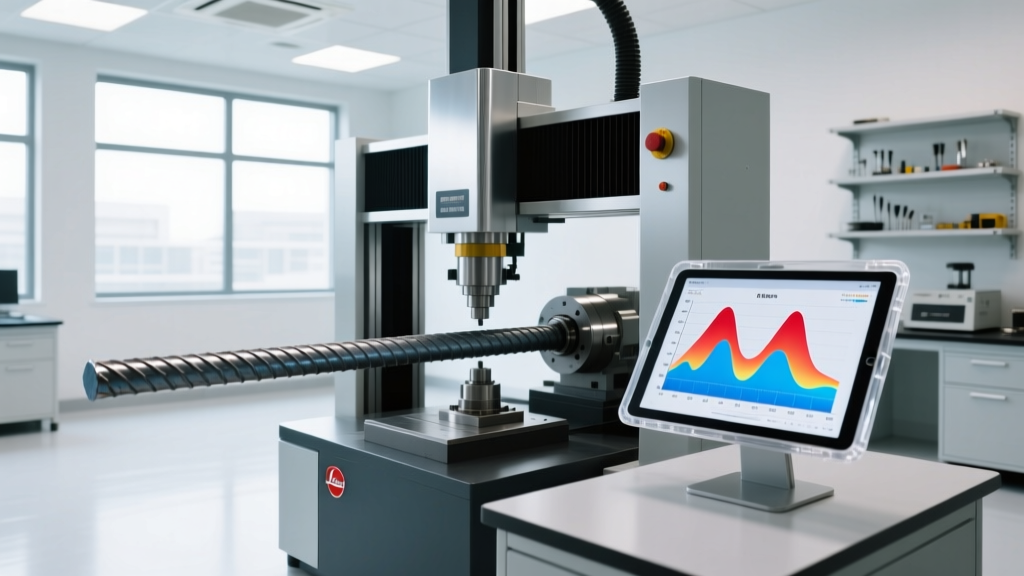
Universal Testing Machines remain the backbone of structural material validation, but the 2026 standard has shifted decisively toward closed-loop digital servos and automated gripping mechanisms. Legacy hydraulic grips frequently suffer from slippage on high-strength steel (e.g., ASTM A706 Grade 80) or cause premature specimen fracture at the grip faces. Modern systems dynamically adjust clamping pressure based on real-time load feedback.
Hardware Spotlight: Instron 6800 Series vs. MTS Criterion 45
When specifying a 300 kN to 600 kN UTM for structural steel and composite rebar testing, two platforms dominate the current market:
- Instron 6800 Series: Features Bluehill Universal software with native API webhooks. The system outputs JSON payloads via MQTT protocols directly to cloud LIMS, eliminating manual CSV exports. It includes a specialized high-temperature environmental chamber option (-80°C to 300°C) for testing aerospace-grade construction composites.
- MTS Criterion Model 45: Prioritize this for high-throughput rebar testing. Its automated wedge-grip designs and integrated extensometers allow for unattended tensile testing cycles. The MTS TestSuite software includes pre-loaded, auto-updating test standards for ISO 6892-1 and ASTM E8.
AI and Phased Array in Non-Destructive Testing (NDT)
Field testing has seen the most aggressive technological leap. Traditional radiographic testing (X-ray) for weld and structural flaw detection is being rapidly replaced by Phased Array Ultrasonic Testing (PAUT) and AI-enhanced Ground Penetrating Radar (GPR). These methods remove radiation hazards and provide immediate 3D volumetric data.
Proceq GPR Live and Edge Computing
The Proceq GPR Live system represents the current pinnacle of concrete subsurface imaging. Unlike older GPR units that required post-processing on desktop software, the 2026 iterations utilize edge computing on ruggedized iOS tablets. The AI overlay automatically identifies and classifies rebar grids, post-tension cables, and voids in real-time, adjusting for varying concrete dielectric constants without manual calibration. This allows field technicians to generate American Concrete Institute (ACI) compliant structural integrity reports before leaving the job site.
Olympus OmniScan X3 for Structural Steel
For structural steel weld inspection, the OmniScan X3 flaw detector utilizes Total Focusing Method (TFM) algorithms. TFM processes the full matrix capture (FMC) data set to render high-resolution cross-sections of weld defects. The AI defect-recognition module flags porosity, lack of fusion, and cracking with a 98% accuracy rate, drastically reducing the reliance on Level III NDT technicians for initial data interpretation.
Equipment Matrix: Legacy vs. Smart Testing Systems
To justify capital expenditure to stakeholders, lab directors must compare the total cost of ownership (TCO) and operational capabilities of legacy versus smart equipment. The matrix below outlines the critical differences for core testing categories.
| Equipment Category | Legacy System (Pre-2022) | Smart System (2026 Standard) | Cost Delta | Primary ROI Driver |
|---|---|---|---|---|
| Concrete Compression (3000 kN) | Manual hydraulic pump, analog dial gauge, hand-logged data. | Fully automated servo-hydraulic, laser displacement tracking, auto-paced to ASTM C39 (0.25 MPa/s). | +$22,000 | Eliminates operator pacing errors; prevents invalid test re-runs. |
| Soil/Aggregate Sieve Analysis | Manual mechanical shaker, hand-weighing each fraction. | Automated robotic sieve stack with integrated digital load cells and RFID sample tracking. | +$35,000 | Reduces 2-hour manual process to 15 minutes; guarantees chain-of-custody. |
| Asphalt Binder Rheology (DSR) | Standalone DSR, manual temperature bath transfers. | Integrated Peltier temperature control, automated specimen loading, AI-driven PG grading prediction. | +$18,000 | Removes thermal shock variables; accelerates mix design approvals. |
| Environmental Curing Chambers | Standard compressor-based cooling, basic thermostat. | IoT-monitored ultrasonic humidification, cloud-logged temp/humidity with blockchain audit trails. | +$8,500 | Provides indisputable compliance proof for curing conditions (ASTM C31). |
Automated Concrete Compression & ASTM C39 Compliance
Concrete compression testing is highly susceptible to operator-induced variance. ASTM International standard C39 strictly mandates a continuous loading rate of 0.25 MPa/s ± 0.05. Human operators using manual hydraulic valves frequently overshoot this rate as the cylinder approaches failure, artificially inflating the compressive strength results and masking potential structural vulnerabilities.
The 2026 generation of automated compression testers (such as the Controls Automax 5 or Matest Cyber-Plus Evolution) utilizes high-response proportional valves and closed-loop PID controllers. These systems adjust hydraulic flow in milliseconds to maintain the exact loading rate, regardless of the concrete's stiffness or the presence of micro-cracking. Furthermore, integrated laser extensometers measure the actual deformation of the cylinder, filtering out the machine's own frame compliance and providing a true stress-strain curve rather than just a peak load value.
Lab Upgrade Decision Framework for 2026
Upgrading an entire testing laboratory simultaneously is capital-prohibitive. Use this phased decision framework to prioritize equipment investments based on your lab's specific bottleneck and compliance risks.
- Phase 1: Audit LIMS Compatibility and Data Bottlenecks. Identify which tests consume the most technician hours in data transcription. Prioritize upgrading high-volume, repetitive tests (like concrete compression and soil index properties) to IoT-enabled machines that push data directly to your LIMS via API.
- Phase 2: Address Compliance and Litigation Risks. If your lab frequently tests materials for high-liability infrastructure (e.g., seismic dampers, post-tensioned bridge cables), invest immediately in automated UTMs with video extensometry and blockchain-secured data logging. The ability to provide an unalterable digital video record of a tensile failure is increasingly required by municipal engineering boards.
- Phase 3: Calibrate for Sustainable Materials. The rise of geopolymers, limestone calcined clay cement (LC3), and recycled concrete aggregates (RCA) requires different testing profiles than Ordinary Portland Cement (OPC). Geopolymers often exhibit different creep and shrinkage characteristics. Ensure your new environmental chambers and long-term shrinkage comparators (ASTM C157) are equipped with high-resolution LVDTs capable of tracking the accelerated early-age shrinkage typical of these alternative binders.
The Bottom Line on Smart Procurement
The building material testing equipment market in 2026 rewards laboratories that treat data as their primary output, rather than just physical test results. By specifying equipment with native API integrations, AI-assisted defect recognition, and automated closed-loop controls, QA/QC facilities can drastically reduce overhead, eliminate compliance vulnerabilities, and position themselves as premium partners for next-generation infrastructure projects.
Written by
Priya KapoorPriya Kapoor is a real estate market analyst and construction economics researcher with expertise in housing affordability, development feasibility, and infrastructure investment. She holds a Master of Regional Planning from Cornell University and previously worked as a senior analyst at CBRE's Investment Properties group, where she modeled returns for $4B in mixed-use development pipelines. Priya now runs an independent research practice advising developers, municipalities, and REITs on construction cost forecasting and market timing. She publishes the quarterly "BuildMat Market Pulse" report tracking material price indices across 12 commodity categories. Based in Austin, TX, Priya serves on the board of Habitat for Humanity Austin and is a marathon runner.
More from Priya Kapoor
View all
Construction Cost
Cost to Build a 1600 Sq Ft Home in 2026: Full Breakdown
Accurate 2026 cost to build a 1600 sq ft home—material, labor, and regional pricing breakdowns included. Plan your budget with real-time estimates.
Aug 11, 2026

Wood & Lumber
Name the Types of Wood for Pressure Treatment and Preservation
Learn how to name the types of wood best suited for pressure treatment. Compare species treatability, chemical retention levels, and 2026 preservation costs.
Aug 4, 2026

Stone & Masonry
Stone Veneer Suppliers Lindenhurst: 2026 Cost Analysis
Analyze 2026 stone veneer costs in Lindenhurst, NY. Compare local supplier pricing, delivery fees, and Suffolk County installation labor rates.
Aug 4, 2026