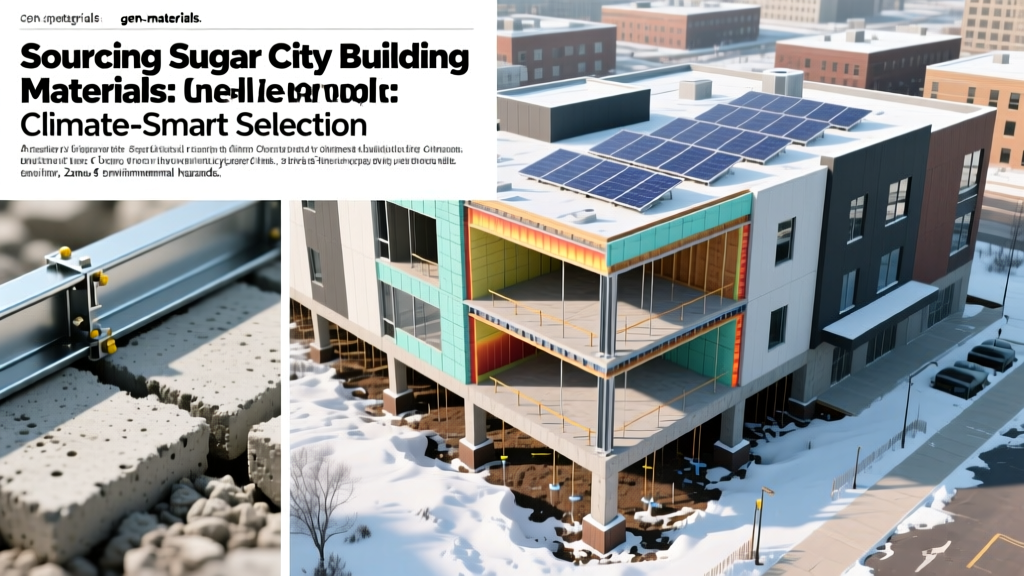
Sourcing Sugar City Building Materials: Climate-Smart Selection
Expert guide to selecting Sugar City building materials for Madison County's deep frost lines, seismic risks, and Zone 6 energy codes.
The Sugar City Climate & Code Matrix
Building in Sugar City, Idaho, requires navigating a unique intersection of high-desert agriculture, severe freeze-thaw cycles, and proximity to the seismically active Teton fault system. Located in Madison County at an elevation of roughly 4,800 feet, the municipality demands material selections that go far beyond standard residential specifications. Builders and homeowners sourcing Sugar City building materials must prioritize thermal mass, moisture management, and structural continuity.
According to the Department of Energy's IECC climate mappings, Madison County falls squarely into Climate Zone 6. This designation mandates rigorous insulation thresholds and strict air-sealing protocols to combat winter heating loads that routinely exceed 7,000 heating degree days annually.
| Parameter | Specification | Material Implication |
|---|---|---|
| Frost Depth | 48 inches minimum | Deep trenching; requires high-slump, air-entrained concrete for footings. |
| Seismic Design Category | D1 / D2 (Site-Specific) | Mandates continuous load paths, specialized hold-downs, and shear wall bracing. |
| Climate Zone | IECC Zone 6 | Ceiling R-60, Wall R-21+5ci (continuous insulation) or advanced framing. |
| Ground Snow Load | 40 - 50 psf | Requires engineered roof trusses and standing-seam metal or impact-rated shingles. |
| Soil Profile | Expansive Clays / Loam | Vapor barriers, sulfate-resistant concrete, and structural slab-on-grade prep. |
Foundation Systems: Beating the Frost Line and Soil Shift
The 48-inch frost depth in Sugar City is non-negotiable for traditional spread footings. However, the region's agricultural history means soil compositions often feature high clay content and occasional sulfate presence from historical irrigation runoff. Selecting the wrong concrete mix for your footings can lead to premature spalling and structural degradation.
Concrete Mix Selection for Madison County Soils
When ordering from local batch plants in Rexburg or Idaho Falls, specify an air-entrained mix (4% to 6% air content) to withstand the extreme freeze-thaw cycling of the Snake River Plain. If your geotechnical report indicates moderate to high sulfate levels, upgrade from standard Type I Portland cement to Type II or Type V sulfate-resistant cement.
For unheated accessory buildings or specific slab-on-grade residential designs, consult your structural engineer about FPSF. By utilizing rigid extruded polystyrene (XPS) insulation vertically and horizontally around the perimeter, you can trap geothermal heat and reduce excavation depths, saving thousands in trenching and concrete costs.
Sub-Slab Vapor and Gas Barriers
Expansive clays retain moisture, which can migrate through the slab and ruin interior hardwood floors or cause mold. Do not use standard 6-mil polyethylene. Source a 15-mil cross-laminated polyolefin vapor barrier (such as Stego Wrap) with taped seams. Furthermore, given regional radon potential, pairing this with a passive radon vent stack and a 4-inch layer of clean, washed drain rock beneath the slab is a critical best practice.
Exterior Envelope: Withstanding Freeze-Thaw and UV Exposure
Sugar City experiences intense summer UV radiation followed by brutal, wind-driven winter snowstorms. The exterior envelope must manage bulk water, resist UV degradation, and provide a thermal break to prevent interior condensation.
Siding: Fiber Cement vs. Engineered Wood
Vinyl siding becomes brittle in sub-zero temperatures and is prone to cracking from hail or stray rocks from nearby agricultural equipment. The two viable premium options are:
- James Hardie HardiePlank (HZ5 Line): Specifically formulated for freezing climates. The HZ5 edge features a proprietary drip edge that prevents snowmelt from wicking back into the panel. It requires a 1/4-inch gap at joints and specific blind-nailing schedules to allow for thermal expansion.
- LP SmartSide ExpertFinish: An engineered wood product treated with zinc borate to resist termites and fungal decay. It offers better impact resistance than fiber cement and installs faster, but requires strict adherence to the 3/8-inch gap rule at end-joints to prevent swelling during spring thaws.
Continuous Insulation (ci) and Sheathing
To meet Zone 6 wall requirements without building a 2x6 wall with complex double-stud framing, utilize integrated structural sheathing. Products like Huber ZIP System R-Sheathing (with 1-inch or 2-inch built-in polyisocyanurate foam) provide the structural shear strength required for FEMA-recommended seismic load paths while simultaneously delivering the required R-5 to R-10 continuous exterior insulation. This eliminates thermal bridging through the wood studs, a major source of heat loss and interior frost buildup in Idaho winters.
Roofing Strategies for High Snow Loads
With ground snow loads pushing 50 psf, roof material selection dictates both longevity and winter safety. Ice damming is a prevalent issue in Sugar City when attic insulation is bypassed by heat loss.
| Material | Snow Shedding | Ice Dam Resistance | Cost per Sq. Ft. (Installed) |
|---|---|---|---|
| Standing Seam Metal (26-gauge) | Excellent (Requires snow guards) | High (if ventilated) | $14.00 - $18.50 |
| Class 4 Impact Asphalt (e.g., Malarkey Vista) | Poor (Retains snow) | Moderate (Requires ice & water shield) | $6.50 - $9.00 |
| Synthetic Slate (e.g., DaVinci) | Good | High | $16.00 - $22.00 |
If selecting standing seam metal, specify a minimum 26-gauge steel with a Kynar 500 paint finish to prevent UV fading. You must install pad-style snow guards above all entryways, HVAC units, and lower roof intersections to prevent lethal snow avalanches. For asphalt shingles, mandate a Class 4 impact rating (UL 2218) to survive late-summer hail storms, and extend the ice-and-water self-adhering membrane at least 6 feet past the interior exterior wall line.
Sourcing Logistics: Local Yards vs. Regional Hubs
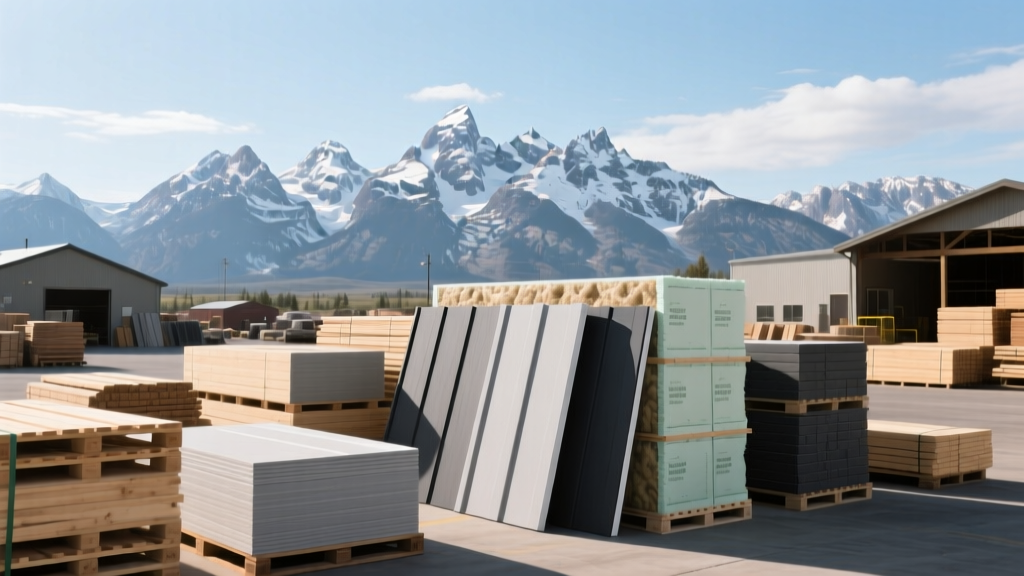
Sugar City itself has limited big-box material availability, meaning supply chain logistics rely heavily on neighboring hubs. Understanding where to source specific materials will prevent project delays.
- Rexburg (10 Minutes): Ideal for daily consumables, dimensional lumber, fasteners, and drywall. Local yards here are accustomed to the BYU-Idaho student housing boom and keep high stock of standard framing materials and acoustic insulation.
- Idaho Falls (35 Minutes): The primary hub for specialized materials. Source your custom trusses, ICF (Insulated Concrete Forms), high-performance windows (e.g., Alpen or Marvin with triple-pane glazing), and bulk masonry supplies from regional distributors here. The freight routes via US-20 are well-maintained year-round, making daily deliveries feasible.
- Salt Lake City Hubs (4 Hours): For custom architectural elements, high-end interior finishes, or specialized structural steel, contractors often piggyback on LTL (Less-Than-Truckload) freight routes originating from SLC distribution centers, which usually deliver to Idaho Falls within 48 hours.
If you are building through the winter, never store Portland cement, drywall, or spray foam components directly on the ground or in unheated enclosures. Cold temperatures alter the chemical curing process of spray foam, leading to off-ratio applications that will fail inspection. Maintain a heated, dry staging area on-site.
Frequently Asked Questions by Sugar City Builders
Do I need a continuous load path for seismic compliance?
Yes. Because Madison County borders active fault zones, the International Residential Code (IRC) mandates continuous load paths. This means using specific engineered connectors (like Simpson Strong-Tie hold-downs and hurricane ties) to physically tie the roof trusses to the top plates, the studs to the sill plates, and the sill plates to the foundation via epoxy-set anchor bolts.
What is the best window glazing for Zone 6?
Specify triple-pane, argon-filled windows with a U-factor of 0.22 or lower. More importantly, pay attention to the Solar Heat Gain Coefficient (SHGC). In Sugar City, you want a higher SHGC (0.35 to 0.45) on south-facing windows to capture passive solar heat during the winter, and a lower SHGC on west-facing windows to block intense summer afternoon sun.
Can I use standard fiberglass batts for insulation?
While code allows it, standard fiberglass batts are highly susceptible to convective heat loss if the air sealing is not flawless. In Sugar City's extreme cold, mineral wool batts (like Rockwool Comfortbatt) are vastly superior. They offer higher R-values per inch (R-4.2 vs R-3.4), do not lose thermal resistance in sub-zero temperatures, and provide superior fire resistance and acoustic dampening.
Written by
James ThorntonJames Thornton is a construction industry veteran with 25 years of hands-on experience in wood framing, lumber grading, and residential building codes. He started as a framing carpenter in rural Oregon, earned his ICC Residential Building Inspector certification, and eventually became a senior plan reviewer for the City of Portland Bureau of Development Services. James holds a B.S. in Wood Science & Technology from Oregon State University and is a certified lumber grader through the West Coast Lumber Inspection Bureau (WCLIB). He has inspected over 3,000 residential construction sites and authored the city's internal guide on advanced framing techniques (2x6 at 24" O.C.). James lives in Bend, OR, where he builds custom timber-frame cabins and competes in lumberjack sports.
More from James Thornton
View all
Insulation
Best Home Insulation Materials: Complete 2026 Guide
Compare top home insulation materials for 2026. Find R-values, installed costs per square foot, and best uses for fiberglass, spray foam, and mineral wool.
Aug 4, 2026

Sustainable Building
Certify Your Green Building Material for LEED and WELL
Step-by-step guide to certifying a green building material for LEED v5 and WELL v2. Master EPDs, HPDs, and VOC limits for 2026 project specifications.
Aug 4, 2026

Stone & Masonry
Veneer Stacked Stone Panels: Interior Design & Style Showcase
Discover how veneer stacked stone panels transform interiors. Explore modern design profiles, material pairings, and technical installation specs.
Aug 4, 2026