How to Get Building Materials in Kenshi: A Cost Analysis
Master base construction with our cost analysis on how to get building materials in Kenshi. Optimize cats, labor, and automated ore mining for maximum ROI.
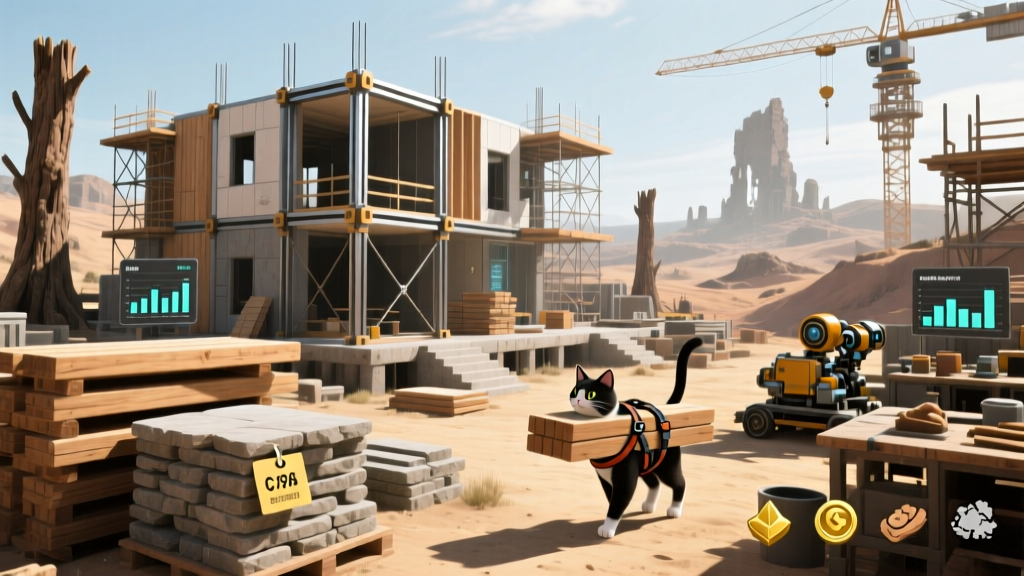
The Economics of Base Construction in Kenshi
Base building in Kenshi halts the moment your stockpiles deplete. Whether you are erecting basic perimeter walls or constructing advanced automated defense turrets, securing a reliable supply chain for Building Materials is not just a logistical task; it is a strict economic calculation. In the harsh environment of the Great Desert or the Fog Islands, every unit of material represents a direct expenditure of either capital (Cats) or operational resources (Power and Labor).
To determine the most efficient method for sourcing these materials, we must analyze the three primary acquisition vectors: direct market purchasing, automated in-house production, and high-risk scavenging. This analysis breaks down the capital expenditure (CAPEX), operational expenditure (OPEX), and risk-adjusted yields of each method to help you optimize your settlement's supply chain.
Market prices in Kenshi are not static. According to the Kenshi World State mechanics, regional faction conflicts directly impact trader inventories and markups. If the Shek Kingdom is at war with the United Cities, material prices in Admag can spike by up to 40%, while stock availability plummets. Always cross-reference your purchasing routes with current geopolitical stability.

Purchasing from Traders: Capital-Heavy Sourcing
Buying Building Materials directly from faction traders is the fastest method to acquire bulk stockpiles, but it requires massive upfront capital and exposes your caravans to transit risks. The base weight of a single unit of Building Materials is 2kg, meaning a standard character with a 70kg encumbrance limit can carry exactly 35 units per trip.
Trader Price and Stock Comparison
The following table outlines the baseline economics of purchasing from major faction hubs. Prices assume a neutral World State and standard faction relations.
| Location / Faction | Base Price (Cats) | Avg. Stock Limit | Transit Risk Factor | Optimal For |
|---|---|---|---|---|
| Mongrel (Tech Hunters) | 1,200 - 1,400 | 40 - 60 units | Moderate (Dust Bandits) | Early-to-Mid Game Outposts |
| Admag (Shek Kingdom) | 1,100 - 1,500 | 80 - 120 units | High (War/Reavers) | Bulk Mid-Game Purchasing |
| Sho-Battai (United Cities) | 1,500 - 1,800 | 100+ units | Low (Patrolled Roads) | Late-Game High-Capital Bases |
| Skinhouse HQ (Reavers) | 900 - 1,100 | 30 - 50 units | Extreme (Cannibals/Reavers) | Desperate Early-Game Deficits |
Cost Reality Check: Purchasing 100 units from Mongrel will cost approximately 130,000 Cats. Factoring in the need to hire mercenary escorts (roughly 8,000 Cats per day for a squad of five) and the caloric cost of Food Cubes for the caravan, your actual landed cost per unit approaches 1,600 Cats. This makes market purchasing highly inefficient for continuous, late-game expansion.
In-House Production: The Automation ROI
Transitioning from a consumer to a producer of Building Materials requires significant upfront infrastructure investment but reduces the marginal cost per unit to near zero. The production chain requires refining Iron Ore into Iron Plates, processing Raw Stone, and executing the final assembly.
Infrastructure and Power Requirements (CAPEX)
To maintain a continuous production queue without bottlenecking, your power grid must support the simultaneous operation of extraction and refinement facilities. Based on standard Ore Mine and processing yields, a single, uninterrupted production line requires the following power allocation:
- Ore Mine (x2): 100kW (Ensures continuous Iron Ore supply)
- Stone Mine (x1): 50kW (Stone is consumed at a lower ratio than iron)
- Iron Refinery (x2): 200kW (The primary power sink in the chain)
- Stone Processor (x1): 50kW
- Total Baseline Load: 400kW
In a high-wind region like the Great Desert, a single Wind Generator produces an average of 40kW. Therefore, a dedicated 10-turbine wind farm is required to guarantee uptime during low-wind cycles. The CAPEX for this power grid, combined with the mines and refineries, is approximately 180,000 Cats in raw materials and research unlocks.
Labor and OPEX: Biological vs. Mechanical
The operational cost of in-house production is dictated by your workforce. This is where cost analysts must choose between biological and mechanical labor.
While Skeletons do not consume food, their mechanical joints degrade during heavy labor (Mining and Manufacturing). A Skeleton working a 24-hour cycle in an Ore Mine will require regular application of Repair Kits and occasional limb replacements. If your base lacks an automated Skeleton Repair Bed, the OPEX of replacing severed limbs at a faction hospital will quickly exceed the cost of feeding biological workers.
Biological Workers (Humans/Hivers): A human miner consumes roughly 2 Food Cubes per day (approx. 60 Cats/day). If a human miner generates 40 units of raw material value per day, the labor cost per unit is negligible (1.5 Cats). However, biological workers are susceptible to fatigue, injury, and kidnapping, introducing supply chain variance.
Mechanical Workers (Skeletons): Skeletons offer 24/7 uptime and immunity to starvation. Their OPEX is tied strictly to power (for repair beds) and mechanical parts. For high-security, enclosed mining operations, Skeletons provide a 300% higher lifetime ROI despite the initial purchase cost of 4,000 to 10,000 Cats per unit from faction vendors.
Risk-Adjusted Sourcing: Scavenging and Ruins
For early-game settlements lacking both capital and automation, scavenging abandoned ruins is the only viable acquisition method. This method requires zero Cats but demands a high investment in character skill development and risk tolerance.
- Target Identification: Ruins in the Vain and Border Zones often contain stacked crates of Building Materials. These are unowned and free to extract.
- Encumbrance Optimization: Equip characters with specialized backpacks (e.g., the Engineer Backpack) to push carry limits beyond 100kg. This allows for the extraction of 50+ units per run.
- The Athletics Multiplier: The true cost of scavenging is time and exposure. A character with Athletics level 10 will complete a scavenging run from the Vain to a Border Zone base in roughly half the time of a level 1 character, cutting their exposure to Dust Bandit and Sand Ninja patrols by 50%.
Field Insight: Never send a scavenging team without a dedicated scout. The "cost" of a failed scavenging run isn't just lost time; it is the medical expense of splints, bandages, and potential ransom payments if your characters are captured and enslaved by the Reavers or United Cities.
Strategic Decision Matrix: When to Buy vs. Build
Use the following framework to determine your primary sourcing strategy based on your settlement's current development phase and financial liquidity.
| Settlement Phase | Primary Strategy | Secondary Strategy | Key Economic Driver |
|---|---|---|---|
| Phase 1: Initial Outpost | Scavenging Ruins | Micro-purchasing (Mongrel) | Capital preservation; avoiding early-game aggro. |
| Phase 2: Expansion | Bulk Purchasing (Admag) | Manual Crafting | Time efficiency; bridging the gap before automation. |
| Phase 3: Industrialization | Automated Production | Exporting Surplus | Zero marginal cost; generating passive income via excess sales. |
Final Verdict on Material Supply Chains
Understanding how to get building materials in Kenshi requires looking past the immediate availability of the item and analyzing the total cost of ownership. While purchasing from United Cities traders provides immediate gratification, it creates a permanent capital drain that stifles late-game technological research.
The optimal economic strategy dictates using scavenging to survive the first 10 in-game days, utilizing targeted market purchases to erect your first wind farm and refineries, and ultimately transitioning to a fully automated, Skeleton-driven production line. By internalizing your supply chain, you insulate your base from World State market fluctuations and transform your largest construction expense into a self-sustaining asset.
Written by
James ThorntonJames Thornton is a construction industry veteran with 25 years of hands-on experience in wood framing, lumber grading, and residential building codes. He started as a framing carpenter in rural Oregon, earned his ICC Residential Building Inspector certification, and eventually became a senior plan reviewer for the City of Portland Bureau of Development Services. James holds a B.S. in Wood Science & Technology from Oregon State University and is a certified lumber grader through the West Coast Lumber Inspection Bureau (WCLIB). He has inspected over 3,000 residential construction sites and authored the city's internal guide on advanced framing techniques (2x6 at 24" O.C.). James lives in Bend, OR, where he builds custom timber-frame cabins and competes in lumberjack sports.
More from James Thornton
View all
Insulation
Best Home Insulation Materials: Complete 2026 Guide
Compare top home insulation materials for 2026. Find R-values, installed costs per square foot, and best uses for fiberglass, spray foam, and mineral wool.
Aug 4, 2026

Sustainable Building
Certify Your Green Building Material for LEED and WELL
Step-by-step guide to certifying a green building material for LEED v5 and WELL v2. Master EPDs, HPDs, and VOC limits for 2026 project specifications.
Aug 4, 2026

Stone & Masonry
Veneer Stacked Stone Panels: Interior Design & Style Showcase
Discover how veneer stacked stone panels transform interiors. Explore modern design profiles, material pairings, and technical installation specs.
Aug 4, 2026