Starting an Online Building Material Business: 2026 Cost Analysis
Comprehensive 2026 cost analysis for starting an online building material business, covering CapEx, LTL freight logistics, B2B tech stacks, and unit economics.

The Economics of Digital Lumber and Supply
Transitioning building materials from traditional lumber yards to digital storefronts requires navigating a unique set of financial hurdles. Unlike standard e-commerce, selling construction supplies online involves high average order values (AOV), complex B2B payment terms, and heavy freight logistics. According to U.S. Census Bureau E-Stats, wholesale and manufacturing e-commerce continues to capture market share from traditional distribution, yet the construction sector lags due to logistical friction. For entrepreneurs and legacy suppliers launching an online building material business in 2026, understanding the precise capital and operational expenditures is the difference between scaling profitably and burning cash on LTL (Less Than Truckload) freight miscalculations.
Phase 1: Capital Expenditure (CapEx) Breakdown
Initial setup costs for a digital building supply business vary drastically based on your fulfillment model. A dropship model minimizes inventory risk but limits margin control, while a warehouse-stocked model requires significant upfront capital for material handling equipment and warehouse management systems (WMS). Below is a realistic CapEx matrix for a mid-sized hybrid operation (holding high-margin finishes, dropshipping heavy structural lumber).
| CapEx Category | Estimated Cost (2026) | Notes & Specifications |
|---|---|---|
| ERP & WMS Integration | $12,000 - $25,000 | Connecting NetSuite or Sage to your storefront via Celigo or similar middleware. |
| Material Handling Equipment | $18,000 - $35,000 | Used electric forklift (5,000 lb capacity) and heavy-duty pallet racking. |
| Storefront Theme & UX Design | $8,000 - $15,000 | Custom B2B portal design with tiered pricing, quick-order pads, and project lists. |
| Legal & Compliance | $3,500 - $6,000 | Terms of service, freight liability clauses, and multi-state nexus tax setup. |
| Initial Inventory (Finishes) | $40,000 - $80,000 | High-margin, parcel-shippable goods (e.g., cabinet hardware, specialty fasteners, smart glass). |
Phase 2: Operational Expenditure (OpEx) & The Freight Problem
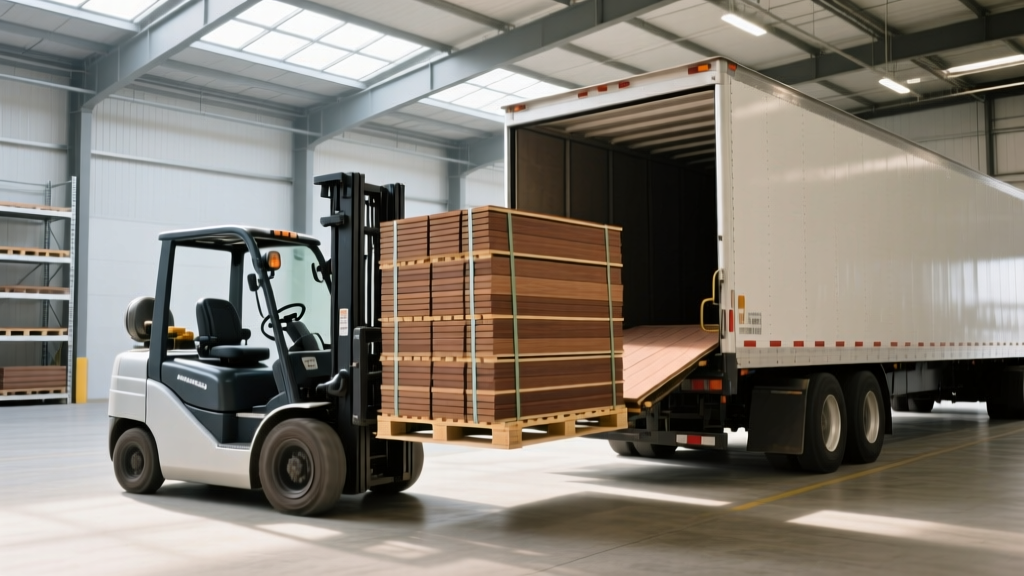
The most common failure mode for new online building material businesses is underestimating outbound logistics. Shipping a 50 lb box of mortar via UPS Ground is straightforward; shipping a 2,400 lb pallet of fiber cement siding requires LTL freight, which introduces accessorial fees, liftgate requirements, and residential delivery surcharges.
Navigating LTL Freight Classes and Accessorials
Building materials are generally classified under NMFC (National Motor Freight Classification) Class 50 or 55 due to their high density. However, carriers apply strict accessorial fees that can wipe out your margin if not passed to the consumer or factored into your pricing algorithm.
- Liftgate Service: $75 - $125 per delivery (Required for 90% of residential contractor sites).
- Residential Delivery Surcharge: $110 - $160 (Applied automatically if the delivery zip code is zoned residential).
- Inside Delivery: $45 - $85 (Drivers will only drop at the curb/dock unless this is billed).
- Detention/Demurrage: $75+ per hour (Charged if your loading dock takes longer than 2 hours to load the carrier's truck).
Tech Stack Costs: B2B vs. B2C Platforms
Standard B2C platforms fail in construction supply because they lack native support for Net-30/Net-60 terms, tax-exempt certificate management, and minimum order quantities (MOQs). McKinsey's research on construction digitization highlights that B2B buyers demand consumer-grade UX with enterprise-grade purchasing logic. Here is how the top platforms compare for building materials in 2026.
| Platform | Base Monthly Cost | B2B Native Features | Best Use Case |
|---|---|---|---|
| Shopify Plus | $2,500+ | Requires third-party apps (e.g., SparkLayer) for complex tiered pricing and quick-order forms. | High-volume finish materials, smart home integration, B2C-heavy contractors. |
| BigCommerce B2B | $1,500 - $3,000 | Native price lists, customer-specific catalogs, and purchase order (PO) checkout out-of-the-box. | Mid-market wholesale distributors, mixed B2B/B2C lumber yards. |
| Adobe Commerce | $22,000+/yr | Unlimited customization, deep ERP syncing, complex multi-warehouse inventory routing. | Enterprise national distributors with massive SKU counts and custom procurement portals. |
Unit Economics: A Real-World Pallet of Composite Decking
To understand true profitability, we must analyze a single, high-value transaction. Let's break down the unit economics of selling one pallet of Trex Transcend Lineage Decking (approx. 500 sq. ft.) direct to a contractor via your online portal.
Order Specifications
- Total Weight: 2,150 lbs
- Freight Class: 50 (Dense building materials)
- Destination: Zone 4 (Approx. 600 miles from distribution center)
Financial Breakdown
| Line Item | Amount | Details |
|---|---|---|
| Retail Price (Online) | $6,850.00 | Contractor tier pricing (12% below MSRP). |
| Wholesale COGS | -$4,950.00 | Distributor net cost from manufacturer. |
| LTL Freight (Zone 4) | -$415.00 | Negotiated rate with regional carrier (includes liftgate). |
| Pallet & Shrink Wrap | -$35.00 | Heavy-duty 48x48 block pallet + 80-gauge wrap. |
| Warehouse Labor | -$55.00 | Forklift staging and loading (approx. 45 mins). |
| Payment Processing | -$20.00 | ACH transfer via Melio/Bill.com (1% fee capped at $20 for B2B). |
| Net Profit | $1,375.00 | 20.0% Net Margin |
By utilizing ACH payment gateways designed for B2B transactions rather than standard credit card processors (which would charge 2.9%, or $198 on this order), the business retains an additional $178 in margin per pallet. Tracking current freight indices via sources like FreightWaves allows procurement teams to adjust retail pricing dynamically as diesel surcharges fluctuate.
Strategic Framework: Fulfillment Decision Tree
When structuring your online building material business, use this framework to determine your fulfillment strategy based on product density and margin.
- High Weight / Low Margin (e.g., Concrete Bags, Standard Lumber): Utilize a Dropship or Vendor-Direct model. Do not touch the product. Route the online order directly to the manufacturer's local distribution node to minimize freight zones.
- Low Weight / High Margin (e.g., Cabinet Hardware, Specialty Fasteners, LED Lighting): Hold in-house. Ship via standard parcel networks (UPS/FedEx). These items subsidize the operational costs of your heavy freight shipments.
- High Weight / High Margin (e.g., Composite Decking, Premium Stone Veneer): Hold in-house or use a specialized 3PL with heavy-material capabilities. Cross-dock these items to consolidate LTL shipments and maximize carrier volume discounts.
Launching an online building material business requires moving beyond simple shopping carts. It demands a rigorous approach to freight logic, B2B payment structures, and density-based margin analysis. By aligning your tech stack with construction procurement realities and strictly managing LTL accessorials, digital suppliers can capture significant market share from legacy brick-and-mortar yards.
Written by
Sarah WhitfieldSarah Whitfield is a chartered quantity surveyor (MRICS) and construction cost analyst with 15 years of experience in material pricing, procurement strategy, and project budgeting. She earned her degree in Construction Management from the University of Reading (UK) and has worked on projects ranging from $2M custom homes to $180M mixed-use developments across North America and Europe. Sarah currently leads cost estimating for BuildMat Insight, maintaining a proprietary database of 4,000+ material price points updated quarterly. She is a frequent contributor to RSMeans cost data panels and has presented at the International Cost Engineering Council (ICEC) congress. Based in Denver, CO, Sarah is an avid trail runner and volunteer mentor for Women in Construction.
More from Sarah Whitfield
View all
Wood & Lumber
What Are the Different Types of Wood? A Builder's Guide
Compare structural softwoods, finish hardwoods, and engineered lumber. Analyze Janka ratings, MOE values, and 2026 pricing for construction.
Aug 4, 2026

Walls & Panels
Steel Framing vs Wood Framing: Corrosion and Moisture Defense
Compare steel framing vs wood framing for moisture resistance. Learn about galvanized coatings, condensation risks, and corrosion protection strategies.
Jul 21, 2026

Stone & Masonry
How to Cut Stone Veneer: Wet Saw vs Grinder Comparison
Compare the best tools for cutting stone veneer. We review wet saws, angle grinders, and chop saws to help you achieve clean, chip-free cuts.
Jul 21, 2026