North Cascade Building Materials Everett WA: 2026 Supplier Review
A 2026 comparison review of North Cascade Building Materials in Everett, WA, evaluating lumber pricing, PNW siding options, and delivery logistics.

The Pacific Northwest Sourcing Dilemma: Local Yards vs. Big Box
Sourcing building materials in Snohomish County requires navigating a unique set of environmental and logistical challenges. With Everett averaging over 35 inches of annual rainfall and experiencing heavy winter saturation, the moisture content and grade of structural lumber and exterior cladding are not just code requirements—they are critical failure-point determinants. For local contractors and custom home builders, evaluating North Cascade Building Materials in Everett, WA, against big-box retailers and national pro-desk suppliers is a necessary exercise in risk management and margin protection.
This 2026 comparison review dissects the inventory depth, pricing structures, and delivery capabilities of North Cascade Building Materials, specifically analyzing their suitability for the wet Pacific Northwest climate. We bypass generic supplier platitudes to focus on exact material grades, fastener compatibilities, and site-access logistics that dictate project timelines in the greater Everett area.
Best for Structural Framing: North Cascade (Superior Douglas Fir-Larch grading and MC15 compliance).
Best for Premium Siding: North Cascade (Extensive Western Red Cedar STK and Clear inventory).
Best for Commodity Engineered Wood: Big Box Retailers (High-volume LP SmartSide pricing, but limited weather-protected storage).
Best for Tight-Site Delivery: North Cascade (Knuckleboom trucks capable of navigating North Everett steep grades).
Deep Dive: North Cascade Building Materials Everett WA Profile
Unlike national chains that rotate inventory based on corporate planograms, regional suppliers like North Cascade Building Materials tailor their stock to the specific microclimates and architectural styles of the Puget Sound region. Their Everett location serves as a critical hub for projects stretching from Marysville down to Mukilteo, offering a distinct advantage in material acclimatization and specialized product lines.
Inventory Specialization & PNW Climate Suitability
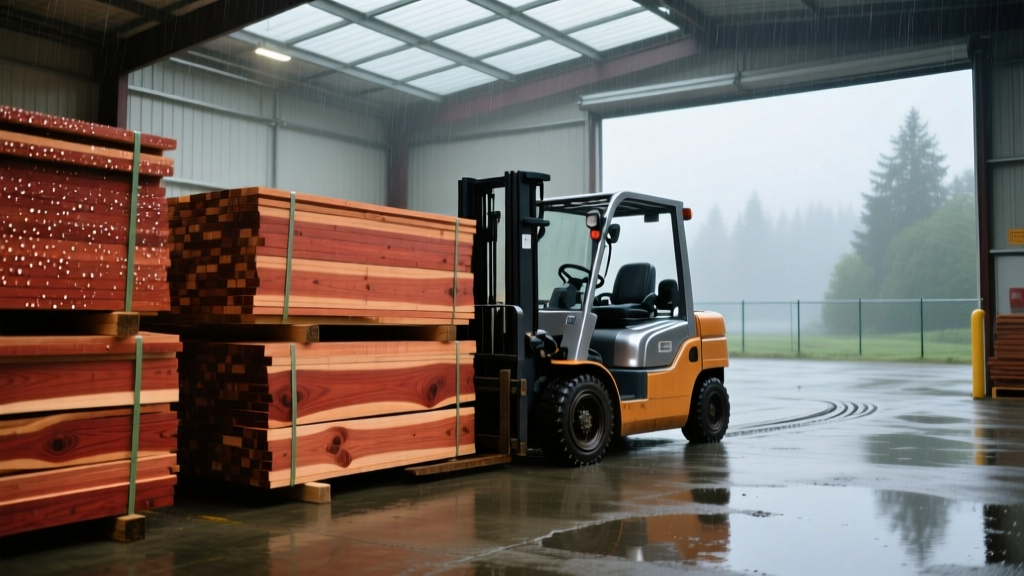
The primary differentiator for North Cascade is their handling of hygroscopic materials. According to the Western Red Cedar Lumber Association, cedar must be properly acclimated to local humidity levels before installation to prevent excessive shrinking or cupping. North Cascade stores premium siding grades under covered, ventilated shelters, maintaining a moisture content (MC) closer to the 12-15% equilibrium range required for Snohomish County exteriors. Conversely, big-box stores frequently store bundled cedar in open-air garden centers, exposing the end-grains to direct rainfall and resulting in localized MC spikes above 19%, which promotes mold growth behind the weather-resistive barrier.
Furthermore, their structural framing inventory heavily favors Douglas Fir-Larch #2 & Better, stamped for high snow-load and seismic requirements specific to Washington State building codes. You will rarely find the warped, wane-heavy SPF (Spruce-Pine-Fir) studs here that often plague the pro-desks of national home improvement chains.
Material Category Comparison: What to Buy Where in 2026
To provide actionable procurement data, we compared pricing, lead times, and material integrity across four core building categories essential to Everett-area residential construction. Prices reflect Q1 2026 regional averages for pro-tier accounts.
| Material Category | North Cascade (Everett) | Big Box Pro Desk | Sourcing Recommendation |
|---|---|---|---|
| Western Red Cedar Siding (STK Grade, 1x6) | $3.85 - $4.20 / linear ft Stored indoors, MC ~14% |
$3.60 - $3.95 / linear ft Outdoor storage, high warp risk |
North Cascade. The 7% premium eliminates 15%+ cull rates from warped/bowed boards. |
| LP SmartSide Series 576 (ExpertFinish) | $1.15 - $1.30 / sq ft 3-5 day lead time |
$1.05 - $1.20 / sq ft In-stock (commodity colors) |
Big Box. For standard colors (e.g., Ironstone, Cobble Brown), big box volume pricing wins. Use Series 576 (7/16") for PNW impact resistance. |
| Doug Fir 2x6 #2 & Btr (16' lengths) | $14.50 - $16.00 / board Consistent grain, tight knots |
$13.80 - $15.50 / board High wane, frequent twisting |
North Cascade. Straighter boards reduce framing labor time and drywall shimming. |
| James Hardie Artisan Collection | $9.50 - $11.00 / sq ft Special order, 2-3 weeks |
Not Carried / Special Order High minimums required |
North Cascade. Better handling of heavy fiber cement pallets; lower minimum order thresholds for custom builds. |
Crucial Fastener Note: When sourcing Western Red Cedar from North Cascade, ensure your crew is using 304-grade or 316-grade stainless steel ring-shank nails. The tannins in PNW cedar will rapidly corrode standard galvanized or electroplated fasteners, leading to black streaking and premature siding failure. The Building Science Corporation explicitly recommends stainless steel for all cedar and treated wood applications in marine-influenced climates like Everett.
Logistics, Delivery, and Snohomish County Site Access
Material quality is irrelevant if it cannot be safely and efficiently delivered to the job site. The topography of the greater Everett area—ranging from the flat, water-logged soils near the Snohomish River delta to the steep, clay-heavy grades of Boulevard Bluffs and Lowell—demands specialized delivery equipment.
The "Mud Season" Delivery Test
Between November and April, unpaved driveways and newly graded sites in Snohomish County turn into deep mud pits. National suppliers frequently rely on standard flatbed trucks equipped with Moffett forklifts. While effective on paved surfaces, Moffetts routinely sink and tip on saturated clay, resulting in dropped loads, damaged materials, and refused deliveries.
North Cascade Building Materials utilizes a fleet equipped with articulating boom trucks (knucklebooms). These trucks can remain on the paved street or stable pad while the hydraulic boom reaches over obstacles, lifting bundles of LP SmartSide or trusses directly to the second-story deck or deep into the muddy site. For custom builders working on infill lots in historic Everett neighborhoods with narrow alleys and zero setback, the knuckleboom capability is not a luxury; it is a mandatory logistical requirement that North Cascade consistently provides.
Pros and Cons Breakdown
To maintain an objective procurement strategy, builders must weigh the operational realities of utilizing a specialized local yard versus a high-volume retailer.
- Pro: Climate-Controlled Lumber Storage. Drastically reduces the cull rate for finish-grade materials like cedar and clear fir.
- Pro: Site-Specific Delivery Equipment. Knuckleboom trucks mitigate the risk of mud-season delivery failures on steep or unpaved Everett sites.
- Pro: Technical Expertise. Yard staff understand local wind-driven rain profiles and can recommend appropriate weather-resistive barriers (WRB) and flashing tapes compatible with specific siding profiles.
- Con: Commodity Pricing. For high-volume, non-critical engineered wood (like OSB sheathing or standard I-joists), North Cascade cannot always match the aggressive loss-leader pricing of big-box pro desks.
- Con: Weekend Availability. Unlike national chains with robust Sunday hours, specialized local yards often operate on reduced weekend schedules, requiring precise Friday staging for weekend framing crews.
Final Procurement Strategy for Everett-Area Builders
The most efficient builders in the Pacific Northwest do not rely on a single source; they deploy a bifurcated procurement strategy. Based on our 2026 analysis, the optimal approach is to source all exterior cladding, finish-grade lumber, and heavy structural beams from North Cascade Building Materials in Everett. The slight premium in unit cost is entirely offset by the reduction in material waste, the elimination of moisture-related callbacks, and the reliability of boom-truck delivery.
Conversely, route your commodity structural panels (OSB, plywood), standard engineered I-joists, and bulk insulation orders to big-box pro desks or national wholesale distributors where volume discounts dominate. Always verify that engineered wood products meet the specific moisture and span ratings mandated by the APA - The Engineered Wood Association for high-humidity environments. By aligning your material sourcing with the specific logistical and climatic realities of Snohomish County, you protect your margins, accelerate your build schedule, and ensure the long-term durability of the structure.
Written by
Elena RodriguezElena Rodriguez is a civil engineer and technical writer specializing in concrete technology, masonry systems, and ASTM/ACI compliance. She earned her B.S. in Civil Engineering from Texas A&M University and spent a decade at a materials testing laboratory, performing over 2,000 concrete compressive strength tests and masonry prism evaluations. Elena is an ACI-certified Field Testing Technician (Grade I) and a member of ASTM Committee C12 on Natural Building Stone. She currently consults on forensic engineering cases involving concrete failures and moisture intrusion. Based in San Antonio, TX, Elena is a proud member of the Society of Women Engineers (SWE) and coaches her daughter's FIRST Robotics team.
More from Elena Rodriguez
View all
Walls & Panels
Cost Analysis: Light Gauge Steel Framing Advantages and Disadvantages
Evaluate light gauge steel framing advantages and disadvantages through a strict cost analysis lens, comparing material, labor, and lifecycle expenses.
Aug 4, 2026

Walls & Panels
Gypsum Board Types: Exact Specifications, Thickness & Dimensions
Compare standard, Type X, and moisture-resistant gypsum board types. Get exact specifications, thicknesses, dimensions, and ASTM standards for your project.
Aug 4, 2026

Fire Resistance
Best Fire-Resistant Outdoor Decking Materials: 2026 Buyer Guide
Discover the best fire-resistant outdoor decking materials for 2026. Compare Class A PVC, aluminum, and hardwood options for WUI compliance and safety.
Aug 4, 2026