Building Materials ID Skyrim: Virtual vs Real-World Construction
Searching for a building materials ID Skyrim command? We compare virtual Hearthfire resources to real-world 2026 timber, clay, and stone construction costs.
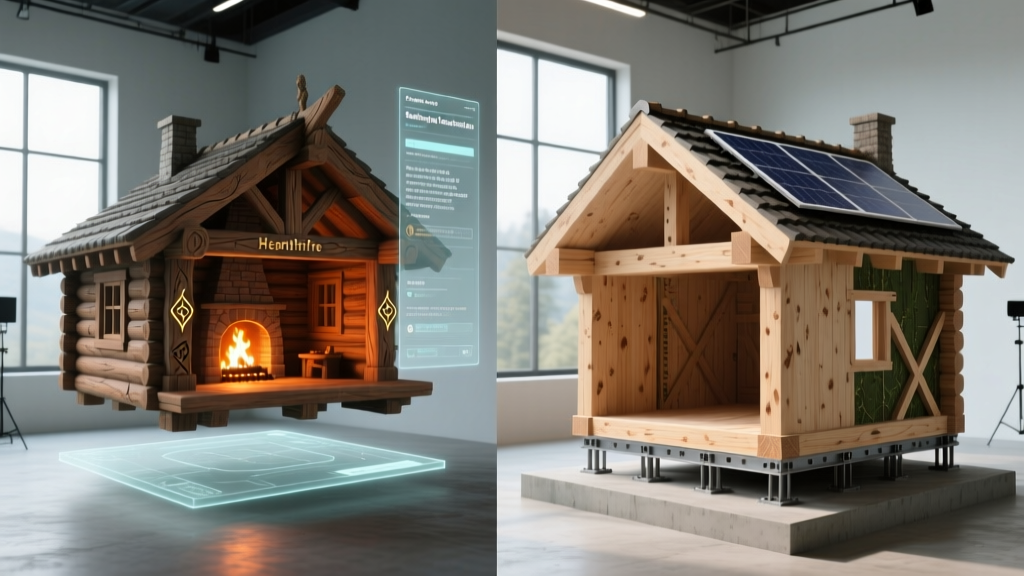
The Intersection of Virtual Commands and Real-World Masonry
When players type a building materials id skyrim console command to instantly spawn 50 sawn logs, 20 units of clay, and quarried stone, they are interacting with a highly simplified, gamified version of structural engineering. In the Hearthfire expansion, these base resources automatically assemble into manors, walls, and roofs without the need for load-path calculations, moisture management, or thermal bridging analysis. However, for architects, builders, and material scientists in 2026, translating these virtual resources into real-world construction requires a rigorous understanding of material properties, ASTM standards, and modern supply chain economics.
player.additem command bypasses the real-world procurement process, understanding the physical equivalents of Skyrim's core triad—timber, stone, and clay—provides a fascinating lens through which to evaluate modern structural insulated panels (SIPs), architectural veneers, and advanced masonry binders.
Sawn Logs vs. Dimensional Lumber and SIPs
In a virtual environment, a 'sawn log' is a uniform, defect-free unit of construction. In the real-world 2026 timber market, structural framing relies on highly graded dimensional lumber, primarily Spruce-Pine-Fir (SPF) or Douglas Fir-Larch. According to the U.S. Forest Products Laboratory's Wood Handbook, the structural integrity of timber is dictated by its moisture content and visual stress grading.
Moisture Content and Structural Yield
Virtual logs do not warp, cup, or harbor fungal decay. Real-world framing lumber must be kiln-dried to a maximum moisture content (MC) of 19% (stamped S-DRY or MC-15) to prevent structural shrinkage that compromises drywall and roofing connections. For high-performance builds in 2026, the industry has largely pivoted from stick-framing entirely with sawn logs to utilizing Structural Insulated Panels (SIPs) or Cross-Laminated Timber (CLT).
- SPF #2 Dimensional Lumber: Yields approximately $4.50 to $6.00 per linear foot in 2026, subject to regional tariff fluctuations. Requires extensive on-site labor and thermal insulation batts.
- Cross-Laminated Timber (CLT): The modern, engineered equivalent of the monolithic virtual log. CLT panels offer a 1-hour fire rating per ASTM E119 and cost between $12.00 and $18.00 per square foot, drastically reducing framing time.
Quarried Stone: Monolithic Blocks vs. Veneer Systems
The 'quarried stone' resource in gaming is typically applied as a solid, load-bearing perimeter wall. Modern construction rarely uses solid quarried stone for load-bearing residential walls due to the immense dead load, poor thermal resistance (R-value of roughly 0.08 per inch), and high masonry labor costs. Instead, 2026 construction utilizes structural backing with architectural stone veneer.
| Material System | 2026 Installed Cost (per sq ft) | Structural Role | Thermal / Moisture Performance |
|---|---|---|---|
| Solid Rubble Masonry | $45.00 - $65.00 | Load-Bearing | Poor insulation; requires interior rigid foam. |
| Natural Stone Veneer (Ashlar) | $22.00 - $38.00 | Non-Load-Bearing Cladding | Requires WRB and 1-inch air gap for drainage. |
| Manufactured Stone Veneer (MSV) | $14.00 - $24.00 | Non-Load-Bearing Cladding | Lighter weight; reduces structural footing requirements. |
When applying stone veneer, builders must adhere to strict moisture management protocols. The National Institute of Standards and Technology (NIST) emphasizes that masonry cladding systems must incorporate a weather-resistive barrier (WRB) and a weep screed at the base to prevent hydrostatic pressure from degrading the structural sheathing.
Clay, Mortar, and the Chemistry of Binding Agents
In virtual building systems, 'clay' is often used interchangeably to form walls, foundations, and mortar. In materials science, unfired clay and fired clay represent entirely different structural paradigms. Unfired clay is utilized in rammed earth or adobe construction, which requires specific arid climates and deep, frost-protected foundations to prevent catastrophic shear failure during freeze-thaw cycles.
Mortar Selection: Type N vs. Type S
When binding quarried stone or clay bricks, the chemical composition of the mortar is critical. Modern builders follow ASTM C270 standards to select the appropriate mortar type based on the compressive strength and flexibility required by the masonry units.
'A common failure mode in residential masonry is the use of Type S (high-strength) mortar on soft, historic, or low-compressive clay bricks. The rigid mortar prevents natural thermal expansion, causing the softer brick faces to spall and crack. Type N mortar provides the necessary flexibility for most modern veneer applications.'
- Type N Mortar: 750 PSI compressive strength. Ideal for exterior stone veneer and above-grade clay brick walls where moderate flexibility is needed to absorb thermal movement.
- Type S Mortar: 1,800 PSI compressive strength. Reserved for below-grade foundations, retaining walls, and high-load structural masonry where lateral soil pressure is a factor.
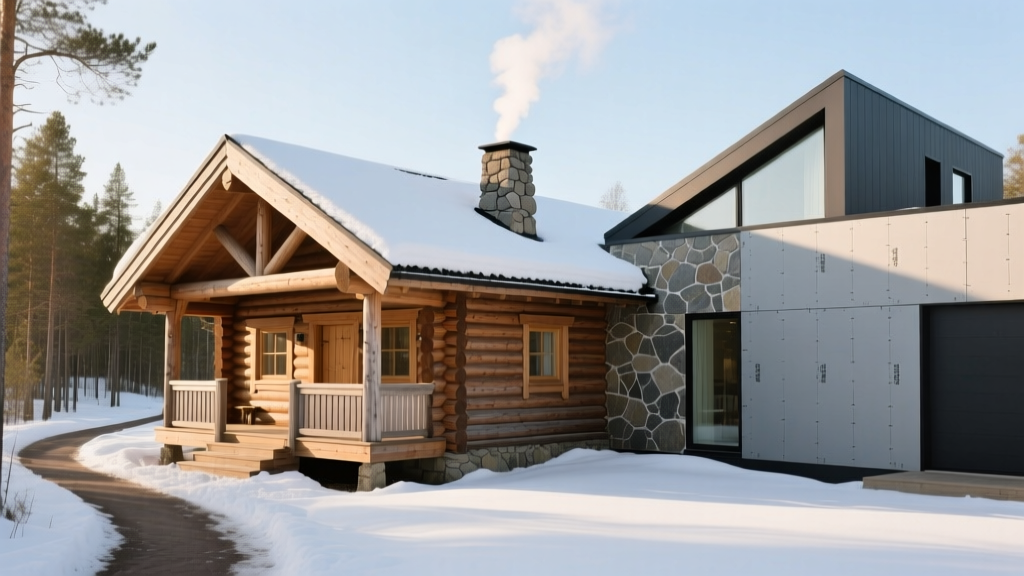
Translating Game Mechanics to Construction Science
The appeal of the building materials id skyrim command lies in its elimination of logistics, curing times, and structural tolerances. Real-world construction in 2026 demands a rigorous adherence to material science. Whether you are specifying CLT panels to replace traditional sawn logs, designing a drainage plane behind a natural stone veneer, or calculating the exact water-to-cement ratio for a Type N mortar mix, the transition from virtual spawning to physical building requires precision, testing, and an understanding of environmental loads.
Key Takeaways for Modern Specifiers
- Abandon Monolithic Assumptions: Virtual stone walls are solid; real-world stone walls must be drained, vented cavity systems to prevent mold and rot.
- Grade Your Timber: Never assume uniform structural capacity. Always specify stamp-graded lumber (e.g., SPF #2 or better) and verify moisture content upon delivery.
- Match the Binder to the Substrate: High-strength mortar destroys soft masonry. Always verify the ASTM compressive strength of both the unit and the mortar before mixing.
Written by
Priya KapoorPriya Kapoor is a real estate market analyst and construction economics researcher with expertise in housing affordability, development feasibility, and infrastructure investment. She holds a Master of Regional Planning from Cornell University and previously worked as a senior analyst at CBRE's Investment Properties group, where she modeled returns for $4B in mixed-use development pipelines. Priya now runs an independent research practice advising developers, municipalities, and REITs on construction cost forecasting and market timing. She publishes the quarterly "BuildMat Market Pulse" report tracking material price indices across 12 commodity categories. Based in Austin, TX, Priya serves on the board of Habitat for Humanity Austin and is a marathon runner.
More from Priya Kapoor
View all
Construction Cost
Cost to Build a 1600 Sq Ft Home in 2026: Full Breakdown
Accurate 2026 cost to build a 1600 sq ft home—material, labor, and regional pricing breakdowns included. Plan your budget with real-time estimates.
Aug 11, 2026

Wood & Lumber
Name the Types of Wood for Pressure Treatment and Preservation
Learn how to name the types of wood best suited for pressure treatment. Compare species treatability, chemical retention levels, and 2026 preservation costs.
Aug 4, 2026

Stone & Masonry
Stone Veneer Suppliers Lindenhurst: 2026 Cost Analysis
Analyze 2026 stone veneer costs in Lindenhurst, NY. Compare local supplier pricing, delivery fees, and Suffolk County installation labor rates.
Aug 4, 2026