2026 Guide to Sourcing from a Chinese Building Material Warehouse
Master direct sourcing from a Chinese building material warehouse. Learn 2026 logistics, GB/T quality standards, and Foshan market negotiation tactics.

The Architecture of China's Wholesale Material Hubs
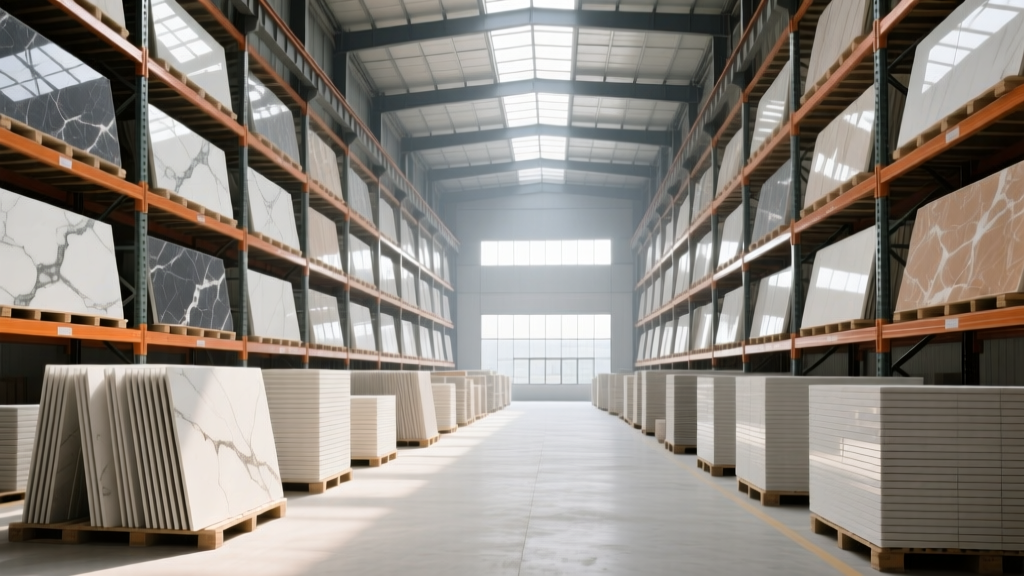
Sourcing directly from a Chinese building material warehouse bypasses domestic distributors, offering 30% to 55% cost reductions on bulk finishings, structural components, and fixtures. However, the sheer scale of these facilities—often exceeding 50,000 square meters per vendor in major industrial zones—requires a highly structured procurement strategy. Unlike Western big-box suppliers, Chinese wholesale warehouses operate on a high-volume, low-margin model where buyer due diligence replaces retail-level quality guarantees.
According to the U.S. International Trade Administration, China remains the dominant global exporter of construction materials, but navigating the physical warehouse floors in manufacturing hubs requires specific regional knowledge. The three primary sourcing nodes each specialize in distinct material categories.
Market Specialization Matrix
| Hub City | Primary Material Focus | Key Wholesale Markets | Best For |
|---|---|---|---|
| Foshan | Ceramics, porcelain, sanitary ware, aluminum profiles | Huayi Decoration Materials Market, China Ceramics City | Heavy finishings, bathroom fixtures, exterior cladding |
| Guangzhou | Lighting, HVAC, architectural hardware, smart home systems | Guangzhou International Lighting Exhibition Center | MEP (Mechanical, Electrical, Plumbing) components |
| Yiwu | Small fixtures, hand tools, fasteners, interior trim | Yiwu International Trade City (District 2 & 4) | High-SKU, low-weight accessory consolidation |
Warehouse Floor Protocol: The 3-Point Inspection
When physically visiting or hiring a third-party agent to inspect a Chinese building material warehouse, rely on a strict 3-point inspection protocol to verify inventory integrity before authorizing the final wire transfer.
- Batch Code Verification: Cross-reference the batch numbers printed on the side of cardboard carton packaging with the manufacturer's production log. For materials like large-format porcelain tiles (e.g., 1200x2400mm), mixing different production batches in the same shipment will result in visible shade variations (caliber and tone discrepancies) once installed.
- Moisture and Pallet Integrity: Inspect the shrink wrap on wooden pallets. In coastal warehouses (like those near Shenzhen or Ningbo), ambient humidity can warp engineered wood flooring or corrode ungalvanized steel fasteners. Ensure desiccant silica gel packets are inserted inside the primary packaging, not just the outer carton.
- The "Drop Test" Simulation: For fragile goods like sanitary ceramics, request the warehouse manager to demonstrate the packaging drop test. Export-grade packaging must utilize high-density EPS foam corners and honeycomb cardboard, surviving a 1.5-meter drop without structural compromise to the product.
Never approve a bulk warehouse shipment based solely on the sample mailed to your office. Unscrupulous trading companies will mail a premium "Golden Sample" manufactured to exact specifications, while the warehouse fulfills the bulk order with B-grade overstock. Always mandate that your quality control inspector selects 5 random cartons from different pallets deep within the warehouse for testing.
Bridging GB/T and International Quality Standards
A major friction point in international procurement is translating Chinese national standards (Guobiao, or GB/T) to Western building codes. A warehouse manager in Foshan will quote you based on GB/T 4100-2015 for ceramic tiles, while your local architect requires compliance with ASTM or ISO standards.
Key Standard Translations for Procurement
- Water Absorption (Porcelain): Under ISO 13006 and ASTM C373, true porcelain must have a water absorption rate of ≤ 0.5% (Group BIa). In the Chinese GB/T system, ensure your purchase order explicitly specifies "Group BIa" (BⅠa类). If the warehouse quotes "Group BIIa" (0.5% < E ≤ 3%), the material is ceramic, not porcelain, and will fail freeze-thaw testing in exterior applications.
- Steel Structural Yield Strength: When sourcing steel I-beams or rebar, the Chinese standard Q235B roughly equates to ASTM A36, while Q355B aligns with ASTM A572 Grade 50. Always require Mill Test Certificates (MTC) stamped with the warehouse's export seal, verifying the chemical composition and yield strength of the specific heat numbers being loaded.
- Formaldehyde Emissions (Wood Products): For engineered flooring and cabinetry, mandate the ENF (Extreme Non-Formaldehyde) grade under the new GB/T 39600-2021 standard, which limits emissions to ≤ 0.025 mg/m³, vastly outperforming the older E1 grade and aligning with strict CARB Phase 2 requirements in North America.
2026 Freight Realities and Loading Tactics
Building materials are notoriously dense, making weight restrictions the primary bottleneck in containerized shipping. According to current global shipping indices tracked by the Freightos Baltic Index, ocean freight rates fluctuate based on seasonal demand, but the physics of container loading remain constant.
Optimizing TEU (Twenty-foot Equivalent Unit) Payloads
A standard 20ft container has a maximum payload capacity of approximately 27,500 kg to 28,500 kg, depending on the shipping line and destination port road weight limits. Because materials like natural stone, porcelain tiles, and cement board are incredibly heavy, a 20ft container will "weigh out" long before it "cubes out" (fills its physical volume).
To maximize the weight allowance for heavy tiles, instruct the warehouse to use plastic slip sheets instead of wooden pallets. Wooden pallets consume roughly 1,000 kg of your 28,000 kg payload allowance and take up 10% of the floor space. Slip sheets require a push/pull forklift attachment at your destination port, but they allow you to load an additional 800 sqm of tile per container, drastically reducing your per-square-meter freight cost.
If you must use wooden pallets for racking compatibility at your domestic job site, ensure the warehouse treats all solid wood packaging according to ISPM 15 regulations. The wood must be heat-treated and stamped with the IPPC "wheat" mark. Failure to provide this stamp will result in customs holding your container at the port of entry, incurring severe demurrage fees.
Financial Structuring and Contract Execution
Transactions with Chinese building material warehouses operate on strict, standardized payment terms. Attempting to negotiate Net-30 or Net-60 terms with a mid-sized wholesale warehouse is generally futile and signals a lack of industry experience.
Standard Payment Framework
- Orders under $50,000 USD: 30% Telegraphic Transfer (T/T) deposit upon signing the Proforma Invoice (PI), with the 70% balance paid via T/T against the faxed copy of the Bill of Lading (B/L). Never pay the balance before the cargo is on the water.
- Orders over $100,000 USD: Utilize an Irrevocable Letter of Credit (L/C) at sight. This protects your capital by ensuring the bank only releases funds when the warehouse presents compliant shipping documents (B/L, Commercial Invoice, Packing List, Certificate of Origin).
- Tariff Mitigation: Instruct the warehouse to provide a "Form E" Certificate of Origin if your destination country has a Free Trade Agreement (FTA) with China (e.g., ASEAN nations, Australia, or New Zealand). This document is critical for claiming preferential tariff rates and can reduce import duties from 10% down to 0%.
Decision Framework: Is Direct Warehouse Sourcing Viable?
Bypassing local suppliers to source directly from a Chinese building material warehouse is not universally optimal. Use this framework to determine if the logistical friction justifies the material savings.
| Project Profile | Sourcing Recommendation | Rationale |
|---|---|---|
| Custom residential build (under 3,000 sq ft) | Use domestic distributors | Freight and customs brokerage fees will erase material savings; lead times are too long for tight residential schedules. |
| Mid-rise commercial / Multi-family (50+ units) | Hybrid approach (Direct for finishings, local for structural) | High volume of repetitive fixtures (vanities, tiles, doors) justifies the 45-day ocean transit time and warehouse consolidation. |
| Large-scale hospitality / Resort development | 100% Direct Warehouse Sourcing | Custom millwork, bulk stone, and specialized MEP fixtures offer massive ROI when sourced directly from Foshan/Guangzhou hubs. |
Successfully leveraging a Chinese building material warehouse requires treating the facility not as a retail store, but as a node in a complex global supply chain. By enforcing strict GB/T to ISO standard translations, optimizing container payloads for dense materials, and securing transactions via Bill of Lading-triggered payments, procurement teams can secure institutional-grade materials at highly competitive 2026 price points.
Written by
Priya KapoorPriya Kapoor is a real estate market analyst and construction economics researcher with expertise in housing affordability, development feasibility, and infrastructure investment. She holds a Master of Regional Planning from Cornell University and previously worked as a senior analyst at CBRE's Investment Properties group, where she modeled returns for $4B in mixed-use development pipelines. Priya now runs an independent research practice advising developers, municipalities, and REITs on construction cost forecasting and market timing. She publishes the quarterly "BuildMat Market Pulse" report tracking material price indices across 12 commodity categories. Based in Austin, TX, Priya serves on the board of Habitat for Humanity Austin and is a marathon runner.
More from Priya Kapoor
View all
Construction Cost
Cost to Build a 1600 Sq Ft Home in 2026: Full Breakdown
Accurate 2026 cost to build a 1600 sq ft home—material, labor, and regional pricing breakdowns included. Plan your budget with real-time estimates.
Aug 11, 2026

Wood & Lumber
Name the Types of Wood for Pressure Treatment and Preservation
Learn how to name the types of wood best suited for pressure treatment. Compare species treatability, chemical retention levels, and 2026 preservation costs.
Aug 4, 2026

Stone & Masonry
Stone Veneer Suppliers Lindenhurst: 2026 Cost Analysis
Analyze 2026 stone veneer costs in Lindenhurst, NY. Compare local supplier pricing, delivery fees, and Suffolk County installation labor rates.
Aug 4, 2026