J and L Building Materials Frazer PA: 2026 Regional Supply Trends
Explore 2026 building material trends at J and L Building Materials Frazer PA, from high-performance envelopes to composite decking supply shifts.

The Mid-Atlantic Supply Hub: Frazer PA in 2026
Regional distributors act as the primary barometer for localized construction trends, and J and L Building Materials in Frazer, PA, serves as a critical node for the Greater Philadelphia, Chester County, and Western Pennsylvania markets. As builders navigate the 2026 construction landscape, the inventory shifts at this specific Route 30 corridor facility highlight broader industry transitions. Rather than the supply chain volatility that characterized the early 2020s, the 2026 market is defined by code-driven product mandates, advanced polymer adoption, and hyper-optimized just-in-time logistics. Understanding the specific SKU movements and stock allocations at the Frazer branch provides contractors with a distinct procurement advantage.
According to the AIA Consensus Construction Forecast, regional material availability is increasingly dictating project sequencing in the Mid-Atlantic. Contractors who align their specifications with the high-volume inventory held at J&L's Frazer location are reducing lead times by an average of 14 to 21 days compared to custom-order alternatives.
High-Performance Envelopes and Code Compliance
Pennsylvania's ongoing adoption and enforcement of updated International Energy Conservation Code (IECC) standards have fundamentally altered wall assembly specifications. The Frazer, PA distribution center has responded by drastically increasing its floor space dedicated to continuous insulation (ci) and integrated weather-resistive barriers (WRB).
The Shift to Integrated R-Sheathing
Traditional OSB paired with separate house wrap and exterior rigid foam is losing market share to integrated structural panels. At the Frazer branch, Huber ZIP System R-Sheathing (specifically the R-3 and R-6 polyiso variants) has become a primary stock item rather than a special order. This shift is driven by the labor savings of combining the WRB and exterior insulation into a single nailing step.
The Department of Energy notes that advanced building envelope technologies are now essential for meeting modern thermal bridging requirements. To support this, J&L Frazer has also expanded its mineral wool inventory, specifically stocking ROCKWOOL Comfortboard 80 in 4x8 foot sheets for exterior continuous insulation applications where non-combustibility is mandated by local fire codes in densifying suburban townhome developments.
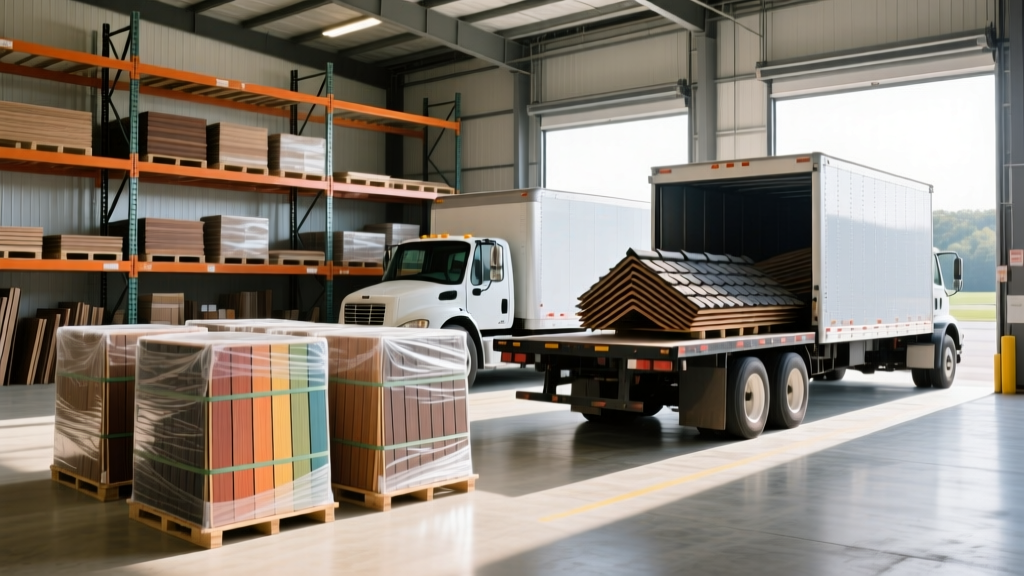
2026 Exterior Cladding and Decking Matrix
The exterior finishes market has seen a definitive pivot away from raw wood and standard vinyl toward engineered polymers and fiber cement. The table below details the current supply dynamics, pricing, and lead times for top-tier cladding and decking materials moving through the Frazer distribution hub.
| Material Category | Primary SKU / Brand Stocked | 2026 Avg. Cost (Material Only) | Frazer Lead Time | Market Trend |
|---|---|---|---|---|
| Fiber Cement Siding | James Hardie ColorPlus (Select Cedarmill) | $3.85 - $4.50 / sq. ft. | In Stock / 3 Days | Dominant; high demand for pre-finished dark tones |
| Engineered Wood Siding | LP SmartSide ExpertFinish (Cedar Texture) | $2.90 - $3.40 / sq. ft. | In Stock / 2 Days | Growing; preferred for labor-saving longer lengths |
| Composite Decking | Trex Transcend Lineage (Biscayne/Broadmoor) | $11.50 - $13.00 / lin. ft. | 5 - 10 Days | Surging; heat-mitigating pigments driving sales |
| PVC Trim | AZEK Harvest Collection (White/Clay) | $4.20 - $5.10 / lin. ft. | In Stock / 1 Day | Stable; replacing wood fascia entirely in new builds |
A notable trend at the Frazer branch is the aggressive stocking of heat-mitigating composite decking. Trex Transcend Lineage boards, engineered with reflective inorganic pigments to reduce surface temperatures by up to 40 degrees compared to traditional dark composites, have become a standard requirement for south-facing decks in Chester County. Contractors specifying these lines must account for a 5 to 10-day staging window at the Frazer yard, as high seasonal velocity often depletes immediate will-call racks.
Roofing Supply Shifts: Asphalt vs. Synthetic
The roofing material supply chain in Western Pennsylvania is undergoing a bifurcation. While architectural asphalt shingles remain the volume leader, the Frazer facility has allocated significant racking space to synthetic alternatives and impact-resistant modified asphalt.
SBS Modified Asphalt for Severe Weather
With insurance carriers increasingly scrutinizing roof replacements following severe wind and hail events in the Mid-Atlantic, demand for SBS (Styrene-Butadiene-Styrene) modified asphalt shingles has spiked. J&L Frazer maintains deep inventory of Owens Corning Duration Storm and GAF Timberline UHDZ. These shingles feature a polymer-modified asphalt layer that provides Class 4 impact resistance (UL 2218) and enhanced wind warranties up to 130 mph. The material cost premium is approximately 18% to 22% over standard architectural laminates, but contractors report that this cost is frequently offset by homeowner insurance premium discounts.
The Rise of Synthetic Underlayment
Felt paper (15lb and 30lb asphalt-saturated) has been almost entirely displaced by synthetic underlayments in the Frazer distribution network. Products like GAF TigerPaw and Owens Corning ProArmor are stocked in high volumes. These synthetics offer superior tear strength, UV exposure tolerance (up to 6 months), and water resistance, which is critical for Pennsylvania's unpredictable spring and autumn weather patterns during long roofing tear-offs.
Navigating the Frazer, PA Logistics Hub
Procuring materials from J and L Building Materials in Frazer requires an understanding of local logistics and facility operations. Situated near the intersection of Route 30 and Route 100, the facility experiences heavy commercial and commuter traffic. Optimizing will-call and delivery schedules is essential for maintaining tight construction timelines.
Will-Call Optimization Strategies
- Early Morning Staging: The Frazer will-call yard opens early, but the most efficient window for loading heavy pallets (like fiber cement or masonry veneer) is between 6:30 AM and 7:30 AM. Arriving after 8:30 AM often results in 30-to-45-minute delays due to Route 30 commuter congestion and yard forklift prioritization for outbound delivery trucks.
- Pre-Loaded Bundles: For high-volume decking and siding orders, utilize J&L's digital portal to submit cut-lists and bundle requests 48 hours in advance. The Frazer yard utilizes automated banding equipment that can custom-band composite decking bundles by elevation or deck level, saving 2 to 3 hours of on-site sorting labor.
- Crane Truck Scheduling: For residential builds requiring crane-truck delivery (articulating boom trucks for lifting roofing bundles and trusses directly onto the roof deck), bookings at the Frazer branch must be secured 7 to 10 days in advance during the peak May-October building season. Specify the exact reach and payload requirements to ensure the correct Class 5 or Class 7 boom truck is dispatched.
Leveraging Regional Inventory Networks
While the Frazer branch is a primary hub, J&L operates a networked inventory system across the Mid-Atlantic. If a specific SKU—such as a niche colorway of James Hardie siding or a specialized DaVinci synthetic slate profile—is depleted at Frazer, the internal logistics network can typically transfer stock from nearby facilities in King of Prussia or Lancaster within 24 hours. Establishing a direct line with the Frazer inside sales desk allows general contractors to tap into this broader regional inventory without incurring direct freight penalties.
By aligning project specifications with the high-velocity, code-compliant materials actively stocked at the J and L Building Materials Frazer PA location, Mid-Atlantic builders can mitigate supply chain risks, reduce on-site labor hours, and deliver high-performance structures that meet the rigorous demands of the 2026 building codes.
Written by
Elena RodriguezElena Rodriguez is a civil engineer and technical writer specializing in concrete technology, masonry systems, and ASTM/ACI compliance. She earned her B.S. in Civil Engineering from Texas A&M University and spent a decade at a materials testing laboratory, performing over 2,000 concrete compressive strength tests and masonry prism evaluations. Elena is an ACI-certified Field Testing Technician (Grade I) and a member of ASTM Committee C12 on Natural Building Stone. She currently consults on forensic engineering cases involving concrete failures and moisture intrusion. Based in San Antonio, TX, Elena is a proud member of the Society of Women Engineers (SWE) and coaches her daughter's FIRST Robotics team.
More from Elena Rodriguez
View all
Walls & Panels
Cost Analysis: Light Gauge Steel Framing Advantages and Disadvantages
Evaluate light gauge steel framing advantages and disadvantages through a strict cost analysis lens, comparing material, labor, and lifecycle expenses.
Aug 4, 2026

Walls & Panels
Gypsum Board Types: Exact Specifications, Thickness & Dimensions
Compare standard, Type X, and moisture-resistant gypsum board types. Get exact specifications, thicknesses, dimensions, and ASTM standards for your project.
Aug 4, 2026

Fire Resistance
Best Fire-Resistant Outdoor Decking Materials: 2026 Buyer Guide
Discover the best fire-resistant outdoor decking materials for 2026. Compare Class A PVC, aluminum, and hardwood options for WUI compliance and safety.
Aug 4, 2026