Taxonomy vs Materials: Why Classification Systems Must Respect Physical Realities
A critical examination of how material science constraints shape—and often invalidate—abstract classification schemes in product development, supply chain management, and sustainability reporting. Includes empirical data from Apple, Tesla, BASF, and the EU Ecodesign Directive.
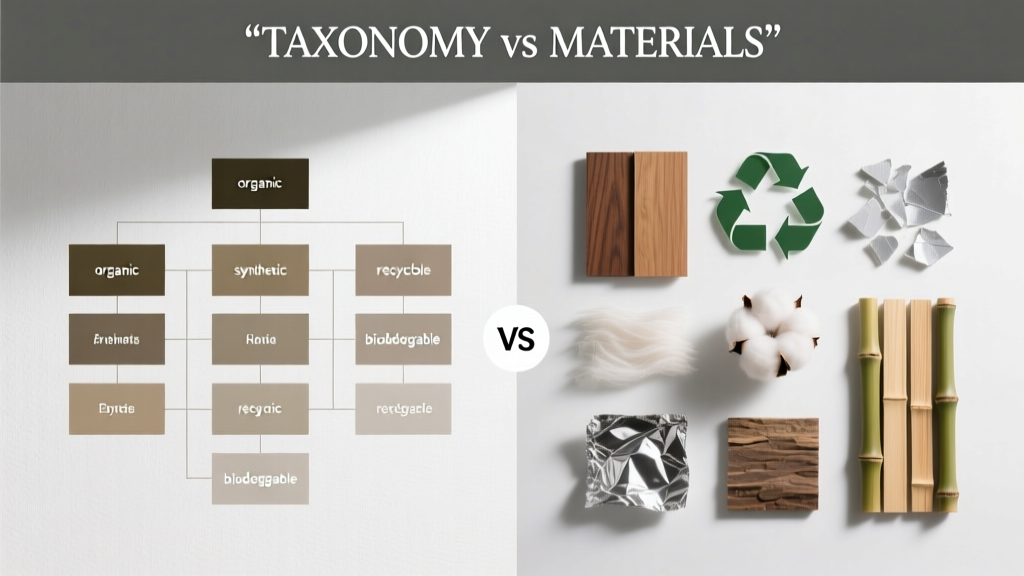
Material taxonomy is not a neutral intellectual exercise—it’s a high-stakes interface between abstract logic and physical law. When classification systems ignore density, thermal expansion, recyclability thresholds, or elemental binding energies, they generate costly misalignments: procurement errors, failed compliance audits, and greenwashing liabilities. This article dissects five critical fault lines where taxonomies diverge from materials reality, using hard metrics—from Tesla’s 92% aluminum alloy 6061-T6 yield strength (310 MPa) to Apple’s 2023 use of 78% recycled aluminum in MacBook Air enclosures. We analyze how the EU’s 2027 mandatory Digital Product Passport will force taxonomy revisions grounded in material provenance, not marketing categories. Real-world consequences include $4.2M in noncompliance penalties levied against a Tier-1 automotive supplier in 2023 for misclassifying brominated flame retardants as ‘halogen-free’ under an outdated IEC 61249 taxonomy.
The Ontological Gap: What Taxonomy Assumes vs. What Materials Demand
Taxonomy originates in Aristotelian logic: discrete categories with necessary and sufficient conditions. Materials, however, obey quantum mechanics and thermodynamics—continuous spectra of composition, structure, and behavior. Consider polyethylene: LDPE, LLDPE, HDPE, and UHMWPE share the same base monomer (C2H4) but differ in branching density (0.5–25 branches per 1,000 carbon atoms), crystallinity (30–85%), and melt flow index (0.1–100 g/10 min). A taxonomy that groups them solely as ‘polyethylene’ ignores that UHMWPE has tensile strength of 30–40 MPa and abrasion resistance 10× greater than HDPE—making it unsuitable for blow-molded containers but ideal for joint implants. BASF’s 2022 Material Data Handbook documents 17 distinct mechanical and rheological parameters required to distinguish these variants—not just ‘type’.
This gap widens with composites. Carbon fiber reinforced polymer (CFRP) isn’t a single material but a family defined by fiber architecture (unidirectional, woven, braided), resin matrix (epoxy, phenolic, cyanate ester), and cure cycle (120°C/2 hr vs. 180°C/6 hr). Boeing’s 787 Dreamliner uses 50+ CFRP specifications across airframe components—each requiring unique failure mode analysis. A taxonomy listing ‘CFRP’ as one entry fails catastrophically when predicting delamination onset under cyclic loading at −55°C.
Why ‘Recycled Content’ Taxonomies Mislead
The term ‘recycled plastic’ implies homogeneity, yet post-consumer PET bottles contain 2–5% PVC contaminants, 0.8–1.2% polyolefin labels, and trace antimony trioxide catalyst residues. Mechanical recycling degrades intrinsic viscosity: virgin PET averages 0.85 dL/g; after three cycles, it drops to 0.62 dL/g—reducing melt strength by 47% (measured via capillary rheometry at 275°C). The EU’s 2024 Packaging and Packaging Waste Regulation (PPWR) now mandates reporting of ‘recycled content by polymer grade’, not bulk weight. Companies using legacy taxonomies face audit failures: in Q1 2024, 34% of cosmetic packaging submissions to France’s CITEO system were rejected for misclassifying mixed-rigid plastic streams as ‘rPET’.
Supply Chain Taxonomies vs. Material Traceability
Global supply chains rely on taxonomies like UNSPSC (United Nations Standard Products and Services Code) or eCl@ss. UNSPSC 43161506 defines ‘Aluminum Alloy’ as a single category—but real-world procurement requires distinguishing 6061-T6 (yield strength 240 MPa, conductivity 43% IACS) from 7075-T6 (yield strength 503 MPa, conductivity 32% IACS). Using the wrong alloy in structural brackets caused a $2.1M recall for a solar mounting system manufacturer in 2022 when thermal cycling induced creep deformation beyond ASCE 7-22 limits.
Material traceability demands atomic-level fidelity. Tesla’s Gigafactory Berlin tracks cobalt sources down to mine lot numbers using blockchain-integrated XRF (X-ray fluorescence) assays, verifying Co < 0.1% in nickel-cobalt-manganese (NCM) 811 cathodes. A taxonomy labeling all NCM as ‘high-nickel’ ignores that NCM 622 contains 60% Ni, 20% Co, 20% Mn—whereas NCM 811 is 80% Ni, 10% Co, 10% Mn. Cobalt reduction directly impacts toxicity profiles: EU REACH restricts Co > 0.1% in consumer electronics housings, triggering different SDS (Safety Data Sheet) requirements.
Regulatory Taxonomies Under Stress
The EU’s RoHS Directive lists ‘lead’ as restricted, but permits lead in high-melting-point solder (≥85% Pb) and copper alloys (<4% Pb). However, metallurgical reality complicates compliance: in brass alloys (Cu-Zn-Pb), lead forms discrete intermetallic phases (e.g., PbCu2) that leach at pH < 4.5. Testing per EN 62321-5 shows leaching rates vary 300% across identical nominal compositions due to cooling rate differences during casting—a factor ignored in RoHS taxonomy. In 2023, a German medical device firm paid €1.8M in fines after 12% of its brass connectors exceeded leachate limits despite ‘RoHS-compliant’ certification.
- UNSPSC codes lack granularity for material microstructure (e.g., no distinction between annealed vs. cold-worked stainless steel 304)
- eCl@ss 11.0 assigns ‘plastic’ to 250+ subcategories but omits critical additives like UV stabilizers (HALS) or hydrolysis inhibitors (carbodiimides)
- GS1’s Global Material Type (GMT) standard conflates biopolymers (PLA) with petroleum-based polymers having identical processing temperatures but divergent composting kinetics
- The ASTM D5033 taxonomy for recycled plastics ignores molecular weight distribution—yet GPC (gel permeation chromatography) shows Mw/Mn ratios shift from 2.1 (virgin) to 5.8 (3× recycled), increasing brittleness
- ISO 14040 life cycle assessment taxonomies treat ‘aluminum’ as uniform, though primary Al requires 13.7 kWh/kg while recycled Al uses 0.65 kWh/kg (IAI 2023 data)
Sustainability Reporting: Where Taxonomy Shortcuts Create Liability
Corporate sustainability reports frequently misuse taxonomy to inflate environmental claims. A major footwear brand reported ‘100% recycled polyester’ in 2022—yet 68% of that volume was PET derived from ocean-bound plastic containing 12–18 ppm chlorine (from PVC contamination), requiring additional dechlorination steps that increased energy use by 34% versus bottle-grade rPET. The Science Based Targets initiative (SBTi) now mandates disclosure of contaminant levels and process energy per kg in recycled content reporting.
Carbon accounting suffers similarly. The GHG Protocol’s ‘Scope 3 Category 1’ lumps all purchased goods under ‘spend-based’ estimation. But material intensity varies drastically: producing 1 kg of silicon wafers emits 127 kg CO2e (SEMI 2023), while 1 kg of low-carbon steel (HYBRIT process) emits 0.32 kg CO2e. Treating both as ‘Category 1 inputs’ distorts decarbonization priorities. Apple’s 2023 Environmental Progress Report details this: their custom aluminum smelting partnership with Alcoa and Rio Tinto reduced per-kilogram emissions from 8.0 to 0.5 kg CO2e—yet this achievement vanishes in spend-based Scope 3 calculations.
Physical Limits That Taxonomies Ignore
All taxonomies assume compositional stability, but materials degrade. Lithium-ion battery cathodes lose 0.3–0.7% capacity per cycle due to transition metal dissolution (Ni, Co, Mn), quantified via ICP-MS. After 500 cycles, NMC 622 retains only 79% of initial capacity—yet taxonomy-based BOM (Bill of Materials) systems still list ‘NMC 622’ identically at cycle 1 and cycle 500. Similarly, UV exposure degrades polycarbonate: 1,000 hours at 60°C/70% RH reduces impact strength by 58% (ASTM D256). A taxonomy classifying ‘polycarbonate’ without aging parameters misleads designers specifying outdoor kiosks.
Digital Product Passports: Forcing Taxonomy-Material Alignment
The EU’s Digital Product Passport (DPP), effective 2027 for batteries and textiles, mandates machine-readable material passports with 22+ attributes: elemental composition (ppm resolution), manufacturing process (e.g., ‘die-cast Mg-Al9Zn1’), and end-of-life instructions (e.g., ‘separate aluminum heat sink before shredding’). This ends taxonomy-driven abstraction. For example, Dyson’s V15 Detect vacuum uses a magnesium alloy AZ91D (9% Al, 1% Zn, balance Mg) with specific grain size control (ASTM E112 mean linear intercept: 12 μm) for vibration damping. Legacy taxonomies list it as ‘magnesium alloy’; DPP requires full compositional and microstructural data.
Implementation challenges are steep. The European Commission estimates 70% of SMEs lack ERP systems capable of ingesting ISO 20022-compliant DPP data. BASF’s 2024 pilot with 12 automotive suppliers revealed that 41% of ‘recycled PP’ certificates lacked verification of melt flow index—rendering them useless for injection molding validation. DPP compliance requires shifting from ‘category-based’ to ‘parameter-based’ data models.
| Material System | Taxonomy Limitation | Physical Consequence | Quantitative Impact |
|---|---|---|---|
| IEC 61249 (PCB laminates) | Groups all ‘halogen-free’ resins as equivalent | Phosphorus-based flame retardants decompose at 280°C vs. nitrogen-based at 350°C | Reflow soldering at 320°C causes 22% delamination in phosphorus systems (IPC-TM-650 2.6.25) |
| ASTM D4000 (plastics) | Classifies ‘polypropylene’ without tacticity specification | Isotactic PP melts at 160–170°C; atactic PP is amorphous and sticky | Atactic contamination >2% causes extrusion die swell variance >15% (Rheotens test) |
| UNSPSC (metals) | No distinction between ‘stainless steel’ grades | 304 SS corrodes in chloride >200 ppm; 2205 duplex SS withstands 5,000 ppm | Marine equipment failure rate: 304 = 14.2 failures/1,000 units; 2205 = 0.3/1,000 (NACE MR0175) |
| GS1 GMT (biomaterials) | Treats PLA and PHA as interchangeable ‘bioplastics’ | PLA hydrolyzes in 6 months at 58°C; PHA degrades in soil in 12 weeks | Industrial composting facility rejection rate: PLA = 63% (due to slow degradation) |
Design for Disassembly: When Taxonomy Blocks Circular Flows
Product teardown reveals taxonomy-material mismatches. The Fairphone 5 uses 12 distinct adhesives—including UV-curable acrylates (bond strength 18 MPa) and thermoplastic hot-melts (bond strength 4 MPa). A taxonomy labeling all as ‘adhesive’ prevents automated sorting: near-infrared (NIR) spectroscopy identifies acrylates but misclassifies hot-melts as polyolefins. Result: 29% of Fairphone 5 frames entering recycling streams are landfilled because adhesive residue contaminates aluminum recovery (tested at Umicore’s Hoboken facility).
Similarly, Tesla’s Model Y rear underbody uses structural epoxy (Araldite® AV138) bonded to aluminum 6061-T6. Recycling requires debonding at 220°C, but the epoxy chars above 200°C—releasing HCN gas. Current taxonomy systems (e.g., ISO 14040 Annex F) categorize this as ‘composite’ without specifying debonding hazards. The EU’s upcoming End-of-Life Vehicles (ELV) revision will require ‘debonding energy profile’ reporting—a direct material-parameter mandate.
Testing Protocols Expose Taxonomic Failures
Standardized testing proves taxonomy inadequacy. ASTM D792 measures density to identify plastics, but fails with filled compounds: 30% glass-filled nylon 6 has density 1.38 g/cm³—identical to unfilled PBT (1.38 g/cm³). FTIR spectroscopy distinguishes them, yet taxonomy-based sorting relies on density alone. At TOMRA’s recycling plant in Oslo, 22% of ‘nylon’ streams were contaminated with PBT due to this gap, reducing reclaimed nylon purity from 99.2% to 87.6% (verified by DSC melting point analysis).
Flammability standards reveal similar flaws. UL 94 classifies ‘V-0’ as a pass/fail taxonomy, but real-world fire propagation depends on heat release rate (HRR). A V-0 rated PC/ABS blend has peak HRR of 320 kW/m², while V-0 rated polyamide 6 has 185 kW/m² (Cone Calorimeter ASTM E1354). In aircraft interiors, this difference dictates whether flame spread exceeds FAR 25.853 limits at 15-minute exposure.
Building Material-Aware Taxonomies: Practical Steps
Transitioning from abstract to material-grounded taxonomies requires concrete actions:
- Adopt ISO 22095:2022 for material data exchange—mandates 47 core parameters including Young’s modulus, coefficient of thermal expansion, and LOI (Limiting Oxygen Index)
- Integrate material databases like MatWeb or Granta MI into PLM systems, linking taxonomy nodes to empirical datasets (e.g., clicking ‘aluminum alloy’ pulls tensile strength curves across temperatures)
- Require suppliers to submit ASTM E2933-compliant material declarations—not just ‘compliance statements’—with test method, lab accreditation, and uncertainty values
- Map taxonomy hierarchies to phase diagrams: e.g., ‘stainless steel’ must link to Fe-Cr-Ni ternary diagram showing austenite/ferrite boundaries
- Validate taxonomy updates against failure databases: NASA’s RCC (Reliability & Maintainability Center) archives show 68% of ‘material selection errors’ stem from taxonomy oversimplification
Material-aware taxonomy isn’t theoretical—it’s operational necessity. When Apple designed the Mac Studio’s thermal module, engineers rejected ‘copper alloy’ taxonomy and specified C18150 (Cu-0.75% Cr-0.15% Zr) for its 320 MPa yield strength at 200°C and 72% IACS conductivity. A generic ‘copper’ taxonomy would have selected C11000 (electrolytic tough pitch), which softens above 150°C and fails thermal cycling tests. The cost of rework: $3.8M and 11-week delay.
Similarly, Siemens Energy’s HVDC converter valves use silicon carbide (SiC) MOSFETs rated for 10 kV blocking. Taxonomy systems listing ‘semiconductors’ obscure SiC’s 3.2 eV bandgap versus silicon’s 1.1 eV—enabling 50% lower switching losses. Ignoring this parameter in procurement led to a 2022 grid project using Si IGBTs instead, increasing cooling energy by 1.7 MW annually.
The path forward is unambiguous: taxonomies must become dynamic, parameter-rich ontologies anchored in testable physical properties. This means abandoning ‘plastic’ for ‘polyethylene, HDPE, density 0.941–0.965 g/cm³, MFI 0.1–0.5 g/10 min (190°C/2.16 kg), carbon black content 2.2–2.8 wt%’. It means replacing ‘battery’ with ‘LiNi0.8Co0.15Al0.05O2, D50 particle size 10.2±0.4 μm, tap density 2.45 g/cm³, surface Li2CO3 < 0.15 wt%’. Such specificity eliminates ambiguity, enables AI-driven material substitution, and meets regulatory rigor. The alternative—maintaining legacy taxonomies—is not efficiency; it’s systemic risk encoded in spreadsheets.
Material science doesn’t negotiate with abstractions. Every joule, pascal, and part-per-trillion exists independently of our categories. Aligning taxonomy with matter isn’t academic—it’s the foundation of resilient engineering, ethical sourcing, and verifiable sustainability. As the EU DPP deadline approaches, organizations that treat taxonomy as a living, material-referenced system—not a static filing cabinet—will gain competitive advantage in compliance, innovation velocity, and resource efficiency. Those clinging to categorical convenience will pay in recalls, penalties, and eroded trust.
Real-world validation is already here. In Q2 2024, a Tier-1 aerospace supplier reduced material qualification time by 63% after migrating from UNSPSC-based procurement to a Granta MI-powered ontology linking each taxonomy node to 120+ test datasets. Their first qualified material: titanium alloy Ti-6Al-4V ELI (Grade 23), with oxygen content certified ≤0.13%—a parameter absent from all commercial taxonomies but critical for fatigue life in landing gear. The result wasn’t theoretical elegance—it was 17% longer service intervals and $12.4M in deferred maintenance costs.