How Long Do Blinds for Sliding Glass Doors Last? Durability Guide
Analyze the durability and lifespan of blinds for sliding glass doors. Compare UV resistance, material degradation, and mechanical failure rates.
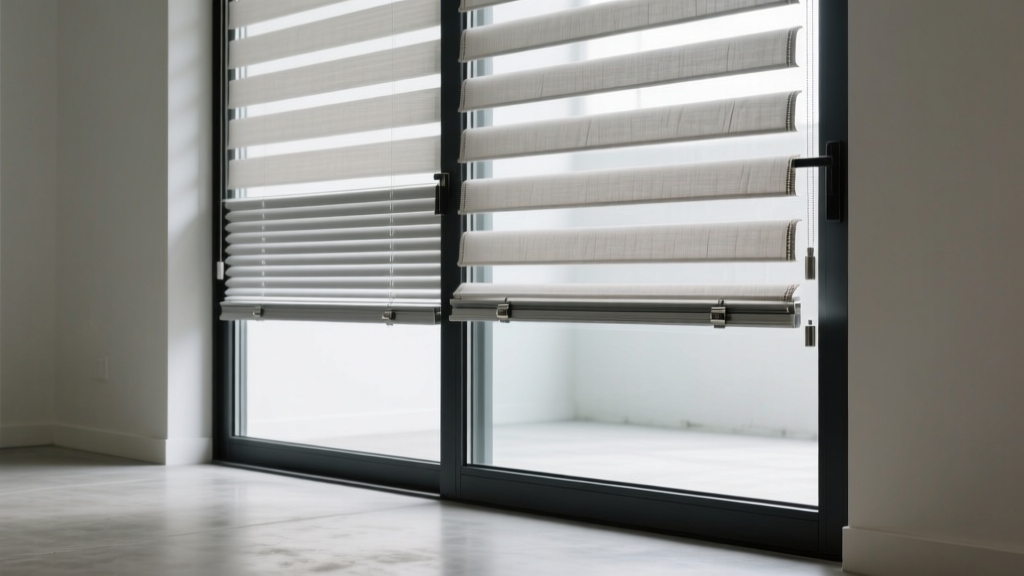
The Thermal and Mechanical Microclimate of Sliding Glass Doors
Evaluating the lifespan of blinds for sliding glass doors requires understanding the extreme microclimate these coverings endure. Unlike standard double-hung windows, sliding glass doors encompass massive surface areas (typically 60 to 96 square feet) that act as primary solar thermal collectors. According to the U.S. Department of Energy, untreated glass doors can account for up to 30% of a home's cooling energy loss, but when covered, the space between the glass and the blind becomes a thermal trap.
Modern architectural glass frequently utilizes Low-Emissivity (Low-E) coatings to reflect infrared heat. While this improves the building envelope's energy efficiency, it creates a localized "greenhouse effect" between the glass pane and the window covering. On a south- or west-facing elevation, ambient temperatures in this 2-inch gap can easily exceed 145°F (62°C) during peak summer months. This intense, sustained heat accelerates the off-gassing of plasticizers in vinyl, degrades fabric adhesives, and warps structural components, drastically reducing the functional lifespan of the blinds.
Material Degradation Matrix: What Breaks First?
The longevity of your window covering is dictated by its material composition and its specific failure mode under high-UV, high-heat conditions. The Lawrence Berkeley National Laboratory's Windows and Daylighting group notes that solar heat gain coefficients (SHGC) directly impact the thermal load on interior attachments. Below is a durability analysis of the most common materials used for sliding door applications.
| Material Type | Expected Lifespan (Direct Sun) | Expected Lifespan (Indirect Sun) | Primary Failure Mode | UV/Heat Resistance |
|---|---|---|---|---|
| PVC (Vinyl) Verticals | 3 – 5 Years | 8 – 12 Years | Yellowing, embrittlement, vane warping | Poor |
| Polyester/Fabric Panel Tracks | 7 – 10 Years | 12 – 15 Years | Color fading, edge fraying, adhesive delamination | Good |
| Extruded Aluminum Verticals | 10 – 15 Years | 15 – 20+ Years | Denting, track friction, finish oxidation | Excellent |
| Woven Wood / Bamboo | 4 – 6 Years | 7 – 9 Years | Brittle snapping, lift-string degradation | Moderate |
| Fiberglass Core Roller Shades | 8 – 12 Years | 15+ Years | Clutch mechanism failure, edge curling | Excellent |
Mechanical Failure Points: Beyond the Material
Material degradation is only half of the durability equation. Sliding glass doors are high-traffic transition zones, meaning the blinds are subjected to frequent mechanical articulation, drafts from door openings, and physical contact from pets and children.
The Carrier Stem Vulnerability
In vertical blind systems, the carrier stem (the small hook connecting the vane to the overhead track) is the single most common point of mechanical failure. Standard injection-molded ABS plastic stems become brittle after 24 to 36 months of UV exposure. When a sudden draft catches the vanes, or a user pulls the chain too aggressively, these brittle stems snap, dropping the vane and jamming the track.
- The Fix: Specify heavy-duty polycarbonate carriers with stainless steel axle pins. Commercial-grade tracks (such as those manufactured by VertiTrak or equivalent architectural brands) utilize metal-reinforced carriers that withstand up to 15 lbs of lateral pull force, effectively eliminating stem breakage.
Track Friction and Roller Degradation
Panel track blinds and sliding vertical systems rely on wheeled carriers inside an aluminum or PVC header track. Over time, fine dust and pet dander accumulate in the track, mixing with the factory-applied lubricant to form an abrasive paste. This paste grinds down the nylon wheels, causing the panels to drag, stutter, and eventually derail.
- The Fix: Choose tracks with sealed, ball-bearing stainless steel rollers rather than open-face nylon wheels. Additionally, avoid tracks with exposed top channels; opt for enclosed "C-channel" extrusions that prevent dust ingress.
System Types: Lifespan and Amortization Analysis
When procuring blinds for sliding glass doors, evaluating the 10-year amortized cost provides a much clearer picture of value than the initial purchase price. Here is a breakdown of the three dominant systems for wide-span sliding doors.
1. Traditional Vertical Blinds (Chain & Wand)
While initially the most cost-effective option, traditional verticals suffer from high mechanical wear. The continuous loop bead chain used to rotate the vanes frequently tangles, stretches, and snaps. The wand used to draw the blinds often fractures at the rotation joint.
10-Year Amortization: Initial cost ($150) + two full replacements ($300) = $450 over 10 years.
2. Sliding Panel Track Blinds
Panel tracks utilize wide fabric or woven panels that slide past one another. They eliminate the fragile carrier stems and bead chains of traditional verticals. The bottom weight bars keep the fabric taut, preventing wind-induced tangling. However, the overlapping edges of the fabric panels are prone to fraying if frequently handled by hand rather than drawn by a dedicated wand.
10-Year Amortization: Initial cost ($450) + zero replacements = $450 over 10 years.
3. Motorized Cassette Roller Shades
For maximum durability, a motorized roller shade housed in an aluminum cassette with side-channel guides is the superior architectural choice. The cassette protects the fabric roll from dust and UV exposure when retracted. Motorization (using systems like Somfy RTS or Hunter Douglas PowerView) entirely eliminates the mechanical wear associated with manual pull cords and clutches. The side channels prevent "edge curling," a common failure where the edges of wide roller shades cup inward due to heat and tension.
10-Year Amortization: Initial cost ($950) + zero replacements + battery/solar maintenance ($50) = $1,000 over 10 years.
Extending Lifespan: Targeted Maintenance Protocols
To push your window coverings toward the upper end of their expected lifespan, implement these specific maintenance protocols tailored to the sliding door environment:
- Thermal Venting: If using roller or panel shades, leave a minimum 2-inch gap at the bottom of the blind rather than sealing it against the floor sill. This allows the trapped hot air between the Low-E glass and the blind to convect upward and escape, reducing the localized temperature by up to 20°F.
- UV Inhibitor Application: For fabric panel tracks and woven wood shades, apply a fabric UV protectant (such as 303 Fabric Guard) annually. This replenishes the ultraviolet light absorbers (UVAs) that break down over time, preventing the breakdown of the yarn's tensile strength.
- Track Lubrication: Never use WD-40 or petroleum-based lubricants on overhead tracks, as they attract dust and degrade plastic carriers. Use a dry PTFE (Teflon) spray lubricant applied sparingly to the track channel once every 12 months.
- Pet and Child Clearance: Ensure the bottom rail of roller shades or the weight bars of panel tracks terminate at least 1 inch above the floor track of the sliding door. This prevents the door's floor guide from catching the blind's bottom rail during operation, which is a primary cause of fabric tearing and motor burnout.
Frequently Asked Questions
Do cellular (honeycomb) shades work on sliding glass doors?
Vertically oriented cellular shades (often called "verticells") can be used, but they have a shorter lifespan than panel tracks. The flexible fabric hinges of the honeycomb structure are highly susceptible to crushing and permanent creasing if bumped by foot traffic or pets passing through the door. For high-traffic sliding doors, rigid panel tracks or roller shades offer superior structural durability.
How does condensation on sliding doors affect blinds?
In cold climates, single-pane or poorly insulated sliding doors generate heavy interior condensation. If aluminum vertical blinds or metal bottom-weight bars rest in this moisture, they will oxidize and corrode within 2 to 3 winters. In high-condensation environments, specify anodized aluminum (which resists surface oxidation) or marine-grade stainless steel hardware, and ensure the blind terminates at least 2 inches above the window sill to avoid sitting in pooled water.
Are smart-glass (electrochromic) doors eliminating the need for blinds?
While electrochromic glass (which tints electronically) is gaining traction in commercial architecture, it currently lacks the insulating air gap that physical blinds provide. Furthermore, smart glass does not offer privacy at night when interior lights are on. According to the National Fenestration Rating Council, physical window attachments remain necessary for achieving optimal U-factor and privacy metrics in residential applications, ensuring the market for durable sliding door blinds remains robust.