Best Materials for 3D Printing Eyeglass Frames & Glass Architecture
Discover how the best materials for 3D printing eyeglass frames, like Ultem and TR-90, are revolutionizing custom architectural glass detailing.
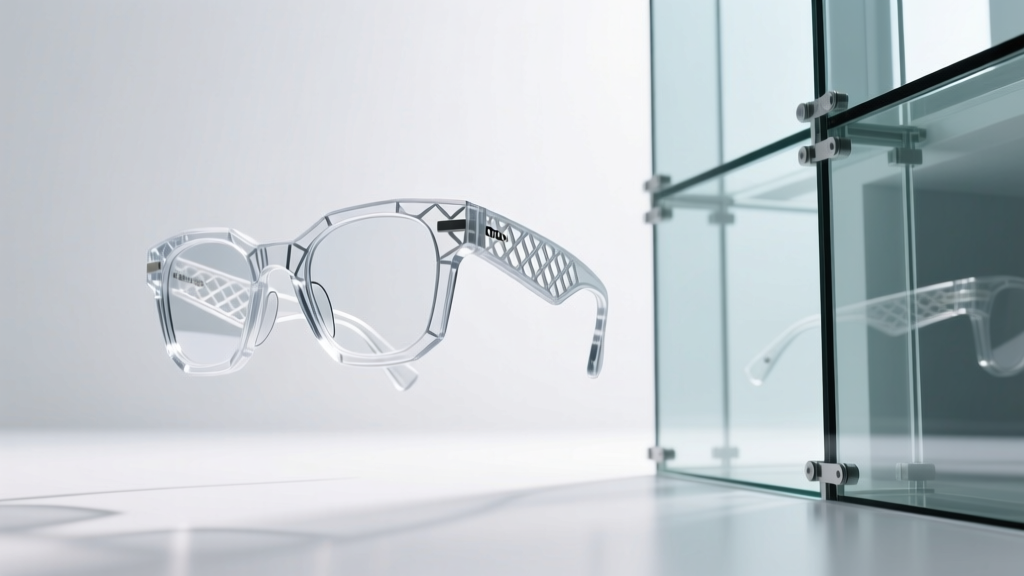
The Cross-Industry Material Pipeline: From Optics to Facades
When optical engineers and industrial designers source the best materials for 3d printing eyeglass frames, they demand a highly specific matrix of properties: extreme UV stability, high strength-to-weight ratios, biocompatibility, and precise dimensional tolerance. In 2026, a significant cross-industry migration is occurring. High-end architectural firms and facade consultants are increasingly co-opting these exact optical-grade and medical-grade polymers to solve complex detailing problems in architectural glass construction.
Custom architectural glass—particularly point-supported glazing, curved curtain walls, and bespoke structural glass nodes—often requires hardware that traditional CNC-machined aluminum cannot produce cost-effectively at low volumes. By leveraging the same advanced SLS (Selective Laser Sintering) and FDM (Fused Deposition Modeling) polymers optimized for premium eyewear, architects are now 3D printing structural glass fittings, seismic drift gaskets, and optical scale models with unprecedented performance.

Top Eyewear-Grade Polymers Evaluated for Structural Glazing
The transition from facial wear to building envelopes requires materials that can withstand environmental degradation, structural loads, and strict fire codes. Below is an analysis of the primary polymers dominating both sectors.
1. Ultem PEI (Polyetherimide)
Originally adopted for high-end, heat-resistant eyeglass frames and aerospace components, Ultem 9085 is an amorphous thermoplastic polyetherimide. In architectural glass applications, it is utilized for point-supported glass spider fittings and interior glass partition brackets. Its primary advantage is its inherent Flame, Smoke, and Toxicity (FST) compliance. Unlike standard nylon, Ultem meets stringent ASTM E84 Class A fire ratings, making it one of the few 3D-printable polymers legally permissible for structural interior glass hardware in commercial high-rises.
2. TR-90 (Grilamid)
TR-90 is the undisputed champion of flexible, memory-retentive eyewear frames. In the context of architectural glass, TR-90 is being adapted for seismic drift gaskets and custom mullion seals. Because TR-90 exhibits an elongation at break exceeding 300%, it acts as a kinetic shock absorber. When a building sways during high wind loads or seismic events, rigid EPDM rubber can sometimes tear or transfer stress to the glass edge. TR-90 gaskets flex dynamically, absorbing the kinetic energy and protecting the structural silicone and glass edges from catastrophic shear failure.
3. Glass-Filled Nylon (PA12-GF)
When eyewear designers need rigid, lightweight hinges or thick-stem accents, they use 30% glass-bead-filled Nylon 12 via SLS printing. For architectural glass, PA12-GF is the go-to material for bespoke structural glass nodes and complex mullion connectors. The glass beads dramatically increase the tensile modulus and heat deflection temperature, allowing the printed part to support heavy insulated glass units (IGUs) without the thermal bridging issues associated with machined aluminum.
Material Comparison Matrix: Eyewear vs. Architectural Glass Performance
| Material | Primary Eyewear Use | Architectural Glass Application | Tensile Strength | UV & Fire Stability |
|---|---|---|---|---|
| Ultem 9085 (PEI) | Heat-resistant safety frames | Interior spider fittings, fire-rated brackets | ~47 MPa | Excellent (FST Compliant) |
| TR-90 (Grilamid) | Flexible memory-flex frames | Seismic drift gaskets, curved glass seals | ~28 MPa | High UV / Moderate Fire |
| PA12-GF (Nylon) | Rigid hinges, thick accents | Structural nodes, mullion connectors | ~52 MPa | Moderate UV / Low Fire |
| Clear Ceramic Resin | Optical lens prototyping | 1:50 scale light-diffusing models | ~65 MPa | High UV / Low Fire |
Real-World Architectural Glass Applications
Bespoke Structural Glass Nodes for Non-Standard Geometries
In parametric facade design, glass panels rarely meet at standard 90-degree angles. Traditional cast or CNC-machined stainless steel spider fittings require expensive, multi-axis tooling for every unique node. By utilizing PA12-GF—the same material used for durable, lightweight eyeglass hinges—facade engineers can SLS-print custom structural nodes tailored to the exact parametric angle of the glass intersection. According to industry data from Materialise, 3D printing complex architectural nodes reduces lead times from 8 weeks (for custom casting) to under 72 hours, while eliminating thermal bridging in the building envelope.
Custom Curved Glazing Gaskets
Curved architectural glass facades require continuous, non-linear gaskets. Extruding custom EPDM profiles for a single curved project is cost-prohibitive. FDM printing with flexible TR-90 allows contractors to print exact-radius gaskets that snap into standard aluminum mullions while perfectly matching the curvature of the cold-bent glass. The material's biocompatibility also means it does not leach plasticizers that could degrade the structural silicone used in the glazing pocket.
Cost & Lead Time Analysis: 3D Printed PA12-GF vs. CNC Aluminum
Scenario: Production of 40 unique, non-repeating structural glass mullion brackets for a parametric atrium.
- CNC Machined Aluminum (6061-T6): $14,500 total | 6-week lead time | High thermal bridging
- SLS Printed PA12-GF: $4,200 total | 5-day lead time | Thermally broken (insulating)
Note: While aluminum offers higher ultimate tensile strength, PA12-GF provides sufficient structural support for secondary interior glass partitions while drastically reducing cost and timeline.
Optical Scale Models and Light Diffusers
Architectural firms rely on highly accurate physical models to test light transmission through complex glass facades. The best materials for 3d printing eyeglass frames and optical lenses include specialized SLA (Stereolithography) clear ceramic resins. These resins can be printed, UV-cured, and polished to achieve up to 92% light transmission. Architects use these resins to print 1:50 scale glass mullions and bespoke interior light diffusers that accurately simulate how low-iron architectural glass will cast shadows and refract light within a space.
Building Codes, Fire Safety, and Limitations
While the material crossover is highly effective, structural glass applications are heavily regulated. The National Glass Association (NGA) and local building codes dictate strict performance criteria for any hardware supporting overhead or structural glass.
Do not use standard PA12-GF or TR-90 for interior glass hardware in commercial fire egress corridors. These materials will fail ASTM E84 testing. You must specify Ultem 9085 or specialized PEEK (Polyether ether ketone) filaments, which maintain structural integrity at high temperatures and pass stringent FST (Flame, Smoke, Toxicity) requirements for commercial architectural applications.
Furthermore, while 3D printed polymers excel in custom, low-volume detailing, they are not yet suitable for primary load-bearing exterior curtain wall anchors exposed to direct, unshaded UV radiation over decades. For exterior applications, 3D printed eyewear-grade polymers are best utilized as sacrificial templates for investment casting, or as interior structural nodes and secondary glazing seals.
Frequently Asked Questions
Can 3D printed eyeglass materials support heavy insulated glass units (IGUs)?
For primary exterior load-bearing support, traditional steel or aluminum is still required. However, for interior glass partitions, balustrades, and secondary mullion connections, Glass-Filled Nylon (PA12-GF) and Ultem possess more than enough tensile strength to support standard 1/2-inch to 1-inch thick architectural glass panels.
Why use TR-90 instead of standard 3D printed TPU for glass gaskets?
Standard TPU (Thermoplastic Polyurethane) degrades under prolonged UV exposure and can leach chemicals that compromise structural silicone glazing sealants. TR-90, engineered for lifelong skin contact and sun exposure in eyewear, offers vastly superior UV stability and chemical inertness, ensuring the architectural glass seal remains intact for decades.
Are these materials compatible with standard architectural hardware?
Yes. Because SLS and high-resolution FDM printing offer tolerances down to 0.1mm, these 3D printed nodes and gaskets can be designed with standard metric threads and snap-fit profiles, allowing them to integrate seamlessly with off-the-shelf stainless steel tension cables and aluminum mullion tracks.
Written by
David NakamuraDavid Nakamura is a licensed architect (AIA) and construction technology writer focused on sustainable building methods, mass timber engineering, and high-performance building envelopes. He holds a Master of Architecture from the University of Washington and is a certified Passive House Consultant (CPHC). David spent eight years at the Seattle firm Mithun, where he led the design of three LEED Platinum projects, before founding his own practice specializing in net-zero residential design. He serves on the editorial advisory board of GreenBuilder Magazine and has authored peer-reviewed papers on cross-laminated timber (CLT) connections for the Journal of Structural Engineering. In his spare time, David teaches woodworking at Pratt Fine Arts Center and kayaks the Puget Sound.
More from David Nakamura
View all
Construction Cost
Labor Cost to Build a Deck Per Sq Ft: 2026 Installation Guide
Discover the exact labor cost to build a deck per sq ft in 2026. This installation guide breaks down contractor rates, complexity factors, and hidden fees.
Aug 4, 2026

Construction Cost
How Much Does It Cost to Build a 3 Bedroom House? Financing Guide
Learn exactly how much it costs to build a 3 bedroom house and explore 2026 financing options, construction loan types, and budget frameworks for your build.
Aug 4, 2026

Construction Cost
Cost to Build a Tennis Court: 2026 Guide
How much does it cost to build a tennis court in 2026? Breakdowns for asphalt, concrete, and synthetic surfaces plus fencing and lighting.
Jul 30, 2026