Insulated Bag Material Taxonomy: Concrete Curing & Bulk FIBCs
Compare insulated bag materials for construction, from concrete curing blankets to temperature-controlled bulk FIBCs. Includes R-values, costs, and ACI specs.
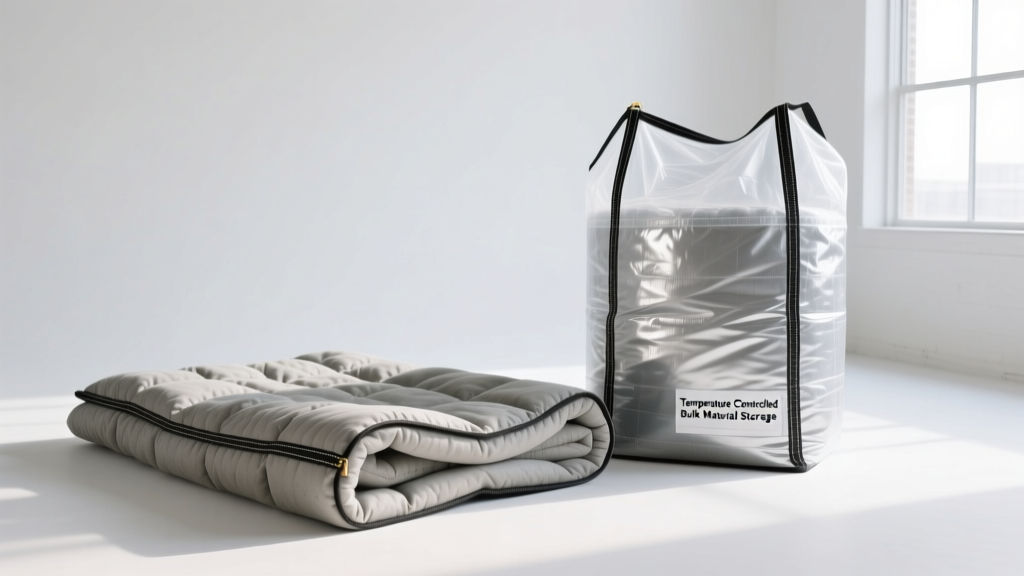
The Role of Insulated Bags in Modern Construction
In the construction and building materials sector, the term "insulated bag" extends far beyond consumer cooler bags. Industrial insulated bags and flexible intermediate bulk containers (FIBCs) are critical thermal management systems used to protect temperature-sensitive materials during transport, storage, and curing. From maintaining the hydration temperature of cold-weather concrete pours to preventing the premature polymerization of two-part epoxy resins, selecting the correct insulated bag material dictates project success and material viability.
This guide provides a comprehensive material taxonomy for construction-grade insulated bags, detailing the thermal properties, structural limitations, and cost profiles of the core insulation technologies used in the industry today.
Material Taxonomy: Core Insulation Technologies
Construction insulated bags rely on three primary thermal resistance mechanisms: conductive resistance (trapped gas), radiant reflection, and nano-porous restriction. Understanding the material science behind these layers is essential for specifying the right product.
1. Closed-Cell Polyethylene Foam (EPE/XPE)
Expanded Polyethylene (EPE) and Cross-Linked Polyethylene (XPE) are the workhorses of flexible construction insulation. These materials trap inert gas within a matrix of closed cells, providing reliable conductive resistance.
- Thermal Performance: Yields an R-value of R-3.5 to R-4.5 per inch of thickness.
- Structural Traits: Highly flexible, water-resistant, and chemically inert. XPE offers superior tensile strength compared to EPE.
- Failure Mode: Compression set. When heavy construction materials (like aggregate or dense chemical drums) are placed inside EPE-lined bags, the foam compresses. A 50% compression reduces the effective R-value by up to 40%, severely compromising thermal performance.
- Cost Profile: $0.80 to $1.50 per square foot for 1/2-inch industrial grades.
2. Radiant Foil Barriers & Multi-Layer Laminates
For applications where radiant heat transfer is the primary concern—such as protecting materials from direct solar gain on job sites—aluminum foil and metalized PET (polyethylene terephthalate) laminates are utilized. These are rarely used alone; they are typically bonded to an EPE or bubble core to create a multi-layer insulated bag liner.
- Thermal Performance: Foil layers reflect up to 97% of radiant heat (emissivity of 0.03 to 0.05). However, they offer near-zero conductive R-value without an air gap or foam core.
- Structural Traits: Excellent vapor barrier properties (perm rating < 0.05). Prevents moisture ingress that can ruin drywall compounds or Portland cement blends.
- Failure Mode: Alkaline degradation and tearing. Bare aluminum foil reacts with the high alkalinity of wet concrete (pH 12-13). If used as a direct-contact concrete curing bag, the foil must be backed by a chemically resistant LLDPE (Linear Low-Density Polyethylene) film.
3. Aerogel-Infused Flexible Liners
Silica aerogel blankets (such as those utilizing Spaceloft technology) represent the premium tier of insulated bag materials. Aerogel restricts molecular heat transfer through its nano-porous structure, offering unmatched thermal resistance in ultra-thin profiles.
- Thermal Performance: Delivers R-10 per inch, allowing a 10mm liner to outperform a 50mm EPE foam bag.
- Structural Traits: Hydrophobic, highly breathable, and virtually immune to compression set. Maintains R-value even under extreme point-loads from heavy bulk materials.
- Cost Profile: $12.00 to $18.00 per square foot. Reserved for high-value, highly temperature-sensitive payloads like aerospace-grade structural adhesives or specialized pharmaceutical construction chemicals.
Application 1: Cold Weather Concrete Curing Bags
When ambient temperatures drop below 40°F (4°C), concrete hydration slows dramatically, risking structural failure. According to Portland Cement Association guidelines and ACI 306R standards, concrete must be maintained at a minimum of 50°F during the initial curing period. Insulated curing bags and blankets are deployed to trap the exothermic heat generated by the cement hydration process.
Never stack heavy curing weights (like sandbags or concrete blocks) directly on top of standard EPE foam insulated curing bags without a load-distributing rigid board. Point-loading compresses the foam cells, destroying the insulating air pockets and leading to localized freezing of the concrete slab beneath.
Specification Table: Concrete Curing Insulated Bags
| Material Composition | Total R-Value | Min. Service Temp | Est. Cost (4x8 ft Bag) | Best Application |
|---|---|---|---|---|
| 1/4" EPE + Dual Foil | R-2.5 | 35°F (2°C) | $85 - $110 | Mild cold snaps, short-duration pours |
| 1" Closed-Cell XPE | R-4.5 | 20°F (-6°C) | $160 - $210 | Standard winter flatwork and footings |
| 2" Polyiso Foam Core | R-11.0 | 0°F (-18°C) | $280 - $350 | Extreme cold, structural columns, deep freezes |
Application 2: Temperature-Sensitive Bulk FIBCs
Flexible Intermediate Bulk Containers (FIBCs), commonly known as bulk bags, are used to transport 1,000 to 4,000 lbs of dry or semi-solid construction materials. When these materials are temperature-sensitive—such as polyurethane resins, PVC plastisols, or specialized drywall setting compounds—standard woven polypropylene bags are insufficient. Insulated FIBCs incorporate thermal liners to maintain a stable internal microclimate during transit.
The Flexible Intermediate Bulk Container Association (FIBCA) outlines strict safety and performance parameters for bulk bags. When adding insulation to FIBCs, the structural integrity of the lifting loops must not be compromised by the liner's thickness or rigidity.
Anatomy of an Insulated Bulk FIBC Liner
A high-performance insulated bag liner for chemical transport typically features a 3-ply or 4-ply lamination:
- Outer Scrim: Woven HDPE for puncture resistance and structural anchoring to the host FIBC.
- Thermal Core: 10mm to 20mm EPE foam or metalized bubble matrix for conductive and radiant resistance.
- Reflective Layer: Vacuum-deposited aluminum to bounce external solar radiation away from the payload.
- Inner Contact Layer: Food-grade or chemical-grade LLDPE (typically 4 to 6 mil thick) to prevent chemical off-gassing from the foam core into the payload, and to allow for heat-welded seams.
Selection Matrix: Matching the Bag to the Job
Use the following decision framework to specify the correct insulated bag material based on your project's thermal delta and payload characteristics.
| Project Scenario | Primary Thermal Threat | Recommended Material | Required Feature |
|---|---|---|---|
| Winter Concrete Curing (Slabs) | Convective heat loss to cold air | 1" XPE Foam with Vinyl Jacket | High compression resistance, waterproof seams |
| Transporting Epoxy Resins (Summer) | Solar radiant heat gain in transit | Foil-Bubble-Foil Laminate Liner | High reflectivity (97%), lightweight to maximize payload |
| Storing Cold-Sensitive Admixtures | Conductive freezing from ground/contact | Aerogel-Infused Liner | Ultra-thin profile, zero compression set, hydrophobic |
| Protecting Drywall Compound (Humid) | Moisture ingress + mild temp swings | Metalized PET + 1/4" EPE | Low perm rating (<0.05), vapor-tight heat-welded seams |
Lifecycle, Degradation, and Maintenance
Industrial insulated bags are capital expenditures meant for repeated use. However, the harsh environment of a construction site accelerates material degradation. To maximize ROI, site managers must implement specific maintenance protocols.
Pro-Tip for Fleet Managers: Implement a color-coded tagging system for insulated curing bags. Tag bags that have exceeded 50 uses or show visible compression thinning. Downgrade these bags from critical structural pours to non-critical frost-protection applications (like covering temporary water lines) to mitigate the risk of cold-joint failures.
- UV Degradation: Unjacketed EPE foam breaks down rapidly under UV exposure, turning brittle and shedding micro-plastics. Always specify UV-inhibited polyethylene jackets (usually 6-mil woven poly) for bags that will remain outdoors for more than 14 days.
- Chemical Spills: Alkaline substances (wet concrete, lime) and solvents (acetone, MEK) will dissolve standard foam adhesives. Clean spills immediately with a pH-neutral detergent. If the inner LLDPE liner is breached, the bag must be decommissioned, as the foam core will absorb moisture and lose its insulating properties.
- Seam Integrity: Sewn seams create thermal bridges and needle holes that leak air. For strict temperature control (± 2°F), specify bags with high-frequency (HF) welded or hot-air welded seams rather than traditional thread stitching.
Frequently Asked Questions
Can I use standard reflective bubble wrap as a concrete curing insulated bag?
No. Standard single or double-bubble reflective wrap provides an R-value of only 1.0 to 1.5. While it is excellent for blocking radiant heat in attic spaces, it lacks the conductive thermal mass required to trap the exothermic heat of curing concrete in freezing ambient temperatures. ACI 306 compliance typically requires a minimum R-value of 4.0 to 5.0 for winter pours, necessitating 1-inch closed-cell foam or specialized multi-layer curing blankets.
How do I calculate the required R-value for an insulated bulk bag?
The required R-value depends on the thermal mass of the payload, the ambient temperature delta, and the transit time. The basic heat transfer equation is Q = (A × ΔT) / R, where Q is heat loss, A is surface area, and ΔT is the temperature difference. For a 2,000 lb pallet of resin requiring 48 hours of protection in 20°F weather, an R-6 to R-8 multi-layer foil-foam liner is typically specified, often supplemented with phase-change material (PCM) gel packs placed inside the bag to absorb thermal shocks.
Are aerogel insulated bags worth the high cost for construction?
For general building materials, no. The $15+ per square foot cost of aerogel liners is prohibitive for bulk commodities. However, for high-value, mission-critical materials—such as aerospace structural epoxies, specialized carbon-fiber resins, or temperature-sensitive pharmaceutical cleanroom sealants—aerogel is highly cost-effective. It prevents thousands of dollars in material spoilage and allows for smaller, lighter shipping containers, offsetting freight costs.