Maintenance and Cleaning Playbook for Exposed Board Insulation
Learn how to safely clean, inspect, and maintain exposed rigid board insulation in basements and crawlspaces to prevent mold and preserve R-value.
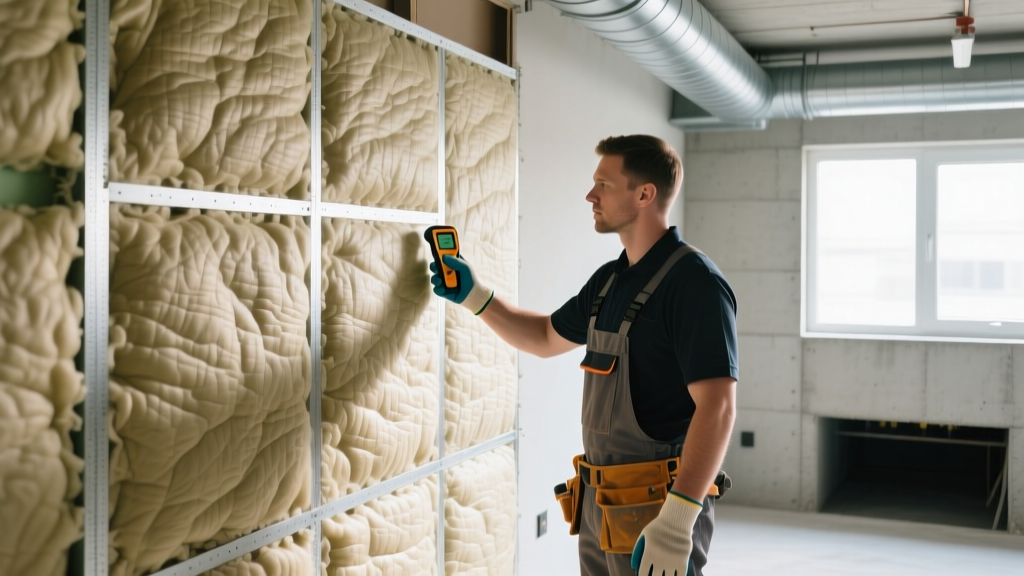
The Vulnerability of Exposed Rigid Foam and Mineral Wool
While most insulation is hidden behind drywall or exterior cladding, exposed board insulation in unfinished basements, crawlspaces, utility rooms, and acoustic studios faces unique environmental stressors. Rigid foam boards—such as Extruded Polystyrene (XPS), Expanded Polystyrene (EPS), and Polyisocyanurate (Polyiso)—as well as high-density mineral wool boards, are highly susceptible to dust accumulation, physical impact, UV degradation, and moisture intrusion. When dust settles on the foil or plastic facers of polyiso boards, it acts as a moisture wick, trapping ambient humidity against the surface and creating a breeding ground for mold. Similarly, physical damage to the edges of XPS boards compromises the continuous thermal envelope, leading to localized condensation and thermal bridging.
Maintaining exposed board insulation is not merely an aesthetic exercise; it is critical for preserving the material's stated R-value and ensuring the vapor retarder facers remain intact. This playbook provides exact protocols for cleaning, repairing, and remediating exposed board insulation systems.
Before disturbing any exposed insulation, don an N95 respirator (or P100 for heavy mold remediation), safety goggles, and nitrile gloves. Cutting, sanding, or aggressively vacuuming degraded EPS or mineral wool boards releases fine particulate matter that can irritate the respiratory tract. Never use a standard household vacuum without a HEPA filter upgrade, as it will simply exhaust microscopic insulation particles back into the room air.
Step-by-Step Cleaning Protocol for XPS, EPS, and Polyiso
Cleaning rigid foam board insulation requires a delicate balance between removing contaminants and avoiding chemical or physical damage to the foam core and its facers. Solvents, petroleum-based cleaners, and stiff-bristled brushes will melt EPS and tear polyiso foil facers.
Phase 1: Dry Dusting and HEPA Vacuuming
- Equip a HEPA-filtered wet/dry vac with a soft-bristle brush attachment. Avoid beater-bar attachments, which will gouge the foam.
- Start from the top down. Work systematically across the wall or ceiling, allowing the brush to lightly agitate the surface while the vacuum captures the dislodged dust.
- Address the seams. Use a crevice tool to vacuum out dust packed into the joints between boards. Accumulated dust in seams holds moisture and degrades the adhesive tape over time.
- Wipe with a dry microfiber mop. For large, flat expanses of foil-faced polyiso (like Johns Manville AP Foil-Faced boards), a dry microfiber dust mop is faster and less abrasive than a vacuum hose.
Phase 2: Spot-Cleaning Stains and Grime
For grease splatters in utility rooms or dirt marks in crawlspaces, avoid harsh degreasers. Mix a mild solution of TSP-PF (Trisodium Phosphate - Phosphate Free) and warm water. Dampen a microfiber cloth—do not soak it—and gently wipe the affected area. Rinse immediately with a cloth dampened only with clean water, and dry the surface with a lint-free towel to prevent water from seeping into the board edges.
Moisture, Mold, and Efflorescence Remediation
Moisture is the primary enemy of exposed insulation. While XPS and EPS are closed-cell foams, they are not entirely impervious to water vapor transmission, and their edges are highly vulnerable. Mineral wool boards, conversely, are vapor-permeable and can hold significant moisture within their matrix without losing their structural shape, though they become a conduit for mold if left damp.
| Board Type | Water Absorption (ASTM C272) | Mold Remediation Limit | Chemical Restriction |
|---|---|---|---|
| XPS (e.g., Owens Corning FOAMULAR) | < 0.3% by volume | Surface cleaning only; replace if water is trapped behind boards. | No solvents, no bleach (degrades flame retardants). |
| EPS (Standard Expanded Polystyrene) | 2.0% - 4.0% by volume | Must be removed and replaced if mold penetrates the bead structure. | Highly sensitive to hydrocarbons and aerosol propellants. |
| Polyiso (Foil-Faced) | < 1.0% (core), but facer traps water | Facer can be wiped; if foil is delaminating, replace the board. | Avoid acidic cleaners that pit the aluminum foil facer. |
| Mineral Wool Board (e.g., Rockwool AFB) | High (Hydrophobic but vapor open) | Surface spores can be HEPA vacuumed; wet mold requires replacement. | Never use liquid cleaners; liquid destroys the binder matrix. |
If you discover surface mold on the facer of a polyiso or XPS board, do not use bleach. The EPA explicitly advises against using bleach for routine mold cleanup on porous or semi-porous materials, as bleach fails to penetrate surfaces and leaves behind water that feeds future growth. Instead, apply a botanical or enzyme-based mold remover, such as Concrobium Mold Control, which crushes the mold spores at the root without introducing excess moisture. Spray lightly, let it dry completely, and then HEPA vacuum the residue.
Repairing Compromised Vapor Retarders and Facers
The thermal performance of board insulation relies heavily on continuous seams. In exposed environments, boards are frequently bumped by storage items, ladders, or HVAC equipment, resulting in crushed corners and torn facers. A torn foil facer on polyiso board compromises its Class I vapor retarder rating, allowing interior moisture to condense inside the wall cavity during winter months.
The Seam and Facer Repair Matrix
- Minor Facer Tears (Under 3 inches): Clean the area with isopropyl alcohol to remove dust and oils. Apply a 2-inch wide strip of acrylic-compatible foil tape. Avoid standard duct tape, as its rubber-based adhesive dries out and peels within 12 to 18 months in fluctuating temperatures. Use products like Huber ZIP System tape or Dow Weathermate Plus, which utilize aggressive acrylic adhesives designed for long-term building envelope adhesion.
- Crushed or Gouged Edges: If the foam core is crushed but the board is otherwise secure, fill the void with a minimal-expanding polyurethane foam sealant (e.g., GREAT STUFF PRO Window & Door). Do not use high-expansion foam, as the pressure will bow the surrounding boards and break the adhesive bond to the masonry or framing. Once cured, trim the foam flush with a serrated knife and seal the patch with mastic tape.
- Delaminated Foil Facers: If the foil facer is bubbling or peeling away from the polyiso core, the board has suffered moisture damage. The adhesive bond between the facer and the foam is irreversible. The affected board must be cut out and replaced.
Maintaining Exposed Mineral Wool Acoustic Boards
In commercial spaces, recording studios, and auditoriums, high-density mineral wool boards (often wrapped in acoustic fabric or left exposed with hardened edges) serve as critical sound absorbers. The maintenance playbook for these boards is entirely different from rigid foam.
"Mineral wool is inorganic and does not provide a food source for mold, but the dust and organic particulates that settle on its surface do. The goal of cleaning acoustic mineral wool is to remove the organic dust layer without destroying the fragile fiber matrix."
Never use water or liquid cleaners on exposed mineral wool boards. Liquid causes the fibers to mat together, permanently destroying the board's Noise Reduction Coefficient (NRC) by eliminating the microscopic air gaps that trap sound waves. To clean acoustic boards, use a low-suction HEPA vacuum held exactly one inch away from the surface, or use short bursts of compressed air from a distance to blow dust out of the fiber matrix, followed by immediate ambient HEPA filtration of the room.
When to Replace Rather Than Maintain
Maintenance can only extend the life of board insulation so far. According to guidelines referenced by the CDC regarding mold in building materials, any porous insulation material that has been wet for more than 48 hours and shows signs of internal mold growth must be discarded. For rigid foam, replacement is mandatory under the following conditions:
- UV Degradation: If XPS boards exposed to sunlight from basement window wells show a chalky, powdery surface that sheds orange or blue dust when touched, the UV stabilizers have failed. The R-value is actively degrading as the foam surface oxidizes. Cover the boards with a UV-blocking paint (acrylic latex) or replace them.
- Waterlogged EPS: EPS is essentially a matrix of fused plastic beads with microscopic air gaps between them. Once capillary action pulls groundwater into these gaps in a crawlspace, the board will not dry out. It will lose up to 50% of its insulating value and must be replaced with a closed-cell XPS or Polyiso alternative.
- Off-Gassing or Odor: If exposed polyiso boards emit a persistent, sharp chemical odor after the initial 30-day off-gassing period, it indicates a breakdown of the blowing agents or a reaction with ambient chemicals. This requires immediate removal and replacement with a Greenguard Gold certified alternative.
By adhering to these specific, material-aware maintenance protocols, facility managers and homeowners can ensure their exposed board insulation continues to perform at its engineered thermal and acoustic specifications for decades.