Insulation Material Cost per Square Foot: 2026 Guide
Compare insulation material costs per square foot for 2026. Analyze fiberglass, spray foam, and mineral wool ROI, R-values, and installation expenses.

The True Cost of Insulation: Beyond the Price Tag
Calculating the true cost of an insulation material requires looking past the initial retail price per square foot. In 2026, material costs are heavily influenced by the global phase-down of hydrofluorocarbons (HFCs), which has shifted the pricing landscape for extruded polystyrene (XPS) and closed-cell spray foams. Furthermore, the installed cost—factoring in labor, air-sealing prerequisites, and waste factor—often triples the raw material expense.
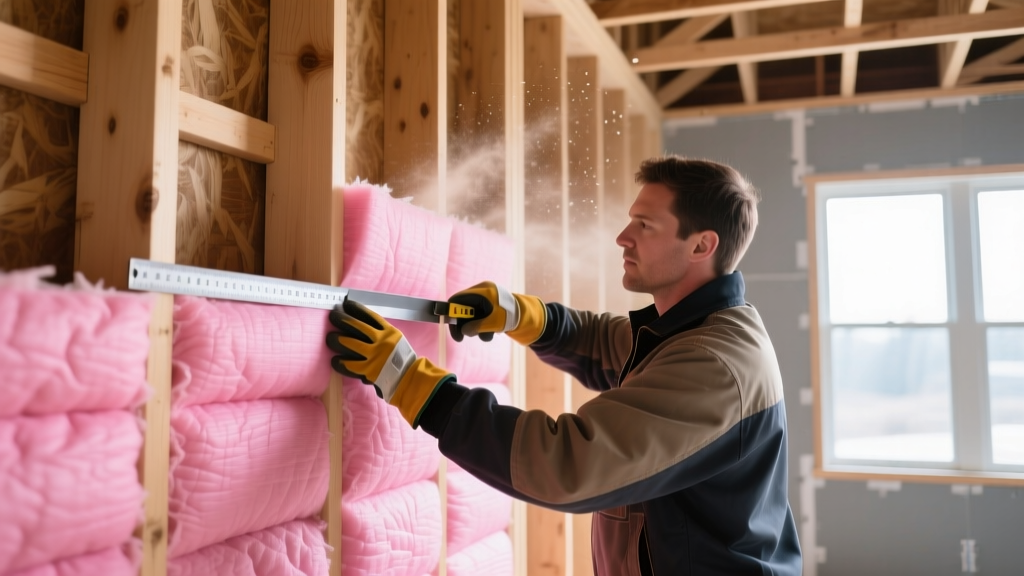
2026 Insulation Material Cost Matrix
The following table breaks down the baseline material and installed costs for the four primary insulation categories used in residential and light commercial construction. Prices reflect Q1 2026 national averages for standard 2x4 and 2x6 framing cavities.
| Insulation Material | R-Value per Inch | Material Cost (per sq. ft.) | Installed Cost (per sq. ft.) | Primary Application |
|---|---|---|---|---|
| Fiberglass Batts | R-3.1 to R-4.3 | $0.45 - $1.10 | $1.50 - $2.80 | Standard wall/attic cavities |
| Mineral Wool Batts | R-4.2 to R-5.0 | $1.10 - $1.80 | $2.50 - $4.20 | Fire-rated assemblies, acoustic |
| Closed-Cell Spray Foam | R-6.0 to R-7.0 | $1.60 - $3.20 | $4.50 - $8.50 | Unvented roofs, flood zones |
| Rigid Polyiso Board | R-5.6 to R-6.5 | $0.90 - $1.60 | $3.00 - $5.50 | Exterior continuous insulation |
Deep Dive: Material-Specific Cost & Performance Analysis
Fiberglass Batts: The Baseline Standard
Fiberglass remains the most cost-effective insulation material for standard framing. Products like Owens Corning Pink Next Gen offer improved dust reduction and recovery rates compared to older iterations. For a standard 2x4 wall, an R-15 batt costs approximately $0.65 per square foot for the material alone.
Failure Mode & Cost Impact: The most common financial leak with fiberglass is compression. Stuffing an R-19 batt (designed for 2x6 walls) into a 2x4 cavity does not yield R-19; it drops the thermal resistance to roughly R-13 while increasing the material cost by 30%. Always match the batt thickness to the cavity depth to avoid paying for R-value you will not achieve.
Mineral Wool: The Acoustic and Fire Upgrade
Mineral wool (stone wool) commands a 40% to 60% premium over fiberglass but delivers superior performance in specific scenarios. ROCKWOOL Comfortbatt (R-15 for 2x4) costs around $1.35 per square foot. Unlike fiberglass, mineral wool is hydrophobic and maintains its R-value even if exposed to moisture during construction delays.
Where the ROI justifies the cost: Use mineral wool in interior partition walls for soundproofing (achieving STC ratings of 45-50 when paired with resilient channels) and in fire-rated assemblies. It is non-combustible and withstands temperatures exceeding 1,800°F, meeting strict ASTM E119 fire-resistance standards without requiring additional intumescent coatings.
Closed-Cell Spray Foam: The Premium Barrier
Closed-cell spray polyurethane foam (ccSPF) like Icynene ProSeal provides an R-value of roughly R-6.5 per inch and acts as a Class II vapor retarder. The material cost is high, but the true expense lies in the specialized labor and equipment required, pushing installed costs to $6.00+ per square foot.
Supply Chain Context: The transition to next-generation blowing agents with lower Global Warming Potential (GWP) has stabilized ccSPF pricing in 2026 after the volatile spikes of the early 2020s. While expensive, ccSPF adds structural racking strength to wall assemblies and eliminates the need for separate air-sealing membranes, offsetting some secondary material costs.
Rigid Foam Board: Continuous Insulation Solutions
To meet modern energy codes requiring continuous insulation (ci) to mitigate thermal bridging through wood studs, rigid foam is essential. Extruded Polystyrene (XPS) like Owens Corning FOAMULAR NGX uses a next-gen blowing agent and costs about $1.10 per square foot for 1-inch thickness (R-5).
Thermal Drift Warning: If building in Climate Zones 5 or higher, consider Polyisocyanurate (Polyiso) instead of XPS for exterior applications. While Polyiso boasts a higher nominal R-value (R-6.5 per inch), its R-value actually drops in extreme cold due to the condensation of blowing gases within the foam matrix. Always specify cold-temperature R-values when calculating heating loads in northern climates.
Hidden Costs: Labor, Prep, and Retrofitting
When budgeting for an insulation project, contractors must account for variables that rarely appear on the material invoice:
- Demolition and Disposal: Retrofitting an existing attic requires removing old, settled material. Disposal fees for bagged fiberglass or cellulose average $150 to $300 per dumpster load.
- Scaffolding and Access: Multi-story exterior continuous insulation installations require scaffolding, adding $2.00 to $4.00 per square foot to the labor burden.
- Electrical and Plumbing Adjustments: Adding 2 inches of rigid foam to an exterior wall means window and door jambs must be extended, and exterior electrical outlets must be rebuilt. Budget $35 to $50 per window for jamb extensions.
- Ignition Barriers: Exposed spray foam in basements or crawlspaces violates building codes due to toxicity when burned. Applying an intumescent paint (like DC315) adds $1.20 to $1.80 per square foot to the project.
Calculating ROI: Payback Periods by Climate Zone
The financial viability of upgrading from code-minimum insulation to high-performance assemblies depends on local utility rates and heating degree days (HDD). The EPA Energy Star program recommends specific R-values based on these zones.
Simple Payback Formula:
Payback Period (Years) = Total Installed Cost per Sq. Ft. / (Annual Energy Savings per Sq. Ft.)
Example (Climate Zone 5 - Chicago): Upgrading attic insulation from R-30 to R-60 using blown-in cellulose costs roughly $1.80/sq. ft. installed. With local natural gas rates, this yields an annual heating savings of approximately $0.18/sq. ft. Payback period: 10 years.
Example (Climate Zone 2 - Houston): The same R-30 to R-60 upgrade costs the same, but cooling savings yield only $0.08/sq. ft. annually. Payback period: 22.5 years. In Zone 2, investing in radiant barriers or upgraded HVAC efficiency yields a faster ROI than excessive attic insulation.
Sourcing & Supply Chain Realities for 2026
Procurement strategies significantly impact the bottom line. Fiberglass and mineral wool are highly commoditized; purchasing full pallets directly from regional distributors rather than big-box retailers can shave 12% to 18% off material costs. Conversely, closed-cell spray foam is not a DIY material. Bids should be evaluated based on the contractor's use of certified installers who perform daily equipment calibration and provide core samples to verify installed density and R-value. Accepting the lowest bid on spray foam often results in under-filled cavities and off-ratio foam that fails to cure properly, leading to costly remediation and severe indoor air quality issues.
Written by
James ThorntonJames Thornton is a construction industry veteran with 25 years of hands-on experience in wood framing, lumber grading, and residential building codes. He started as a framing carpenter in rural Oregon, earned his ICC Residential Building Inspector certification, and eventually became a senior plan reviewer for the City of Portland Bureau of Development Services. James holds a B.S. in Wood Science & Technology from Oregon State University and is a certified lumber grader through the West Coast Lumber Inspection Bureau (WCLIB). He has inspected over 3,000 residential construction sites and authored the city's internal guide on advanced framing techniques (2x6 at 24" O.C.). James lives in Bend, OR, where he builds custom timber-frame cabins and competes in lumberjack sports.
More from James Thornton
View all
Insulation
Best Home Insulation Materials: Complete 2026 Guide
Compare top home insulation materials for 2026. Find R-values, installed costs per square foot, and best uses for fiberglass, spray foam, and mineral wool.
Aug 4, 2026

Sustainable Building
Certify Your Green Building Material for LEED and WELL
Step-by-step guide to certifying a green building material for LEED v5 and WELL v2. Master EPDs, HPDs, and VOC limits for 2026 project specifications.
Aug 4, 2026

Stone & Masonry
Veneer Stacked Stone Panels: Interior Design & Style Showcase
Discover how veneer stacked stone panels transform interiors. Explore modern design profiles, material pairings, and technical installation specs.
Aug 4, 2026