Soundproof Wall Panels Durability: Lifespan Analysis & Failure Modes
Discover the true lifespan of soundproof wall panels. Analyze durability, material degradation, and failure modes for fiberglass, foam, and mass-loaded vinyl.
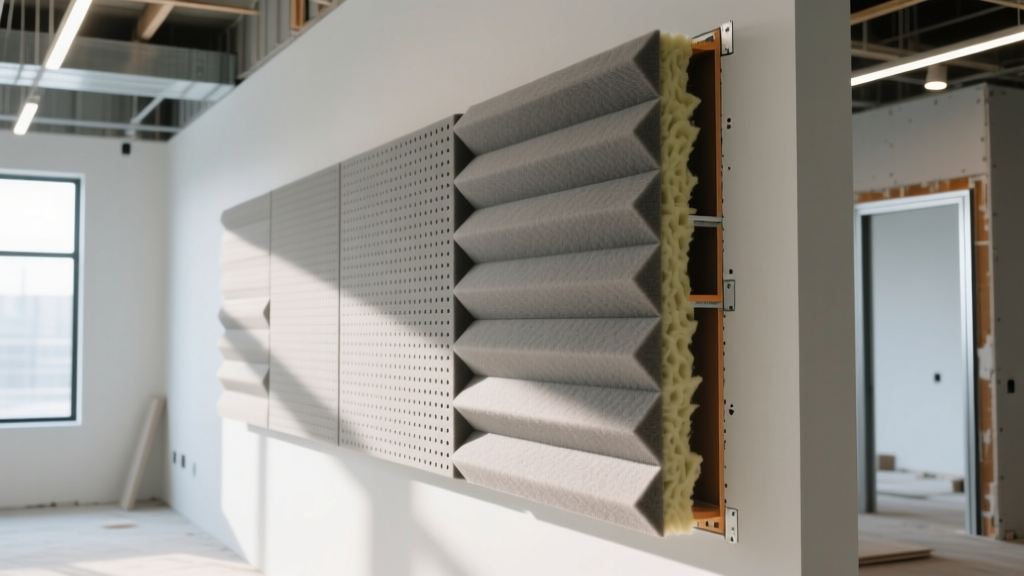
The Physics of Acoustic Degradation
Most acoustic treatments are evaluated on Noise Reduction Coefficient (NRC) or Sound Transmission Class (STC) at the time of installation. However, the acoustic performance of soundproof wall panels degrades over time due to material fatigue, environmental stressors, and mechanical failure. A panel that tests at 0.85 NRC on day one may drop below 0.60 NRC within a decade if the core compresses, the facing delaminates, or the mounting system shifts. Understanding the lifecycle of these materials prevents costly retrofits and ensures long-term acoustic compliance in studios, home theaters, and commercial spaces.
Material Lifespan & Failure Matrix
The longevity of soundproof wall panels is dictated by their core composition and facing materials. Below is a comparative matrix of the most common acoustic panel types, detailing their expected functional lifespans and primary degradation vectors.
| Panel Type | Core Composition | Expected Lifespan | Primary Failure Mode | Avg. Cost (per sq. ft.) |
|---|---|---|---|---|
| Fabric-Wrapped Fiberglass | High-density glass wool (3-8 pcf) | 15–25 Years | Fabric sagging / Edge fraying | $15.00–$32.00 |
| Polyurethane Foam | Open-cell PU acoustic foam | 5–10 Years | UV oxidation / Crumbling | $4.00–$12.00 |
| Melamine Foam | Thermoset melamine resin | 15–20 Years | Physical tearing / Staining | $18.00–$35.00 |
| Mass-Loaded Vinyl (MLV) | Barium sulfate infused PVC | 20+ Years | Plasticizer leaching / Stiffening | $2.50–$5.50 |
| Wood Slat / PET Felt | PET felt backing with MDF slats | 10–15 Years | MDF warping from humidity | $12.00–$28.00 |
Deep Dive: Core Material Durability
Fabric-Wrapped Fiberglass (Owens Corning 703/705)
Fiberglass panels, particularly those utilizing Owens Corning 703 or 705 high-density boards, represent the industry standard for broadband absorption. The mineral wool core itself is virtually immortal; it will not degrade, rot, or lose its acoustic properties if kept dry. The functional lifespan of these panels is entirely dependent on the facing material and the adhesive used to bind it.
Premium acoustic fabrics, such as those from Guilford of Maine, are engineered to resist sagging and maintain acoustic transparency. However, after 12 to 15 years, the spray adhesive bonding the fabric to the fiberglass core can dry out and crystallize, leading to localized delamination. This creates 'dead spots' where the fabric blocks sound waves from entering the porous core. To maximize lifespan, specify panels that use mechanical edge-sealing or heat-bonding techniques rather than chemical adhesives.
Acoustic Foams: Polyurethane vs. Melamine
Polyurethane (PU) acoustic foam—the ubiquitous 'egg crate' or wedge panel—is notorious for its poor longevity. PU foam undergoes photo-oxidation when exposed to ambient UV light and oxygen. Within 5 to 8 years, the foam will yellow, lose its cellular elasticity, and begin to crumble into toxic dust. Once the cellular structure collapses, the material loses its ability to trap and dissipate sound energy, rendering it acoustically useless.
Conversely, melamine foam (often branded as Basotect) is a thermoset polymer that resists UV degradation and maintains its structure indefinitely. Melamine also achieves a Class A fire rating per ASTM E84 standards without the need for chemical fire retardants, which can off-gas and degrade over time. The trade-off is physical fragility; melamine is highly susceptible to tearing and permanent staining from skin oils, making it unsuitable for high-traffic areas where physical contact is likely.
Mass-Loaded Vinyl (MLV) & Wood Slat Composites
Mass-Loaded Vinyl is primarily used for sound blocking (STC improvement) rather than absorption. High-quality MLV, such as Acoustiblok, relies on plasticizers to maintain its flexibility and limp-mass characteristics. Over a 15 to 20-year period, these plasticizers can slowly migrate to the surface and evaporate, causing the vinyl to stiffen. Once MLV loses its limpness, it becomes prone to acoustic resonance and flanking noise transmission.
Modern wood slat panels, which feature MDF (Medium Density Fiberboard) slats mounted on a PET (Polyethylene Terephthalate) felt backing, are highly popular for architectural acoustics. While the PET felt is essentially indestructible and made from recycled plastics, the MDF core is highly sensitive to moisture. In environments where relative humidity consistently exceeds 60%, the MDF will absorb ambient moisture, expand, and warp, pulling the panel away from the wall and ruining the aesthetic and acoustic alignment.
The Hidden Point of Failure: Mounting & Adhesives
The most common cause of premature soundproof wall panel failure is not the acoustic material itself, but the mounting system. Many DIY installations and budget commercial projects rely on heavy-duty spray adhesives (like 3M Super 77) or construction adhesives to bond panels directly to drywall.
A standard 24x48 inch fabric-wrapped fiberglass panel weighs between 6 and 10 pounds. Spray adhesives degrade under constant gravitational shear stress and thermal cycling. After 3 to 5 years, the adhesive bond weakens, causing the panel to slide down the wall or detach entirely, damaging the drywall paper facing in the process.
For any panel exceeding 3 pounds, mechanical fastening is mandatory. Z-clips (French cleats) made from extruded aluminum provide a permanent, load-bearing mount that allows for easy removal and repositioning without degrading over time. Impaling clips with hardened steel pins are also acceptable for lightweight foam panels, provided they are anchored into wall studs or masonry, not just drywall anchors.
Environmental Stressors & Moisture Damage
Acoustic panels are highly susceptible to indoor environmental conditions. According to EPA guidelines on indoor moisture, maintaining relative humidity between 30% and 50% is critical for preventing mold growth and material degradation. Fiberglass and mineral wool cores are inorganic and will not support mold growth, but the fabric facings, starch-based adhesives, and wood components will.
In basement studios or below-grade theaters, hydrostatic pressure can drive moisture through concrete walls. If soundproof wall panels are mounted directly against a damp masonry wall without a vapor barrier or an air gap, the core will absorb moisture. This increases the density of the core, altering its acoustic absorption profile and shifting the effective frequency range, ultimately ruining the room's tuned acoustic response.
10-Year Total Cost of Ownership (TCO) Analysis
When specifying soundproof wall panels, evaluating the initial purchase price is a false economy. The 10-year TCO reveals the true financial impact of material durability, factoring in replacement costs, labor, and acoustic re-testing.
| Material Choice | Initial Cost (100 sq ft) | 10-Year Replacement Cost | Labor & Disposal | 10-Year TCO |
|---|---|---|---|---|
| Polyurethane Foam | $800 | $800 (Full replacement needed) | $400 | $2,000 |
| Fabric-Wrapped Fiberglass | $2,500 | $0 (No replacement needed) | $0 | $2,500 |
| Melamine Foam | $2,800 | $0 (No replacement needed) | $0 | $2,800 |
While PU foam appears to be the most budget-friendly option upfront, its inevitable degradation requires a full tear-down and reinstallation within a decade. High-density fiberglass or melamine panels, despite a higher initial capital expenditure, offer a vastly superior return on investment by maintaining their acoustic and structural integrity for over 20 years.
Specification Framework for Maximum Longevity
To ensure your acoustic treatment survives decades of use without compromising performance, adhere to the following specification framework during the procurement and installation phases:
- Demand Class A Fire Ratings: Ensure all core materials and facings meet ASTM E84 Class A standards. This not only ensures life safety but indicates the use of high-quality, thermoset materials that resist thermal degradation.
- Specify Mechanical Edge Details: Require manufacturers to use hardened resin edges or wood framing on fabric-wrapped panels. This prevents the fiberglass edges from chipping and stops the fabric from fraying at the high-tension corners.
- Utilize Aluminum Z-Clips: Ban the use of liquid nails or spray adhesives for primary mounting. Mandate extruded aluminum Z-clips anchored directly into structural framing.
- Implement Air Gaps for Masonry: When mounting panels on exterior or below-grade walls, install a 1-inch furring strip grid behind the panels to allow for air circulation and prevent moisture entrapment against the acoustic core.
- Select Solution-Dyed Fabrics: If using fabric-wrapped panels in sunlit rooms, specify solution-dyed acrylic or polyester fabrics that are inherently UV resistant, preventing the fading and fiber degradation common in standard printed textiles.