Soundproof Windows Cost Calculator & Pricing Guide 2026
Calculate the exact cost of soundproof windows for your home. Explore 2026 pricing by STC rating, frame material, and retrofit vs. full replacement.
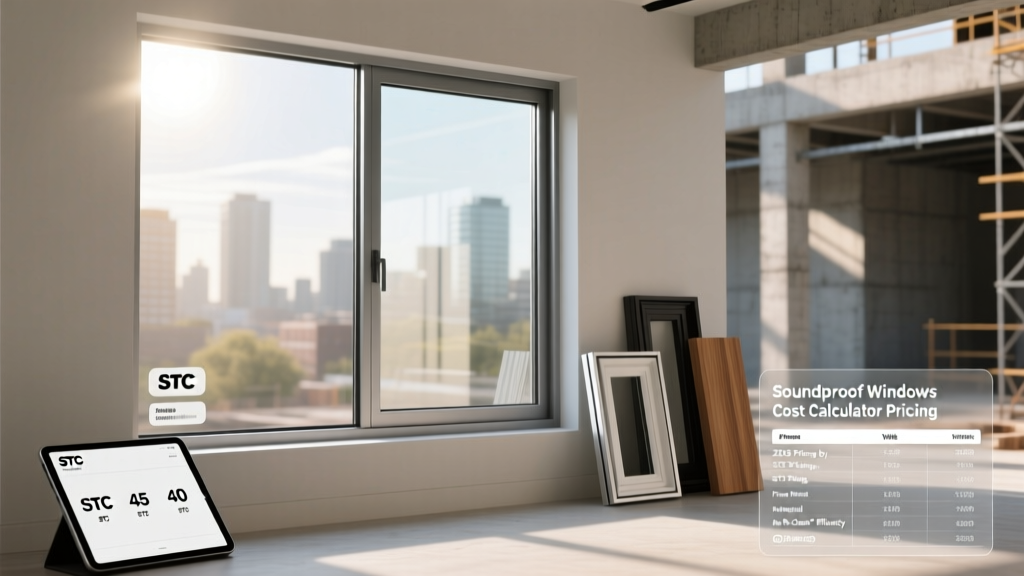
The True Cost of Soundproof Windows in 2026
Upgrading to soundproof windows is one of the most effective ways to mitigate urban noise pollution, which the Environmental Protection Agency (EPA) identifies as a significant environmental health hazard. However, the term 'soundproof' is heavily marketed and often misunderstood. True acoustic windows rely on mass, decoupling, and airtight sealing rather than just thicker glass. In 2026, the cost of acoustic window technology has stabilized, but pricing varies drastically based on whether you need to block high-frequency noise (sirens, voices) or low-frequency noise (highway traffic, aircraft).
To accurately estimate your project, you must first understand the pricing tiers based on acoustic performance metrics. Below is the current market pricing for supply and professional installation.
Acoustic Window Pricing Matrix (Per Unit, Installed)
| Performance Tier | STC / OITC Rating | Glass Configuration | Avg. Cost (Vinyl/Fiberglass) | Avg. Cost (Wood/Clad) |
|---|---|---|---|---|
| Standard Dual-Pane | STC 26 / OITC 21 | 1/8' dual pane, Argon gas | $650 - $850 | $900 - $1,200 |
| Acoustic Laminated | STC 34 / OITC 28 | 1/4' laminated / 1/2' air / 1/8' annealed | $1,100 - $1,450 | $1,500 - $1,900 |
| High-Performance | STC 40 / OITC 34 | Asymmetrical laminated, 5/8' gap, Krypton | $1,600 - $2,100 | $2,200 - $2,800 |
| Extreme / Studio Grade | STC 45+ / OITC 40+ | Dual sash (storm window style) decoupled | $2,800 - $3,500+ | $3,500 - $4,500+ |
STC vs. OITC: The Metric That Actually Matters
Most consumers shop for soundproof windows using the Sound Transmission Class (STC) rating. This is a critical mistake if your primary noise issue is outdoor traffic. STC is weighted to measure high-frequency sounds (human speech, office noise). Outdoor-Indoor Transmission Class (OITC) is weighted for low-frequency sounds (bass, diesel engines, aircraft rumble).
A window might boast an impressive STC 38 but only achieve an OITC 26, meaning it will block a dog barking but fail to stop the rumble of a passing garbage truck. When requesting quotes from manufacturers like Milgard (Quiet Line series) or Pella (Lifestyle with SoundControl), explicitly ask for the OITC rating. Upgrading from an OITC 22 to an OITC 32 typically requires moving from standard annealed glass to a laminated glass with a 0.060-inch Polyvinyl Butyral (PVB) interlayer, adding roughly $250 to $400 per sash.
Quantity Calculator: Estimating Your Project Scope
To calculate the total budget for your soundproofing project, use the following formula. This calculator accounts for the window units, custom sizing premiums, and the critical acoustic sealing materials required to prevent sound leaks.
The Master Cost Formula
Total Project Cost = (Base Window Cost × Quantity) + (Linear Footage × Acoustic Sealant Cost) + Flanking Mitigation + Labor Premium
- Base Window Cost: Use the matrix above based on your required OITC.
- Custom Sizing Premium: Add 15-20% if your rough openings are non-standard (e.g., historic homes with 34x58 inch openings).
- Acoustic Sealant Cost: Calculate the perimeter of all windows. You need one 28oz tube of acoustical sealant (like Tremco or Green Glue) per 2-3 windows. Cost: $12 per tube.
- Labor Premium: Acoustic installation requires meticulous shimming and backer-rod application. Expect a 20-30% premium over standard window installation labor (Standard: $150/unit; Acoustic: $200-$250/unit).
Sample Calculation: 5-Window Urban Bedroom Retrofit
Scenario: A homeowner in Chicago needs to block elevated train noise (low frequency) for 5 standard-sized (36x48) double-hung windows. They require High-Performance (OITC 34) fiberglass windows.
- Base Window Cost: 5 × $1,800 = $9,000
- Acoustic Sealant & Backer Rod: 5 windows × 14 linear feet = 70 LF. Materials = $150
- Labor Premium (Acoustic Certified): 5 × $225 = $1,125
- Total Estimated Budget: $10,275
Retrofit Inserts vs. Full-Frame Replacement
When calculating costs, you must decide between a full-frame tear-out and an interior acoustic insert. Both have distinct financial and acoustic implications.
Comparison Matrix: Inserts vs. Full Replacement
| Feature | Acoustic Window Inserts (e.g., CitiQuiet) | Full-Frame Acoustic Replacement |
|---|---|---|
| Installation Method | Mounted inside existing frame; leaves original window intact. | Original window and frame removed down to the rough opening. |
| Avg. Cost Per Unit | $800 - $1,400 (Material & Install) | $1,500 - $2,800 (Material & Install) |
| Acoustic Benefit | Excellent (Creates massive dead air space between two sashes). | Very Good (Relies entirely on the single unit's mass and seal). |
| Light Reduction | Reduces visible light by 10-15% due to double framing. | No light reduction; maximizes glass area. |
| Best Use Case | Historic buildings, co-ops with strict facade rules, extreme noise. | Standard residential renovations, failing original frames. |
The Science of Asymmetrical Glazing
If you are specifying custom soundproof windows from a commercial glazier, you must request asymmetrical glass thicknesses. When both panes of a dual-pane window are the exact same thickness (e.g., two 1/4-inch panes), they share the same resonant frequency. When a sound wave hits that specific frequency, both panes vibrate sympathetically, creating an acoustic 'hole' where sound passes right through.
By specifying an asymmetrical unit—for example, a 3/8-inch laminated exterior pane and a 1/4-inch annealed interior pane—you force the two panes to resonate at different frequencies. This simple specification change can yield a 3 to 5-point bump in overall STC performance for less than $50 in additional manufacturing costs. Always verify the glazing schedule with your supplier before signing the purchase order.
According to acoustic principles documented in ENERGY STAR and building science guidelines, sound travels through the path of least resistance. If you install STC 45 soundproof windows into a wall assembly featuring STC 30 standard drywall and unsealed electrical outlets, the window's performance is rendered useless. The noise will simply 'flank' the window by vibrating through the weaker wall cavity. Before spending $15,000 on windows, spend $1,500 adding mass-loaded vinyl (MLV) and acoustic drywall to the adjacent wall space.
Hidden Costs: Installation and Acoustic Sealing
The most expensive soundproof window will fail if installed with standard polyurethane spray foam. Expanding foam is rigid and porous; it transmits vibration and allows high-frequency sound to leak through microscopic air gaps. Proper acoustic installation requires specific, often overlooked, line-item materials:
- Closed-Cell Backer Rod ($0.50/LF): Placed in the gap between the window frame and the rough opening to control the depth of the sealant and provide a flexible backstop.
- Non-Hardening Acoustical Sealant ($12-$18/tube): Products like Tremco Acoustical Sealant or OSI SC-175 remain pliable for decades, absorbing structural vibrations without cracking. Standard silicone is insufficient for low-frequency vibration damping.
- Compression Seals / Weatherstripping ($40-$80 per sash): The operable sashes must use multi-fin pile weatherstripping or silicone bulb seals. If you can slide a piece of paper between the closed sash and the frame, your acoustic seal is compromised.
Decision Framework: Which Specification Do You Need?
Use this rapid diagnostic guide to determine the exact window specification required for your environment, preventing you from overpaying for unnecessary performance or underbuying and failing to solve the noise issue.
- Scenario A: Suburban street noise, occasional lawnmowers, barking dogs.
Solution: Standard dual-pane with laminated interior glass (STC 32 / OITC 26). Budget: $900/unit. - Scenario B: Busy arterial road, bus routes, commercial HVAC hum.
Solution: Asymmetrical laminated dual-pane with 5/8' air gap (STC 38 / OITC 32). Budget: $1,600/unit. - Scenario C: Highway proximity, flight paths, elevated rail lines.
Solution: Interior acoustic window inserts over existing exterior windows (Combined STC 45+ / OITC 40). Budget: $1,200/unit (insert only).
Frequently Asked Questions
Do soundproof windows also improve thermal insulation?
Yes. The PVB interlayer in laminated glass blocks 99% of UV rays, and the wider air gaps required for acoustic performance inherently improve the window's U-factor. However, to meet ENERGY STAR thermal criteria, ensure the unit includes a Low-E coating, which does not negatively impact acoustic performance.
Can I just add a secondary storm window instead of buying acoustic windows?
Adding a standard acrylic or glass storm window creates a dead air space that can improve sound reduction by 4 to 6 STC points. However, unless the storm window features airtight compression seals and laminated glass, it will not block low-frequency traffic rumble effectively.
How do I verify the acoustic rating of the windows I am buying?
Do not accept a salesperson's verbal estimate. Require the manufacturer to provide an independent laboratory test report (typically conducted per ASTM E90 standards) that explicitly lists both the STC and OITC ratings for the exact frame and glass configuration you are purchasing.