What Typical Materials Used in a Class H Insulation System Include
Discover what typical materials used in a Class H insulation system include, comparing mica, aramid, and silicone for high-temperature building applications.

Defining the 180°C Threshold in Building Infrastructure
In the architecture, engineering, and construction (AEC) sector, thermal classifications dictate material survivability in extreme environments. While standard commercial building envelopes rely on Class A or B fire ratings, high-heat infrastructure—such as commercial boiler rooms, data center backup generator enclosures, and industrial kitchen exhaust shafts—requires strict adherence to thermal endurance standards. The IEC 60085 and NEMA standards define a Class H thermal rating as the ability to withstand a continuous operating temperature of 180°C (356°F) without structural or dielectric degradation.
When MEP (Mechanical, Electrical, and Plumbing) engineers specify high-heat zones, understanding what typical materials used in a Class H insulation system include is critical for preventing catastrophic thermal failure. Unlike standard fiberglass or mineral wool batts used in residential walls, Class H systems demand advanced polymers, inorganic composites, and specialized elastomers.
Core Material Matrix: Comparing Class H Components
The selection of a Class H material depends on the specific mechanical stress, moisture exposure, and spatial constraints of the building application. Below is a comparative matrix of the primary materials utilized in these high-temperature systems.
| Material Category | Max Continuous Temp | Primary Building Application | Est. Cost (per sq ft) |
|---|---|---|---|
| Mica & Glass Fiber Composites | 450°C - 500°C | Exhaust shafts, boiler pipe wraps | $6.50 - $9.00 |
| Aramid Papers (e.g., Nomex) | 220°C | Generator enclosures, transformer rooms | $12.00 - $18.00 |
| Silicone Elastomers | 180°C - 200°C | Flexible duct connectors, vibration pads | $4.00 - $7.50 |
| Epoxy-Bonded High-Temp Mineral Wool | 180°C (Binder limit) | Acoustic/thermal wrapping for HVAC | $2.50 - $4.00 |
Deep Dive: What Typical Materials Used in a Class H Insulation System Include
When evaluating high-heat mechanical zones, the typical materials used in a Class H insulation system include three primary categories: inorganic composites, advanced synthetic polymers, and elastomeric seals. Each serves a distinct functional role in maintaining the 180°C threshold.
1. Mica and Glass Fiber Composites
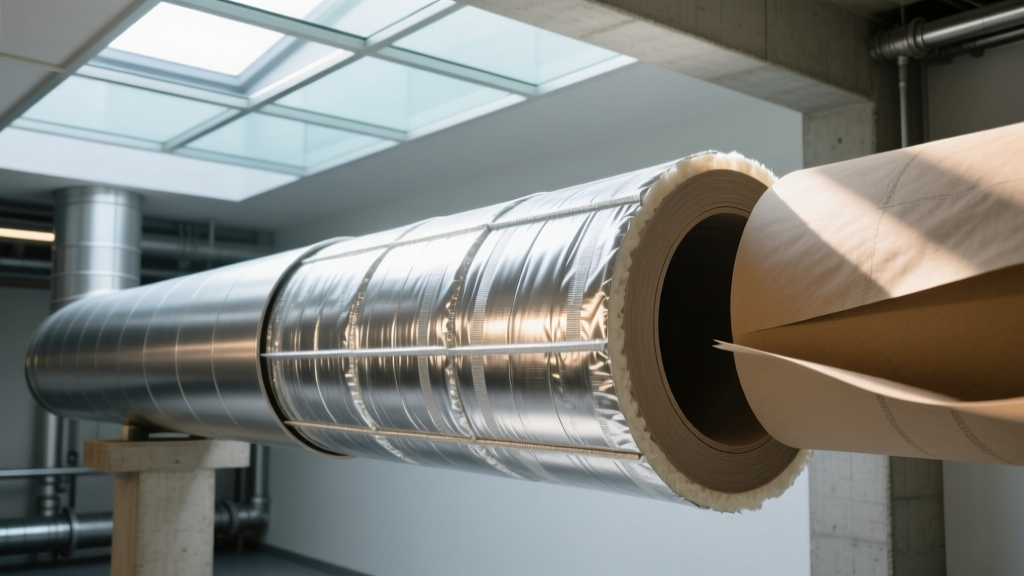
Mica is a naturally occurring silicate mineral with exceptional thermal and dielectric properties. In building systems, it is rarely used alone; instead, it is integrated into glass fiber matrices. Products like Cogebi Micalite or Isovolta Micatherm tapes consist of muscovite or phlogopite mica paper bonded with glass cloth using high-temperature silicone or epoxy resins. These composites are the standard for wrapping high-pressure steam pipes and commercial kitchen exhaust ducts where localized temperatures can spike well beyond the 180°C baseline, offering a safety buffer up to 500°C.
2. Aramid Papers and Epoxy Binders
Aramid fibers, most notably recognized under the DuPont Nomex brand, are meta-aramid polymers that do not melt or support combustion in standard atmospheric conditions. DuPont Nomex 410 is a high-density aramid paper widely specified in Class H systems for electrical insulation within building substations and backup generator enclosures. Its high dielectric strength (up to 12 kV/mm) and mechanical toughness make it ideal for environments where thermal insulation must also prevent electrical arcing.
3. Silicone Elastomers and Fiberglass Sleeving
For applications requiring flexibility—such as expansion joints in high-temperature ductwork or vibration isolation pads beneath heavy mechanical equipment—silicone elastomers are mandatory. Standard organic rubbers degrade rapidly above 120°C. Silicone, however, maintains its elastomeric properties and thermal resistance at a continuous 180°C. When extruded over fiberglass braided sleeving, it creates a flexible, watertight Class H barrier that accommodates the thermal expansion and contraction of building infrastructure.
Failure Modes and Edge Cases in High-Temp Envelopes
Specifying a Class H material is only half the battle; understanding how these systems fail in real-world building environments is what separates expert MEP design from costly retrofits.
- Binder Degradation (The 'Hidden' Failure): While the base mineral wool or glass fiber may withstand 600°C, the organic binders used to hold the batts together often have a thermal limit of 180°C to 200°C. If a boiler room experiences a transient spike to 210°C, the binder will oxidize and turn to ash, causing the insulation to slump and expose the underlying pipe.
- Moisture Ingress in Mica Tapes: Mica-glass composites are highly susceptible to delamination if exposed to continuous condensation. In unconditioned mechanical rooms with high humidity, specifying a hydrophobic silicone binder rather than a standard epoxy is critical to prevent moisture wicking.
- Thermal Bridging at Fasteners: Using standard carbon steel banding to secure Class H insulation around high-temp ducts creates a thermal bridge. The steel banding will conduct heat away from the duct, potentially igniting adjacent combustible building materials. Always specify stainless steel or high-temp fiberglass strapping.
Specification Framework for Architects and MEP Engineers
Use this decision framework to select the correct Class H material based on your specific building application constraints:
- IF the application requires electrical isolation + thermal resistance (e.g., transformer rooms) ➔ SELECT Aramid Paper (Nomex 410).
- IF the application involves rigid, high-heat piping with potential fire exposure (e.g., boiler exhaust) ➔ SELECT Phlogopite Mica-Glass Tape.
- IF the application involves movement, vibration, or expansion joints (e.g., fan connections) ➔ SELECT Silicone-Coated Fiberglass Fabric.
- IF the application requires broad acoustic dampening alongside thermal resistance (e.g., generator housing walls) ➔ SELECT High-Temp Phenolic-Bonded Mineral Wool.
Code Compliance and Procurement Considerations
When procuring these materials for commercial projects, verifying third-party testing is non-negotiable. According to ASTM E84 (Standard Test Method for Surface Burning Characteristics of Building Materials), any insulation exposed to the plenum space or mechanical room air must maintain a Flame Spread Index (FSI) of 25 or less and a Smoke Developed Index (SDI) of 50 or less to achieve a Class A rating.
Furthermore, engineers should consult the IEC 60085 thermal classification guidelines to ensure that the specific manufacturer's data sheet explicitly certifies the 180°C continuous rating, rather than just a 'peak' or 'short-term' exposure rating. In 2026, supply chain lead times for specialized aramid papers and high-grade phlogopite mica can stretch from 6 to 10 weeks; early specification during the schematic design phase is essential to prevent project delays and the dangerous temptation to substitute with lower-class (Class F or B) materials on the job site.
Written by
David NakamuraDavid Nakamura is a licensed architect (AIA) and construction technology writer focused on sustainable building methods, mass timber engineering, and high-performance building envelopes. He holds a Master of Architecture from the University of Washington and is a certified Passive House Consultant (CPHC). David spent eight years at the Seattle firm Mithun, where he led the design of three LEED Platinum projects, before founding his own practice specializing in net-zero residential design. He serves on the editorial advisory board of GreenBuilder Magazine and has authored peer-reviewed papers on cross-laminated timber (CLT) connections for the Journal of Structural Engineering. In his spare time, David teaches woodworking at Pratt Fine Arts Center and kayaks the Puget Sound.
More from David Nakamura
View all
Construction Cost
Labor Cost to Build a Deck Per Sq Ft: 2026 Installation Guide
Discover the exact labor cost to build a deck per sq ft in 2026. This installation guide breaks down contractor rates, complexity factors, and hidden fees.
Aug 4, 2026

Construction Cost
How Much Does It Cost to Build a 3 Bedroom House? Financing Guide
Learn exactly how much it costs to build a 3 bedroom house and explore 2026 financing options, construction loan types, and budget frameworks for your build.
Aug 4, 2026

Construction Cost
Cost to Build a Tennis Court: 2026 Guide
How much does it cost to build a tennis court in 2026? Breakdowns for asphalt, concrete, and synthetic surfaces plus fencing and lighting.
Jul 30, 2026