India Building Insulation Material Market: 2026 Cost Analysis Guide
Comprehensive 2026 cost analysis of the India building insulation material market, covering pricing, regional variations, and ROI metrics.
Market Dynamics and the Shift Toward Energy Compliance
The india building insulation material market is undergoing a structural transformation in 2026. Driven by the mandatory enforcement of the Energy Conservation Building Code (ECBC) for commercial complexes and the rapid expansion of green-certified residential townships, insulation has transitioned from an optional upgrade to a baseline structural requirement. For contractors, architects, and procurement managers, navigating this market requires moving beyond generic per-square-foot estimates to understand the granular cost drivers, material-specific pricing tiers, and hidden installation variables that dictate final project budgets.
According to the Bureau of Energy Efficiency (BEE), buildings account for nearly 33% of total electricity consumption in India, with HVAC systems representing the largest load. Consequently, the financial penalty for poor thermal envelope design has never been higher. This cost analysis dissects the current pricing landscape, providing actionable procurement frameworks for the Indian construction sector.
- Average GST on insulation materials: 18%
- Year-over-year raw material price volatility (Polystyrene/PU): 4.2%
- Primary growth driver: IGBC and GRIHA rating compliance mandates
Material-by-Material Cost Breakdown (Per Sq. Ft.)
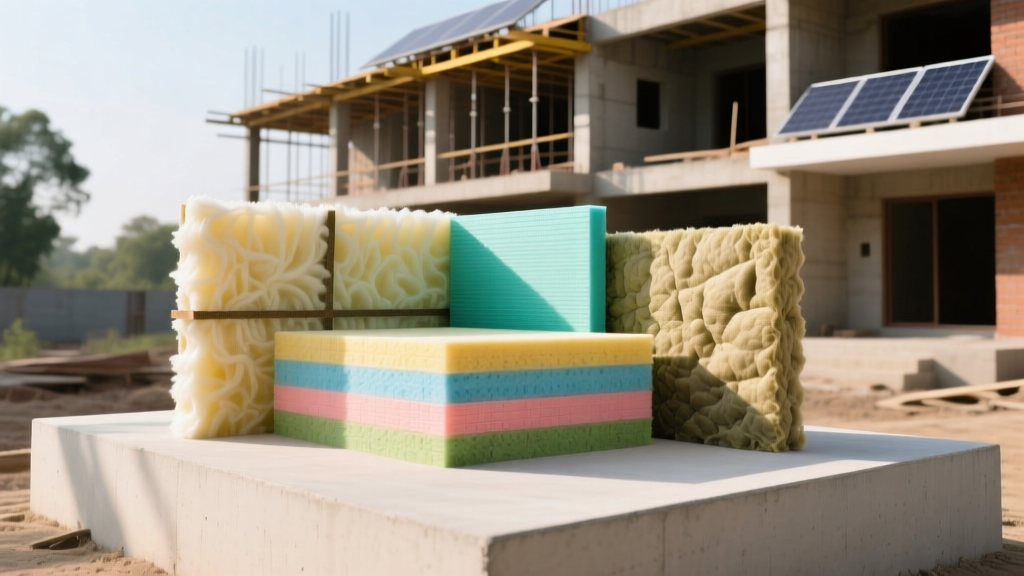
Pricing in the Indian market varies drastically based on material density, fire retardancy treatments, and brand premiums. The table below outlines the 2026 baseline costs for primary insulation materials, excluding installation labor and scaffolding.
| Material Type | Typical Density | Cost Range (₹/sq.ft.) | Primary Application | Fire Rating (IS 11227) |
|---|---|---|---|---|
| Expanded Polystyrene (EPS) | 16 - 24 kg/m³ | ₹45 - ₹85 | Under-deck roofing, cavity walls | Class E (Self-extinguishing) |
| Extruded Polystyrene (XPS) | 30 - 38 kg/m³ | ₹120 - ₹180 | Plinth insulation, heavy-load floors | Class E |
| Polyurethane Foam (PUF) Spray | 35 - 45 kg/m³ | ₹280 - ₹420 | Industrial sheds, cold storage, terraces | Class O / Class 1 (with additives) |
| Glass Mineral Wool | 16 - 32 kg/m³ | ₹65 - ₹115 | HVAC ducting, drywall partitions, acoustics | Non-combustible (Class A1) |
| Rock Mineral Wool | 60 - 120 kg/m³ | ₹95 - ₹160 | Fire-stopping, external wall insulation (EIFS) | Non-combustible (Class A1) |
Hidden Costs: Installation, Logistics, and Wastage
Material cost is only the baseline. Procurement teams must factor in site-specific variables that frequently inflate budgets by 15% to 25%:
- Surface Preparation for PUF: Spray foam requires a completely dry, dust-free substrate. In coastal cities like Chennai or Mumbai, applying PUF during high-humidity months requires industrial dehumidifiers, adding ₹12 to ₹18 per sq.ft. in equipment rental costs.
- Thermal Bridging Corrections: Simply placing EPS between concrete columns is insufficient. Addressing thermal bridges with specialized aerogel tapes or localized XPS patches adds approximately 8% to the total envelope insulation budget.
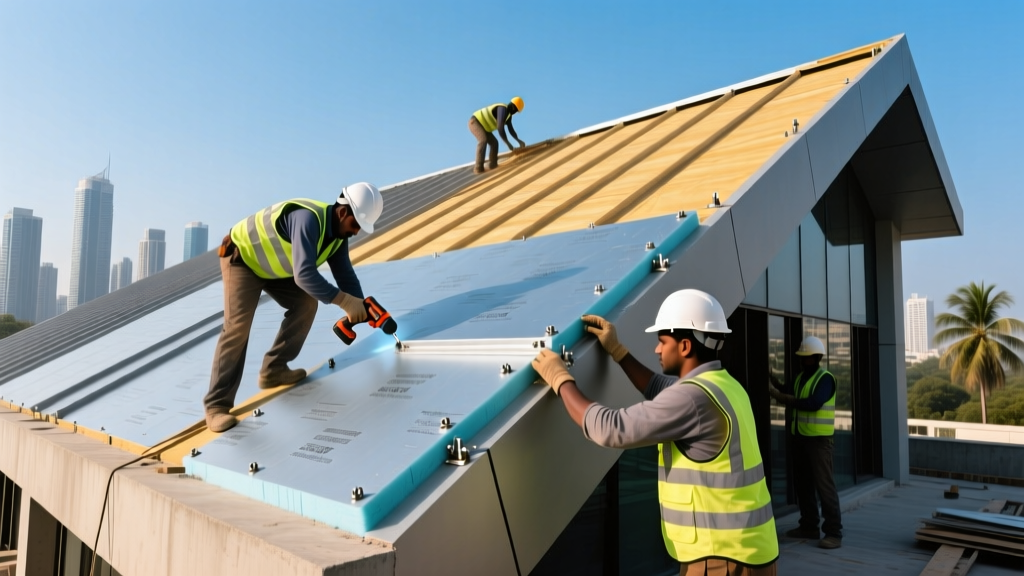
- Scaffolding and Access: For retrofitting external facades on mid-rise buildings (G+4 to G+10), scaffolding rental and labor safety harness requirements can cost ₹25 to ₹40 per sq.ft. of facade area, independent of the insulation material cost.
- Wastage Factors: Standard cutting wastage for rigid boards (XPS/EPS) is 5-7%. However, for complex curved roofs or domed structures, custom cutting pushes wastage to 12-15%. Always order an additional 10% for standard geometries and 18% for complex architectural profiles.
Regional Price Variations Across Major Indian Hubs
The india building insulation material market is highly fragmented geographically. Logistics costs for bulky, low-weight materials like EPS and Glass Wool severely impact final landed prices. Below is a regional cost multiplier matrix based on 2026 freight and localized demand dynamics.
Delhi NCR & North India
Multiplier: 1.0x (Baseline)
Market Driver: Extreme summer peaks (45°C+) drive massive demand for roof and west-wall insulation. High concentration of manufacturing plants in Bhiwadi and Manesar keeps freight costs for EPS and PUF exceptionally low.
Mumbai & Western Corridor
Multiplier: 1.15x
Market Driver: High humidity necessitates closed-cell materials (XPS, PUF) to prevent moisture ingress and mold. Acoustic insulation (Rockwool) commands a premium due to dense urban noise pollution and strict municipal noise ordinances for commercial zones.
Bangalore & South India
Multiplier: 1.08x
Market Driver: Moderate climate reduces residential thermal demand, but the booming IT park and data center sector drives bulk procurement of high-density PUF and specialized HVAC duct insulation (glass wool with FSK facing).
Kolkata & Eastern India
Multiplier: 1.22x
Market Driver: Lower localized manufacturing capacity for specialized chemical foams means XPS and high-grade PUF must be transported from central or western hubs, significantly inflating freight costs for voluminous shipments.
ROI and Payback Periods: Commercial vs. Residential
Specifying high-performance insulation requires justifying the upfront capital expenditure (CapEx) against operational expenditure (OpEx) savings. In 2026, with commercial electricity tariffs in states like Maharashtra and Tamil Nadu averaging ₹9.50 to ₹11.00 per kWh, the payback math is highly favorable.
"For a standard 10,000 sq.ft. commercial office space in Hyderabad, upgrading the roof insulation from 50mm EPS to 75mm XPS increases initial CapEx by approximately ₹6,50,000. However, it reduces annual HVAC cooling loads by 18%, yielding electricity savings of ₹2,40,000 per year. The simple payback period is just 2.7 years, well within the 5-year ROI threshold demanded by institutional developers."
— Energy Audit Framework, Indian Green Building Council (IGBC)
Calculating Your Specific Payback Period
Use this step-by-step framework to model ROI for your specific project:
- Calculate the U-Value Delta: Determine the thermal transmittance (U-value) of the uninsulated assembly versus the insulated assembly. (Target ECBC compliance requires roof U-values of ≤ 0.26 W/m²K).
- Estimate Cooling Load Reduction: Use software like eQUEST or DesignBuilder. As a rule of thumb, every 0.1 W/m²K reduction in the envelope U-value decreases the cooling load by approximately 4-6% in composite Indian climates.
- Monetize the Savings: Multiply the annual kWh saved by the local commercial tariff, factoring in a conservative 5% annual utility rate escalation.
- Factor in HVAC Downsizing: Superior insulation often allows MEP consultants to downsize the chiller or VRF plant capacity by 10-15%, offsetting 20% to 30% of the insulation material cost immediately during construction.
Strategic Procurement Framework for Indian Contractors
To optimize costs without compromising compliance, procurement teams should adopt the following strategies when navigating the india building insulation material market:
1. Mandate BIS Certification in Tenders
Always specify Bureau of Indian Standards (BIS) compliance (e.g., IS 11227 for polystyrene, IS 8183 for mineral wool). Non-certified, unorganized sector materials may appear 20% cheaper but frequently suffer from severe density variations and off-gassing, leading to failed ECBC blower-door tests and costly tear-outs.
2. Leverage Off-Season Procurement
Insulation demand in India peaks between February and May (pre-monsoon roof treatments). Procuring XPS and PUF chemicals during the August-October window can yield 8% to 12% negotiated discounts from major manufacturers looking to clear warehouse volume before the winter quarter.
3. Specify Faced vs. Unfaced Accurately
Do not pay for unnecessary facings. For concealed cavity wall applications, unfaced glass wool is sufficient. However, for exposed under-deck applications in factories, specify aluminum foil (FSK) or PVC-facing to prevent fiber shedding and improve radiant heat reflection, justifying the ₹15/sq.ft. premium.
Frequently Asked Questions (FAQ)
Is GST on insulation materials uniform across India?
Yes, most standard thermal and acoustic insulation materials (EPS, XPS, PUF, Mineral Wool) fall under the 18% GST slab (HSN codes 3921 and 6806). However, some specialized reflective foil barriers or raw chemical components for on-site foaming may attract different rates. Always verify the exact HSN code with your supplier during the tendering phase.
How does the ECBC impact residential insulation costs?
While the ECBC is strictly mandatory for commercial buildings and large residential complexes (connected load >100 kW), state-level adaptations like the Eco-Niwas Samhita (ENS) are pushing thermal performance standards for individual villas and smaller apartments. Complying with ENS typically adds 1.5% to 2.5% to the total civil construction cost but significantly boosts the property's resale value and marketability.
Can I use EPS for roof waterproofing integration?
Standard EPS is highly susceptible to moisture degradation and solvent-based waterproofing chemicals. If integrating insulation directly with a liquid-applied or bituminous waterproofing membrane on a flat terrace, you must specify high-compressive-strength XPS (minimum 300 kPa) or use a protective geotextile separation layer to prevent chemical melting of the EPS substrate.
Written by
Sarah WhitfieldSarah Whitfield is a chartered quantity surveyor (MRICS) and construction cost analyst with 15 years of experience in material pricing, procurement strategy, and project budgeting. She earned her degree in Construction Management from the University of Reading (UK) and has worked on projects ranging from $2M custom homes to $180M mixed-use developments across North America and Europe. Sarah currently leads cost estimating for BuildMat Insight, maintaining a proprietary database of 4,000+ material price points updated quarterly. She is a frequent contributor to RSMeans cost data panels and has presented at the International Cost Engineering Council (ICEC) congress. Based in Denver, CO, Sarah is an avid trail runner and volunteer mentor for Women in Construction.
More from Sarah Whitfield
View all
Wood & Lumber
What Are the Different Types of Wood? A Builder's Guide
Compare structural softwoods, finish hardwoods, and engineered lumber. Analyze Janka ratings, MOE values, and 2026 pricing for construction.
Aug 4, 2026

Walls & Panels
Steel Framing vs Wood Framing: Corrosion and Moisture Defense
Compare steel framing vs wood framing for moisture resistance. Learn about galvanized coatings, condensation risks, and corrosion protection strategies.
Jul 21, 2026

Stone & Masonry
How to Cut Stone Veneer: Wet Saw vs Grinder Comparison
Compare the best tools for cutting stone veneer. We review wet saws, angle grinders, and chop saws to help you achieve clean, chip-free cuts.
Jul 21, 2026