Brick Paint Selection: Mineral vs. Acrylic Formulas Explained
Discover the complete taxonomy of brick paint. Compare mineral, silicate, and acrylic formulas based on vapor permeability, cost, and masonry health.
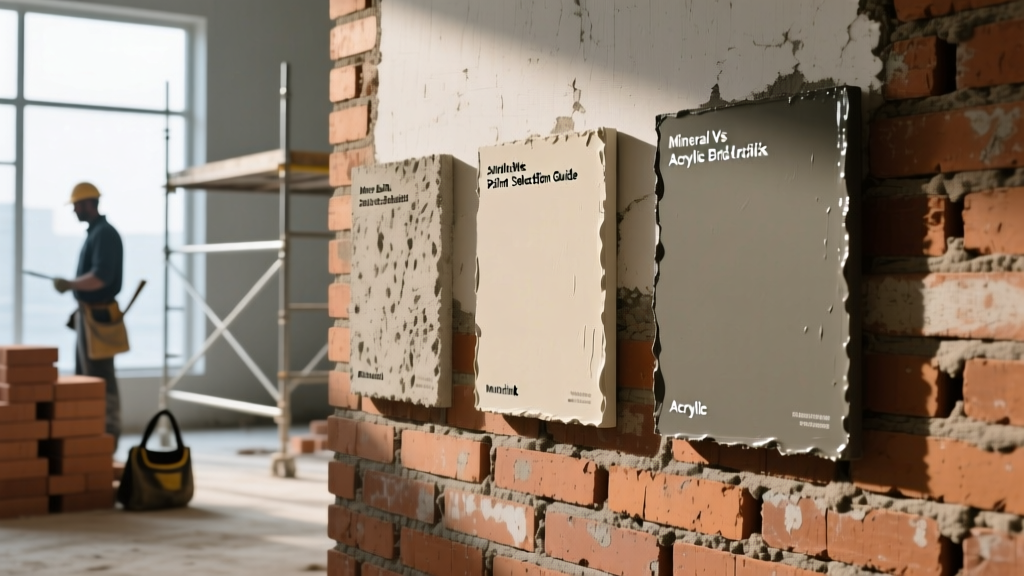
Applying a coating to masonry fundamentally alters its hygrothermal dynamics. Unlike wood or drywall, brick is a porous, mass-wall material designed to absorb and release moisture. The single most common cause of painted brick failure—characterized by peeling, blistering, and catastrophic face spalling—is the selection of a coating that traps moisture inside the wall assembly. Selecting the correct brick paint requires a strict understanding of material taxonomy, vapor permeability, and the chemical bond between the coating and the clay substrate.
The Hygrothermal Imperative: Vapor Permeability (Perms)
Vapor permeability is measured in "perms" (grains of water vapor transmitted through one square foot of material per hour, per inch of mercury vapor pressure difference, tested via ASTM E96). Unpainted, fired clay brick typically exhibits a vapor permeability rating between 10 and 20 perms, allowing it to "breathe" and dry outward after rain events.
When you apply a standard film-forming paint, you risk dropping that permeability to near zero. If water enters the wall through micro-cracks in the mortar joints, roof leaks, or capillary action from the foundation, it must be able to evaporate. If an impermeable paint film blocks this outward drying, hydrostatic pressure builds behind the coating. During freeze-thaw cycles, this trapped water expands, literally blowing the fired face off the brick—a permanent structural defect known as spalling. According to the Brick Industry Association (BIA) Technical Notes, any coating applied to exterior brick must maintain high vapor permeability to prevent moisture entrapment.
Taxonomy of Brick Paint Formulas
The term "brick paint" encompasses several distinct chemical families. Understanding the difference between a surface film and a petrifying coating is critical for material selection.
1. Mineral Silicate Paints (Potassium Silicate)
Mineral silicate paints use a potassium silicate (liquid glass) binder. Instead of forming a plastic film on the surface, the silicate chemically reacts with the free lime (calcium hydroxide) present in the brick and mortar to form calcium silicate hydrate. This process, known as petrification or silicification, integrates the pigment directly into the masonry matrix. Brands like KEIM Mineral Coatings and Romabio dominate this space. Because the coating becomes part of the brick, it maintains the substrate's natural vapor permeability (often retaining 80-90% of the brick's original perm rating) while providing exceptional UV stability and fade resistance.
2. Acrylic and Latex Emulsions
Standard exterior acrylics form a continuous, flexible plastic film over the brick. While high-quality 100% acrylic resins offer excellent color retention and elasticity to bridge hairline mortar cracks, they inherently restrict vapor transmission. Even "breathable" acrylic masonry paints rarely exceed 2 to 4 perms. They are best reserved for interior brick walls or exterior brick in exceptionally dry, arid climates where inward-driven moisture from rain is minimal.
3. Elastomeric Coatings
Elastomeric paints are heavily bodied, high-build acrylic or polyurethane coatings designed to stretch and bridge significant structural cracks. They possess virtually zero vapor permeability (often less than 0.5 perms). While highly effective for below-grade foundation waterproofing or sealing porous Concrete Masonry Units (CMU) in commercial applications, elastomerics should never be applied to residential, above-grade face brick. The National Park Service Preservation Briefs explicitly warn against using impermeable coatings on historic and porous masonry due to the accelerated deterioration they cause.
4. Limewash and Mineral Washes
While technically a wash rather than a high-build paint, limewash (calcium hydroxide suspended in water) is a traditional, highly breathable alternative. As it cures, it absorbs carbon dioxide from the air and carbonates back into limestone (calcium carbonate). It offers a mottled, historic aesthetic and complete vapor permeability, though it requires more frequent reapplication than silicate paints and lacks the opacity of modern architectural coatings.
Formula Comparison Matrix
| Formula Type | Vapor Permeability | Bond Type | Expected Lifespan | Material Cost (2026) |
|---|---|---|---|---|
| Mineral Silicate | High (8-15 perms) | Chemical (Petrification) | 15–25 Years | $90 – $130 / gallon |
| 100% Acrylic | Low (1-4 perms) | Mechanical (Surface Film) | 5–8 Years | $65 – $85 / gallon |
| Elastomeric | None (0.1-0.5 perms) | Mechanical (Thick Film) | 10+ Years (CMU only) | $100 – $150 / gallon |
| Limewash | Very High (20+ perms) | Chemical (Carbonation) | 3–7 Years | $40 – $60 / gallon |
Decision Matrix: Matching Paint to Brick Condition
Choosing the right brick paint requires a diagnostic assessment of the masonry's current state. Follow this framework to avoid catastrophic adhesion and moisture failures.
- Scenario A: Unpainted, New or Historic Brick in Good Condition.
Action: Use a Mineral Silicate paint. The brick has free lime available for the chemical bond, and you preserve the wall's ability to dry outward. Do not use acrylics. - Scenario B: Brick Exhibiting Efflorescence (White Powdery Salt Deposits).
Action: Do not paint. Efflorescence indicates active moisture movement through the wall carrying soluble salts. Painting over it will result in the salts crystallizing behind the paint film, pushing it off the wall within months. Identify and fix the water intrusion source first, then dry-brush the salts. - Scenario C: Brick Previously Painted with Acrylic/Latex.
Action: You are locked into film-forming coatings. Mineral silicate paints will not chemically bond to a plastic acrylic film; they require raw, mineral substrates. You must either strip the existing paint entirely (using chemical masonry strippers, never abrasive sandblasting which destroys the brick's fired crust) or repaint with a high-quality masonry acrylic. - Scenario D: Spalling or Flaking Brick Faces.
Action: Stop. Paint cannot fix structural spalling. The brick faces are delaminating due to freeze-thaw damage or manufacturing defects. Consult a masonry restoration specialist for brick replacement or tuckpointing before considering any coatings.
⚠️ Warning: The Primer Trap
Never apply a standard PVA (polyvinyl acetate) or generic drywall primer to exterior brick. Brick is highly alkaline (pH 9–11), especially when new or freshly tuckpointed. Standard primers will saponify (turn to soap) and fail. If an acrylic topcoat is chosen, you must use an alkali-resistant, masonry-specific primer. If using mineral silicate paint on raw brick, no primer is needed—the silicate requires direct contact with the masonry minerals to petrify.
Application Variables: Climate and Solar Exposure
The geographic location of the structure heavily dictates which brick paint taxonomy is viable. In coastal environments or regions with high wind-driven rain (e.g., the Pacific Northwest or the US Gulf Coast), the risk of moisture penetrating the brick veneer is elevated. In these zones, the outward drying potential is paramount, making mineral silicate paints the only safe choice for above-grade veneers.
Conversely, in high-UV, arid environments like the American Southwest, acrylic paints perform significantly better than they do in humid climates because the lack of ambient moisture reduces the risk of trapping liquid water behind the film. However, even in arid climates, mineral paints offer superior UV resistance; the inorganic mineral pigments in silicate paints do not chalk or fade under intense solar radiation, whereas organic acrylic pigments will eventually degrade and chalk over a 7-to-10-year period.
Cost Breakdown and Long-Term ROI
When evaluating brick paint, initial material cost is a misleading metric. The true cost of masonry coating must factor in surface preparation, application labor, and the lifecycle maintenance.
In 2026, professional masonry painters charge between $4.50 and $7.00 per square foot for a complete mineral silicate application (including pressure washing, alkali-neutralization if necessary, and two coats). A standard acrylic application costs slightly less upfront, typically $3.00 to $5.00 per square foot, because the material is cheaper and application tolerances are more forgiving.
However, the lifecycle ROI heavily favors mineral paints. When an acrylic film fails after 7 years, it does not simply fade; it peels and blisters. Preparing the wall for a new coat requires extensive scraping, wire brushing, and potentially chemical stripping to remove the failed film—labor that can exceed $3.00 per square foot. Mineral silicate paints, by contrast, do not peel. They slowly erode and fade over 20 years. Recoating a mineral-painted brick wall requires only a light power wash and a fresh coat of silicate paint, with zero scraping required, resulting in a 40% to 50% reduction in lifecycle maintenance costs over a 30-year period.
Final Selection Directives
Selecting the right brick paint is an exercise in moisture management, not just aesthetics. For any exterior, above-grade, unpainted brick veneer or solid masonry wall, potassium silicate mineral paints represent the optimal synthesis of durability, color retention, and hygrothermal safety. Reserve acrylics strictly for interior applications or previously painted surfaces where stripping is cost-prohibitive, and banish elastomerics from your residential brick detailing entirely. By aligning the chemical properties of the coating with the physical realities of the clay substrate, you ensure the longevity of both the finish and the masonry itself.