What Heavier a Pound of Bricks or Feathers? Durability Analysis
Explore the physics of what heavier a pound of bricks or feathers, analyzing how material density dictates structural durability and lifespan.

The Physics of the Riddle: Mass vs. Volumetric Footprint
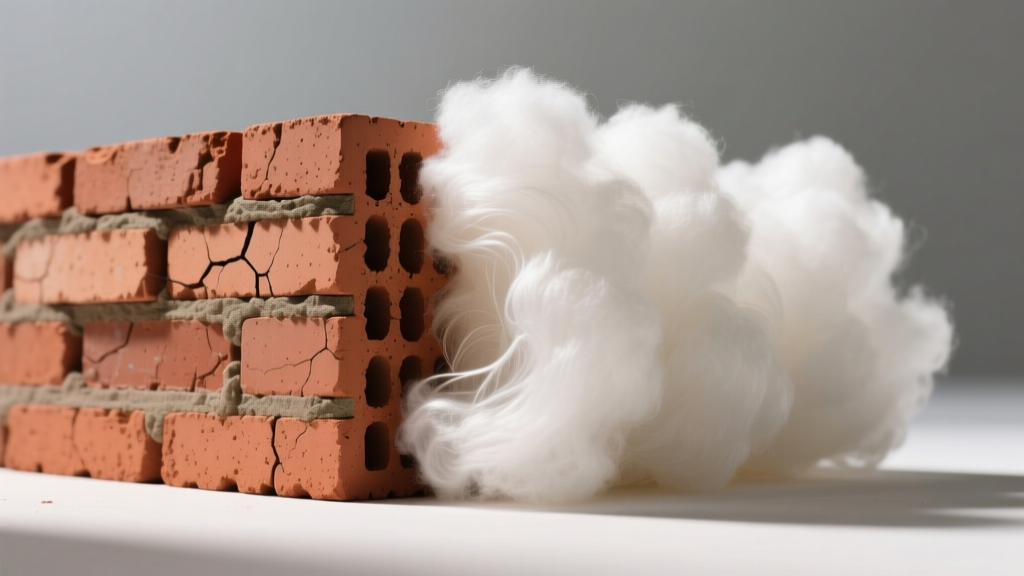
The classic riddle asking what heavier a pound of bricks or feathers is a trick of cognitive bias, intentionally conflating mass with density. From a strict physics standpoint, a pound is exactly 0.453592 kilograms; the mass is identical. However, due to Archimedes' principle of buoyancy, a pound of feathers displaces significantly more air than a pound of bricks. To register exactly one pound of weight on a standard scale in Earth's atmosphere, the feathers must actually possess slightly more mass to counteract the upward buoyant force of the displaced air.
In structural engineering and material science, this divergence between mass and volume is not a parlor trick—it is the fundamental determinant of building durability. When architects and builders evaluate materials, the volumetric footprint (density) of a material dictates its compressive strength, thermal mass, moisture resistance, and ultimate lifespan. Analyzing the durability of high-density ceramics (bricks) versus low-density organic fibers (feathers or their modern construction equivalents, like cellulose and fiberglass) reveals why density remains the ultimate metric for structural longevity.
Density as the Ultimate Durability Metric
Durability in construction is rarely about total weight; it is about how that weight is distributed and how the material's internal matrix resists environmental degradation. Fired clay brick possesses a density ranging from 120 to 150 pounds per cubic foot (pcf). In contrast, lightweight fibrous insulators—the modern functional equivalent of feathers—range from 0.5 to 3.5 pcf. This massive disparity in density directly correlates to mechanical and environmental resilience.
| Material Class | Density (lb/ft³) | Compressive Strength (psi) | Est. Lifespan (Years) | Primary Failure Mode |
|---|---|---|---|---|
| Fired Clay Brick (Grade SW) | 130 - 150 | 4,500 - 8,000+ | 100+ | Mortar joint degradation |
| Aerated Autoclaved Concrete | 25 - 40 | 300 - 900 | 50 - 80 | Impact spalling, moisture |
| Fiberglass Batts (Feather-like) | 0.5 - 1.2 | N/A (Insulator) | 20 - 30 | Compression set, moisture |
| Blown Cellulose Insulation | 1.5 - 3.5 | N/A | 20 - 30 | Settling, mold, rot |
According to the Brick Industry Association (BIA) Technical Notes 9A, the high density of fired clay provides exceptional resistance to mechanical impact and fire, while its low porosity (when properly vitrified) limits water ingress. Lightweight materials, while excellent for thermal resistance (R-value), lack the structural matrix to survive bulk water exposure or physical compression over time.
The "Feather" Failure Mode: Low-Density Material Degradation
Low-density, high-porosity materials have a massive surface-area-to-volume ratio. In construction, when fibrous materials analogous to feathers (such as uncompressed fiberglass or blown cellulose) are exposed to moisture, they suffer catastrophic durability failures. The U.S. Department of Energy notes that wet insulation loses its thermal resistance and structural integrity, often leading to hidden mold growth and wood framing rot.
When low-density insulation gets wet, capillary action draws water deep into the fibrous matrix. Because these materials lack the density to shed water or dry rapidly via thermal mass, they remain saturated. This leads to 'compression set'—the permanent collapse of the material's structure, reducing its R-value by up to 50% and creating a permanent biological hazard within the wall cavity.
High-Density Masonry: ASTM Standards and Freeze-Thaw Survival
The durability of brick is codified in ASTM C62 (Standard Specification for Building Brick). For exterior applications in climates with freezing temperatures, engineers must specify Grade SW (Severe Weathering) brick. Grade SW bricks are manufactured to achieve a high degree of vitrification, resulting in a dense, glass-like internal matrix that limits water absorption.
- Maximum Water Absorption: Grade SW brick must not exceed 17% absorption by the cold water test, ensuring the internal pores remain small enough to prevent bulk water saturation.
- Compressive Strength: Must meet a minimum of 3,000 psi, though most modern structural bricks exceed 5,000 psi.
- Freeze-Thaw Resistance: As detailed in the BIA Technical Notes on Freeze-Thaw Resistance, water expands by 9% when it freezes. The high-density matrix of SW brick prevents the critical saturation level required for ice lenses to form and spall the masonry face.
Conversely, a low-density organic material exposed to the same freeze-thaw cycles would absorb water like a sponge, freezing and expanding until the cellular structure is entirely destroyed.
Thermal Mass and Acoustic Durability
Beyond structural integrity, density dictates environmental durability. Brick possesses a specific heat capacity of approximately 0.22 BTU/(lb·°F). While a pound of bricks and a pound of feathers weigh the same, the brick's high density allows it to store significant thermal energy per square foot of wall space. This creates a 'decrement delay,' slowing heat transfer and reducing the cyclical thermal expansion and contraction that degrades building envelopes over decades.
Acoustically, the Mass Law dictates that sound transmission loss increases by roughly 6 dB for every doubling of mass per unit area. A pound of bricks concentrated into a small, dense wythe provides an STC (Sound Transmission Class) rating that blocks low-frequency structural noise. A pound of feathers, spread across a vast volume, provides negligible acoustic dampening against impact noise, demonstrating that concentrated density is required for long-term environmental isolation.
Actionable Framework: Specifying Materials for 100-Year Lifespans
To maximize building durability in 2026 and beyond, architects must separate materials by their density-driven strengths, utilizing high-density masonry for protection and low-density fibers strictly for controlled thermal management.
- The Base and Plinth (High Density): Specify Grade SW face brick or high-density CMU for the first 12 to 24 inches above grade. This zone is subject to splash-back, snow accumulation, and capillary rise. Low-density materials will fail here within a decade.
- The Cavity Wall Interface (Separation): When pairing brick veneer with lightweight cavity insulation, maintain a strict 2-inch air gap. Use rigid, semi-permeable mineral wool (which bridges the gap between feather-like lightness and brick-like moisture resistance) rather than fiberglass, ensuring any bulk water hitting the brick wythe drains freely without wicking into the insulator.
- Attic and Roof Assemblies (Low Density): Restrict 'feather-like' low-density materials (blown cellulose, fiberglass) to horizontal, gravity-bearing applications in conditioned, dry spaces where they are protected from bulk water and will not suffer compression set from foot traffic or stored loads.
Frequently Asked Questions
Does the weight of a brick wall cause structural settling over time?
Yes, dead loads matter. A standard 4-inch brick wythe adds roughly 40 pounds per square foot (psf) to the structural framing and foundation. While a pound of bricks and a pound of feathers weigh the same, the brick requires heavy-duty steel or reinforced concrete lintels and continuous concrete footings, whereas lightweight framing can be supported by standard dimensional lumber.
Can lightweight materials ever match the durability of brick?
Not in terms of impact or weathering. However, modern aerogels and vacuum insulation panels (VIPs) offer extreme thermal resistance in thin profiles. Yet, these advanced materials are highly sensitive to punctures and moisture, meaning they still require a high-density, durable cladding (like brick or fiber cement) to protect them from the physical environment.
How does efflorescence affect brick durability compared to low-density materials?
Efflorescence is the crystalline deposit of salts left behind when water evaporates from masonry. While mostly aesthetic, severe efflorescence can cause cryptoflorescence (salt crystallization below the brick surface), leading to spalling. Low-density organic materials do not experience efflorescence; instead, they experience biological degradation (mold and rot) under similar moisture conditions.
Written by
Sarah WhitfieldSarah Whitfield is a chartered quantity surveyor (MRICS) and construction cost analyst with 15 years of experience in material pricing, procurement strategy, and project budgeting. She earned her degree in Construction Management from the University of Reading (UK) and has worked on projects ranging from $2M custom homes to $180M mixed-use developments across North America and Europe. Sarah currently leads cost estimating for BuildMat Insight, maintaining a proprietary database of 4,000+ material price points updated quarterly. She is a frequent contributor to RSMeans cost data panels and has presented at the International Cost Engineering Council (ICEC) congress. Based in Denver, CO, Sarah is an avid trail runner and volunteer mentor for Women in Construction.
More from Sarah Whitfield
View all
Wood & Lumber
What Are the Different Types of Wood? A Builder's Guide
Compare structural softwoods, finish hardwoods, and engineered lumber. Analyze Janka ratings, MOE values, and 2026 pricing for construction.
Aug 4, 2026

Walls & Panels
Steel Framing vs Wood Framing: Corrosion and Moisture Defense
Compare steel framing vs wood framing for moisture resistance. Learn about galvanized coatings, condensation risks, and corrosion protection strategies.
Jul 21, 2026

Stone & Masonry
How to Cut Stone Veneer: Wet Saw vs Grinder Comparison
Compare the best tools for cutting stone veneer. We review wet saws, angle grinders, and chop saws to help you achieve clean, chip-free cuts.
Jul 21, 2026