Arctic White Stone Veneer Cost Guide: 2026 Pricing & Installation
Analyze 2026 arctic white stone veneer costs, including material pricing, labor rates, prep work, and hidden expenses for natural and manufactured options.
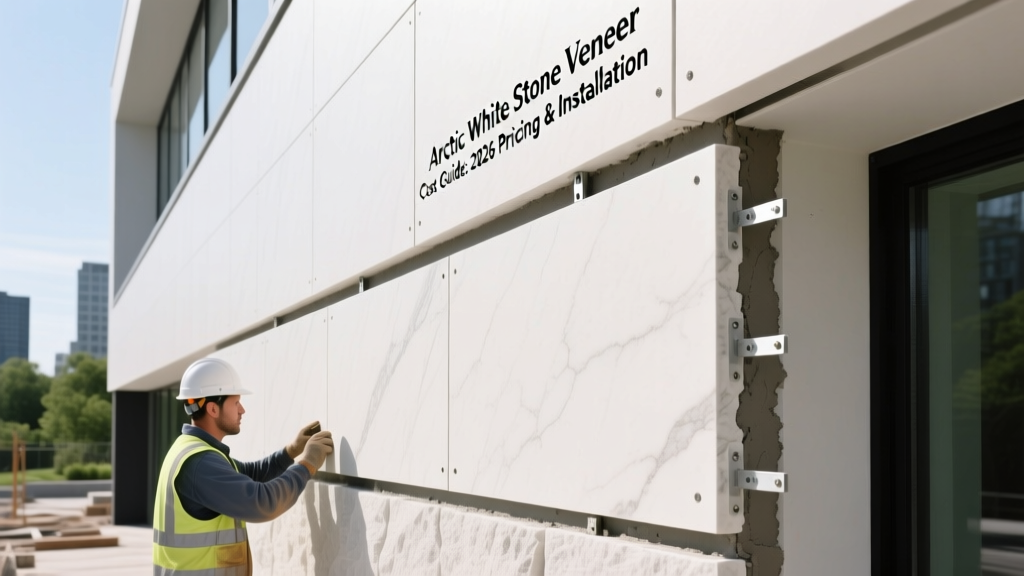
The Financial Reality of Arctic White Stone Veneer
Specifying arctic white stone veneer introduces a premium aesthetic that commands a corresponding premium in both material acquisition and specialized installation. Whether utilizing natural arctic white quartzite, white marble, or high-density manufactured concrete veneer styled to mimic bright stone, the total project cost extends far beyond the per-square-foot price of the stone itself. In 2026, supply chain stabilization has normalized freight surcharges, but skilled masonry labor shortages continue to drive installation rates upward. This analysis breaks down the exact capital requirements, hidden substrate costs, and long-term maintenance liabilities specific to bright white stone profiles.
2026 Quick Cost Snapshot (Per Square Foot)
- Manufactured White Veneer (Material): $8.50 – $14.00
- Natural Arctic Quartzite (Material): $15.00 – $26.00
- Substrate Prep & Lath: $3.50 – $6.00
- Masonry Labor (Installation): $14.00 – $24.00
- Total Installed Cost: $26.00 – $60.00+ per sq. ft.
Material Breakdown: Manufactured vs. Natural White Stone
The term "arctic white" is frequently applied to both natural quarried stone and manufactured architectural veneer. The cost divergence between the two is substantial, driven by quarrying logistics, weight, and structural requirements.
| Feature | Manufactured White Veneer | Natural Arctic Quartzite |
|---|---|---|
| Average Material Cost | $8.50 - $14.00 / sq. ft. | $15.00 - $26.00 / sq. ft. |
| Weight per Sq. Ft. | 8 - 11 lbs. | 13 - 18 lbs. |
| Structural Reinforcement | Rarely required for standard framing | Often requires foundation footing or steel angle shelves |
| Color Consistency | High (batch-controlled pigments) | Low (natural mineral veining and variations) |
| Waste Factor | 5% - 8% | 10% - 15% |
Manufactured stone veneer (MSV) must comply with ASTM C1670 standards for manufactured stone masonry veneer, ensuring adequate compressive strength and freeze-thaw durability. While manufactured options offer significant upfront savings and lighter weight, natural arctic quartzite provides unparalleled depth and UV stability that prevents the micro-fading sometimes seen in older cementitious veneers.
Labor and Substrate Preparation: The Hidden Budget Drivers
Masonry contractors typically charge between $14.00 and $24.00 per square foot for veneer installation, but this rate assumes a perfectly prepared, plumb substrate. Arctic white stone, due to its high contrast, exposes uneven joints and shadow lines far more than darker, variegated stones. Consequently, masons often take 15% to 20% longer to lay white profiles to ensure absolute precision, pushing labor rates toward the higher end of the spectrum.
Mandatory Preparation Costs
Before a single stone is set, the wall assembly must be constructed to manage moisture. Skipping these steps on white stone guarantees catastrophic aesthetic failure.
- Weather-Resistive Barrier (WRB): Two layers of Grade D asphalt felt or a high-grade synthetic wrap ($1.00 - $1.80 / sq. ft.).
- Corrosion-Resistant Metal Lath: Minimum 2.5 lb self-furring galvanized or stainless steel lath ($1.50 - $2.50 / sq. ft.).
- Scratch Coat: A 1/2-inch thick layer of Type S mortar, scored horizontally to provide a mechanical key for the veneer mortar ($1.00 - $1.70 / sq. ft.).
Critical Warning: Never install arctic white stone veneer directly over painted brick, existing drywall, or unprepared concrete block. The substrate must be stripped to the masonry or framed out with a proper drainage plane. Adhesion failure on heavy white quartzite can lead to sudden detachment and severe property damage.
The Efflorescence Risk: Protection Costs for White Stone
The single greatest financial risk when installing bright white stone veneer is efflorescence—the white, powdery crystalline deposit of water-soluble salts that migrates to the stone surface. On gray or tan stone, efflorescence is barely noticeable. On arctic white stone, the mineral deposits from the mortar bed, metal lath rust, or substrate alkalinity will create visible, irregular yellow or gray streaks that ruin the aesthetic.
Budgeting for Efflorescence Prevention
To protect a $15,000 white stone investment, allocate an additional 4% to 6% of the total budget for advanced moisture management and sealing:
- Weep Screeds and Flashing ($2.50 - $4.00 per linear foot): Mandatory at the base of the wall and above all penetrations (windows, doors) to evacuate water before it dissolves salts in the mortar.
- Polymer-Modified Mortar ($45 - $65 per 80lb bag): Standard Type N or Type S mortar contains high levels of Portland cement, which is highly alkaline. Using a specialized, low-alkali veneer setting mortar reduces the salt source.
- Penetrating Siloxane Sealer ($0.75 - $1.50 per sq. ft.): Applied 30 days after installation (once the mortar has fully cured and off-gassed moisture), a breathable silane/siloxane sealer prevents liquid water ingress while allowing water vapor to escape. Do not use film-forming acrylic sealers, which trap moisture and cause spalling in freeze-thaw climates.
Regional Labor and Material Variances
Geography heavily influences the final ledger. In the Northeast and Pacific Northwest, where freeze-thaw cycles dictate stringent masonry codes and union labor prevails, expect installed costs for natural arctic quartzite to exceed $55.00 per square foot. Conversely, in the Sunbelt (Texas, Florida, Arizona), where foundation footing requirements for veneer are less restrictive due to absent frost lines, and non-union masonry labor is more abundant, total installed costs for manufactured white veneer can drop to $22.00 - $28.00 per square foot.
Freight costs also skew the budget. Natural arctic white quartzite is predominantly quarried in specific regions (such as the Appalachian belt or imported from Brazil/India). If your project is located far from these distribution hubs, LTL (Less Than Truckload) freight surcharges can add $1.50 to $3.00 per square foot to the material cost alone. Manufactured stone, produced by regional plants across the country, largely circumvents this penalty.
Decision Matrix: Which Arctic White Veneer Should You Specify?
Use this framework to align your budget with the correct material specification:
- Choose Manufactured Veneer If: Your budget is capped below $35/sq. ft. installed, you are cladding an upper-story wood-framed wall where weight is a structural concern, or you require absolute color uniformity for a large commercial facade.
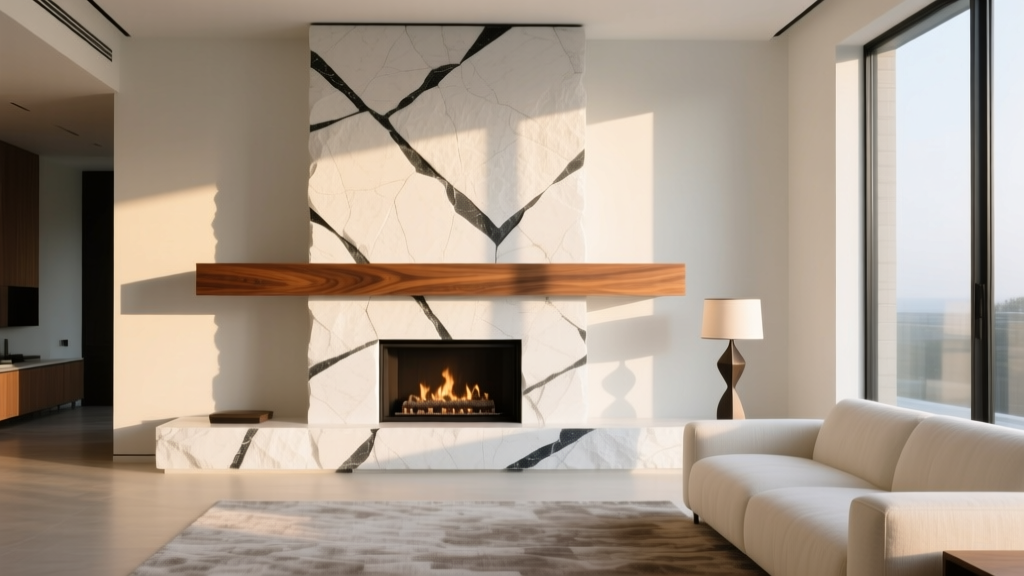
- Choose Natural Quartzite If: You are designing a high-end residential interior feature wall, a luxury exterior entryway, or a landscape retaining wall face where UV stability, natural depth, and permanence justify the $50+ per square foot investment.
Frequently Asked Cost Questions
Does arctic white stone veneer increase home appraisal value?
Yes, but with diminishing returns. According to data tracked by the National Association of Home Builders, premium exterior cladding upgrades generally recoup 70% to 80% of their cost at resale. However, white stone is a highly polarizing, trend-dependent aesthetic. While it commands a premium in contemporary and modern-farmhouse architectural styles, it may not yield a higher ROI than neutral, variegated fieldstone in traditional markets.
Can I install white stone veneer myself to save on labor?
DIY installation saves the $14-$24/sq. ft. labor cost, but it introduces massive risk. White stone requires meticulous mortar joint tooling; dropping standard gray mortar on the face of bright white stone during installation will result in permanent staining that requires expensive professional acid washing or stone replacement. Furthermore, improper WRB and lath installation voids all manufacturer warranties and violates local building codes.
How much does it cost to clean and maintain white stone veneer?
Routine maintenance is minimal but specific. Annual cleaning requires a low-pressure wash (under 800 PSI) with a specialized, non-acidic masonry cleaner. Acidic cleaners (like muriatic acid) will etch natural white marble or quartzite and degrade the cement matrix of manufactured stone. Budget approximately $150 to $300 annually for professional soft-washing, or $40 for DIY cleaning solutions. Reapplication of the siloxane sealer is required every 5 to 7 years, costing roughly $0.80 per square foot if hired out.
Written by
Elena RodriguezElena Rodriguez is a civil engineer and technical writer specializing in concrete technology, masonry systems, and ASTM/ACI compliance. She earned her B.S. in Civil Engineering from Texas A&M University and spent a decade at a materials testing laboratory, performing over 2,000 concrete compressive strength tests and masonry prism evaluations. Elena is an ACI-certified Field Testing Technician (Grade I) and a member of ASTM Committee C12 on Natural Building Stone. She currently consults on forensic engineering cases involving concrete failures and moisture intrusion. Based in San Antonio, TX, Elena is a proud member of the Society of Women Engineers (SWE) and coaches her daughter's FIRST Robotics team.
More from Elena Rodriguez
View all
Walls & Panels
Cost Analysis: Light Gauge Steel Framing Advantages and Disadvantages
Evaluate light gauge steel framing advantages and disadvantages through a strict cost analysis lens, comparing material, labor, and lifecycle expenses.
Aug 4, 2026

Walls & Panels
Gypsum Board Types: Exact Specifications, Thickness & Dimensions
Compare standard, Type X, and moisture-resistant gypsum board types. Get exact specifications, thicknesses, dimensions, and ASTM standards for your project.
Aug 4, 2026

Fire Resistance
Best Fire-Resistant Outdoor Decking Materials: 2026 Buyer Guide
Discover the best fire-resistant outdoor decking materials for 2026. Compare Class A PVC, aluminum, and hardwood options for WUI compliance and safety.
Aug 4, 2026