Carrara Marble Maintenance: Cleaning, Stain & Etch Guide
Master Carrara marble maintenance with our expert playbook. Learn pH-safe cleaning, poultice stain removal, etch repair, and sealing protocols.
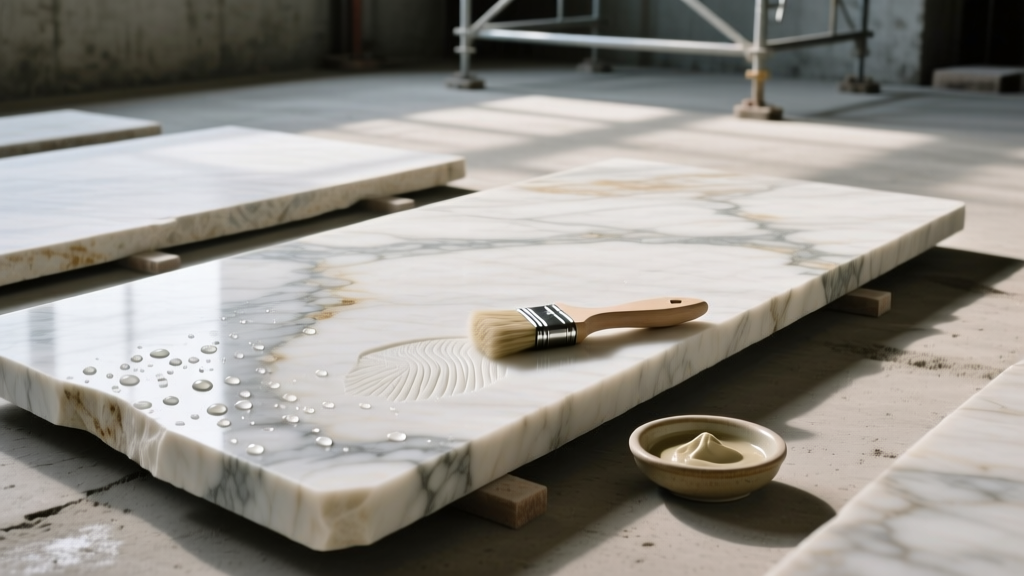
The Calcite Vulnerability: Why Carrara Demands Specific Care
Carrara marble is geologically classified as a calcite-based stone, composed primarily of calcium carbonate (CaCO3). On the Mohs hardness scale, it registers between 3 and 4, making it significantly softer and more chemically reactive than granite or quartzite. This geological reality dictates a strict maintenance playbook: standard household cleaners will actively degrade the stone's surface.
Because calcium carbonate reacts violently with acidic compounds, exposure to everyday substances like lemon juice, tomato sauce, or vinegar-based cleaners causes an immediate chemical reaction. This dissolves the microscopic crystalline structure of the stone, resulting in permanent dull spots known as etch marks. Furthermore, Carrara's natural porosity (typically ranging from 0.5% to 1.5% by volume) allows oil and organic pigments to penetrate the surface if left unsealed.
Critical Distinction: Etching vs. Staining
Etching is a chemical burn. It alters the physical texture of the stone, leaving a dull, matte spot that feels slightly rough or depressed to the touch. Sealers cannot prevent etching.
Staining occurs when a foreign pigment (wine, oil, coffee) penetrates the stone's microscopic pores. Impregnating sealers are designed specifically to buy you time to wipe up spills before they stain.
Daily & Weekly Cleaning Protocols
Routine cleaning of Carrara marble requires strict pH management. You must only use neutral or slightly alkaline cleaners with a pH between 7.0 and 10.0. Acidic cleaners (pH below 7) will etch the surface, while highly alkaline cleaners (pH above 10) can strip topical polishes and degrade the impregnating sealer over time.
| Cleaning Goal | Approved Products (pH 7-10) | Banned Products & Consequences |
|---|---|---|
| Daily Dust & Debris | Dry microfiber mop, untreated dust mop | Brooms with stiff bristles (will scratch the Mohs 3 surface) |
| Weekly Washing | StoneTech Daily Clean, Granite Gold Daily Cleaner, Simple Green Stone | Vinegar, Windex, bleach, ammonia (causes immediate etching and sealer degradation) |
| Spill Mitigation | Blot immediately with a soft cotton cloth or paper towel | Wiping or rubbing (spreads the acidic/oily spill across a wider surface area) |
According to the Natural Stone Institute, the mechanical action of wiping a spill can push acidic liquids deeper into the stone's fissures. Always blot spills from the outside in to contain the affected area.
The Poultice Method: Extracting Deep Stains
When a spill bypasses the sealer and penetrates the Carrara, surface cleaning will fail. You must use a poultice—a thick, absorbent paste that draws the stain out of the stone's pores via capillary action as the solvent evaporates.
Formulating the Poultice
- For Oil-Based Stains (grease, cooking oil, cosmetics): Mix diatomaceous earth or kaolin clay with pure acetone to form a thick peanut-butter-like paste.
- For Organic Stains (wine, coffee, tea, fruit): Mix the clay powder with 12% hydrogen peroxide. (Do not use standard 3% drugstore peroxide; it lacks the oxidative strength to break down deep organic tannins).
Step-by-Step Extraction Protocol
- Prep the Area: Clean the stained surface with a pH-neutral cleaner and let it dry completely.
- Apply the Paste: Spread the poultice over the stain using a plastic putty knife. Ensure the layer is at least 1/4-inch to 1/2-inch thick, extending one inch beyond the stain's visible edges.
- Seal and Vent: Cover the poultice with plastic wrap and tape the edges down with painter's tape. Poke 4 to 6 small holes in the plastic wrap to allow controlled evaporation.
- The Waiting Period: Leave the poultice undisturbed for 24 to 48 hours. The plastic wrap forces the solvent into the stone to break down the stain, while the slow evaporation through the holes pulls the dissolved pigment back into the clay.
- Removal: Remove the plastic wrap and allow the clay to dry completely into a hard, crusty powder. Scrape it off gently with a plastic scraper and rinse with distilled water.
Restoring Etch Marks: Polished vs. Honed Finishes
Because etching is physical damage to the stone, no liquid cleaner can fix it. The repair method depends entirely on the factory finish of your Carrara marble.
Repairing Polished Carrara
Polished Carrara achieves its mirror-like shine through mechanical abrasion up to 3,000-grit, followed by chemical polishing. To repair a localized etch mark, you must re-polish the calcium carbonate crystals.
Use a specialized marble polishing powder containing tin oxide, such as MB Stone Care Etch Remover (approximately $35 per pint). Apply a small amount of the powder to the etch mark, add a few drops of water to create a slurry, and buff vigorously with a white nylon scrub pad or a low-speed orbital polisher for 2 to 3 minutes. Wipe clean and assess the gloss reflection. Repeat if necessary.
Repairing Honed Carrara
Honed Carrara has a matte, satin finish. Polishing powders will ruin this finish by creating a localized glossy spot. Instead, you must mechanically re-hone the etched area to match the surrounding grit level. Most honed Carrara is finished at a 200 to 400-grit level.
Use a 400-grit diamond hand pad or a specialized stone honing pad. Keep the surface wet with distilled water and rub the pad in a circular motion over the etch mark, feathering your strokes outward into the surrounding undamaged stone to blend the texture. As noted by experts at This Old House, blending the edges is critical; otherwise, you will replace a dull etch mark with a visibly smooth, mismatched depression.
Cost Analysis: DIY vs. Professional Restoration
DIY Etch Repair: $35 - $60 for commercial etch removers or diamond pads. Requires significant elbow grease and carries a risk of uneven blending if not feathered correctly.
Professional Restoration: Marble restoration specialists typically charge between $4.00 and $8.00 per square foot to machine-hone and re-polish an entire countertop or floor section. For severe, widespread etching across a large kitchen island, hiring a certified stone restorer yields vastly superior optical clarity.
Sealing Cadence: The Water Drop Test
Impregnating sealers (like StoneTech BulletProof or Tenax Ager) do not sit on the surface; they penetrate the pores and line them with hydrophobic resins. Over time, friction, cleaning, and UV exposure degrade these resins. Carrara marble in high-traffic kitchens typically requires resealing every 12 to 18 months, while bathroom vanities may go 2 to 3 years.
Do not rely on a calendar schedule. Rely on the Water Drop Test:
- Place a 3-inch puddle of room-temperature water on the Carrara surface in a high-use zone (e.g., near the sink or stove).
- Start a timer for 15 minutes.
- Wipe the water away and inspect the stone.
- If the stone remains its original color, the sealer is intact. If a dark, damp ring remains, the stone's pores are exposed, and it is time to apply a fresh coat of penetrating sealer.
Carrara Marble Maintenance FAQs
Can I use a steam mop on Carrara marble floors?
No. Steam mops operate at temperatures exceeding 212°F (100°C) and force moisture under pressure. The extreme thermal shock can cause microscopic fissures in the calcite to expand, leading to spalling or pitting. Furthermore, the pressurized steam can drive moisture behind the stone, degrading the thinset mortar and causing efflorescence (white salt deposits) to bloom on the surface.
Does a high-quality sealer make Carrara marble stain-proof?
No sealer makes natural stone completely stain-proof; they only make it stain-resistant. An impregnating sealer reduces the stone's surface tension, causing liquids to bead up rather than absorb. This buys you a window of time—usually 15 to 30 minutes—to wipe up a spill before it penetrates. If an oily substance is left on sealed Carrara overnight, it will eventually bypass the sealer and stain the stone.
How do I remove hard water spots around a Carrara vanity sink?
Hard water spots are mineral deposits (calcium and magnesium) left behind by evaporating tap water. Because you cannot use acidic descalers (like CLR or vinegar) on marble, you must remove them mechanically. Use a dry, single-edge razor blade held at a 45-degree angle to gently scrape the mineral crust off the polished surface. Follow up by buffing the area with a dry microfiber cloth and a light application of stone polish to restore the hydrophobic barrier.