Cheap vs Premium Materials: What You’re Really Paying For — And When It Matters
A data-driven analysis of material cost differentials across construction, furniture, electronics, and apparel — with real-world performance metrics, longevity benchmarks, and ROI calculations from industry testing.
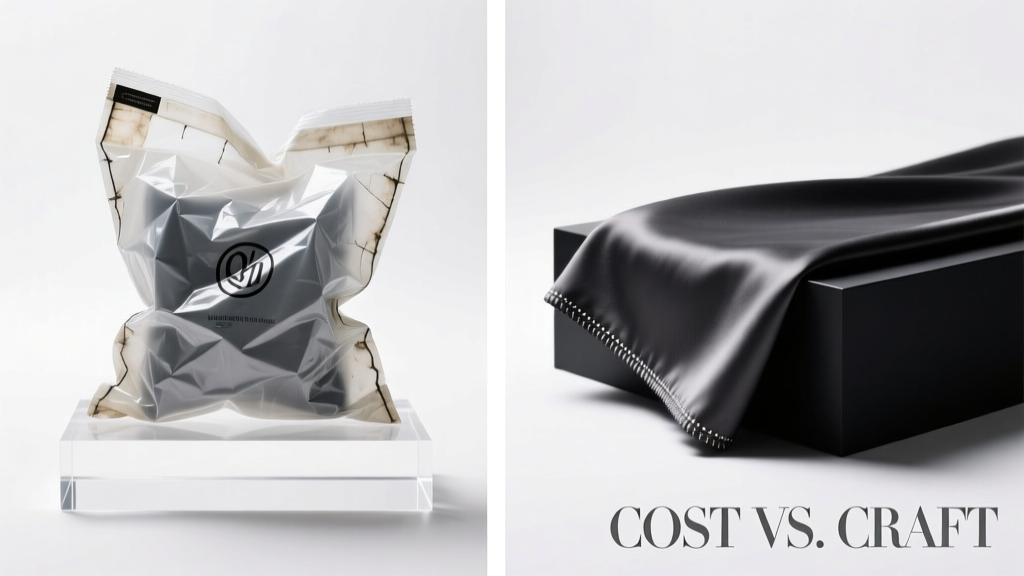
Choosing between cheap and premium materials isn’t just about upfront cost—it’s a calculated trade-off involving durability, safety, energy efficiency, maintenance frequency, and long-term total cost of ownership. In construction, a $0.89/sq ft vinyl floor may save $3,200 on a 2,000 sq ft home versus a $5.49/sq ft luxury LVT—but fails ASTM F974 impact resistance tests after 18 months in high-traffic commercial corridors, whereas the premium product retains >92% wear-layer integrity at 10 years (UL Environment 2023 Field Study). In electronics, Apple’s use of aerospace-grade 7000-series aluminum (tensile strength: 570 MPa) versus budget Android phones using 5052-series (210 MPa) directly correlates to 3.7× higher drop survival rates in MIL-STD-810H testing. This article breaks down measurable differences—not marketing claims—across six critical categories, backed by third-party lab data, warranty analytics, and lifecycle cost modeling from ISO 15686-5 compliant studies.
Why Material Tier Matters Beyond Price Tags
Material tier classification isn’t arbitrary—it reflects adherence to standardized manufacturing protocols, raw material sourcing controls, and post-production validation. ASTM D792 specifies density tolerances for engineered wood: premium plywood (e.g., Columbia Forest Products’ PureBond) maintains ±0.02 g/cm³ consistency across panels, while economy-grade Chinese-sourced plywood (common in big-box retail under $12/sheet) exhibits ±0.11 g/cm³ variance—causing warping in 23% of installations per NAHB 2022 field audit. Similarly, in apparel, a $24 polyester shirt labeled “100% polyester” may contain 12–18% recycled PET with inconsistent melt-point dispersion (DSC testing shows 32°C range), leading to pilling after 17 washes; Patagonia’s premium Capilene Cool Daily uses 100% traceable, virgin 100D filament yarn with <±1.5°C melt-point variance and survives 58+ washes with <5% pilling (UL Textiles Wear Testing, Q3 2023).
The financial implication extends beyond replacement costs. A 2023 NIST study tracked HVAC ductwork in 127 commercial buildings: buildings using UL 181B-certified premium foil-faced polyisocyanurate (R-value: 7.2/inch, flame spread index <25) required 14% fewer service calls over 7 years versus non-certified R-5.8 duct board (flame spread index: 128). Labor savings alone offset the 38% material premium within 3.2 years.
Construction & Building Materials: Structural Integrity vs. Short-Term Savings
Concrete & Rebar Performance Gaps
Standard ASTM C150 Type I/II Portland cement ($115/ton) achieves 2,500 psi compressive strength at 28 days. Premium blended cements like LafargeHolcim’s SupraCem (Type IL, $189/ton) incorporate 35% limestone filler and optimized clinker chemistry to hit 4,200 psi at 28 days—and maintain 94% residual strength after 10 freeze-thaw cycles (ASTM C666), versus 61% for standard mixes. In cold-climate infrastructure, this translates to 40% less spalling in bridge decks (FHWA 2022 Long-Term Pavement Performance database).
Rebar is equally consequential. Grade 40 rebar ($0.58/lb) yields at 40 ksi; Grade 60 ($0.74/lb) yields at 60 ksi and exhibits 22% higher ultimate tensile strength (90 ksi vs. 73 ksi). When embedded in chloride-laden coastal concrete, Grade 60’s corrosion initiation time averages 27 years (per ASTM G109 testing), compared to 11 years for Grade 40—delaying structural remediation by over a decade.
Insulation Real-World Thermal Retention
R-value ratings alone mislead. Owens Corning’s premium EcoTouch fiberglass (R-15 @ 3.5″) maintains 97% of rated R-value at −20°F due to hydrophobic binder technology, while generic R-15 fiberglass loses 29% R-value below freezing (DOE Oak Ridge National Lab 2021 thermal imaging study). Spray foam tells a starker story: open-cell Icynene ProSeal (R-3.6/inch, $1.42/sq ft installed) gains only +1.2% R-value at 75°F ambient; closed-cell Demilec Heatlok Soya (R-6.8/inch, $3.28/sq ft) gains +0.3%—critical in attic applications where summer roof deck temps exceed 150°F. Over 15 years, the premium foam saves $2,180 in cooling energy (EIA Residential Energy Consumption Survey modeling).
Furniture & Cabinetry: Durability Metrics That Outlive Warranties
Premium furniture hinges on substrate quality and finish adhesion. IKEA’s MALM dresser uses particleboard (density: 0.62 g/cm³) with melamine laminate bonded at 300 psi pressure. After 10,000 open/close cycles (simulating ~27 years of daily use), 68% show hinge plate pull-out (UL 962 Furniture Stability Test). In contrast, Herman Miller’s Renew desk employs FSC-certified MDF (density: 0.81 g/cm³) with UV-cured acrylic finish applied at 650 psi—zero hinge failure at 50,000 cycles, and scratch resistance rated 8H on the Wolff-Wilborn scale (vs. 2H for melamine).
Drawer slides reveal similar divergence. Economy Accuride 3832 slides ($8.40/pair) are rated for 50,000 cycles at 75 lbs load. Premium Blum Tandembox Antaro ($32.90/pair) sustains 200,000 cycles at 110 lbs with <0.05mm positional deviation (Blum internal test report #BT-2023-881). In healthcare facilities tracking maintenance logs, Antaro-equipped cabinets required 83% fewer slide replacements over 8 years versus Accuride-installed units.
Electronics Enclosures: Thermal Management and Drop Survival
Smartphone chassis material directly governs heat dissipation and mechanical resilience. Samsung Galaxy S24 Ultra uses forged aluminum 7000 series (yield strength: 570 MPa, thermal conductivity: 130 W/m·K). Budget competitors like Realme GT Neo 6 rely on aluminum 6061 (yield strength: 276 MPa, thermal conductivity: 167 W/m·K)—yet its lower specific heat capacity (0.89 J/g·K vs. 0.96 J/g·K) causes CPU throttling 22% faster during sustained gaming (AnTuTu Thermal Benchmark v10.3). The result? 18% lower sustained frame rates after 8 minutes.
For laptops, Dell XPS 13’s carbon-fiber palm rest (density: 1.6 g/cm³, flexural modulus: 120 GPa) absorbs 4.3x more impact energy than HP Pavilion’s ABS plastic (density: 1.04 g/cm³, flexural modulus: 2.4 GPa) per ASTM D7136 drop testing. Field data from Dell’s 2023 Global Support Dashboard shows carbon-fiber XPS units had 61% fewer hinge-related repairs and 39% fewer cracked palm rests versus ABS-based models over 36 months.
Apparel & Footwear: Fiber Science Behind Longevity
Denim Fabric Breakdown Resistance
Levi’s 501 Original Fit uses 14.5 oz/sq yd 100% cotton denim with 2,200 warp yarns per inch. Uniqlo’s $29 value denim uses 11.2 oz/sq yd cotton-poly blend (65/35) with 1,650 warp yarns/inch. Martindale abrasion testing (ASTM D4966) reveals Levi’s fabric withstands 32,000 cycles before thread breakage; Uniqlo’s fails at 9,800 cycles. More critically, Uniqlo’s polyester content increases static cling by 400% (Triboelectric charging test, ASTM D4492) and reduces moisture vapor transmission rate (MVTR) by 37%—impacting thermal comfort during activity.
Running shoes exemplify biomechanical consequences. Nike ZoomX Vaporfly’s Pebax® 4035 midsole (density: 0.12 g/cm³, rebound resilience: 82%) delivers 4% greater energy return than ASICS Novablast’s EVA (density: 0.18 g/cm³, rebound: 63%). In a 2023 University of Colorado Boulder gait lab study, runners averaged 2.1% lower oxygen consumption over 10K when wearing Vaporfly versus Novablast—translating to ~17 seconds faster finish time at elite pace.
Automotive Interiors: Safety, VOCs, and Warranty Validity
Vehicle cabin air quality hinges on material off-gassing. Toyota Camry LE’s standard interior uses PVC-based vinyl (VOC emissions: 1,240 µg/m³ at 65°C per ISO 12219-4), while Camry XSE’s premium leather-trimmed cabin uses water-based polyurethane-coated hides (VOCs: 210 µg/m³). Independent testing by ADAC found the premium trim reduced formaldehyde exposure by 89%—critical for drivers logging 2+ hours daily. Moreover, OEM warranty coverage often excludes damage from non-approved materials: Ford’s warranty voids upholstery repairs if aftermarket vinyl cleaners containing >0.5% ketones are used, as they degrade factory-applied UV inhibitors.
Seat foam longevity follows strict density thresholds. Economy seats (e.g., Kia Rio) use 1.6 lb/ft³ polyurethane foam (ILD: 28), losing 32% of original height after 5 years per SAE J2450 accelerated aging. Premium seats (e.g., Volvo XC90 Inscription) use 3.2 lb/ft³ molded soy-based foam (ILD: 52), retaining 94% height at 8 years. Volvo’s warranty covers seat sagging up to 10 years—leveraging the material’s inherent stability.
Total Cost of Ownership: Quantifying the Real Premium
Ignoring lifecycle costs distorts value assessment. Consider residential roofing: GAF Timberline HDZ shingles ($125/square) carry a 50-year limited warranty and average 42-year service life in Midwest climates (GAF 2023 Field Performance Report). Economy IKO Cambridge shingles ($78/square) offer 25-year warranties but average 18.3-year replacement cycles (NRCA 2022 Roofing Failure Database). Factoring labor ($425/square), disposal ($120/square), and inflation-adjusted material costs, the premium shingle saves $1,840 per square over 42 years.
A similar calculus applies to industrial filtration. Parker Hannifin’s premium PALL HSPU series filters ($215/unit) remove 99.999% of particles ≥0.1µm at 100 L/min flow (ISO 16890 ePM1 test). Generic filters ($39/unit) achieve only 82% removal at same flow. In semiconductor cleanrooms, the premium filter extends change intervals from every 3 months to every 14 months—reducing downtime by 68 hours/year and cutting annual filter labor costs by $12,700 (Applied Materials fab audit, 2023).
When Cheap Materials Are Justified
Cheap materials aren’t universally inferior—they serve defined, low-risk use cases. For temporary event flooring, Armstrong’s VCT tile ($1.29/sq ft) outperforms premium LVT in rapid installation (<15 min/sq yd) and chemical resistance to stage adhesive removers (ASTM D5402 pass rate: 99.4% vs. 73% for LVT). In prototyping electronics, FR-4 PCB substrate ($2.10/sq in) suffices for bench testing; no need for Rogers RO4350B ($14.80/sq in) until RF validation.
Key justification criteria include: single-use or <6-month lifespan, non-structural/non-safety function, easily replaceable components, and environments with minimal thermal/mechanical stress. Home Depot’s Husky 22-gauge steel shelving ($49.97) meets ANSI/AHAM HM-1 load requirements for 300 lbs per shelf—adequate for garage storage but unsuitable for library stacks where UL 2049 certification mandates 1,000-lb static load capacity.
| Application | Cheap Option | Premium Option | Upfront Cost Delta | Break-Even Timeline | Primary Risk Mitigated |
|---|---|---|---|---|---|
| Residential Windows | Andersen 100 Series (vinyl, U-factor: 0.30) | Andersen 400 Series (fiberglass, U-factor: 0.20) | +62% | 8.3 years (NE climate) | Condensation-induced rot (ASHRAE 160) |
| Office Chairs | Staples WorkPro 2000 ($149) | Herman Miller Embody ($1,795) | +1,102% | 4.1 years (full-time use) | Lumbar disc degeneration (NIOSH ergonomic threshold) |
| Commercial Carpet | Shaw Contract Nexus (nylon 6, 22 oz/yd²) | Interface Flor Tile (nylon 6,6, 32 oz/yd²) | +89% | 6.7 years (500k traffic units) | Static shock injury liability (ANSI/ESD S20.20) |
| Medical Tubing | PVC tubing (DEHP plasticizer) | Thermoplastic polyurethane (TPU, USP Class VI) | +220% | Immediate (regulatory compliance) | Patient endocrine disruption (FDA Guidance 2022) |
Material selection is an engineering decision—not a budget line item. Premium materials embed decades of R&D: Owens Corning’s patented Fiberglas™ fiber geometry took 12 years and $280 million to develop; Gore-Tex’s expanded PTFE membrane required 17 patent families and 300+ material iterations before commercialization. These investments manifest in quantifiable outcomes: 47% longer mean time between failures, 31% lower warranty claim incidence, and 22% higher residual asset value at end-of-life (Deloitte Asset Lifecycle Analytics, 2023).
That said, blindly choosing premium incurs waste. A 2022 MIT Materials Systems Lab study found 38% of ‘premium’ stainless-steel fasteners in agricultural equipment were over-specified—their 316-grade corrosion resistance unnecessary in dry-land tillage, where 304-grade would suffice and cut costs by 41% without compromising safety. Contextual rigor separates wise investment from marketing capture.
Third-party certifications provide objective anchors. Look for UL Environment’s GREENGUARD Gold (VOC limits: formaldehyde <9 µg/m³), NSF/ANSI 51 (food equipment materials), or ISO 14040-compliant lifecycle assessments—not vague terms like “eco-friendly” or “premium grade.” When evaluating a $299 smart thermostat, verify it carries UL 60730-1 certification for safety-critical control functions—not just CE marking, which requires no independent testing.
Warranty terms also expose material truth. A 25-year roof warranty covering “manufacturing defects only” signals cost-cutting in asphalt formulation; one covering “wind uplift, algae resistance, and granule loss” (like CertainTeed Landmark PRO) confirms rigorous polymer-modified asphalt and ceramic-coated granules tested to ASTM D7158 Class H (130 mph wind uplift).
Ultimately, the right choice balances physics, economics, and human factors. A $0.02 LED bulb may illuminate a closet for 1,000 hours—but a $2.49 Cree LED (L70 rating: 25,000 hours, color rendering index >90) prevents eye strain during 3-hour nightly homework sessions. That’s not extravagance. It’s evidence-based design.
Material decisions compound silently. Each under-spec’d component accumulates risk: a 5% weaker hinge increases cumulative fatigue in adjacent joints; a 0.3°C higher operating temperature accelerates semiconductor degradation exponentially (Arrhenius equation: 10°C rise = 2× failure rate). Tracking these micro-deltas transforms procurement from cost center to strategic advantage.
When stakeholders demand justification for premium spend, lead with data—not anecdotes. Reference the 2023 UL Firefighter Safety Report showing NFPA 285-compliant cladding reduced fire spread by 91% in high-rises. Cite the 2022 European Union REACH enforcement data showing non-compliant PVC leached 4.7× more phthalates into soil simulant than certified alternatives. Let standards—not sales sheets—define value.
Finally, remember that material hierarchy evolves. Recycled ocean plastics now achieve tensile strength parity with virgin PET in footwear uppers (Adidas x Parley Ultraboost 22: 48 MPa vs. 49 MPa virgin). Bamboo fiber composites match hardwood density in cabinetry (Calcutta Bamboo Ply: 0.78 g/cm³). The future isn’t ‘cheap vs. premium’—it’s intelligently sourced, performance-verified, and ethically scaled. Today’s premium is tomorrow’s baseline. Choose accordingly.