Stone Veneer Siding Cost Per Square Foot: 2026 Pricing and ROI Guide
Discover the true cost of stone veneer siding in 2026. Break down material, labor, and hidden expenses, plus compare manufactured vs. natural stone ROI.

The Real Cost of Stone Veneer Siding: Beyond the Price Tag
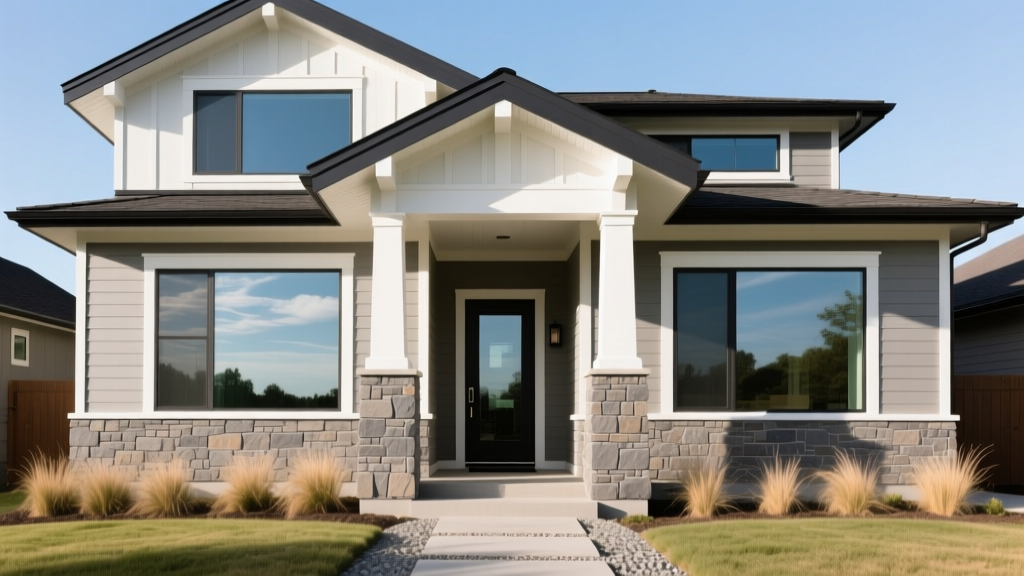
Installing stone veneer siding transforms a home's exterior, but the financial commitment extends far beyond the per-square-foot material tag. In 2026, homeowners and contractors must navigate fluctuating masonry labor rates, mandatory weather-resistive barrier (WRB) upgrades, and structural load considerations. While the aesthetic appeal of stone is undeniable, a precise cost analysis requires dissecting the project into material acquisition, specialized labor, substrate preparation, and long-term return on investment.
Quick Cost Summary: 2026 National Averages
- Manufactured Stone Veneer (Material): $6.50 – $12.00 per sq. ft.
- Natural Stone Veneer (Material): $15.00 – $32.00 per sq. ft.
- Professional Masonry Labor: $12.00 – $22.00 per sq. ft.
- Total Installed Cost (Manufactured): $18.50 – $34.00 per sq. ft.
- Total Installed Cost (Natural): $27.00 – $54.00 per sq. ft.
Note: Prices reflect 2026 market rates and exclude scaffolding, demolition of existing siding, and complex architectural detailing.
Manufactured vs. Natural Stone: A Financial and Structural Comparison
The most critical financial decision in a stone veneer project is choosing between manufactured (architectural) stone and natural stone. Manufactured stone, such as Cultured Stone or Eldorado Stone, is a Portland cement-based product cast from natural stone molds. Natural stone is quarried and sliced into veneer thicknesses. The cost divergence is driven by weight, extraction processes, and installation speed.
| Feature | Manufactured Stone Veneer | Natural Stone Veneer |
|---|---|---|
| Material Cost | $6.50 - $12.00 / sq. ft. | $15.00 - $32.00 / sq. ft. |
| Weight | 10 - 12 lbs / sq. ft. | 15 - 25+ lbs / sq. ft. |
| Structural Prep | Standard wood framing usually sufficient | May require foundation footings or steel reinforcement |
| Waste Factor | 5% - 8% (uniform shapes) | 10% - 15% (irregular shapes) |
| Installation Speed | Faster (flatter backs, consistent thickness) | Slower (requires sorting, varied thickness) |
From a structural perspective, the Whole Building Design Guide (WBDG) emphasizes that exterior wall assemblies must account for the dead load of cladding. While natural stone's heavier weight (up to 25 lbs per square foot) often necessitates pouring concrete footings below the frost line to support the masonry, manufactured stone's lighter profile (around 11 lbs per square foot) can typically be supported by standard 2x6 wood framing and structural sheathing, saving thousands in foundational retrofitting.
Hidden Costs That Blow Up Siding Budgets
Contractor estimates frequently quote a 'per-square-foot' rate that assumes a flat, uninterrupted wall. Real-world exteriors are complex. Budgeting for stone veneer siding requires line-item allocations for the following hidden variables:
1. Substrate Preparation and Weather Barriers
Stone veneer cannot be applied directly to plywood or drywall. The assembly requires a weather-resistive barrier (WRB), followed by a drainage mat (in wet climates), 2.5 lb galvanized wire lath, and a scratch coat of Type S mortar. If your existing WRB (like Tyvek CommercialWrap) is degraded, replacement adds $1.50 to $2.50 per square foot. Furthermore, code requires a weep screed at the base of the wall to allow moisture to escape. High-quality PVC or galvanized steel weep screeds cost $3.00 to $6.00 per linear foot, plus labor.
2. Corner Returns and Trim Pieces
Outside corners are the most labor-intensive and expensive part of a stone veneer install. While flat surface stones might cost $8 per square foot, interlocking corner pieces are sold by the linear foot, typically ranging from $18 to $35 per linear foot. A home with multiple juts, bay windows, and columns will see material costs increase by 15% to 20% purely from corner detailing.
3. Scaffolding and Site Access
Masonry is heavy and requires mixing stations, mortar boards, and safe elevation access. For a standard two-story home, erecting and renting scaffolding for a 2-to-3-week installation window will add $1,500 to $3,500 to the project total. If the site has tight access (e.g., narrow side yards preventing forklift use), manual material transport will increase labor hours significantly.
ROI and Resale Value: Does Stone Veneer Pay Off?
When evaluating the financial viability of stone veneer siding, the return on investment (ROI) at resale is a primary metric. According to data aggregated in the Remodeling Magazine Cost vs. Value Report, manufactured stone veneer consistently ranks as one of the highest-ROI exterior improvements, frequently recouping 90% to 102% of its project cost at resale, depending on the regional market.
'Appraisers and real estate professionals categorize stone veneer as a premium exterior finish. Unlike vinyl siding, which signals basic utility, stone veneer signals permanence and architectural intent. However, the ROI plummets if the stone profile clashes with the home's architectural style or if the installation exhibits poor mortar joint tooling and efflorescence.'
Natural stone, while more expensive, does not necessarily yield a higher percentage ROI than manufactured stone. Because the initial capital outlay for natural stone is so much higher, the percentage recouped often drops to the 70% to 80% range, even though the absolute dollar value added to the home may be similar.
Code Compliance and Material Standards
Cutting corners on material standards is a financial risk that manifests as structural failure or moisture intrusion. When purchasing manufactured stone, verify that the product complies with ASTM C1670, the standard specification for adhered manufactured stone masonry veneer. This standard ensures the product has undergone rigorous freeze-thaw cycle testing and meets minimum compressive strength requirements. Products lacking this certification are prone to spalling, cracking, and water absorption, which will void warranties and necessitate premature replacement.
Decision Framework: Which Stone Veneer Should You Choose?
Use the following framework to determine the most financially sound path for your specific project:
- Choose Manufactured Stone Veneer If: You are retrofitting an existing wood-framed home without the budget to pour new concrete footings; you need a specific, uniform color palette; or your primary goal is maximizing ROI for a near-term home sale.
- Choose Natural Stone Veneer If: You are building a new construction home where footings can be integrated into the initial foundation pour; you are targeting a high-end luxury market where buyers demand authentic, non-repeating geological patterns; or you reside in a region with extreme temperature swings where the thermal mass and density of natural stone provide superior longevity.
- Choose a Hybrid Approach If: You want the prestige of natural stone but need to control costs. Install natural stone on the lower third of the exterior (the 'skirt' or 'water table') where impact resistance is critical, and transition to high-quality manufactured stone or fiber cement siding on the upper levels.
Ultimately, the cost of stone veneer siding is an investment in the building envelope's durability and the property's curb appeal. By accurately forecasting the hidden costs of substrate prep, corner detailing, and structural support, you can execute a masonry project that remains financially viable from the first scratch coat to the final home appraisal.
Written by
Sarah WhitfieldSarah Whitfield is a chartered quantity surveyor (MRICS) and construction cost analyst with 15 years of experience in material pricing, procurement strategy, and project budgeting. She earned her degree in Construction Management from the University of Reading (UK) and has worked on projects ranging from $2M custom homes to $180M mixed-use developments across North America and Europe. Sarah currently leads cost estimating for BuildMat Insight, maintaining a proprietary database of 4,000+ material price points updated quarterly. She is a frequent contributor to RSMeans cost data panels and has presented at the International Cost Engineering Council (ICEC) congress. Based in Denver, CO, Sarah is an avid trail runner and volunteer mentor for Women in Construction.
More from Sarah Whitfield
View all
Wood & Lumber
What Are the Different Types of Wood? A Builder's Guide
Compare structural softwoods, finish hardwoods, and engineered lumber. Analyze Janka ratings, MOE values, and 2026 pricing for construction.
Aug 4, 2026

Walls & Panels
Steel Framing vs Wood Framing: Corrosion and Moisture Defense
Compare steel framing vs wood framing for moisture resistance. Learn about galvanized coatings, condensation risks, and corrosion protection strategies.
Jul 21, 2026

Stone & Masonry
How to Cut Stone Veneer: Wet Saw vs Grinder Comparison
Compare the best tools for cutting stone veneer. We review wet saws, angle grinders, and chop saws to help you achieve clean, chip-free cuts.
Jul 21, 2026